‘A History of Domestic Violence’

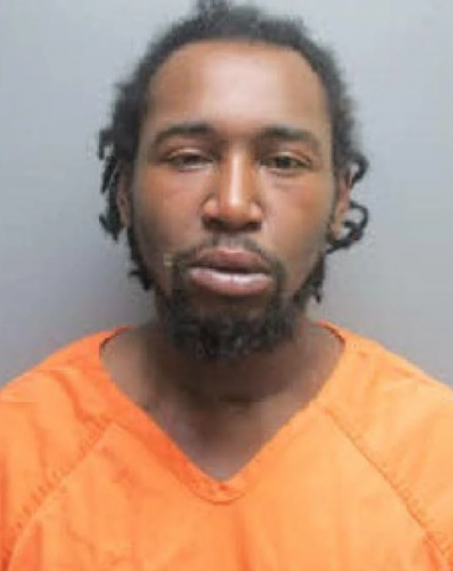
Jennifer Cruz was 33 years old when she was fatally shot near the Royal Inn motel on U.S. 15 north of Sumter, South Carolina. She was also 35 weeks pregnant; doctors were able to deliver her baby alive, but the infant was last reported as being in critical condition. According to the sheriff’s department, security camera video recorded at the scene shows Cruz’s estranged boyfriend ambushed her as she arrived at the motel where she had recently been staying, The ex-boyfriend fired several shots at the car Cruz was riding in, chasing the vehicle down the street.

Sheriff Anthony Dennis said “Cruz and [Troy] Wells had a history of domestic violence.” Because the suspect knew that Cruz was pregnant, the sheriff described the shooting as “callous and cold-blooded.”

Don’t expect to see this story on CNN. The only reason I know about the murder of Jennifer Cruz is that, in an idle moment, I decided to Google “suspect manhunt.” This is something I do occasionally — Google some phrase like “mass shooting” or “stabbing suspect” and see what kind of stories turn up in the search results. Our news media establishment picks and chooses which crimes deserve national coverage, and I don’t trust their judgment in such matters any more than I trust them to deliver unbiased political coverage. On an average day, there are roughly 50 homicides committed in the United States — 355 homicides a week, more than 1,500 a month — and if the only murders you know about are the ones that get national media attention, you don’t have an accurate picture of crime in America. Much of the public is therefore misinformed about crime and law enforcement, and this misunderstanding has serious political and social consequences. As voters, how can we assess public policy in regard to the criminal justice system if we don’t have the basic facts about how and why and where and when crime happens? Beyond that, in terms of public safety, how can you act to prevent crime — to avoid becoming a victim — if you aren’t fully informed about the risk factors involved? Risk is not randomly distributed in society, but rather follows certain patterns and, if you are aware of the patterns of criminal behavior, you can reduce your risk of becoming a victim of crime.

All of this is to explain the rationale behind my occasionally doing searches for phrases like “suspect manhunt,” which is how I became aware of the March 23 murder of Jennifer Cruz in South Carolina.

The good news is that the suspect Troy Wells is no longer at large. He surrendered to Sumter County authorities on Thursday, and is now in custody, charged with murder and attempted murder:

“I say this was ‘cold-blooded’ because it was premeditated. Wells lay in wait for the victims, and he knew Cruz was pregnant,” said Sumter County Sheriff Anthony Dennis.
“We believe he intended to not only kill both occupants of the car but the unborn child as well,” he added. . . .
Wells has had numerous encounters with law enforcement. His convictions include lynching, domestic violence, drug charges, larceny, traffic violations, and failure to stop for a blue light.
Sheriff Dennis added, “We believe that anyone who would commit a crime like this is a danger to the community and we are pleased that he is now in custody.”

One of the facts about crime that the media don’t tell you is that criminals seldom begin their criminal careers with murder. Which is to say, most murders are committed by people with prior criminal histories — repeat offenders, like Troy Wells — and therefore leniency toward such habitual criminals represents a menace to public safety. Speaking of patterns of behavior, local NBC affiliate WIS-TV reports:

“The baby was everything to her,” said Ashley Cannon, Cruz’s sister. “She was just so excited she was having another child.”
Cannon said Cruz had a tumultuous romantic relationship with Wells that had been going on for about year. Recently, Cruz had cut ties with him.
“They had lots of physical altercations,” Cannon said. “Not to the point where she would call the cops. She told me a few things, but she didn’t want to tell me much, because she knew I would get upset. I think she hid a lot from me, but I do know that he has been abusive to her before.”
Cannon also said Wells had threatened to kill people multiple times.

It’s a pattern of criminal behavior, you see. But this won’t be reported on CNN, and feminists — who love to lecture us about “violence against women” — haven’t mentioned this case, for some reason.
 

Shop Electronics at Amazon

Save on Groceries and Everyday Essentials

Shop Amazon Basics

Office & School Supplies

‘An Extensive Criminal History’

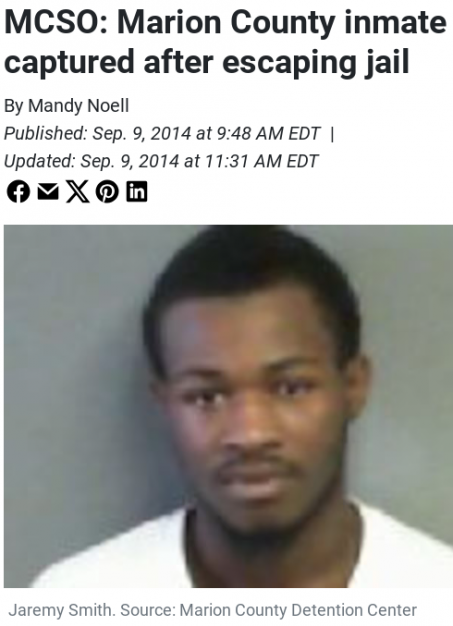
In the wee hours of September 9, 2014, there was a jailbreak at the Marion County Detention Center in Mullins, South Carolina, when “two inmates overpowered two detention officers inside the jail. The inmates handcuffed one and beat the other.” Jaremy [sic] Alexander Smith was able to escape, but deputies tracked him with bloodhouds and he was recaptured about two hours later. Fast forward to 2024 . . .

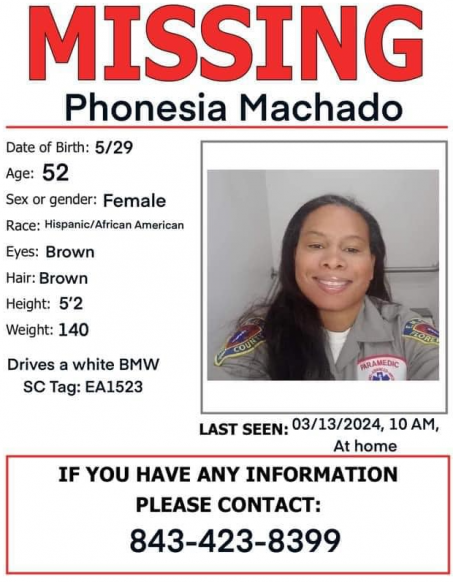
Friday morning, Marion County authorities issued a missing persons alert for Phonesia Machado-Fore, a paramedic who worked in neighboring Florence County. Machado-Fore had last been seen at her home on Tuesday and, the alert noted, she drove a white BMW.

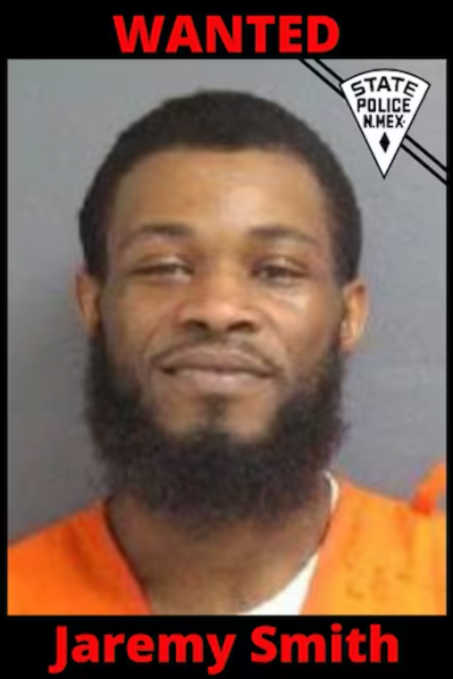
Not coincidentally, at 5 a.m. Friday morning, about 1,500 miles west of Marion County, South Carolina, New Mexico State Police Officer Justin Hare “was dispatched to Interstate 40, near milepost 318, to assist a motorist in a white BMW who had a flat tire and was attempting to wave down other motorists.” When Officer Hare parked behind the disabled vehicle, the driver got out of the car and approached the passenger side of Officer Hare’s vehicle, The trooper rolled down his window and talked to the stranded motorist, offering him assistance. The man then shot Officer Hare, walked around to the driver’s side of his vehicle, shot the trooper again and, shoving the body into the passenger seat, drove away in the state police vehicle. The trooper’s body was dumped two miles west, on an access road, and the killer then drove another 10 miles before abandoning the vehicle and fleeing on foot. The New Mexico State Police have launched a manhunt to apprehend Officer Hare’s killer.

Yes, it’s the same Jaremy Alexander Smith who broke out of the Marion County jail 10 years ago and, about 12 hours after Smith murdered Officer Hare in New Mexico, authorities in South Carolina announced that they had recovered the body of Phonesia Machado-Fore in Dillon County, and that Jaremy Smith is a “person of interest” in her death.

Now, are you ready for the real kick in the head?

According to New Mexico State Police, Smith has “an extensive criminal history in South Carolina” that included taking hostages and rioting in jail; breaking and entering; armed robbery; resisting or evading police officers; auto theft; and shooting at or from a motor vehicle.

WHAT THE HELL, SOUTH CAROLINA? Given his “extensive criminal history,” why wasn’t Jaremy Smith behind bars? Here you’ve got two people dead — a paramedic in South Carolina and a state trooper in New Mexico, because some judge or district attorney missed a chance to put this murderous lowlife away for 20 or 30 years?

It’s not like South Carolina is a Democrat-controlled sanctuary of liberalism. The state has a Republican governor, two Republican U.S. senators, and six of seven U.S. House members are Republicans. You’re telling me that, in a state so dominated by Republicans — where Donald Trump won by a 12-point margin in 2020 — you can’t do something to make sure dangerous criminals get locked up before they kill somebody?

Somebody explain to me what the hell is going on here, because I’m at a loss to why a habitual felon like Jaremy Smith was walking the streets with his “extensive criminal history in South Carolina.”

UPDATE 2:10 p.m. ET: The cop-killer is now in custody:

The suspect wanted in the killings of a New Mexico state trooper and a South Carolina paramedic was captured Sunday following a shooting involving law enforcement, authorities said.
The suspect, Jaremy Smith, was taken into custody in Bernalillo County, New Mexico, after leading police on a chase that resulted in a shooting involving at least one deputy from the Bernalillo County Sheriff’s Office, according to the New Mexico State Police. . . .
Bernalillo County Sheriff’s deputies spotted Smith driving a car in Albuquerque at about 8 a.m. local time, officials said. Smith allegedly led deputies on a chase that ended in his arrest, according to authorities.
“The Bernalillo County Sheriff’s Office is currently in the area of Unser and Anderson Hill for a deputy-involved shooting,” the agency said in a social media post, referring to a neighborhood in southwest Albuquerque. “The Multi-Agency Task Force has initiated an investigation.”
No deputies were injured in the incident, officials said.

Let justice be done. Of course, if justice were done, that “deputy-involved shooting” would have been the end for Jeramy Smith.


Shop Electronics at Amazon

Save on Groceries and Everyday Essentials

Shop Amazon Basics

Office & School Supplies

Trump Stomps Haley in S.C.

There are a lot of sad faces on CNN tonight (I watch CNN so you don’t have to). All week long, they’ve been hyping up Nikki Haley’s chances in South Carolina and . . . Well, it ain’t happening. At this hour, Trump is winning by a margin of more than 20 points in Haley’s home state. He has won every caucus and primary so far, and there is no likelihood of her winning anywhere in the future. Nikki Haley is not campaigning for the Republican nomination in any meaningful sense. What she is doing is campaigning for Joe Biden’s reelection. Nikki Haley is a puppet, controlled by the left-wing billionaires who have funded her campaign, and boosted by unlimited free publicity from liberal media outlets.

No honest person can say otherwise.


Shop Electronics at Amazon

Save on Groceries and Everyday Essentials

Shop Amazon Basics

Office & School Supplies

An Argument for Gun Control?

Say hello to Derrick Edward Gathers, a registered sex offender from Augusta, Georgia. In 2005, when he was 19 years old, Gathers was convicted of third-degree rape — but this mug shot is not from that case. In April 2020, Gathers was arrested on charges of drug possession as well as possession of a firearm by a convicted felon. However, this mug shot is not from that arrest, either. In March 2021, Gathers was arrested for a parole violation but — as you may have guessed — this mug shot is not from that arrest. Would the reader care to guess what happened to Derrick Gathers in June 2022? If you guessed “arrested,” congratulations. This time, Gathers was charged with driving on the wrong side of the road, with no license, no insurance and an expired tag, as well as fleeing or eluding a police officer.

But the mug shot? Not from that arrest, either.

You may be wondering, what does it take to put someone in prison nowadays? Because here we have a registered sex offender who got arrested three times in the span of barely two years — including charges of possessing a firearm as a convicted felon — and we might imagine that at least one of these arrests would have been enough to put Derrick Gathers away for more than a few months at a time. But, no, because here at last is the crime that led to the mug shot at the top:

The registered sex offender accused of trying to kill a state trooper and a Bamberg County deputy on Sunday will remain in jail until his case is heard in court.
Derrick Edward Gathers, 37, of Augusta, Ga. is charged with two counts of attempted murder and one count each of possession of a weapon during the commission of a violent crime and failure to stop for blue lights. . . .
Those charges stem from a traffic stop initiated by the S.C. Highway Patrol and Bamberg County Sheriff’s Office around 3:30 a.m. Sunday on U.S. Highway 78, on the edge of Denmark, near Best Friend Avenue.
As Lance Cpl. B.A. Frazier approached the Mazda SUV allegedly driven by Gathers, the driver presented a pistol and shot the trooper in the side of his face, according to the S.C. Law Enforcement Division.
Warrants also accuse Gathers of shooting at Bamberg County Sheriff’s Deputy Dwayne Duckson.
Frazier and Duckson returned fire, with bullets striking the SUV.
Other officers pursued the SUV until it crashed into a home in Branchville. Gathers was treated by medics and transported to the hospital, where he stayed until he was booked into the Bamberg County Detention Center at 1:59 p.m. Monday.
The Bamberg County courtroom on Tuesday was filled to standing room only with law enforcement officers in support for Frazier and Duckson.
Frazier attended the hearing virtually from his hospital room where he’s undergoing treatment for a gunshot wound to the right side of his face.
Second Circuit Deputy Solicitor David Miller told the court that Gathers has an extensive record with multiple felony convictions in New York and pending charges in Georgia.
Miller described Gathers a danger to the community.
Miller asked the court to deny setting Gathers’ bond.
[Judge Richard] Threatt agreed.

Gathers has an extensive record that dates back to 2005 in Broome County, New York.
On Dec. 20, 2005, he was convicted of third-degree rape and second-degree criminal sexual act there.
He is a registered sex offender. According to the Georgia Bureau of Investigation’s Sex Offender Registry, Gathers’ aliases include: “Assassin,” “Tiger” and “Tragedy.”
Miller told the court that Gathers has a warrant for his arrest in Georgia.

Here is the state trooper that Gathers shot:

Highway Patrol Lance Corporal B.A. Frazier

Lance Corporal Frazier is said to be making “significant progress” in his recovery, and I checked the White House press office page to see if President Joe Biden has said anything about this case, but apparently not. Every time a shooting makes the national news, Biden issues a statement blaming the NRA and Republicans for opposing “commonsense gun safety reforms,” but when a convicted sex offender who’s been in and out jail repeatedly for the past three years shoots a state trooper, where is Joe? What does the president have to say about this case? How would his so-called “commonsense gun safety reforms” prevent a lifelong felon like Derrick Gathers — who, by law, is not allowed to possess firearms, period — from committing the crime that finally got him locked up with no bail? Do you see the problem here?

All the gun-control laws in the world won’t stop criminals from committing crime, including crimes with guns, because guess what? Criminals steal guns. The only way to stop this is to put criminals behind bars, but Joe Biden and the Democrats don’t want to send criminals to prison because “social justice” or whatever. And as a result of this turn-’em-loose policy, cops end up getting shot by criminals who should never have been out on the street. The only way law-abiding citizens can protect ourselves against these rampaging felons is to buy guns — and Democrats want to put us in prison for daring to defend ourselves.

My friend Robert Waters wrote a book, Guns Save Lives: True Stories of Americans Defending Their Lives With Firearms. You should read it.


‘A Coven of Sexual Predators’

Well, at least they weren’t Catholic priests:

Multiple cheerleading coaches in South Carolina — including a coach who recently killed himself — sexually abused at least six boys and girls and provided them with drugs and alcohol, a federal lawsuit alleges.
A “coven of sexual predators” surrounded Rockstar Cheer of Greenville for more than a decade, according to one of the lawyers for the alleged victims.
Attorney Bakari Sellers contends that what happened is a result of the same kind of institutional failure seen in the case of Larry Nassar, the former USA Gymnastics and Michigan State University doctor who is serving a minimum of 40 years in prison after admitting that he molested some of the nation’s top gymnasts for years.
The lawsuit was filed Thursday by four girls and two boys who said they were abused by Scott Foster and others affiliated with Rockstar gyms. It suggests there could be up to 100 more survivors of the abuse.
“Scott Foster and his allies did their best to intimidate and isolate their targets, making these young people feel alone and somehow responsible. Well, they’re not alone anymore,” attorney Jessica Fickling said in a statement announcing the suit.
Foster, 49, was found dead in his car at a state park on Aug. 22. He shot himself in the head, the Greenville County Coroner’s Office ruled.
“He knew this was going to be a moment when the light was going to be shined on what I think will turn out to be a coven of sexual predators surrounding Rockstar,” said attorney James Bannister.
A number of people either knew Foster was abusing his cheer students and ignored it or did not have rules and procedures in place to stop the abuse, the lawsuit says.
Foster and other coaches not named in the lawsuit had sex with cheer students, sent and asked for explicit photos over social media, gave them alcohol and marijuana at their homes and in hotel rooms at cheer competitions and warned them to not tell anyone about it, according to the lawsuit.
“We have video of Scott Foster on Snapchat with beer bongs drinking with his underage cheerleaders,” Sellers said at a news conference this week.
The suit also names Varsity Brands, which runs cheerleading competitions; the U.S. All Star Federation, which is an organizing and governing body for competitive cheerleading across the country; Bain Capital, which bought Varsity in 2018, and others.
State and federal police are investigating Foster’s Rockstar Cheer and other cheerleading outlets, seizing computers, cellphones and other evidence, Bannister said.

Jeffrey Epstein could not be reached for comment.


The True Story of a Teenage Patriot

Abraham Isham Bolt was just 16 years old in 1780 when he joined the South Carolina militia. The Patriot cause had suffered its worst defeat of the war when Charleston surrendered in May 1780. The British planned to use Charleston as a base of operations from which to open a new front in the war against the American rebellion. It was believed the rebellion was more popular in New England, while Tories were more numerous in the South. If the British could recruit Tory (or “Loyalist”) forces to suppress the rebellion in the South, this would divide the colonies, and draw Washington’s army away from the mid-Atlantic theater.

In an ironic twist of history, early British success in South Carolina led directly to Cornwallis’s final defeat in the war, and I am proud that my ancestor Abraham Bolt was part of that history. You’ve seen the movie The Patriot? Yeah, that’s what the South Carolina militia did.

Of course, Hollywood took liberties with the story. There are no portraits of Abraham Bolt, so he may have been as handsome as Heath Ledger, but it’s highly unlikely the South Carolina militia wore such spiffy uniforms. Nevertheless, there was a real war in South Carolina — a savage guerrilla campaign, with massacres and reprisals, ending in a stunning Patriot victory — and my teenage ancestor was there when it happened, in two crucial battles of the campaign. There is on file in the South Carolina archives a record of Abraham Bolt’s pay for his militia service, precisely enumerated in pounds and shillings — £12, 17 shillings, 1½ pence.

Notice that this payment wasn’t issued until May 1786, meaning that it took more than five years for South Carolina to pay its militia for their service during the war, and the state’s “currency” had been so devalued by inflation that £90 pounds in South Carolina paper money was worth less than £13, the actual coin amount paid to Abraham Bolt.

Until Saturday, I had no idea who Abraham Bolt was. What happened was that I was doing some research related to a post about Lena Dunham, seeking to show how large families were prevalent in America’s past. So I went to the genealogical records of my own family, and in the process of that research went back through the family tree, starting with my great-grandfather, Winston Wood Bolt (b. Jan. 5, 1839, Walton County, Georgia). His father, Benjamin Berryman Bolt (b. Nov. 23, 1806, Laurens County, South Carolina), was the son of James Robert Bolt (b. Jan. 14, 1783) whose father was Abraham Isham Bolt (b. Aug. 24, 1764, Fauquier County, Virginia). Abraham Bolt, the heroic teenage Patriot, was my great-grandfather’s great-grandfather. Continue reading The True Story of a Teenage Patriot →

Dopehead Biker Dies of ‘White Privilege’ and Blunt-Force Trauma, But Mainly …

. . . it was the blunt-force trauma:

A Berkeley County deputy will not face charges in connection with a fatal collision with a motorcycle that occurred in Summerville in April [2017].
A grand jury convened Thursday in Dorchester County and declined to indict for reckless homicide, according to Senior Assistant Solicitor Don Sorenson with the First Circuit Court.
“They found there was not enough evidence,” Sorenson said.
Robert Lee Clark Jr., 30, of Goose Creek, died after his Harley Davidson collided with Deputy James Vansant’s SUV on Main Street, near Richardson Avenue, according to the South Carolina Highway Patrol, the lead investigative agency in the case. Berkeley County sheriff’s officials said its agency also conducted its own investigation.
Vansant has been on leave from the sheriff’s office since the April 19 crash.
In a statement Thursday afternoon, Berkeley County Sheriff Duane Lewis said Vansant will remain on leave until the sheriff’s office completes its internal investigation.
He reiterated that Clark was driving “erratically” and failed to stop.
“It is important to realize that deputies have a dangerous job. Traffic stops and domestic violence investigations are among the most dangerous and unpredictable things that they do. It’s unfortunate that a loss of life occurred in this case and both families have been impacted by this incident,” Lewis said.
In the days after the incident, fellow members of the local motorcycle community gathered at Hutchinson Square to rally against the sheriff’s office and its pursuit policy.
The sheriff’s office was also quick to release dash cam footage of the chase and crash, which showed the deputy’s vehicle hit the motorcycle two different times. But sheriff’s officials said they believed Clark failed to shift properly, slowing the bike and causing the officer’s SUV to hit it. Vansant’s vehicle was traveling at more than 100 mph during parts of the chase.
The sheriff’s office said the chase started when Vansant observed the motorcycle traveling 66 mph in a 45 mph zone headed toward Crowfield Boulevard from Interstate 26. At the time Vansant was conducting radar near Ace Hardware on College Park Road, an incident report stated.
Despite lights and sirens, Clark failed to stop for the deputy and a 7-mile chase ensued. Dash cam footage showed the motorcyclist fluctuate in speed during the event. The motorcyclist also made “abrupt lane changes” at times, Vansant wrote in his report. A second deputy also joined the chase at Ridge Church Road.
The motorcyclist crashed when he swerved to avoid a third vehicle that had stopped for lights and sirens, and in trying to speed away, missed a gear, slowed down the bike and forced it to clip the front of Vansant’s vehicle, the sheriff’s office said. Clark and his bike crashed into the curb.

I found this story after watching video of the April 2017 pursuit:


Do “fellow members of the local motorcycle community” believe speed limits should not apply to them? Why? Because they’re white?

Honestly, that’s the only possible explanation why anyone would attempt to defend what Clark did. He was carrying nearly two ounces of marijuana when the deputy blue-lighted him and maybe — in his feeble dopehead brain — he thought he could get away, so he took off running for seven miles at speeds in excess of 100 mph. You watch enough police pursuit videos, and after a while you start hoping for the suspect to die, preferably in a spectacular crash, like when a Texas bank robber at the wheel of a Dodge Challenger “veered off the road, hit a power pole and went airborne into a tree.” Die, criminal, die!


The dead criminal in that case was black, and it would be racist of me not to applaud the death of a white criminal with equal enthusiasm.

We need to have a serious talk in this country about crime. Complaints about “mass incarceration” miss the point. People would not be incarcerated if they hadn’t broken the law, but they also wouldn’t be incarcerated if the cops had just killed them while they had the chance.

Maybe if we weren’t so sensitive about police using “excessive force,” there would be less crime. What if more Americans were like this grand jury in South Carolina that refused to indict the deputy for running the dopehead biker off the road? That is to say, what if we as a society stopped being so sympathetic toward criminals, and instead supported law enforcement as the authorized guardians of our safety?

Democrats like Joe Biden say law enforcement is part of “systemic racism” and what if we stipulate this, for the sake of argument? If enforcing the law is “white supremacy,” what does this say about situations where cops kill a white criminal? Will the SPLC say my lack of sympathy for white criminals is part of “white supremacy”?

Frankly, I would hesitate to deny such an accusation. Expecting people to conform to the rules of civilized society, and authorizing police to use force against those who don’t comply — if that’s what “white supremacy” means, then who wouldn’t be a “white supremacist”?

Americans have for too long permitted criminals, whatever their race, to impose on our sympathy. Too many movies have celebrated the outlaw as a heroic or romantic figure, which has resulted in a diminished respect not only for police, but for law-abiding citizens. White people are deeply implicated in this hero-worship of criminals. The Godfather won multiple Academy Awards for its celebration of gangster life. If it’s OK for white people to romanticize the Mafia, isn’t it racist for us to complain about black teenagers who think it’s cool to be gangbanging with the Crips?

If we don’t want our society to descend into anarchy, we must stop having sympathy for criminals and start supporting law enforcement, even if this means we must forfeit the “white privilege” that would otherwise permit us to do 100 mph on a Harley with two ounces of weed.

Let’s face it, everybody would like to do that. Toke up a big spliff, hop on your Harley and — ZOOM! — off you go at 100 mph.

Just don’t try that in Summerville, South Carolina. They’ll run you off the road, and you’ll get zero sympathy from me, dopehead loser.


‘Criminal Justice Reform’


There wasn’t much left of the car after the high-speed chase ended in South Carolina, and not much left of the driver, either. Behind the wheel of a stolen Toyota Prius, Kamontie Gross, 19, led police on more than a 20-mile chase April 18, 2019, from Charlotte, North Carolina, after he and two accomplices committed an armed robbery. Police from Charlotte backed off the chase, letting a police helicopter track the stolen vehicle down I-77 to the border, where South Carolina state troopers took up the pursuit. At one point, troopers used a PIT maneuver to spin the car around, but it kept going until its fiery conclusion near Rock Hill.


You will probably not be surprised by this information:

According to Mecklenburg County Jail records, Gross had been arrested nine times since 2016. Four of those arrests included charges related stolen vehicles.
Jail records also show [Gross’s 17-year-old accomplice Aniya] Taylor had been arrested seven times since 2017. Her arrests also included several charges for Possession of a Stolen Vehicle, as well as Fleeing or Eluding Arrest with a Motor Vehicle.


Between them, these two teenagers had 16 arrests, and while I couldn’t find the name of the third suspect, who survived the crash, we can imagine that this person had his or her own string of arrests. Why weren’t these criminals already behind bars? What is going on in our criminal justice system, when repeat offenders are being turned loose to wreak havoc on our streets, endangering public safety? The media amplify complaints from activists who say “mass incarceration” is the problem, but it seems to me the problem is rather the opposite. Authorities appear reluctant to lock up young criminals; grand theft auto used to be considered a serious crime, but now it’s just a videogame title, I guess.

A TV reporter interviewed Kamontie Gross’s mother:

Channel 9’s Tina Terry spoke with the mother of the man behind the wheel, who said she waited for hours at the hospital before learning that her oldest child had died in the crash.
“It’s so hard to lose a child. It’s so hard, it’s so hard,” Chaquia Gross said.
The crash killed her son Ka’Montie Gross, who was behind the wheel, an unnamed passenger, and seriously injured a second passenger.
Chaquia said she has no idea where her son was going or why any of this happened, but she said her friend messaged her about the crash shortly after it happened.
“I was like ‘Is he OK?’ They said ‘He’s gone’ and I’m like ‘What,'” Chaquia said. “She said ‘I can’t, I can’t let you see him, if you did you wouldn’t recognize him.”
Chaquia said her son had a big heart that cared for others, but he never extended that same care to himself.
“He’d tell you don’t walk across the street cause a car coming, he’d walk,” Chaquia said. “If you were down, he would pick you right back up. We might clash, but I love him to death. I’m gonna miss him.”

Oh, he “had a big heart,” when he wasn’t stealing cars, perhaps. The reader will probably not be surprised to learn that, according to jail records, Chaquia Gross was arrested on charges of breaking and entering a motor vehicle and larceny about six weeks before her son’s death. According to records, Chaquia Gross was born in June 1984 and her son Kamontie was born in June 1999, before his mother’s 15th birthday.

Go ahead and blame “systemic racism” for this.