
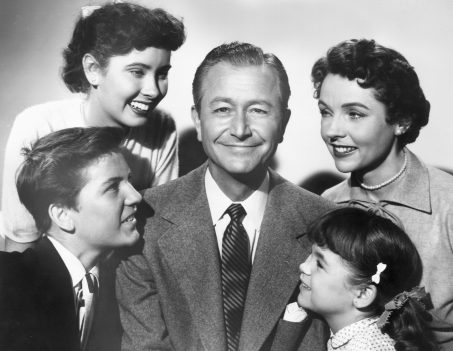
One thing about the passage of time is that, as you grow older, you begin to notice the shift of values. What was once widely accepted — the expected social norms of your childhood — come to be viewed as quaint, old-fashioned or perhaps even barbaric. When I was born in Atlanta in 1959, Dwight Eisenhower was still president, and the South was still governed by Jim Crow segregation. By the time I started first grade in 1965, the passage of the Civil Rights Act had eliminated segregation, although of course, the customs and attitudes of the Jim Crow era did not magically evaporate overnight. Because I was just a schoolboy at the time, the politics of all this was completely over my head. My parents’ generation, being raised with a stoic temperament and a concern for civility and courtesy, didn’t talk in front of the children about the various social upheavals of the 1960s, so I really can’t say with much certainty what their attitudes were. They were staunch Democrats (as everyone was in that time and place), and reasonably liberal as such things were reckoned in that era, but I don’t know much more about their beliefs.
By the 1990s, when I was married with a family of my own, and was viewing politics through adult eyes, the message of conservative Republicans had a lot to do with traditional family values.
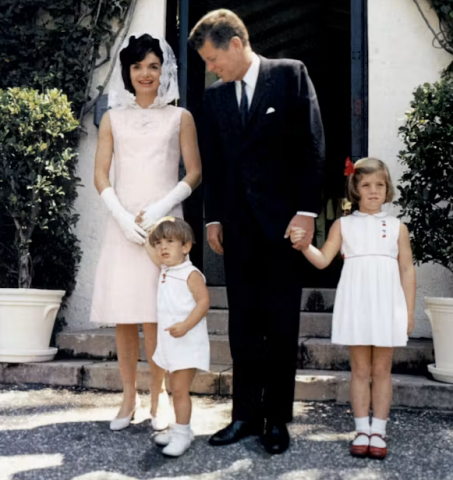
How was it that what had been taken for granted in America just three decades earlier had become a right-wing political agenda? The standard answer is “the Sixties,” a reference to the multitudinous changes that destabilized our national culture during that tumultuous decade.
When I was a boy growing up in Douglas County, Georgia, practically all of the kids came from “traditional families.” Divorce was considered scandalous in my parents’ generation, and none of my childhood acquaintances were from “broken homes,” to use a quaint term. Whatever other problems we had, at least most kids in my generation didn’t have to deal with the confusing welter of household arrangements — stepfathers, stepmothers, stepbrothers, half-brothers, etc. — that had become so commonplace two or three decades later. No-fault divorce was one part of the problem, but by the 1990s, America also had a rapidly growing number of bastards, to use a word now considered taboo.
Some of y’all may be old enough to remember when Hillary Clinton’s 1996 book It Takes a Village was in the headlines, criticized for what it really represented, i.e., an argument for expanding government bureaucracy as a substitute for functional families. Living inside a cocoon of like-minded liberals, it is likely that Hillary Clinton never bothered to read the most important social policy book of the 1980s, Charles Murray’s Losing Ground. What Murray demonstrated was that the social welfare programs created (or vastly expanded) in the 1960s (LBJ’s “Great Society” agenda, the so-called “War on Poverty”) had actually harmed the poor people that liberals said they meant to help, by incentivizing behaviors that increased poverty, while discouraging behaviors that could lead to a better life. Contrary to what Hillary and other liberals believed, the best thing to do for poor people was to stop “helping” them this way — cut the welfare budget and eliminate the programs.
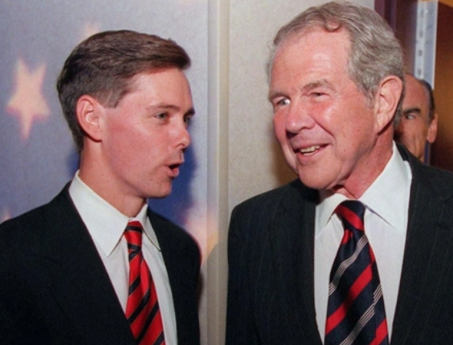
The arguments made by Charles Murray in Losing Ground were aimed at policy wonks, but the way the “family values” agenda entered the mainstream of Republican Party politics was via a popular TV preacher, Pat Robertson. Beginning in 1966, Robertson began co-hosting a weekday TV show, The 700 Club, which I remember my Grandma Kirby watching regularly in the 1970s. The 700 Club became the foundation of Robertson’s cable-TV channel, the Christian Broadcasting Network (CBN), which launched in 1977. Robertson had a large nationwide following by the time he announced his candidacy for the 1988 Republican presidential nomination. Even though he stood no chance against George H.W. Bush, the incumbent vice president, Robertson made a fairly respectable showing, collecting 115 delegates and more than a million votes during the primaries. Along the way, Robertson also developed a core group of grassroots volunteers (particularly in Iowa) and, most importantly, a mailing list of campaign donors.
The donor list from the Robertson 1988 campaign became the financial basis of the Christian Coalition, which in 1989 hired young Republican operative Ralph Reed to be its executive director. Reed’s success as a political organizer and strategist was crucial to the Republican takeover of Congress in 1994. While the lion’s share of credit for that belongs to Newt Gingrich — who himself praised the role of Rush Limbaugh in the 1994 campaign — a lot of the conservative “foot soldiers” who made that campaign a success were part of the army of activists that Ralph Reed had helped recruit and train. Thus you have a very condensed explanation for how “traditional family values” came to be seen as a right-wing agenda.
Most of what people think of in this context is opposition to (a) abortion and (b) “gay rights.” This is a very narrow and negative understanding of what has motivated Christian conservatives since the 1990s, namely, a desire to maintain (or restore) the middle-class married household as the defining institution of American life. As Charles Murray showed in Losing Ground, it was the decline of married-family households (or, viewed from the opposite end, the increase of children growing up in non-traditional households) that was largely responsible for a lot of other things that had gone wrong in America by the mid-1980s.
If there were any one thing I would like to stress in discussion of Christian conservatives and the so-called “Culture Wars,” it would be this: We cannot vote our way into heaven, nor can mere politics restore America’s “traditional family values.” Now let me tell you a story.
‘But You Must Act’
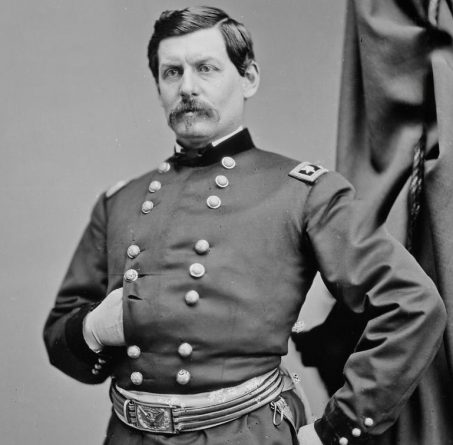
When he was first appointed to command the Union army defending the nation’s capital after the Yankees were defeated at Bull Run in July 1861, George McClellan was hailed as a heroic figure, destined for greatness. He set about training and equipping the rabble of raw recruits streaming into Washington, D.C., and began formulating a bold plan. Rather than marching out to fight the Rebels camped near the old Bull Run battlefield, McClellan instead would mount a massive amphibious project, transferring his army to the Virginia peninsula between the James and York rivers, thus to attack the Confederate capital of Richmond from the east. This would reverse the strategic picture; instead of the Union army being forced to defend the capital in D.C., instead the Souterners would be compelled to defend their own capital. The theater of war would be transferred from Abe Lincoln’s doorstep to Jefferson Davis’s backyard, so to speak. Lincoln approved this plan, but in consideration of concerns from Cabinet members and congressional leaders, stipulated that McClellan must leave behind in the vicinity of Washington enough troops to make sure that the Rebels didn’t make a leap at the capital while McClellan was busy shipping his army down to the Virginia peninsula. McClellan agreed to this, and as part of his arrangements, decided to transfer some troops that were then stationed in the Shenandoah Valley eastward to become part of the force defending the capital. With this problem taken care of, McClellan and his army of more than 100,000 men set sail from the wharves of Alexandria on March 17. The army disembarked at Fort Monroe, on the tip of the peninsula, and began moving inland, when disaster struck more than 200 miles away — disaster in the form of Thomas “Stonewall” Jackson.
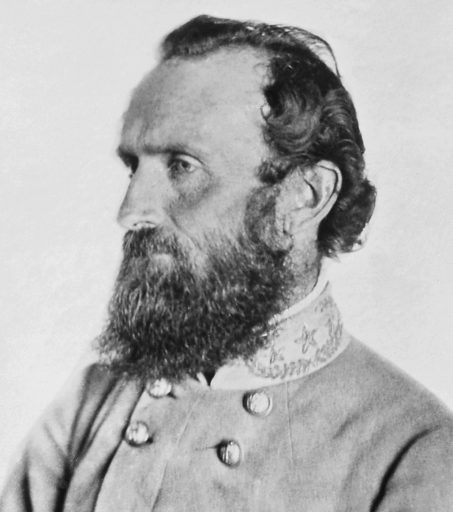
Jackson commanded barely 4,000 troops in the Shenandoah Valley, and when he discovered that part of the Yankee army opposing him was being withdrawn, he resolved to attack the remainder immediately. It turned out that Jackson had underestimated the Union force that had been left in the Valley, and he suffered a bloody repulse when he attacked them at Kernstown on March 23. Despite this, however, Jackson’s aggression had a major strategic impact. Lincoln and others in Washington could not believe that Jackson had attacked with such a small force, and figured he must have at least 10,000 men in the Valley. McClellan being all the way down at Fort Monroe, Lincoln and his advisors set about to counter this perceived threat and, in the process, took a hard look at the actual number of troops that McClellan had left to guard Washington. What they found struck them as completely inadequate to the task — the capital seemed very vulnerable, and there was fear that Jackson’s attack at Kernstown might herald a Confederate offensive — which led Lincoln to withdraw from McClellan’s command an entire army corps, so as to make sure that D.C. was safe. Public criticism of McClellan’s slow progress in his Peninsula campaign was widely heard in the capital, as Bruce Catton narrates in Mr. Lincoln’s Army:
The clamour against McClellan deepened, became a clamour against Lincoln for keeping him in command. Lincoln tried to give McClellan an understanding of this increasing pressure as a factor which McClellan would have to keep constantly in mind when he made his plans; tried to show him that it was a pressure which, political conditions being what they so regrettably were, even the President of the United States might finally be unable to resist. On April 9, Lincoln wrote him: “And once more let me tell you, it is indispensable to you that you strike a blow. I am powerless to help this.” He concluded the letter by assuring McClellan that he would sustain him as far as he could: “but,” he added, “you must act.”
“You must act” — that is the essence of the message I would share with young people on this Father’s Day. However much anyone might hope to accomplish through politics, in terms of preserving “traditional family values” in America, what matters more is what we actually do in our everyday lives. Many millions of dollars in campaign contributions have been spent, and untold hours of labor by activists has been done in terms of electing candidates and promoting legislation that might advance a conservative agenda. What have I done? Well, I’ve stayed married to the same woman for 37 years, sired and raised six children to adulthood, and occasionally do what I can to help with the grandkids.
What I have done is to live “traditional values,” rather than merely to talk about them, or to vote for them. Once upon a time, living this way wasn’t considered political at all. People fell in love, got married, had kids, etc., and because almost everybody was living that way, there wasn’t anything controversial about it. Nowadays, however, to live that kind of life — husband and wife, mom and dad, “till death do us part” — makes you some kind of right-wing extremist. The SPLC might even put you on their “Hate Map” for suggesting that this is the best way to live.
Be an extremist, and have fun doing it. Certainly, I’ve had a blast.
Happy Father’s Day to all you right-wing extremists everywhere!