IQ Voodoo and Other Errors
Posted on | August 6, 2026 | Comments Off on IQ Voodoo and Other Errors
One of the problems with American politics is how the two-party system tends to foster a Manichean duality on every issue. The Democrat “borg” (which includes media and academia) pushes whatever its policy agenda may be at any moment, and demonizes anyone who dissents. Meanwhile, those of us in the conservative opposition (Republicans, by default) are compelled to naysay whatever Democrats are advocating. Over the course of decades, one may see the two coalitions change — constituent groups changing loyalties — but this process is usually so gradual that it is not recognized at the time such shifts are happening.
One of the sudden shifts came in 1994, when the Republican Party’s “Contract With America” helped produce one of the most consequential midterm elections in American history. For the first time in 40 years, the GOP captured control of both Houses of Congress. Among other things, 1994 marked the beginning of the end of moderate or conservative Democrats being able to win elections in the South. This was ironic, in that Bill Clinton had been elected as an alleged moderate, but during his first two years as president, enacted an agenda so left-wing that it completely alienated many of his erstwhile supporters — including me.
You don’t get to backstab me twice.
When I explain why I quit the Democratic Party, that’s what it really comes down to. Loyalty matters. Honor matters. Bill Clinton proved himself to be disloyal and dishonorable, and we are all today living with the consequences of his betrayal, for which he cannot be forgiven, because he has never really admitted what he did wrong. People like that don’t deserve an explanation; just walk away, and resolve yourself to get even, however long it may take to obtain your revenge.
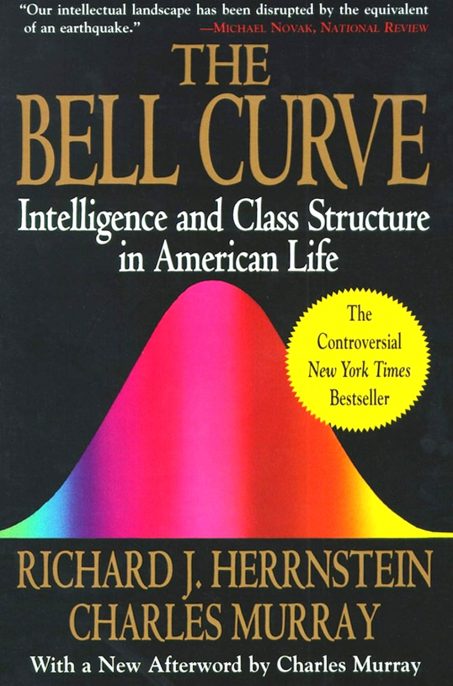
Something else monumental happened in 1994 — the publication of Richard Herrnstein and Charles Murray’s The Bell Curve: Intelligence and Class Structure in American Life. As I’ve said before, when the book first came out, I read the reviews and editorial comments about the book and actually believed the “crypto-Nazi race science” smears. And then, in an online argument (dial-up modems and Usenet), I shared that opinion and got called out: “Have you actually read the book?” Oops.
Once I read The Bell Curve, it was a revelation. Arguably the most important part of the book is Part I (“The Emergence of a Cognitive Elite,” pp. 1-125), which explains how the widespread use of standardized testing after World War II had created a gigantic sorting machinery, organized for the purpose of identifying the smartest children and directing them toward elite higher education. The elite schools (highly selective in their admissions processes, accepting only a fraction of those who apply) could pick and choose from a nationwide pool of students because the SAT produced a single uniform metric of academic potential. SAT scores were correlated to IQ, and you could see (as illustrated by a chart on p. 40 of the book) how the sorting of students worked to send the very brightest to the most prestigious schools.
This sorting mechanism was never perfect, however. There are smart kids who, for whatever reason, don’t get on the competitive treadmill of earnest strivers whose entire adolescence is organized around getting accepted by an Ivy League school (the protagonist of Risky Business simply MUST get into Princeton). Yet, as The Bell Curve makes clear, statistical averages matter, a lot. So if you decide to party your way through high school, as some of us did, you will later face an uphill battle to get ahead, while those Ivy League kids will spend the rest of their lives thinking they’re smarter than you. “Steeper Ladders, Narrower Gates” is the title of the chapter in which Herrnstein and Murray explain how the process of “cognitive partitioning” had become increasingly stringent.
None of that has anything to do with race, which doesn’t make its appearance as an analytical factor until page 269 of The Bell Curve, and what Herrnstein and Murray were trying to do, in that regard, was to explain why three decades of welfare spending and civil-rights activism had done so little to eradicate the disparities of income (and other socioeconomic metrics) between races. The Left claims such disparities are evidence of racism (“RAAAAACISM!”) and, on that matter, the message of The Bell Curve is simply, “No.” Herrnstein and Murray then discuss the possible consequences of their analysis in terms of public policy, but the real takeaway from the book is that we have to abandon the “blank slate” thinking and radical-egalitarian fanaticism that led to the dead-end failures of the “Great Society” agenda.
The smear against The Bell Curve as “racist,” however, is not the only dangerous misunderstanding. There is also the danger of what I think of as “IQ voodoo,” the belief that intelligence is synonymous with moral virtue, the only metric of human value. It is certainly true, as shown in Part II of The Bell Curve (“Cognitive Classes and Social Behavior”) that higher IQ is correlated with many positive behavioral outcomes, and vice-versa. However, this doesn’t mean that having the kind of SAT score that gets you into MIT or Stanford is a secular equivalent of sainthood — a member of “the elect,” as our Puritan forefathers might have said.
Believing that they are better than everybody else — not merely smarter, but also more “compassionate,” etc. — is what makes our elite so insufferably obnoxious, especially to those of us who tested pretty doggone good ourselves, even if we didn’t go to Harvard.
A problem closely related to “IQ voodoo” is our natural tendency to accept persuasiveness as a substitute for correctness. It is not merely possible, but entirely common, for people who are very good at articulating arguments to use that persuasive power to promote ideas that are disastrously wrong. The reason socialism is enjoying a vogue among young people nowadays is not because the economy is particularly bad, but rather that those under 40 don’t have the memories that us older folks have. We know damned well that socialism doesn’t work, and has never worked anywhere, whereas naïve youth don’t have that knowledge. And there are very clever people (especially including podcasters) who are good at making arguments for socialism that seem persuasive to those who don’t have the kind of knowledge we have.
The same is true, by the way, for anti-Semitism. It’s probably not a coincidence that both socialism and anti-Semitism are what all “the cool kids” are into nowadays. The rise of podcasting as a medium, and the way online algorithms feed into siloing and confirmation bias, are a perfect storm for the gestation of mind viruses. I mention this because so-called “popular historian” Darryl Cooper did another interview with Tucker Carlson and it was like the Wuhan lab of mind viruses.
SUPERCUT: Tucker Carlson and Darryl Cooper spend a couple hours saying insane things about Jews.
1. The Zionist lobby's "strategic imperative" to "corrupt people so completely"
2. Israel "would have already" nuked Iran if it could get away with it
3. Carlson: "The only nice part… pic.twitter.com/HdZaQPOiAD— Max ? (@MaxNordau) August 6, 2026
Someone more patient than me should go through videos of Darryl Cooper and do a critical analysis of his rhetorical method. I can’t stand to listen to the guy, but it’s obvious that he employs tactics of sophistry to “sell” his toxic belief system to those not inoculated against it. One such tactic is to suggest that those who believe “conventional wisdom” on any topic have been duped by propaganda. For example, the purveyor of JFK assassination theories will mock you for thinking that Lee Harvey Oswald was responsible, citing as disproof the seemingly impossible trajectory of the so-called “single bullet” which, according to the Warren Commission, hit John Connally before ricocheting to hit Kennedy. What the conspiracy theorist is trying to do is to distract you from the lack of evidence for any plausible alternative to Oswald as the assassin. Whatever problems of ballistic detail may be involved in Oswald’s marksmanship, it is a violation of Occam’s Razor to go chasing around in search of far-fetched alternatives, when you have the Marine-trained gunman, equipped with a Mannlicher-Carcano rifle, in a sniper position with a perfect view of the presidential motorcade. Case Closed, as Gerald Posner said.
Same thing with Darryl Cooper’s “just asking questions” method of promoting antisemitic beliefs. He is not merely criticizing Israeli policy, or U.S. foreign policy, but is trying to distract from — to downplay or dismiss — the reality of murderous Islamic terrorism as a factor in the Middle East. And in doing so, he breathes new life into anti-Jewish slanders that were widespread long before Hitler came to power.
The fact that Cooper is both intelligent and persuasive does not change the fact that he is wrong and deceptive. Jesus warned his disciples to be “wise as serpents.” We ought to pay heed to that warning.
Comments
THE FULL METAL JACKET REACH-AROUND AWARD
HIT THE FREAKING TIP JAR!
Search
Recent Posts
- ‘A Reliable Barometer of Wrongness’
- In The Mailbox: 10.07.26
- In The Mailbox: 10.06.26 (Evening Edition)
- In The Mailbox: 10.06.26 (Afternoon Edition)
- Rule 5 Sunday: A Salute to Mrs. Justin Verlander
- FMJRA 2.0: No Grandeur This Week Just Misery
- The Wrong Matthew Ingalls, the Correct ‘Jane Doe’ and the Cornell 7 Case
- In The Mailbox: 10.02.26 (Evening Edition)
- In The Mailbox: 10.02.26 (Afternoon Edition)
- In The Mailbox: 09.30.26
RSS reader subscription

MEMEORANDUM
Recent Comments
- on The Wrong Matthew Ingalls, the Correct ‘Jane Doe’ and the Cornell 7 Case
- on The Wrong Matthew Ingalls, the Correct ‘Jane Doe’ and the Cornell 7 Case
- on In The Mailbox: 10.02.26 (Evening Edition)
- on Deranged Stalker Deborah Frisch Is Out of Prison, But for How Much Longer?
- on Rule 5 Sunday: Oktoberfest
THE AMAZING GONZO FEED
Major Leagues
Archives
- October 2026 (10)
- September 2026 (38)
- August 2026 (43)
- July 2026 (39)
- June 2026 (40)
- May 2026 (43)
- April 2026 (59)
- March 2026 (44)
- February 2026 (37)
- January 2026 (45)
- December 2025 (42)
- November 2025 (44)
- October 2025 (44)
- September 2025 (47)
- August 2025 (48)
- July 2025 (48)
- June 2025 (47)
- May 2025 (48)
- April 2025 (42)
- March 2025 (48)
- February 2025 (49)
- January 2025 (48)
- December 2024 (42)
- November 2024 (44)
- October 2024 (47)
- September 2024 (43)
- August 2024 (55)
- July 2024 (63)
- June 2024 (59)
- May 2024 (48)
- April 2024 (43)
- March 2024 (55)
- February 2024 (46)
- January 2024 (45)
- December 2023 (53)
- November 2023 (62)
- October 2023 (57)
- September 2023 (56)
- August 2023 (53)
- July 2023 (69)
- June 2023 (67)
- May 2023 (53)
- April 2023 (60)
- March 2023 (73)
- February 2023 (65)
- January 2023 (56)
- December 2022 (60)
- November 2022 (64)
- October 2022 (58)
- September 2022 (68)
- August 2022 (75)
- July 2022 (69)
- June 2022 (73)
- May 2022 (74)
- April 2022 (57)
- March 2022 (79)
- February 2022 (65)
- January 2022 (58)
- December 2021 (62)
- November 2021 (68)
- October 2021 (73)
- September 2021 (63)
- August 2021 (60)
- July 2021 (80)
- June 2021 (64)
- May 2021 (64)
- April 2021 (58)
- March 2021 (73)
- February 2021 (57)
- January 2021 (71)
- December 2020 (77)
- November 2020 (81)
- October 2020 (84)
- September 2020 (94)
- August 2020 (75)
- July 2020 (68)
- June 2020 (83)
- May 2020 (77)
- April 2020 (65)
- March 2020 (85)
- February 2020 (94)
- January 2020 (95)
- December 2019 (88)
- November 2019 (60)
- October 2019 (113)
- September 2019 (91)
- August 2019 (91)
- July 2019 (88)
- June 2019 (80)
- May 2019 (74)
- April 2019 (97)
- March 2019 (100)
- February 2019 (85)
- January 2019 (93)
- December 2018 (90)
- November 2018 (83)
- October 2018 (96)
- September 2018 (79)
- August 2018 (107)
- July 2018 (98)
- June 2018 (86)
- May 2018 (78)
- April 2018 (78)
- March 2018 (97)
- February 2018 (61)
- January 2018 (70)
- December 2017 (62)
- November 2017 (68)
- October 2017 (67)
- September 2017 (70)
- August 2017 (68)
- July 2017 (52)
- June 2017 (60)
- May 2017 (56)
- April 2017 (80)
- March 2017 (80)
- February 2017 (102)
- January 2017 (104)
- December 2016 (65)
- November 2016 (86)
- October 2016 (77)
- September 2016 (81)
- August 2016 (66)
- July 2016 (83)
- June 2016 (81)
- May 2016 (65)
- April 2016 (64)
- March 2016 (81)
- February 2016 (74)
- January 2016 (66)
- December 2015 (64)
- November 2015 (85)
- October 2015 (71)
- September 2015 (80)
- August 2015 (67)
- July 2015 (79)
- June 2015 (69)
- May 2015 (72)
- April 2015 (94)
- March 2015 (122)
- February 2015 (71)
- January 2015 (93)
- December 2014 (99)
- November 2014 (67)
- October 2014 (109)
- September 2014 (87)
- August 2014 (106)
- July 2014 (132)
- June 2014 (154)
- May 2014 (126)
- April 2014 (145)
- March 2014 (144)
- February 2014 (142)
- January 2014 (185)
- December 2013 (192)
- November 2013 (173)
- October 2013 (175)
- September 2013 (181)
- August 2013 (167)
- July 2013 (147)
- June 2013 (135)
- May 2013 (128)
- April 2013 (105)
- March 2013 (162)
- February 2013 (191)
- January 2013 (206)
- December 2012 (190)
- November 2012 (176)
- October 2012 (240)
- September 2012 (206)
- August 2012 (235)
- July 2012 (223)
- June 2012 (161)
- May 2012 (230)
- April 2012 (269)
- March 2012 (282)
- February 2012 (247)
- January 2012 (267)
- December 2011 (285)
- November 2011 (300)
- October 2011 (302)
- September 2011 (297)
- August 2011 (288)
- July 2011 (297)
- June 2011 (245)
- May 2011 (260)
- April 2011 (344)
- March 2011 (293)
- February 2011 (201)
- January 2011 (263)
- December 2010 (265)
- November 2010 (266)
- October 2010 (305)
- September 2010 (280)
- August 2010 (272)
- July 2010 (230)
- June 2010 (244)
- May 2010 (256)
- April 2010 (222)
- March 2010 (271)
- February 2010 (286)
- January 2010 (229)
- December 2009 (21)
- October 2009 (1)
Free Agents
SHAMELESS CAPITALISM
Triple-A Franchises
- All-American Blogger
- American Power
- Anti-Idiotarian Rottweiler
- Athens & Jerusalem
- Barney Quick
- Bartholomew's Notes On Religion
- BatesLine
- Bear Creek Ledger
- Bearsears Patriots
- Blog de KingShamus
- Bride of Rove
- Cold Fury
- Daily Pundit
- Dr. Helen
- I Own The World
- Legal Insurrection
- Moe Lane
- No Runny Eggs
- Obi`s Sister
- Protein Wisdom
- Rhetorican
- Small Dead Animals
- The Conservatory
- The People's Cube
- The Sundries Shack
- VodkaPundit
- Vox Day
- Zilla of the Resistance
Blogroll
- 90 Miles From Tyranny
- A Conservative Shemale
- A Point of View
- Adrienne's Corner
- AmSpec Blog
- Bad Blue
- Blazing Cat Fur
- Calvin Freiburger Online
- Carol's Closet
- Catholic Bandita
- Caught Him With A Corndog
- Cecil Calvert
- Common Cents
- Conservative Hideout
- Conservative Watch News
- Conservatives for America
- Conservatives For Palin
- Crazy For Liberty
- Dad 29
- DC Damsel
- Dr. Flap
- Dyspepsia Generation
- Effing Conservatives
- Election Dissection
- Eric Reasons, IT Genius
- Eye of Polyphemus
- Finding Ponies. . .
- Free Will
- Grandpa John's
- Granite Grok
- GrEaT sAtAn"S gIrLfRiEnD
- Hoosier Access
- John William Perry
- Judicial Watch
- Jumping in Pools
- KURU Lounge
- Laughing Conservative
- Makes My Brain Itch
- Marathon Pundit
- Martin Eisenstadt's Blog
- Media Fade
- Michael Leahy
- Mister Pterodactyl
- Naked Villainy
- Nice Deb
- noot's observatory
- Not One Red Cent
- Okrahead
- Ollieander
- Pileus
- Pinup Girl
- Point of a Gun
- Political Pit Bull
- Reaganite Republican Resistance
- Red Alexandria
- Red State Eclectic
- Red, White & Conservative
- Republican Redefined
- ResCon1
- Ric's Rulez
- Ricochet
- Right of Course
- Robipedia
- Robomonkey
- Ruby Slippers Blog
- Saberpoint
- Scared Monkeys
- Sentry Journal
- SI VIS PACEM
- Skepticrats
- Smash Mouth Politics
- Sooper Mexican
- Taking Hayek Seriously
- Tel-Chai Nation
- Tequila & Javalinas
- The Aged P
- The Classic Liberal
- The Izzy Report
- The Minority Leader
- The NeoSexist
- The Nose on Your Face
- The Republican Mother
- The Right Sphere
- The Saint Angilbert Press
- The Snooper Report
- The Underground Conservative
- Thunder Tales
- Tom McLaughlin
- Tory Anarchist
- TrogloPundit
- Vets On The Watch
- Watcher of Weasels
- Western Experience
- World's Only Rational Man
- WyBlog
- Yankee Phil
- Zingstrom's Blog