
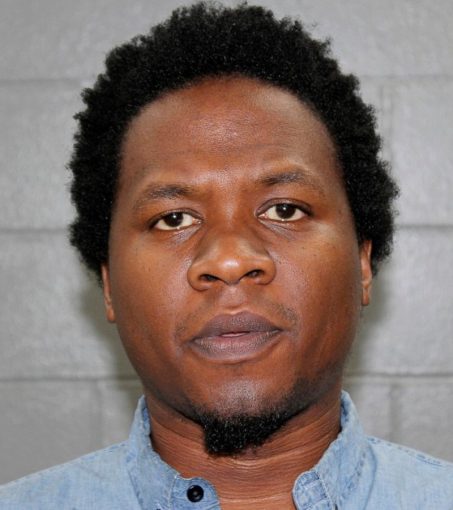
The Worst Journalist, Ever

Juan Maurice Thompson

You probably never heard of Juan M. Thompson, because I hadn’t either until Andy Ngo called attention to his case, which has somehow been forgotten by most of the media, but in 2016 and 2017, Thompson made national news — not in a good way. A St. Louis native from a bad neighborhood, Thompson won a scholarship to Vassar College, once an all-women’s school, but dropped out before graduating. He had worked a couple of internships before somehow talking himself into a job at The Intercept in late 2014. Barely a year later, Thompson was fired:

In February 2016, the [Intercept] appended lengthy corrections to five stories by reporter Juan M. Thompson and retracted a sixth, about Charleston church shooter Dylann Roof, written over the previous year, focused on the African-American community. Shortly afterward, a note from editor Betsy Reed indicated that Thompson had been fired recently after his editors discovered “a pattern of deception” in his reporting. According to Reed, he had “fabricated several quotes in his stories and created fake email accounts that he used to impersonate people, one of which was a Gmail account in my name”.
Reed apologized to readers and to those misquoted. She noted that some of Thompson’s work, most of it using public sources, was verifiable. Editors alerted any downstream users of the affected stories, and promised to take similar action if further fabrication came to light.
Thompson suggested that the greater problem was racism in the media field.

Yeah, sure — “the greater problem was racism.” There has never been an answer to the question of how Thompson talked himself into that job, for which he clearly was not qualified. Notice that his problem was basic reporting — picking up the phone, calling sources, taking notes, etc. — and he attempted to conceal his failure by literally making up quotes from people, including fake “sources” he invented. This would be a firing offense in any case, but Thompson’s fakery involved at least one bogus “exclusive” that got picked up nationally:
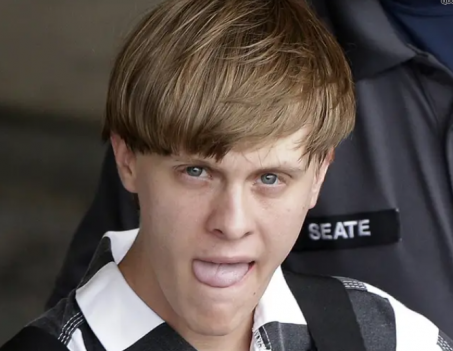
Mass murderer Dylann Roof

A June 2015 report by The Intercept which alleged Dylann Roof was dumped by a girlfriend for a black man years before he killed nine people in a black church in Charleston, South Carolina, was fabricated, the website said Tuesday [February 2, 2016].
In a post titled “A Note To Readers,” Intercept Editor-in-Chief Betsy Reed wrote that staff had “recently discovered a pattern of deceptions in the actions” of reporter Juan Thompson. . . .
The website on Tuesday retracted Thompson’s story on Roof and issued corrections on four other stories.
In his June 18 story on Roof, Thompson claimed he spoke by phone with the shooter’s cousin, “Scott Roof.” Two members of Roof’s family have since told The Intercept they do not know such a person.
Thompson’s story attributed quotes to “Scott Roof” about Dylann once dating a girl who left him for a black man. “He kind of went over the edge when a girl he liked starting dating a black guy two years back,” the quotes read. “Dylann liked her…The black guy got her. He changed. I don’t know if we would be here if not.”

No such person as “Scott Roof” existed, and yet this June 2015 story got picked up in all kinds of media (including the UK Daily Mail) and was not retracted until more than seven months later. You might compare Juan Thompson’s fabrication to the similar scandal of Jayson Blair at the New York Times, except that Blair’s fakery did not involve anything as egregious as Dylann Roof’s infamous slaughter, which killed nine people in a Charleston church. For more than half a year, it seems, nobody bothered to fact-check the hoax Thompson perpetrated at the Intercept, but once they did, they discovered he’d faked practically every story he wrote for them. As awful as this was, however, it was not even the worst thing Thompson did. He literally became a terrorist:

Juan Thompson, a former reporter for The Intercept who was fired after it was revealed he fabricated stories, has been arrested for allegedly making bomb threats against Jewish Centers as well as the Anti-Defamation League, according to authorities. The news comes on the heels of a rash of threats and attacks directed at Jewish communities in the U.S.
According to a federal complaint, Thompson, 31, made more than a half-dozen bomb threats against Jewish schools and community centers both in his name and that of an ex-girlfriend, apparently to intimidate her. …
The DOJ issued a press release on the arrest that states, “Today, we have charged Juan Thompson with allegedly stalking a former romantic interest by, among other things, making bomb threats in her name to Jewish Community Centers and to the Anti-Defamation League.”

That was May 2017. I don’t know whether to say it’s ironic or merely predictable that the ex-girlfriend targeted by Thompson in this bizarre scheme was white. In December 2017, Thompson was sentenced to federal prison. A couple of months later, Associated Press reported:

Nearly two dozen times, Francesca Rossi called law enforcement to complain that an ex-boyfriend was harassing her online, posting nude images of her, sending notes to her bosses that she had a sexually transmitted disease and making it appear she was running guns and trafficking in child pornography.
But they couldn’t make it stop and couldn’t even make an arrest for almost a year, until the man set off a national panic by posing as Rossi to make bomb threats against Jewish centers across the country. That turned it into a major federal case that ended with her tormentor, Juan Thompson, arrested within days and eventually sentenced to five years in prison.
Rossi spoke to The Associated Press in her first interview since the criminal case ended in December.
“It went on for months. I thought I was going to die and no one could help me,” Rossi said. “In the end, the only way that my abuse was legitimized is because he went after such a large community of people, and because there was so much hysteria over it.” …
Legal and policing experts say her experience is an extreme example of how law enforcement is ill-equipped to handle the growing threat of online crime, even though laws have recently been passed in 38 states addressing cyberstalking and revenge porn. …
Part of the complexity in the Thompson case, for example, was that Thompson used 25 different devices that allowed him to mask his identity. …
Rossi told the AP that she met Thompson through an online dating site in late 2014. He worked as a journalist with The Intercept; she as a social worker. They bonded over their commitment to reform. And for a while, their relationship was great. …

(Permit me to interrupt and repeat what I’ve said so often before, namely that online dating is for losers. The very fact that someone is using a dating app can be construed as evidence that nobody they actually know in real life is willing to date them. But let’s return to Francesca Rossi and her not-entirely-surprising tale of woe.)

But by the spring of 2016, he’d moved into her Brooklyn apartment and trouble came with him. She started getting harassing texts from ex-boyfriends. The wife of another ex-boyfriend sued, saying she’d given him a sexually transmitted disease, a lawsuit that turned out to be a hoax. Another posted a naked picture of her online.
Rossi panicked. She contacted Carrie Goldberg, a lawyer specializing in online harassment and she quickly figured out that only one man was behind the harassment: Thompson. He’d been posing as her exes for months. Rossi believes he was trying to make her feel bad so he could intimidate and control her.
“Juan was going through all of my stuff and I had no idea,” said the 33-year-old Rossi. “He somehow gained access. I never gave him access to any of my passwords. But he had everything on me. He had been reading my texts and my emails for at least a year.”
Rossi broke up with him, but then things got worse. …

(Breaking up with a psychopath is never easy.)

Thompson telephoned, emailed and texted her relentlessly, she said. Sometimes, he posed as others, terrorizing Rossi and her family, including her 92-year-old grandmother. He called and wrote her office. He used every major social media platform to trash her. He even posted her information on a website where men promote violence against women.
“Technology gave him utter access to me,” she said. “Every time my phone buzzed, I felt sick. I mean, I thought he was going to kill me. I felt like my life was over.”
But since she didn’t know his physical address, she couldn’t get a permanent restraining order. Police at her local precinct closed Rossi’s harassment case in October 2016. The FBI was still slowly looking into the case. . . .
Over 150 bomb threats were reported against Jewish community centers and day schools in 37 states and two Canadian provinces. It was national news. Authorities blamed most on an 18-year-old Israeli-American Jewish hacker arrested in Israel last March. But federal officials said Thompson made a dozen of the threats.
Thompson was arrested in his native St. Louis early last March [i.e., 2016]. By June, he’d pleaded guilty to making hoax threats and cyberstalking.

The harassment of his ex-girlfriend, which turned into a national terrorism investigation, was no doubt the most reprehensible of Thompson’s behavior. However, she was not his only victim. Doyle Murphy is editor-in-chief of the Riverfront Times in St. Louis:

In the days before Juan Thompson’s arrest [in March 2017] for his part in a string of bomb threats to Jewish Community Centers across the U.S., the St. Louis native seemed a little extra crazy, which is saying something.
This is a guy who took imaginary trips to Cuba and Senegal. He dubiously claimed he was with the Standing Rock protesters in North Dakota and that he’d bought a house in Detroit. He lied about the weirdest things. . . .
At the Riverfront Times, we published a cover story about Thompson last February. He was a north St. Louis native who was once a reporter with a job at The Intercept in New York City, a news site best-known for its cache of documents from national security leaker Edward Snowden. But Thompson had been fired after the site caught him making up details and sending bogus emails, including some masquerading as the site’s editor.
Thompson blamed racism and also claimed to have cancer. But we uncovered additional problems with his work, going all the way back to his college days with the student newspaper at Vassar College, a prestigious university in Poughkeepsie, New York. Thompson had overcome an impoverished background to attend college there, but failed to graduate. He still landed a few good media jobs — only to crash and burn when his sourcing didn’t check out.
After our cover story, we followed up later with a short account of his brief tenure for an online news site. I wrote the stories. Thompson was pissed. He emailed my boss and tried to get me fired. When that didn’t work, he emailed me.
“You are a white piece of shit who lies and distorts to fit a narrative,” he wrote me in October. “Thankfully no one reads you or the rft and you will spend the rest of your career aggregating stories about shootings.”
Things were quiet for a while after that, but then came the fake Twitter accounts. My wife and I were sitting on our couch one night when she tapped me on the elbow and showed me her phone. Someone had created a brand-new Twitter profile claiming I was a rapist. The person tweeted at her, my boss and other journalists around St. Louis. It was an insane — and, though it’s hard to believe I even have to say it — completely untrue accusation. …
We finally contacted the St. Louis police department’s cyber crimes unit. I still remember the detective stopping me before I could get the full explanation out.
“Does this have anything to do with Juan Thompson?” he asked.
I had not even said Thompson’s name yet. I didn’t want to accuse him prematurely, although the fake accounts and the penchant for revenge had me fully convinced it was him.
It turns out police were already investigating complaints Thompson had been harassing his ex-girlfriend in New York. They couldn’t tell me much about her case, but the pattern of weird cyberattacks was the same. I called one of Thompson’s old roommates, whom I had quoted in an earlier story. He too was under attack. Someone was sending anonymous messages to his employer and and graduate school, claiming he was a racist. …
All we could do was watch what Thompson was doing online, try to link it to the attacks on me and my family and brace ourselves for the next hit. …
If you believed his posts, he was jet-setting across the world. He was also railing against capitalism, white women, police, liberals, Trump and so many others.

This pattern of demonizing others, seeking scapegoats for one’s own personal failures, is certainly not limited to Juan Thompson. It’s characteristic of narcissistic personality disorders, and if you’ve ever had the unfortunate experience of dealing with such a person, you know what a nightmare it can be. Given the high-profile nature of Juan Thompson’s crimes, it’s weird that I had never heard of him until Andy Ngo mentioned him Friday. What’s even weirder is how this bizarre saga has completely disappeared, and is so rarely mentioned anymore. You’d think there would have been at least a Netflix documentary about this story.
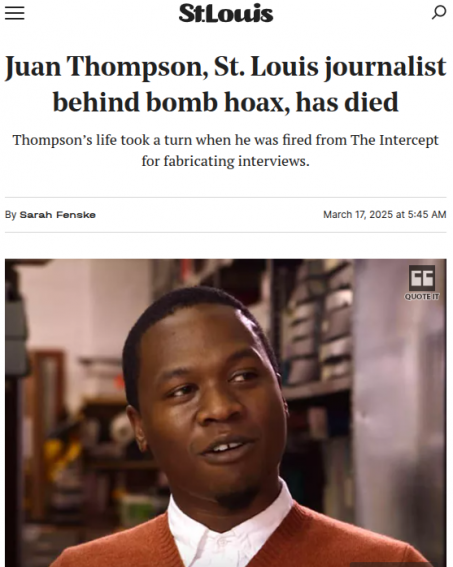
He’s dead now. Died of a drug overdose in September 2024, but his death went largely unnoticed for a while. His ex-girlfriend’s lawyer tweeted about it in late October 2024, but it was not until March 2025 that his death was reported in St. Louis Magazine by Sarah Fenske, who had formerly been Murphy’s boss at the Riverfront Times:

As the editor in chief of the Riverfront Times during its coverage of Thompson’s fabrication scandal and, a year later, his arrest, I had a front-row seat to some of the havoc he wreaked. I didn’t save the anonymous emails he sent me about Murphy, but I remember they were ugly. And even after Murphy figured out that it was probably Thompson who was falsely accusing him, and even after the St. Louis Police confirmed to Murphy that they were already looking at him for similar offenses, the attacks continued—through Twitter and through emails, to Murphy’s wife, to me. Thompson anonymously contacted other media outlets suggesting they should look into Murphy; I felt obligated to contact them proactively to explain that Murphy was not a perpetrator, but a victim of harassment.

Now that he’s dead, Juan Thompson can no longer harass anyone, and it’s safe to call him The Worst Journalist, Ever.

He certainly earned that dubious honorific.

UPDATE: Welcome, Instapundit readers! And yes, of course, “The worst journalist ever so far.” But at least for now, the late Mr. Thompson holds the title, like Babe Ruth waiting for Hank Aaron to come along.


Natives vs. Newcomers in Virginia: What ‘Spanberger’s Lobster’ Is Really About

Current Virginia congressional districts (click image to enlarge)

When I was a young newspaper staffer in Rome, Georgia, my boss was Pierre-Rene Noth. He was half-Jewish and half-Catholic. His father had been a left-wing journalist in France before the family fled the Nazis. Pierre was very liberal, but when it came to journalism, his motto was “local, local, local.” Realizing that news consumers turned to TV and other media for national news, his obsession was about focusing on local issues, and one of Pierre’s pet peeves was how the congressional map in Georgia at the time had Rome being represented in Congress by a guy from the Atlanta suburbs in Cobb County. Pierre believed that, if the map were properly drawn, the northwest corner of the state would be its own congressional district, with Rome in the middle of it. Pierre died a few years ago and did not live to see the fruition of his vision, although I can’t imagine he would have been pleased when the Rome-based 14th District elected Marjorie Taylor Greene to Congress. Anyway . . .

Pierre’s idea about properly drawn congressional maps was on my mind Sunday as I drove — via Winchester, Warrenton and Culpeper — to Louisa, Virginia, to cover the “Vote No” rally. That route took me through some of the most scenic country I’d ever laid eyes on, and the beauty of the place just made me more angry that Abigail Spanberger wants to deprive the people who live there of their rightful representation.

As you can see from the map above, the current district map of Virginia is a masterpiece of simplicity. The two basic principles of a good map are that districts should be (a) coherent and (b) compact. By “coherent,” I mean that the geography of a district ought to make some kind of sense; counties shouldn’t be split up unnecessarily and districts ought not to cross mountain ranges or major rivers if such distortions can be avoided. By “compact,” I mean that a district ought not to go sprawling over the countryside for no reason. The shape of the district should not resemble a lizard or a crustacean. In both of these regards, it’s hard to find any fault with the current Virginia congressional maps. You’ll notice that two small districts — the 8th and the 11th — are crammed up next to the Potomac River across from D.C., representing the urbanized precincts of Alexandria, Arlington and Fairfax. The 10th District encompasses the rapidly growing area around Dulles International Airport, as well as Fauquier, Prince William and Rappahanock counties. Most admirable is how the northern end of the Shenandoah Valley, stretching from Roanoake up toward the West Virginia panhandle, is all encompassed in the Sixth District, while the southwest corner of the state — coal country down there — is represented as District 9. This is a near-perfect map, and you see that District 5 is both coherent and compact, covering central Virginia down to the North Carolina border. Now look at this:

That monstrosity is what the 5th District of Virginia would look like if this redistricting referendum passes next Tuesday. You could consult a thesaurus for the right words to describe it — abomination, etc. — but you certainly can’t call it compact or coherent. If you’re a Republican voter, it’s the Creature That Ate Your Representation.

Did I mention that Spanberger is from New Jersey? Her family moved to Virginia when she was 13, and she has hated it ever since. Being in Congress — she won her seat by a slender margin in 2018, a high-tide year for Democrats — was a way for Spanberger to inflict revenge on the Virginia natives she has always despised. And this is the factor you have to realize about Virginia politics: In the D.C. suburbs, almost none of the residents are actually from Virginia. They’re all from somewhere else originally, and often quite recent transplants. They are ambition-fueled careerists with no real roots in the community. Virginia has been positively overrun by these newcomers in recent decades. The population of the Commonwealth has increased by almost 2.5 million since 1990, and the bulk of those are crammed into Northern Virginia, living in townhouses, condominiums, apartments and cookie-cutter subdivisions of “McMansions” built on quarter-acre lots.

Get out into the countryside, however, and you meet the real Virginians. That’s who turned out at the Louisa County Courthouse on Sunday. Folks in that part of Virginia can not only tell you what regiment their Confederate great-grandfather fought with, they can tell you which regiment his great-grandfather served in under General Washington. These people have actual roots, some of them all the way back to Jamestown, and the Democrats absolutely hate these real Virginians.

Well, that’s why I drove all the way to Louisa:

Roadsides in this part of the Old Dominion are festooned with signs: “VOTE NO APRIL 21.” From here to Winchester, a distance of more than 100 miles, scarcely any signs could be seen expressing support for the Democrat-backed referendum that would redistrict Virginia’s congressional delegation and effectively silence the voices of those who dwell in the rural parts of the Commonwealth. But those voices were heard loudly Sunday afternoon on the lawn of the county courthouse here.
“What are you going to do?” Republican Rep. John McGuire asked the crowd.
“Vote no!” the hundred or so attendees shouted.
“I think you can do better than that,” the fifth district’s congressman said. “What are you going to do?”
“Vote no!” they yelled in reply.
Early voting has been going on for weeks, and when those at the courthouse rally were asked for a show of hands of who had already voted, nearly every hand was raised. With barely more than a week to go before April 21, however, the question is whether their votes — and those of Republican voters elsewhere in Virginia — will be enough to prevent passage of the partisan gerrymander that newly-installed Gov. Abigail Spanberger and the Democrat-controlled legislature would impose. . . .

You can read the rest of my latest American Spectator column.


‘Independent Journalist,’ My Ass!

Joe Biden (left) with Democrat activist Christopher Hale (right)

The tax-exempt 501(c)3 organization Catholics in Alliance for the Common Good (CACG) was founded in 2005 by two Democrats, Tom Perriello and Alexia Kelley. CACG “received at least $450,000 in financial support from the massive George Soros philanthropy network from 2006-2010.” A memo that leaked in 2016 credited CACG with shaping President Obama’s 2009 speech at Notre Dame university in which he sought to “reframe” the debate about abortion. Kevin Jones of Catholic News Agency reported in October 2016:

[T]he site Wikileaks has posted alleged 2012 emails involving Hillary Clinton campaign chief John Podesta, who appears to state that Catholics in Alliance was founded to aid a “Catholic Spring” political revolution within the Church.
Christopher Hale, who became Catholics in Alliance’s executive director in late 2013, distanced himself from accusations he and his colleagues aimed to split the Church.
“We don’t concern ourselves with the internal politics of the Catholic Church,” Hale told CNA Oct. 17.

Four years later, in 2020, when Christopher Hale ran for Congress in Tennessee, his tenure with CACG became controversial:

The former executive director of a progressive Catholic political advocacy organization, who is now vying for a Congressional seat in Tennessee, has denied a former board member?s allegations that he defrauded the organization and eventually left it bankrupt.
“I’m speaking publicly now, with very little interest in scoring points. I’m simply here to speak on the record, to establish a fact pattern, to help explain to the public the disappointing experience I have had with Chris Hale,” said James Salt, a former board member of Catholics in Alliance for the Common Good, in a livestream announcement Aug. 3. . . .
Hale is running in the Democratic primary in Tennessee’s 4th Congressional District. His opponent in that race, Noelle Bivens, hosted a livestreamed event with Salt on Monday evening, after local media reported that Hale is accused of misusing email lists from his former employer to fundraise for his own benefit.
Salt said the political advocacy group, which aimed to advance Democratic candidates and policy initiatives by appealing to Catholics, was financially and legally harmed by Hale’s leadership of the organization.
“My job is simply to be on the record saying he did a great disservice to everyone who has worked with him.”
After Hale was hired as executive director of Catholics in Alliance for the Common Good in 2013, Salt said, “we began to see a pattern of Chris obfuscating and avoiding any kind of accountability.”
Eventually, Salt said, Hale lied about filing financial records, and once told colleagues he was having surgery, which was apparently not true, in order to excuse missed work.
Hale was fired from the group in 2017, Salt said, and the group was dissolved. Hale disputed that he was fired, saying he left on good terms with the board, because he was ready to “move on and have different adventures in life.”
He is accused of leaving with the organization’s mailing and email donor lists, and using them after he was fired to fundraise for an initiative he started later that year, called The Francis Project.
According to documents obtained by the Murfreesboro Voice, Hale was asked repeatedly to stop using those lists for fundraising, but continued to do so as late as December 2019.
In a Jan. 24 letter to Washington, D.C’s attorney general, Lawyers for Catholics in Alliance for the Common Good, and the related Catholics United organization, said that The Francis Project was not actually a non-profit, but was instead a trade name connected to a Washington, DC for-profit corporation incorporated by Hale, and registered as “Christopher Hale.”

Are you with me so far? There can be no doubt that (a) Christopher Hale is a member of the Democratic Party who was (b) associated with a left-wing group that got hundreds of thousands of dollars from the Soros network, but (c) was accused of unscrupulous dealings after he left that organization and ran for Congress as a Democrat in 2020. Hale won the Democratic primary that year, but lost the general election by a 33-point margin to incumbent Republican Rep. Scott DesJarlais.

All of this is preamble to a weird story this week:

The Pentagon and White House are refuting reports that high-level U.S. defense officials told Pope Leo XIV and the Vatican to take the United States’ “side” when it comes to matters of military influence and Western Hemisphere oversight.
Allegations stem from interactions that originated in January, according to the Free Press, which reported that Undersecretary of Defense Elbridge Colby allegedly summoned Cardinal Christophe Pierre, the Vatican’s ambassador to Washington, D.C., to deliver a “bitter lecture” during a closed?door meeting characterized as tense.
Colby purportedly told Pierre that “the United States has the military power to do whatever it wants in the world,” adding: “The Catholic Church had better take its side.”
On Wednesday, independent journalist Christopher Hale on his Letters From Leo webpage confirmed that the meeting took place, adding “that some Vatican officials were so alarmed by the Pentagon’s tactics that they shelved plans for Pope Leo XIV to visit the United States later this year.” The pope, 70, who hails from Chicago, was expected to come to the U.S. this July as part of the nation’s 250th anniversary celebration.
“The Free Press’ characterization of the meeting is highly exaggerated and distorted,” a U.S. Department of Defense spokesperson told Military.com on Thursday. “The meeting between Pentagon and Vatican officials was a respectful and reasonable discussion. We have nothing but the highest regard and welcome continued dialogue with the Holy See.” . . .
Officials in the Vatican saw the official’s purported remarks as referencing an Avignon papacy, viewed as a threat to use military force against the Holy See.

This story is just wild beyond words, but what infuriated me was the reference to “independent journalist Christopher Hale,” when anyone could have done a Google search and learned what I have told you about Hale, that he is a Democratic Party operative, with a shady reputation and no credentials whatsoever as a “journalist.” Furthermore — and I should hope my Catholic friends see this as I do — what are we to make of the fact that George Soros has expended vast amounts of money to influence (or perhaps a better verb is subvert) the Catholic Church?

Being a Protestant myself, I don’t take orders from the Vatican, but we live in a world where everything has become political, and this story (which the Pentagon has basically called a pile of bovine excrement) is just another example of how the left-wing billionaire Soros poisons everything he touches. Everyone needs to wake up and pay attention.


‘Thou Shalt Not Bear False Witness Against Thy Neighbour’ (Exodus 12:16)

Not every day I quote the King James Bible in a headline, but it seems that some people don’t understand why the Ninth Commandment is so important that God felt the need to include it in the Top Ten.

Making false accusations is both a sin and a crime, and it can also be a tort — libel or slander — although as a society we have allowed this sin to go unpunished so often that some people think they can get away with it. If you’re wondering about the mug shot at the top of this post, she once broke the Ninth Commandment without suffering any consequences, but then she later broke another commandment, and was sent to prison.

She walked out of the North Carolina Correctional Institution for Women last month, having served her time. When I saw the news of her release, I checked the calendar and discovered that tomorrow, March 13, is the 20th anniversary of a notorious event in North Carolina:

March 13, 2006, was a Monday night, and one might suppose that the Allure Escort Service in Durham, North Carolina, would have had many adult entertainers available for the occasion. For some reason that was never adequately explained, however, while the lacrosse team captains had reportedly requested white strippers, the two performers sent to 610 North Buchanan Boulevard were a 31-year-old mixed-race woman, Kim Roberts (half-black, half-Korean), and Ms. Mangum, a black woman who was then 27. This contributed a racial aspect to the subsequent controversy that had a magnetic effect in attracting national media attention. . . .

You can read the rest of my latest column at The American Spectator.


An Odd Sequel to the Bubba/‘Brittni’ Saga

The late Fred ‘Bubba’ Copeland (left) as ‘Brittni Summerlin’ (right)

It’s been more than two years and most readers have probably forgotten the disturbing story of the late Fred “Bubba” Copeland:

Copeland was the mayor of Smiths Station, a town of less than 7,000 people in Lee County, Alabama. He was also a freakazoid, secretly pursuing transgender fantasies that he posted online using a persona he called “Brittini Blaire Summerlin.”

Habitually working in “file-it-and-forget-it” mode, the tragic tale of Bubba/“Brittini” hadn’t crossed my mind recently, but then Glenn Reynolds called attention to a campus controversy:

The TPUSA chapter at the University of Montevallo rescheduled the mid-February “Change My Mind”-style event after administrators postponed the original date, citing safety concerns.
Now scheduled for March 5, it will still feature conservative commentator and 1819 News founder Bryan Dawson and be a “pick up the mic” format encouraging open debate, according to TPUSA Montevallo’s Instagram page.
“Montevallo caved to the liberal mob on campus who staged a walkout as a protest for the university allowing me to speak,” Dawson posted on his Facebook page. “Montevallo cancelled the TPUSA event citing this and security concerns due to death threats towards me.”
Dawson’s planned appearance had prompted a walkout by several dozen students earlier in the month who said they felt unsafe with the speaker selection, citing his criminal past, the Vallo Vision News reported.

You might not be able to add the 2+2 connection there, so I will give you further information from the Montevallo student newspaper:

Organizers say they consider the [walkout] a success, with 20 to 30 students taking part.
Dawson is president and CEO of conservative news outlet 1819 [News], and student protesters are upset with his invitation to campus. . . .
Protest organizers, who asked to be identified only as A.O. and J.S., believe this decision will only bring harm to their already hurting university. A.O. says if they were an incoming freshman on a campus tour and “someone with that background was sitting in front of a place, one of two places to eat on campus, I probably wouldn’t have ended up here.”
“That background” referring to Dawson’s felony filled background of cocaine trafficking, serial car theft, attempted murder and the releasing of information that led to the suicide of Alabama mayor and pastor Fred “Bubba” Copeland.

A-ha! So now we know what it’s really about: The students regard Dawson as persona non grata because it was his site that exposed Bubba/“Brittini,” who committed suicide a few days after the first story about the mayor’s freakazoid life was published by 1819 News.

Let me now remind you, however, that in his/“her” online persona, Bubba/“Brittini” appears to have harmed real people that he/“she” knew in real life, using their names and photos:

Ansley Summerlin, who alleged Copeland used her identity, told WTVM her name and likeness appeared on multiple porn sites.
“I had some people start sending me photos that were posted of me on multiple porn sites, I guess you could say that also had pictures of ‘Brittini,’ as well,” she said. “And he proceeded to use my first and middle names on these sites. And I believe there are about nine sites now that have five or six photos of my face and my name across the net.”
The second alleged victim, identified as a “local hairstylist in Smiths Station,” also discussed her likeness being used in Copeland’s writings.
“It said my first and last name,” she said. “And it was basically describing the way that I look and intensified, I guess, as a porn star. And it went into very graphic detail. I didn’t get past the first page because I honestly couldn’t stomach it.”

Take my word for it when I tell you that this was arguably not even the worst thing that Bubba/“Brittini” did in his/“her” online fantasy persona. You can browse through the archives at 1819 News if you’re curious, or just trust me when I say that it was very, very bad.

Because of my file-it-and-forget-it habit, I hadn’t followed up on the story — like, the guy’s dead, what else is there to report? — which is why I didn’t realize that a tear-jerker sob story about Bubba/“Brittini” was published by a swanky magazine and it won a Pulitzer Prize!

The article in question omitted the most sordid aspects of what Bubba/“Brittini” did online — and I repeat, this was very, very bad stuff — and instead tried to paint the small-town mayor as a sympathetic figure victimized by an EVIL RIGHT-WING WEBSITE!

While ethical arguments about how 1819 News handled the story are worthy of discussion, I would like to point out that Taylor Lorenz has “doxxed” people who were a lot more innocent than Bubba Copeland.

The protest against Bryan Dawson was, in fact, an attempt to punish and silence 1819 News for publishing the truth about Bubba/“Brittini,” but the students also mentioned Dawson’s criminal record.

In 2007, when he was 22 years old, Bryan Dawson was a serious drug dealer in Colorado. If you know anything at all about drug dealers, you know that “serious” means capable of deadly violence. He very nearly killed a guy he suspected of being a snitch, and could have been sentenced to hundreds of years in prison. A plea bargain got him a 16-year sentence, and while in prison, Dawson became a Christian. He was later released to a halfway house:

After graduating from the program, he was able to transfer his parole to Alabama, where his wife was living.
A friend of Dawson’s helped him get an affiliate relations manager job with USA Radio Networks, which syndicated several big-name talk show hosts such as Steve Deace. Dawson helped market the network’s news segments to stations across the country.
“I was the new guy. I didn’t know the rules, and so you know, I was told that this would never work when I originally pitched it to the team, but I thought it would, and it did,” Dawson said.
His success led him to work for Lee Habeeb on expanding “Our American Stories,” which gave Dawson the experience and skills he would soon use to help launch 1819 News.
Dawson said after the 2020 election, he turned his focus away from national news to the local level. That’s when Caleb Crosby with the Alabama Policy Institute called him about starting a state-focused radio show.

This is an amazing story, and one that Dawson has told at length — his testimony on the saving power of Christ. Which may explain a couple of things. First, why did 1819 News make the decision to publish that story about Bubba/“Brittini”? It may have something to do with the fact that Bubba Copeland was a “wolf in sheep’s clothing,” pastoring a Baptist church while engaging in heinous online behavior in his “Brittni Summerlin” persona. But surely Dawson would not have expected Copeland’s suicide, because how was Copeland’s situation worse than what Dawson himself had faced when he was sent to prison?

Christians are supposed to be courageous, able to withstand the worst through faith in Jesus, emulating the Savior who was willing to suffer death for our sake. However unfair we may consider our own suffering to be, it cannot be worse than what Jesus suffered. We ought never complain when we are chastised, because our sins give us no room to say our suffering is unjust. If we have any blessings in our life, how much more grateful to God should we be, knowing how unworthy we are?

How does God choose His servants? Those of us of Calvinist leanings ponder Romans 8:28-31, and then look at such an example as Bryan Dawson — plucked out of a prison cell and raised up for a duty that he surely never contemplated during his outlaw career in Colorado. If it pleased God to have such a servant, who are we to object, so long as Bryan is faithful to his calling and does the Lord’s work?

The decision to publish the Bubba/“Brittini” story must be considered in this light. What would I do if such a bombshell story just landed in my lap? How could any editor say no to such a story? Bryan Dawson has been widely condemned for that decision, but has repeatedly pointed out that his critics aren’t willing to reckon with the worst aspects of what Bubba Copeland did. Esquire magazine won a Pulitzer for soft-peddling the heinous nature of what Copeland was doing online, and where are the awards for the guys at 1819 News, including reporter Craig Monger, who broke the original story? Talk about an injustice . . .

Anyway, the students at the University of Montevallo who protested against Bryan Dawson’s appearance are idiots and cowards, and I’m glad they’ve failed to prevent him from speaking on campus.


‘He Was Mr. BLM’

Big hat-tip to Luke Rosiak of the Daily Wire for calling attention to a story I missed last year. Probably gonna write more about this later on my Substack, but it’s a big enough story I can give you the gist of it here and still have plenty left to chew on over there. Ten years ago, Wesley Lowery was basically the poster boy for diversity in journalism.

In college, Lowery did internships at the Detroit News, the Columbus Dispatch, and the Wall Street Journal, then hired on at the Boston Globe in 2013, when he was 23. A year later, he was hired at the Washington Post, which had just brought in ex-Globe editor Marty Baron as their new top editor. Not long after Lowery joined the Post, he was sent to Ferguson, Missouri, to cover the 2014 race riots there. Talk about a career being “fast-tracked,” Lowery was moving at hyper-speed — front-page bylines in the Washington Post at age 24? Bob Woodward didn’t even join the Post until he was 27. Lowery’s star soared even higher the next year when he was made the lead reporter on the Post’s “Fatal Force” project, which compiled a database of police shootings (and other fatalities) nationwide, a project awarded the Pulitzer Prize in 2016.

There were book deals, etc., and a job with CBS News before, in 2023, Lowery became a faculty member at American University, executive editor of the university’s Investigative Journalism Workshop (IJW).

Behind all this success, however, it appears that Lowery had a drinking problem and also a woman problem — the two problems were not unrelated — and while womanizing drunks have never been rare in the world of journalism, you can’t do that if you’re a university professor, because Title IX essentially criminalizes male heterosexual behavior:

Wesley J. Lowery, a Pulitzer-winning investigative reporter and one of the most influential journalists of his generation, has left his positions as the executive editor of the Investigative Reporting Workshop and as an associate professor of journalism at American University in Washington, DC, after less than two years there. His departure follows a number of complaints against him, according to former colleagues, including at least three Title IX allegations, in which he was accused of improper behavior with colleagues and female students.

That was March 2025, and Lowery’s getting axed from his university gig wasn’t the end of the story. In the post-“Me Too” environment, it was necessary not merely to get Lowery fired from his job, but to drive a stake through the heart of his career, to ensure that he was permanently excluded from journalism forever. Two months after Lowery’s exit from American University, the Columbia Journalism Review published a lengthy account of his habitual lechery. One of the CJR’s sources was Imani Moise, a Wall Street Journal reporter who knew Lowery through the National Association of Black Journalists:

At the time of these encounters — which spanned from 2018 to 2024, when he had reached the height of his media stardom — each of these women viewed Lowery as a professional contact, someone they knew socially and looked up to, not as a romantic partner with whom they were engaging in consensual sex. Until now, some had feared making noise about Lowery, beyond telling a few confidants. “He was the golden boy, held up on this pedestal,” Moise said. She deeply felt his importance to journalism, to American culture, to so much. “He was Mr. BLM.”

Almost like a metaphor or something.


Thoughts From a ‘Heritage American’

Grave of John Pelham in Jacksonville, Alabama

Perhaps you’re not on X (formerly known as Twitter) and therefore have been spared the quarrel over “Heritage Americans.” Don’t know who coined that term or in what context it originated, but it seems to be a critique of the “proposition nation” ideology that George Will did so much to promote. Far be it from me to embrace or endorse a crypto-Nazi “blood and soil” ideology — the polar opposite of “proposition nation” — but the problem is that we are (or should be) talking about public policy.

In the long-running battle between neocons and paleocons, my sympathies are decidedly paleo (cf., “First They Came for Mel Bradford”). However, the really important battle is to keep Democrats from getting back in power and ruining everything while we are quarreling amongst ourselves, hurling insults back and forth. The whole intramural donnybrook between Tucker Carlson, Ben Shapiro, et al., pains me for this reason. We are less than a year away from a crucial midterm election, with the historical odds against us, and should be united, not divided.

As I have said, it is public policy we should be discussing, especially in regard to immigration. President Trump has done a remarkable job in halting and even reversing the flood of illegal invaders that Joe Biden and the Democrats unleashed, and our task now is to ensure that this policy is continued, which cannot happen if Democrats win the next midterms. These thoughts are related to what I have to say in my latest American Spectator column:

About 20 years ago, I received an email from a young man congratulating me on my good fortune in being hate-listed by the Southern Poverty Law Center. It is not pleasant to think back to what was then a rather dark moment in my life. At the time, the SPLC had not yet completely discredited itself by its wild accusations of “extremism” against just about anyone to the right of Chuck Schumer, and surviving their attack was not quite as easy for me as some might nowadays suppose.
My great sin — the Thought Crime for which the SPLC arraigned me — was to be a Southerner who was not ashamed of my ancestors, and to dare speak in defense of my beloved homeland. When I attended Jacksonville (Alabama) State University, I learned that the highway which bisects the campus was named for the most famous native of that region. Pelham Road memorializes Confederate artillery officer John Pelham, who gained fame as commander of J.E.B. Stuart’s “horse artillery.” During the Battle of Fredericksburg, Virginia, in December 1862, Stuart, with two guns, held up the advance of an entire Union division for more than an hour, a feat witnessed by Gen. Robert E. Lee, who praised Pelham’s “unflinching courage.” Three months later, when the young major was killed in the Battle of Kelly’s Ford, Lee mourned the loss of “the gallant Pelham.” He was posthumously promoted to lieutenant colonel and buried in the city cemetery in Jacksonville, a site I have visited, contemplating the life of that young hero who died at age 24. . . .

Please read the whole thing. Deo vindice.


Shop Electronics at Amazon

Save on Groceries and Everyday Essentials

Shop Amazon Basics

Office & School Supplies

They’ve Forgotten How Bad It Could Be

Why did people vote for Zohran Mamdani? It’s as if the people of Gotham City elected the Joker as mayor — a nihilistic appetite for destruction as the motivation of a political movement. If one were in a generous mood, it might be stipulated that Mamdani’s votes came largely from younger voters, who can be forgiven for not knowing how bad life was in New York City during the mayoralty of David Dinkins (1990-1993), the previous rock-bottom of misgovernance in Manhattan.

Permitting ignorance as an excuse for error, however, relieves citizens of their duty to inform themselves before making their choices at the ballot box, and that is a formula for irresponsibility. There was a time when no one avowing themselves to be a socialist could have gotten elected to any position of influence in this country, because Americans viewed socialism for what it is — an immoral philosophy, the justification of theft on a grand scale — and we had seen enough of its failures to know that whatever your problem is, socialism is not the solution.

Yet the voters of New York City have made their choice, and now we get to watch them learn their lesson:

Last week, New York City’s mayor-elect Zohran Mamdani announced that he would end his predecessor’s policy of clearing homeless encampments in the city. On social media, this announcement was greeted by strong language which would not bear repeating here, but reminded me of H.L. Mencken’s timeless aphorism: “Democracy is the theory that the common people know what they want, and deserve to get it good and hard.”
Never has anyone more deserved this kind of democracy, gooder and harder than do the voters of New York City. Life in the city is already very bad — it’s been a steady downhill slide since Rudy Giuliani left the mayor’s office in December 2001 — but the decline has accelerated in recent years, and many observers are interpreting Mamdani’s election as the omen of an impending apocalypse. Maybe the best explanation of what’s gone wrong in the Big Apple is simply hubris. Figuring that their city has somehow managed to survive the blunderings of Mike Bloomberg, Bill de Blasio, and Eric Adams, perhaps New York voters looked at Mamdani’s avowed radicalism and thought, “Why not? How could it possibly get worse?” (Snake Plissken could not be reached for comment.) . . .

Read the rest of my latest column in The American Spectator.


Shop Electronics at Amazon

Save on Groceries and Everyday Essentials

Shop Amazon Basics

Office & School Supplies