Arguably the most exciting words in the history of music, the opening lyrics of “Tutti Frutti” announced the arrival of a bright-burning star who, in a period of two years, created the sound of rock-and-roll. You could say Chuck Berry and Elvis Presley had a larger influence, but nobody was ever more exciting than Little Richard. His falsetto whoops and earthy blues vocal style, combined with his boogie-woogie piano, highlighted a unique blend of talents by a sensational showman.
Beginning with “Tutti Frutti,” Richard Wayne Penniman rattled off a string of hits: “Long Tall Sally,” “Slippin’ and Slidin,” “Rip It Up,” “Ready Teddy,” “The Girl Can’t Help It,” “Lucille,” and “Jenny, Jenny,” among others. The Beatles famously covered “Long Tall Sally” as well as Little Richard’s version of “Kansas City,” and in the 1970s, I remember Johnny and Edgar Winter including “Slippin’ and Slidin” in their rock-and-roll medley. Nobody quite personified rock-and-roll as a wild and dangerous sound quite the way Little Richard did, with the sexual innuendo of his lyrics, his pompadour hairstyle and those crazy leering eyes.
Glenn Reynolds continues piling up the obscure Steely Dan references, and spotting them is becoming easy: If you see any phrase on Instapundit that doesn’t make sense, Google it, because it’s probably a Steely Dan reference. As for example when, in reference to Joe Biden’s doomed campaign, he drops in a lyric from “Kid Charlemagne”:
You are obsolete. Look at all the white men on the street!
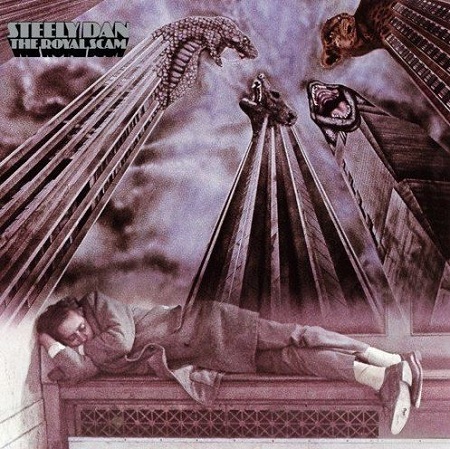
The professor is educating us here because, even though I vaguely remember “Kid Charlemagne,” a minor hit (#82 on the Billboard chart in 1976) from their fifth album, The Royal Scam, I’d never paid any attention to the lyrics, and had no idea what the song was about. Turns out it’s the story of the downfall of legendary LSD maker Owsley Stanley.
On the hill the stuff was laced with kerosene But yours was kitchen clean. Everyone stopped to stare at your technicolor motor home.
That last line refers to the Merry Pranksters‘ bus, and you can see how, by the mid-1970s, that psychedelic hippie vibe was long gone:
Now your patrons have all left you in the red. Your low-rent friends are dead. This life can be very strange. All those Day-Glo freaks who used to paint the face They’ve joined the human race. Some things will never change.
Yes, we’ve all joined the human race, and some of us have even become Republicans. This life can be very strange, indeed.
This is an allusion to a Steely Dan song, “Reelin’ in the Years”:
You been tellin’ me you’re a genius Since you were seventeen. In all the time I’ve known you I still don’t know what you mean. The weekend at the college Didn’t turn out like you planned. The things that pass for knowledge I can’t understand.
Professor Reynolds and I are about the same age, so obviously I caught the reference, but some of you kids might have missed it. For your education, I’ll explain that Steely Dan was a group formed by keyboardist Donald Fagen and guitarist Walter Becker. Their hit singles included “Do It Again” and “Rikki Don’t Lose That Number.” Fagen and Becker met in 1967 as students at Bard College in Annandale-on-Hudson, New York, which is referenced in their 1973 hit, “My Old School”:
California tumbles into the sea — That’ll be the day I go back to Annandale.
The clever, tightly rhymed lyrics pair that with:
Tried to warn you about Chino and Daddy Gee, But I can’t seem to get to you through the U.S. Mail.
“Daddy Gee” is a reference to none other than G. Gordon Liddy, who was the Dutchess County prosecutor behind a drug raid on Fagen’s house his senior year at Bard. The charges against Fagen were dropped, but Liddy went on to notoriety as the mastermind of the Watergate burglary. And, subsequently, after his release from federal prison, Liddy became a conservative talk-radio host who frequently had me on as a guest.
Small world! How weird that I, a former teenage dopehead who spent a lot of his adolescence getting high and listening to Steely Dan, later became friends with the guy who busted them for dope back in the day.
Curiosity killed the cat, as they say, but in my case, habitual curiosity merely led to acquiring a vast hoard of trivia in my head. As a teenage dopehead, the allusions in Steely Dan’s lyrics were opaque and puzzling. “My Old School” was really an inside joke for Fagen and Becker, which only their friends at Bard College would understand. And it was not until decades later that curiosity led me to research the song’s background. I had mistakenly thought that the “Annandale” in the lyrics referred to a town in Fairfax County, Virginia. Why Virginia? Because the lyrics make reference to William and Mary, a Virginia college. Another obscure reference in the song is to the “Wolverine” train which, I discovered via Google, was a service of the New York Central line that ran through Annandale, making its last run in 1967, Fagen’s junior year at Bard.
I remember the 35 sweet goodbyes
When you put me on the Wolverine up to Annandale.
It was still September when your daddy was quite surprised
To find you with the working girls in the county jail.
I was smoking with the boys upstairs
When I heard about the whole affair.
I said, Oh, no, William and Mary won’t do.
Well, I did not think the girl could be so cruel.
And I’m never going back to my old school.
Students of poetry appreciate the cleverness of this, and there was always an aura of intellectualism around Steely Dan, as Fagen said in his memoir: “We were perceived as artists just by virtue of our wisenheimer personalities and transparent resentment of authority.”
Ah, so were we all, back in the day! If you were the type who aced your English exams with little to no studying — getting high all the time tends to reduce a teenager’s devotion to schoolwork — you probably were digging on Steely Dan circa 1974. And I suppose you don’t mind a 600-word digression inspired by a phrase on a blog.
In 2016, Donald Trump got 84% of the vote in Johnson County, Kentucky. And you may ask, “Why does this matter?” Because there’s a tiny community in Johnson County called Butcher Hollow, which is the birthplace of Loretta Lynn, the First Lady of Country Music. If you start looking up the hometowns of Grand Ole Opry legends, you’ll find that practically all of them come from places that voted for Trump, including Merle Haggard, who was born in Kern County, California, which went for Trump by a 13-point margin. The political geography of country music might tell us more about America than just about any other metric:
Dwight Yoakam had me in tears Sunday night. I was watching the new Ken Burns PBS documentary series about the history of country music, and Yoakam quoted a Merle Haggard song, “Holding Things Together,” which is about a man trying to raise his children after his wife has left the family. When Yoakam sang the verse about a heartbroken father attempting to comfort his daughter on her birthday, he choked up, and suddenly the tears were streaming from my eyes, too.
They just don’t write ’em like that anymore, not even in Nashville. Those old songs about hard times and broken hearts, crying in your beer over a cheating woman — you can literally feel the pain in the twanging voices and the whining steel guitars. And the men and women who sang those songs knew a thing or two about hard times, having come from backgrounds of poverty that few Americans in the 21st century can imagine.
Give credit to Burns for this: His eight-part series reminds us that what our contemporary progressives denounce as “white privilege” has never been universal in America, and it certainly didn’t typify the backgrounds of the folks who made Nashville famous as “Music City, U.S.A.” Haggard, for example, was born in Kern County, California, in 1937, the youngest of three children in a family that had left a farm in Oklahoma after their barn burned down. The Haggards were “Okies,” characters right out of a Steinbeck novel, at the bottom of the heap in one of the worst economic eras in American history. . . .
One thing I’ve tried to do with my kids is what I call “cultural education.” Like, there’s no reason children should grow up without an awareness of rock-and-roll classics, and I’ve had many rewarding experiences like the time I heard my youngest son, born in 2000, in the shower singing along to his Spotify rotation of Led Zeppelin. How cool is that?
A couple of days ago, I was driving my youngest daughter (born in 2002) to her summer internship and told her to look up “California Dreamin'” on her Spotify. Why was that song in my mind? Probably some headline I’d read about California’s recent descent into Third World chaos. It’s a forlorn bit of nostalgia to recall what California signified in the 1960s, before Democrats turned it into a socialist nightmare of typhus infections, homeless encampments and heroin needles. At any rate, the song had been stuck in my head and so I asked my 16-year-old daughter to play it on her phone — she’d never heard it before — and when it ended, I said, “That was Number One for the Mamas and Papas in 1966.”
My daughter is quite the chip off the old block, however, and she quickly Googled up the fact that “California Dreamin'” only made it to #4.
That seemed wrong, an injustice. From the first notes of the classical guitar intro to the sonic crescendo of the vocal harmony ending, “California Dreamin'” is a musical masterpiece, two-and-a-half minutes of pure genius in the key of A-minor. In 2004, when Rolling Stone published its list of “The 500 Greatest Songs of All Time,” this 1966 hit was #89 on the list and yet it never actually topped the charts? When I got home, I decided to explore this mystery further and, being rather obsessive about research, I dived in deep.
The Mamas and the Papas were formed in 1965 after the breakup of John Phillips’s first group, The Journeymen. Phillips, the son of a Marine Corps officer, had grown up in Alexandria, Virginia, attended a military school and won an appointment to the Naval Academy in Annapolis, but quit during his first year and then enrolled at Hampden-Sydney College before dropping out to pursue his musical career in New York City. Phillips became part of the folk-music scene in Greenwich Village, and The Journeymen landed a record contract in 1961, when Phillips was 25. (Click here to watch the group on the TV show Hootenanny in 1963.)
In 1962, while touring with The Journeymen, Phillips met a long-legged 17-year-old model in San Francisco. He divorced his first wife and married the model, Michelle Gilliam, but this new romance was one of the factors that contributed to the breakup of The Journeymen. The other factor was the arrival of The Beatles and the subsequent “British invasion,” which put an end to the folk-music scene. For a while, Phillips tried to keep going down the folk road, teaming up with Denny Doherty (from another Greenwich Village group, the Mugwumps) and Michelle to perform as The New Journeymen, but with little success. It was Doherty who suggested adding his former Mugwumps colleague and occasional girlfriend Cass Elliot (neé Ellen Cohen) to form a quartet. The new group’s name was inspired by the notorious Hell’s Angels motorcycle gang, who referred to their girlfriends as “Mamas.”
Meanwhile, there was a song inspired by Michelle Phillips’s first trip to New York in 1963. According to John Phillips, the couple went for a walk around the city “and all she had was California clothing . . . tennis shoes and . . . a tank top and jeans or something.” There was snow on the ground and Michelle was cold, so the couple went into a church to escape the weather and let her warm up for a few minutes. That night, in their Greenwich Village hotel room, Michelle was asleep while John was playing his guitar when the song began to take shape:
So I tried to wake Michelle up to write the lyrics down that I was doing. And she said, “Leave me alone. I want to sleep.”
He persisted until she did wake up, thus earning herself half the songwriting royalties of one of the greatest songs of the decade. The couple offered the song to folk singer Barry McGuire, who did them the favor of introducing them to Dunhill Records chief Lou Adler. The Mamas and the Papas performed background vocals on McGuire’s version of the song, but his gruff baritone didn’t give the record much energy. So what happened next is that, after Adler signed the Mamas and the Papas to their own contract, John Phillips took the master tape of the session, erased McGuire’s voice, and replaced it with him and Doherty singing the lead in duet. On the second verse (“Stopped into a church”), Doherty sings the solo lead in a strong bluesy tenor and then comes the song’s real magic moment. McGuire’s version of “California Dreamin'” had included a forgettable harmonica solo, but for the Mamas and the Papas version, Phillips brought in top studio pro Bud Shank, a veteran L.A. jazz musician. Shank listened to the track, improvised the alto flute solo, and “nailed it on the first take.” It was absolutely brilliant.
The success of “California Dreamin'” had an important influence on pop music in the 1960s, showing that the fusion of rock and folk — pioneered in 1965 by the Byrds — was a durable phenomenon. It helped establish the West Coast as the main scene for American rock music, solidified in 1967 when Jon Phillips organized the Monterrey Pop Festival, with a number of subsequently famous acts, including Jefferson Airplane, Jimi Hendrix and the Grateful Dead, performing in a show with the Mamas and the Papas as headliners. It’s possible that the subsequent careers of acts like the Eagles, Linda Ronstadt and Jackson Browne might never have happened had it not been for “California Dreamin’.”
OK, so why did it never make it to Number One?
When my daughter informed me that “California Dreamin'” peaked at #4 on the Billboard Hot 100, my assumption was that this was because the top three slots at the time must have been held by classic hits by major groups — the Beatles, the Rolling Stones, various Motown hitmakers. And indeed, after the song was first released in December 1965, the songs at the top of the chart included many such big hits by big names. For the week of Jan. 29, 1966, when the Mamas and the Papas were at #44, the Beatles had the #1 spot with “We Can Work It Out,” and upper reaches of the chart also included Smokey Robinson and the Miracles (“Going to a Go-Go,” #23), Stevie Wonder (“Uptight,” #21), the Rolling Stones (“As Tears Go By,” #6) and the Beach Boys (“Barbara Ann,” #2). But these weren’t the artists who ultimately froze “California Dreamin'” out of the top spot. Instead, on the week of March 12, when the Mamas and the Papas’ record peaked at #4, the song in the third-place spot was a wretched piece of drek by Herman’s Hermits. Why was this inspid tune, “Listen People,” at #3? Apparently because it was featured in a Connie Francis movie, When The Boys Meet The Girls.
Imagine that. You record one of the greatest records of the decade, but never get to Number One because of a stupid song from a crappy teen movie, a novelty tune by Frank Sinatra’s daughter, and a flag-waving tribute to militarism. “Vanity of vanities, all is vanity!”
So that was this week’s “cultural education” lesson. Kind of depressing, and the fate of the Mamas and the Papas makes it even sadder. The group broke up in part because Michelle Phillips cheated on her husband, first with Denny Doherty and then with Gene Clark of the Byrds. John Phillips became a heroin addict and, allegedly, raped his own daughter.
What’s perhaps weirdest of all about the Mamas and the Papas is that, whereas John Phillips was the leader of the group, Doherty sang lead on their first hit, and Michelle was movie-star beautiful, “Mama Cass” was the fan favorite, and the only member to have any musical success after the group broke up. The obese daughter of a Baltimore delicatessen owner, she had an IQ of 165 and had toured in a road company of The Music Man before becoming involved in the folk music scene.
All this, you see, from a song stuck in my head and a conversation with my teenage daughter. The car broke down today. Hit the freaking tip jar.
UPDATE: The comments immediately included objections to my statement that Cass Elliot’s death was “reportedly” from choking on a sandwich. As I said in reply to these comments, I linked to a contemporaneous Rolling Stone article that included this version, attributed to a “post-mortem” examination and a “coroner’s hearing.” This account was also part of the New York Times obituary: “According to The Associated Press, her physician said the singer probably choked on a sandwich.”
(Click to enlarge the image.) Yes, of course, I was aware that this has since been classified as an “urban legend,” although I have found only unsourced secondhand stories of how this legend allegedly got started: Supposedly, when they found Mama Cass’s body — she was in England, where she’d just played the London Palladium — there was a sandwich on the nightstand, and this led the coroner to jump to an erroneous conclusion that she had asphyxiated. Heart failure was apparently the actual cause of death, and it has been suggested that Elliot’s health had been impaired by her extreme diets in an effort to lose weight. She had been hospitalized a few months earlier after collapsing prior to a scheduled TV appearance. Certainly, it was not my intention to malign Cass Elliot — a talented performer I always admired — by repeating a disproven story. However, in point of fact, I am still not certain the death-by-choking story has been disproven, because I could not find online any well-sourced account explaining how the original (and supposedly discredited) report made it into the mainstream media before the truth was discovered. So I guess the bottom line here is the same as always: Never trust the New York Times.
Oh, and what I said about my car breaking down? Not an urban legend. Our ancient Nissan overheated on the interstate and I’ve now got a tow bill to worry about, not to mention whatever the repairs cost, so please remember the Five Most Important Words in the English Language:
My mind works in mysterious ways and I’ve forgotten why I started the research that led me down a rabbit hole into an obscure tale from Canadian musical history. In 1958, a singer named Allan Kowbel formed a band in Winnipeg originally called Allan and the Silvertones. By 1962, Kowbel had adopted the stage name “Chad Allan” and his band was called the Reflections. They recorded a few records, but with little commercial success. Then in 1965 a U.S. group called the Reflections had a hit, which caused the band from Winnipeg to change its name to Chad Allan and the Expressions. It was under this name that they recorded what was to be their only hit, a cover of a 1960 record by British rocker Johnny Kidd, “Shakin’ All Over.” But the reason you’ve never heard of Chad Allan and the Expressions is because their record company got an idea for a publicity stunt to promote the single. They sent out promotional copies labeled only “Guess Who?” a trick that caused some DJs to think this was actually the band’s name. And after some confusion, Chad Allan’s group officially adopted The Guess Who as their name.
A 1965 ad promoting “Shakin’ All Over” by “Guess Who?”
Unfortunately for Chad Allan and his newly renamed band, rock music was now progressing rapidly. By 1965, the Beatles were producing far more sophisticated music — “Help!” and “Day Tripper” and “Yesterday” — and while Allan’s sound might have been quite popular a year earlier, it was now becoming passé. Although “Shakin’ All Over” made it to No. 1 on the Canadian charts, it peaked at No. 22 in the U.S.
In 1966, Burton Cummings replaced Chad Allan as the lead singer for The Guess Who, who got a gig as house band on a weekly Canadian TV teen-music show, Let’s Go, that lasted two seasons. In 1969, the group had three Top Ten hits with “These Eyes,” “Laughing” and “No Time,” which was followed in 1970 by their all-time biggest hit, “American Woman,” which made it all the way to No. 1. This success was short-lived, however. Guitarist Randy Bachman developed health problems and Cummings developed an ego problem, and The Guess Who never recovered.
After he left the band, Bachman would later recall, he was labelled “a lunatic and a loser” and “nobody wanted to work with me,” except his old buddy Chad Allan, with whom he created a new group, Brave Belt, that recorded a couple of albums. Bachman recruited bassist/singer Fred Turner to join and, by the time their third album was released, Chad Allan was gone, and the band was now called Bachman-Turner Overdrive. Perhaps you’ve heard of them.
By 1974, Bachman-Turner Overdrive was No. 1 on the charts with “You Ain’t Seen Nothing Yet,” and also the Top 10 “Takin’ Care of Business.”
So, while you’ve probably never heard of Chad Allan, he somehow managed to be present at the creation of two groups — The Guess Who and Bachman-Turner Overdrive — that each later made it to No. 1 without him. Amazing the things you can learn on the Internet . . .
Sexual intercourse began
In nineteen sixty-three (which was rather late for me)
Between the end of the “Chatterley” ban
And the Beatles’ first LP.
The story of how that LP was recorded in a single 10-hour session is told in a fascinating article by Jordan Rutagh. The Beatles had already released two 45-rpm singles — “Love Me Do” and “Please Please Me” — which along with their B-sides (“Ask Me Why” and “P.S. I Love You”) gave them four songs already recorded. A 33-rpm vinyl album in those days typically featured 14 songs (seven on each side), so after “Please Please Me” went to No. 1 on the British charts and their label wanted to capitalize on this success by rushing an LP onto the market, the group needed to add 10 more songs to make the required total. The Liverpool-based quartet arrived at EMI’s London studio on the morning of Feb. 11, 1963, and by 10:45 a.m., the tape machine was rolling.
If you are familiar with the album, you know that there are really only three good songs on it. The title track was a sexual double-entendre, a plea for reciprocation the matter of what was then euphemistically called “heavy petting,” written cleverly enough that the censors couldn’t suppress it, but everybody knew why teenage girls went wild for it.
When the frenzy known as “Beatlemania” took hold in England that year, one newspaper assigned its classical music critic to analyze the group’s oeuvre. He obliged with a review that described the pentatonic structure of “Please Please Me,” and reading that review was the first time the song’s composers ever saw the word “pentatonic.”
It is often wrongly claimed that John Lennon and Paul McCartney were self-taught prodigies. In fact, Lennon as a boy had sung in the local Anglican church choir, and McCartney had been taught the basics of piano and trumpet by his father, who’d played in jazz bands. However, as songwriters, they’d mainly learned by imitating what they heard on their favorite rock, pop and country records. With no formal lessons in music theory, Lennon and McCartney lacked the vocabulary that permitted the highbrow critic to name such a thing as a pentatonic scale, but simply wrote and sang what they liked — and they did OK.
“Please Please Me” sounds incredibly corny and simple to us now, but in 1963 it was ground-breaking and innovative, a fresh new sound that was much different from anything previously heard in pop music. The Beatles’ producer, George Martin, was a classically-trained musician who had never recorded a rock band, but the way he mixed their sound made the drums cut through with tremendous clarity. It was Martin’s production skill that gave such emphasis to the beat in the Beatles.
For rock music fans, however, the title track is arguably only the third-best song on the Please Please Me album. It is eclipsed by the manic energy of “I Saw Her Standing There.” With McCartney on lead vocals, and playing a bass riff lifted from an old Chuck Berry tune, “I Saw Her Standing There” just flat-out rocks. Jordan Rutagh explains that the famous count-off at the start of the track — “One, two, three, FAW!” — was actually recorded on the ninth take. The first take ended up on the album, but Martin had them keep trying for a better version, which never worked out. After the band halted midway through the eighth take because Ringo had flubbed a drum part, Paul was becoming irritated. So he put some of his irritated energy into the count-off of the next take. Martin liked that so much, he spliced it onto the start of take one.
The process of repeated retakes and overdubs rapidly chewed up the studio time allotted to the Beatles’ sessions that day, and the band actually worked through their lunch break, rehearsing in an effort to get their sound together. To make matters more difficult, Lennon was suffering with a head cold that day and kept gobbling throat lozenges to prevent his voice from shutting down completely. By the time they finished recording their next-to-last tune of the day (the Burt Bacharach ballad “Baby It’s You”), it was 10 p.m., everybody was dead tired, and there was some question as to whether Lennon’s voice could hold up through their last number, a cover of a minor hit by the Isley Brothers. They had to get it right in one take and, wow, what a take it was!
Every after more than half a century, the savage intensity of “Twist and Shout” is still exciting. The simple three-chord riff (the same used in the Kingsmen’s “Louie Louie” and Richie Valens’ “La Bamba”) isn’t anything special, and the Isley Brothers’ version had only reached No. 17 on the U.S. charts in 1962. Compare that version to what the Beatles recorded in 1963, and the difference is remarkable, mainly because of the raw sound of Lennon’s voice. “The last song nearly killed me,” he later said of that late-night session, but what an incredible sound!
It’s one of the greatest rock-and-roll records of all time. Later that year, the Beatles were invited to headline the Royal Command Performance, with Queen Elizabeth in attendance. They played three songs, and then Lennon made a joke: “For our last number, I’d like to ask your help. Would the people in the cheaper seats clap your hands? And the rest of you, if you’ll just rattle your jewelry.” Of course, it was “Twist and Shout.”
“Who says A must say B,” some old Bolshevik once said, and in the wake of the Harvey Weinstein scandal, it seems only reasonable to turn a jaundiced eye on the music business. Rose McGowan deserves a lot of credit for blowing the lid off Weinstein’s disgusting habits, and there’s a strong possibility Kaya Jones, formerly of the Pussycat Dolls girl group, is going to be Rose’s counterpart in the music industry, where wild tales of groupies and other, viler goings-on have been common since the Sixties.
My truth.I wasn’t in a girl group. I was in a prostitution ring.Oh & we happened to sing & be famous. While everyone who owned us made the $
As the Blogfather says, read the whole thing. I strongly suspect that a lot of movers and shakers in the music business are going to wish they’d kept their pants zipped and mouths shut.
As usual, many of the following links are to pics generally considered NSFW. The management is not responsible for any problems caused by your failure to exercise discretion in the clicking.
Kaya Jones sings the National Anthem at Sam Boyd Stadium before last week’s UNLV Rebels football game.