Generations of teenage boys in garages everywhere learned to play the classics by the man who arguably invented rock-and-roll, who died this weekend at age 90: The New York Times obituary is a piece of crap, evidently written by a pretentious fool who never played a guitar, so that I’ll have to say that what Chuck Berry did was to recognize the mainstream commercial potential of what was known in the 1950s as rhythm and blues. Berry was also familiar with the idiom of country-and-western music, and shrewdly recognized that there was money to be made with upbeat rhythmic songs about cars and girls and dancing. Chuck Berry was a clever songwriter and an engaging performer. His lyrics were humorous, his guitar skills were excellent, and he was a natural-born showman. Here’s a video of him playing his 1958 smash hit, “Sweet Little Sixteen”:
They’re really rockin’ Boston, In Pittsburgh, P.A., Deep in the heart of Texas And ’round the Frisco Bay, All over St. Louis And down in New Orleans, All the cats want to dance with Sweet little sixteen.
The Chuck Berry song that every teenage guitarist knew back when I was banging around in garage bands was “Johnny B. Goode”:
Deep down Louisiana close to New Orleans,
Way back up in the woods among the evergreens,
There stood a log cabin made of earth and wood,
Where lived a country boy named Johnny B. Goode,
Who never ever learned to read or write so well,
But he could play the guitar just like a ringing a bell.
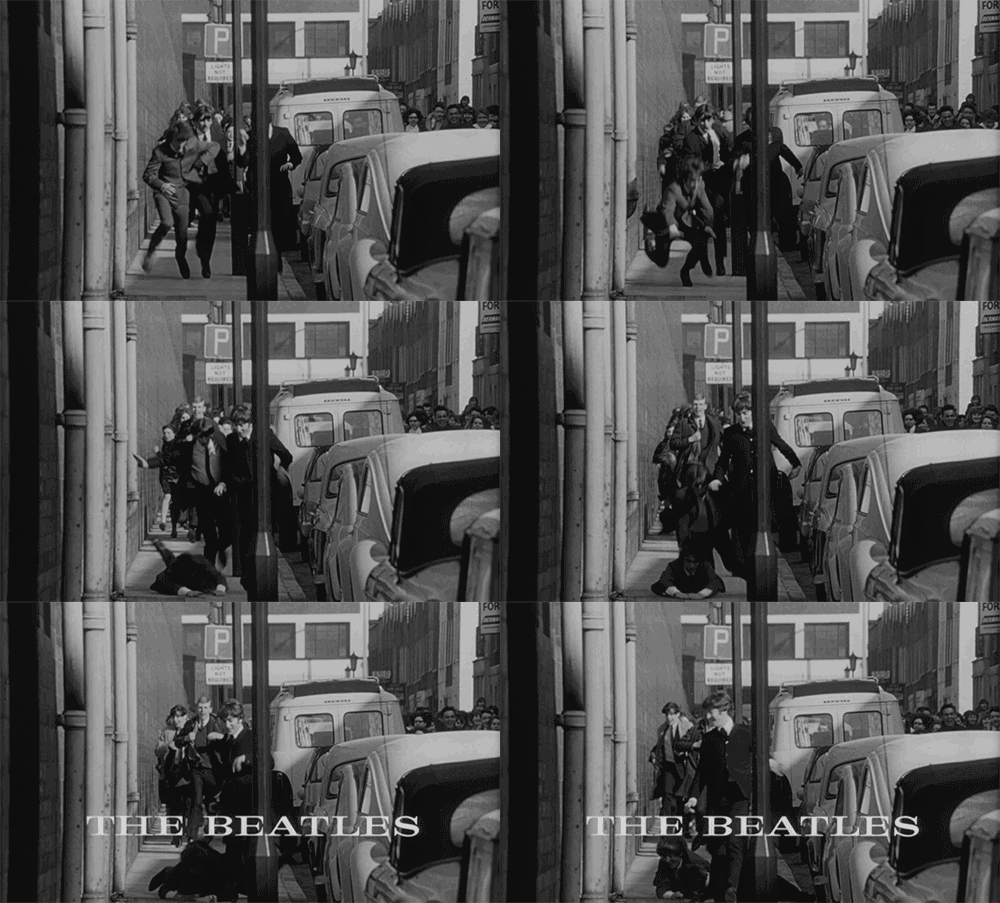
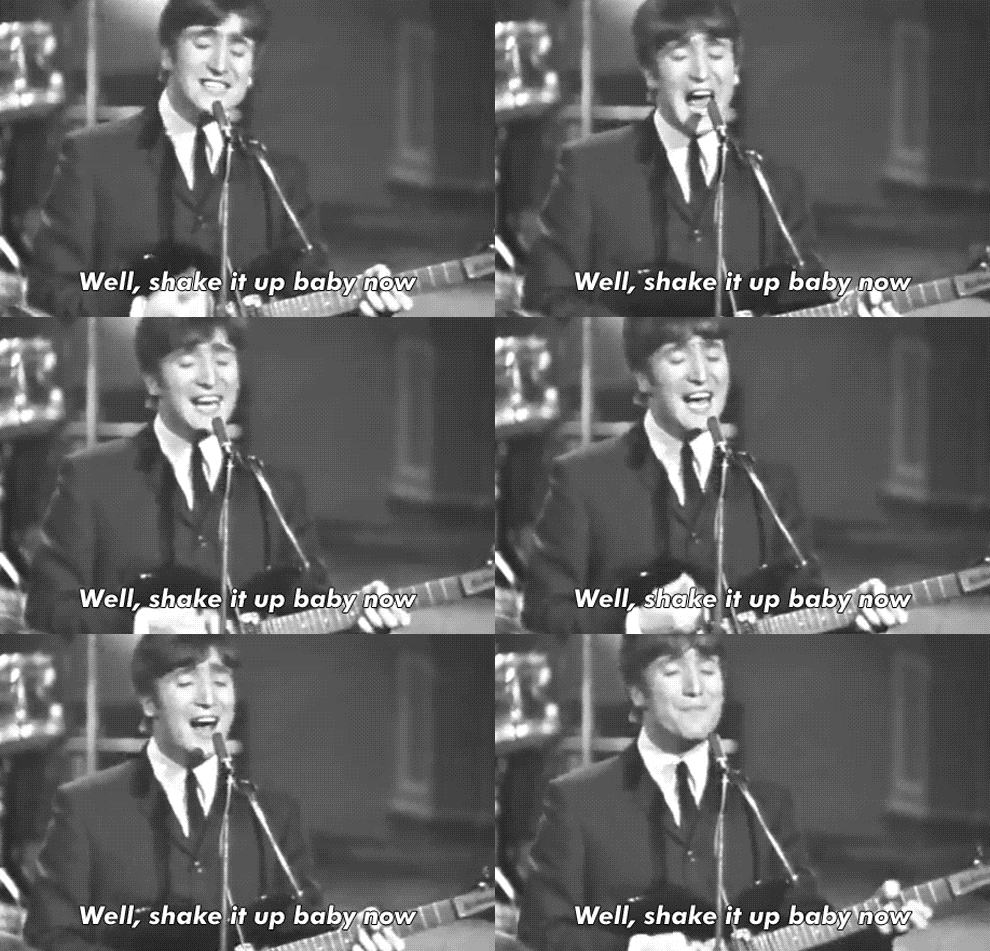
If you didn’t click and watch that video, friends, you missed a real show. Chuck Berry was arguably the most influential guitarist in rock history. There never would have been a Jimmy Page or an Eric Clapton if there had not first been Chuck Berry, and of course, The Beatles were huge fans. “If you had to give rock ‘n’ roll another name, you might call it Chuck Berry.” John Lennon once said. The Beattles memorably covered Berry’s hit “Roll Over Beethoven,” with George Harrison singing lead:
I’m gonna write a little letter, Gonna mail it to my local DJ. It’s a rockin’ rhythm record I want my jockey to play. Roll over Beethoven, I gotta hear it again today.
He was an American original who made history with his guitar, playing that crazy beat that made all the kids dance. Chuck Berry, R.I.P.
Hail, hail rock’n’roll! Deliver me from the days of old. Long live rock’n’roll! The beat of the drum is loud and bold. Rock rock rock’n’roll! The feelin’ is there body and soul.
Not since The Beatles played Shea Stadium, perhaps, have mindless mobs of hysterical youth made news by going wild the way Middlebury College kids did last week. It’s not a pounding backbeat or lovable moptops singing four-part harmony that’s driving them crazy these days, however. No, it’s a 74-year-old policy analyst named Charles Murray:
When Murray is introduced before an audience of some 400, a patter of boos and catcalls disrupt the introduction. When he rises to speak, most of the audience rises en masse and turns its back on Murray. For the next 20 minutes, as Murray stands calmly at the podium, the mob cycles through a sequence of obviously rehearsed chants: “Who is the enemy? White Supremacy,” “Hey hey, ho ho, Charles Murray has to go,” “Racist, sexist, anti-gay, Charles Murray go away,” “Your message is hatred we will not tolerate it,” “Charles Murray go away Middlebury says no way,” etc. . . .
College officials, apparently anticipating a disruption, announce, to renewed boos, that Middlebury Professor Allison Stanger will conduct an interview with Murray from another location and stream the proceedings back to Wilson Hall. . . .
Once the interview began in the second room, protesters swarmed into the hallway, chanting and pulling fire alarms. Still, the interview was completed and officials, including Ms. Stanger, escorted Mr. Murray out the back of the building.
There, several masked protesters, who were believed to be outside agitators, began pushing and shoving Mr. Murray and Ms. Stanger, Mr. Burger [a spokesman for the college] said. “Someone grabbed Allison’s hair and twisted her neck…”
After the two got into a car, Mr. Burger said, protesters pounded on it, rocked it back and forth, and jumped onto the hood. Ms. Stanger later went to a hospital, where she was put in a neck brace.
Note that the violence occurred as Murray and Stanger attempted to leave. As Andrew Stuttaford of National Review observes, “The ‘justification’ for disrupting his speech was that opinions such as Murray’s should not be given a hearing on campus, but this was something else. Murray was not about to speak, he was about to depart, and yet he and Ms. Stanger were attacked.” . . .
A few months ago, AEI’s student group at Middlebury College invited me to speak on the themes in Coming Apart and how they relate to the recent presidential election. Professor Allison Stanger of the Political Science Department agreed to serve as moderator of the Q&A and to ask the first three questions herself.
About a week before the event, plans for protests began to emerge, encouraged by several faculty members. Their logic was that since I am a racist, a white supremacist, a white nationalist, a pseudoscientist whose work has been discredited, a sexist, a eugenicist, and (this is a new one) anti-gay, I did not deserve a platform for my hate speech, and hence it was appropriate to keep me from speaking. . . .
The Bell Curve was published more than 20 years ago. It does not advocate eugenics, it is not racist in any meaningful sense of that word, and the facts examined in the book have not been “discredited” — a fact is always a fact. What the ignorant Middlebury mob has done is to recycle a controversy from two decades ago, basing their false claims on what critics wrote about Murray, rather than what Murray wrote himself.
Such idiots claim to know what Murray “believes” (i.e., that he is a “white nationalist” or whatever), as if they were clairvoyant mind-readers, capable of knowing Murray’s hidden intentions despite everything he has done to contradict this decades-old “white supremacist” smear. This nonsensical way of approaching The Bell Curve is the result of the Left’s propaganda tactics, which involve labeling a critic or opponent as an Enemy of the People, demonizing them in such a way as to prevent anyone from seriously examining their arguments. While I do not wholly agree with every interpretation Murray (and his late co-author, Richard Herrnstein) made of the various data they examined in The Bell Curve, it is nevertheless important to look at the actual data — the facts as they exist — rather than to base our arguments on myths or prejudice. Effective public policy cannot be based on the mere emotional appeal of some sentimental slogan we learned in grade school. Clearly, facts and logic are not being taught in America’s schools today:
The goons who attacked Charles Murray at Middlebury College probably think of themselves as rebels, defending “diversity” against a fascist enemy, but the truth is the complete opposite. Murray is the real rebel, and the mob who attacked him are the real enemies of diversity. Being a left-winger on an elite campus like Middlebury is the most conformist thing imaginable. The anti-Murray protesters were defending a failed status quo against a genuinely radical critic of the system. Murray is a man who creates controversy because he asks tough questions and follows wherever the facts lead. Does this sound familiar?
“I always asked why people did things and why society was like it was,” John Lennon told an interviewer from Playboy magazine. “I didn’t just accept it for what it was apparently doing. I always looked below the surface.” . . .
Read the whole thing at The American Spectator. The Middlebury madness is symptomatic of serious problems. If young people don’t wake up to this danger, America could collapse quite suddenly, and soon.
Adele’s “Rolling in the Deep” is one of those songs I never get tired of hearing. I seldom listen to contemporary pop music, preferring old rock and soul classics of the 1960s and ’70s, but “Rolling in the Deep” is an exception. In a BBC interview, the British singer explained how she suddenly gained worldwide fame in 2008:
“The week I was doing Saturday Night Live, it was meant to be a normal week but the week after, Sarah Palin was supposed to do it, . . . Because something came up in the campaign, she came and did the week I was doing it with Josh Brolin. So it was one of the most watched SNLs ever, and then it was two weeks before the Grammy ballot, which is when people decide what songs they want to maybe nominate, so, like, literally the stars aligned for me. . . . All thanks to Sarah Palin.”
After Adele performed for that huge audience, her album hit number one and she was nominated for four Grammys. Sarah Palin recently sent Adele a copy of her new book, Sweet Freedom: A Devotional, penning this autographed inscription:
B. B. King, whose world-weary voice and wailing guitar lifted him from the cotton fields of Mississippi to a global stage and the apex of American blues, died Thursday in Las Vegas. He was 89.
Mr. King married country blues to big-city rhythms and created a sound instantly recognizable to millions: a stinging guitar with a shimmering vibrato, notes that coiled and leapt like an animal, and a voice that groaned and bent with the weight of lust, longing and lost love.
“I wanted to connect my guitar to human emotions,” Mr. King said in his autobiography, “Blues All Around Me” (1996), written with David Ritz.
In performances, his singing and his solos flowed into each other as he wrung notes from the neck of his guitar, vibrating his hand as if it were wounded, his face a mask of suffering. Many of the songs he sang — like his biggest hit, “The Thrill Is Gone” (“I’ll still live on/But so lonely I’ll be”) — were poems of pain and perseverance.
It is worth noting that B.B. King’s biggest hit, recorded in 1969, was a cover version of a 1951 song by Roy Hawkins and Rick Darnell, but King made it his own. The elements of King’s trademark style — playing guitar “fills” between vocal lines, bending notes and adding vibrato — were not original to him, but he combined them in an unique way with sophisticated arrangements. Aware of his own lack of musical education, King at the outset of his career was shrewd enough to hire the classically trained Onzie Horne to write arrangements for his band, and hit the road with a vengeance. When it came to “paying dues” as a performer, nobody could dispute that King’s dues were fully paid:
He began in juke joints, country dance halls and ghetto nightclubs, playing 342 one-night stands in 1956 and 200 to 300 shows a year for a half-century thereafter, rising to concert halls, casino main stages and international acclaim.
Anyone enthralled by the popular misconception that a working musician’s life is glamorous should contemplate what it was like for King and his band in the 1950s when, in addition to the ordinary hassles of life on the road, they also had to cope with the difficulties that Jim Crow-era segregation imposed. King’s hard-earned status as the most commercially successful blues performer in history, however, required him to endure the ups and downs of a career affected by shifts in popular music tastes. In the early 1960s, he was actually booed in Baltimore by a young audience that was there to see the soul crooner Sam Cooke. King kept working — playing more than 40 weeks on the road year after year — until a new generation rediscovered the blues. British rockers like the Rolling Stones and the Yardbirds, who had traced rock-and-roll back to its R&B roots, inspired a blues revival in the late 1960s:
Mr. King considered a 1968 performance at the Fillmore West, the San Francisco rock palace, to have been the moment of his commercial breakthrough . . .
When he saw “long-haired white people” lining up outside the Fillmore, he said, he told his road manager, “I think they booked us in the wrong place.” Then the promoter Bill Graham introduced him to the sold-out crowd: “Ladies and gentlemen, I bring you the chairman of the board, B. B. King.”
“Everybody stood up, and I cried,” Mr. King said. “That was the beginning of it.”
King was 43 years old and had already played more than 4,000 gigs before his “commercial breakthrough” in 1968.
Think about that the next time you see a spoiled rich white girl at an elite university whining about how she’s oppressed.
“Trigger alert,” my ass.
B.B. King was born the son of sharecroppers in Mississippi and bought his first guitar for $15 when he was 12 years old. Imagine how he must have felt in December 2006 when he was awarded the Presidential Medal of Freedom by President Bush. Real achievement, earned through hard work and persistence, is the only kind of success any honest man should ever desire. I don’t care who you are or how much “talent” you’ve got, you damned sure ain’t better than the King of the Blues.
“Seest thou a man diligent in his business? he shall stand before kings . . .”
— Proverbs 22:29 (KJV)
Mark Knopfler stays around for the guitar, but I think Buffet brings a twist of lime and a smile to the lyric in this cover version of a tune that just looks at a rough weeks and says: “Yeah, shag all that.”
Not to disrespect Knopfler’s original, more gravelly lyric. Mark’s is still too close to the break-up, and drips more regret on the floor.
The reading has been slack this week because I’ve gotten sucked into Ingress, a vile plot by Niantic Labs (a startup within Google) to get slack, nerdy sorts such as myself out from behind their desks and encourage us to tromp around the landscape to various “portals” and either capture them for your faction – after which you can install “resonators” and other equipment, build links to other portals, and establish Control Fields, all to accumulate more Action Points and rise in levels. If the portal is already held by the enemy faction, you can hack it to get equipment (and AP) and/or attack it to destroy enemy resonators, force links to drop, destroy control fields, all of which generate AP for you and frustration for the enemy. After downloading the software to your Android phone/tablet or iDevice, a player can either sign up with The Enlightened faction, a bunch of alien-sucking commie pinko transhumanist sorts, or the Resistance, a noble band of fighters for individual freedom and humanity, but one can just as easily ignore the backstory (reminiscent of the X-Files) and just call the factions Greens and Blues, or Froggies and Smurfs. At any rate, it’s cheap fun – the app is free to download – and as I mentioned before, it gets you out and walking around. I’ve logged a little less than 22 miles in the ten days since I started playing, and have already reached Level 5. Recommended, especially if the weather where you are allows you to get some walking in without sweating to death.
I’ve been a fan of “Weird Al” Yankovic from the beginning, when just about the only place you could hear him was on the Dr. Demento radio show. So it was very cool indeed to see him finally hit #1 on the Billboard charts with his latest (and possibly last) album, Mandatory Fun This is eleven tracks worth of weapons-grade parodistic hilarity (12 if you get the references in “Jackson Park Express”, which I didn’t) and Lord knows we all need some humor in these trying times.
What reading time I have had this week has been mostly spent on Jerry Pournelle’s The Prince, which for those of you not familiar with it is an omnibus made up of Falkenberg’s Legion and the three Helot War novels Pournelle co-wrote with S.M. Stirling, Prince of Mercenaries, Go Tell the Spartans and Prince of Sparta. Good, solid classic combat SF; oddly, while The Prince is not available through Amazon in e-book form, you can get it directly from Baen.
Finally, a plug for Sarah Hoyt’s The Big Ship and the Wise Old Owl a novella about three young people on a generation ship whose leadership has apparently decided to avoid this colonizing nonsense and just stay in space – and in control – forever. But one of the friends finds out that the Builders had a contingency plan for that, and that’s when things get interesting. I wish she’d done more with the idea, but it’s an entertaining novelette and you can’t argue with the price.
Want something less fluffy? The Last Falangist is still out there, and three other folks besides Stacy enjoyed it enough to leave very positive reviews. How about you?


 ) and just call the factions Greens and Blues, or Froggies and Smurfs. At any rate, it’s cheap fun – the app is free to download – and as I mentioned before, it gets you out and walking around. I’ve logged a little less than 22 miles in the ten days since I started playing, and have already reached Level 5. Recommended, especially if the weather where you are allows you to get some walking in without sweating to death.
 This is eleven tracks worth of weapons-grade parodistic hilarity (12 if you get the references in “Jackson Park Express”, which I didn’t) and Lord knows we all need some humor in these trying times.
 , which for those of you not familiar with it is an omnibus made up of
 and the three Helot War novels Pournelle co-wrote with S.M. Stirling,
 ,
 and
 . Good, solid classic combat SF; oddly, while The Prince is not available through Amazon in e-book form, you can get it
 a novella about three young people on a generation ship whose leadership has apparently decided to avoid this colonizing nonsense and just stay in space – and in control – forever. But one of the friends finds out that the Builders had a contingency plan for that, and that’s when things get interesting. I wish she’d done more with the idea, but it’s an entertaining novelette and you can’t argue with the price.