Never Take Advice From Feminists (The @FactoryGrrrl Edition)
Posted on | September 24, 2016 | 2 Comments
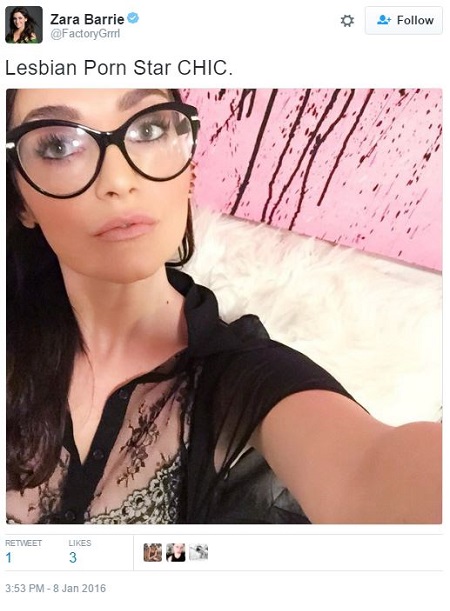
How many times do I have to explain why you should never take romantic advice from feminists? Feminism is a movement organized around the grievances of unhappy women. If a woman is happy and successful in her life, she doesn’t need feminism, and so everything that feminists write about love and sex should be viewed with extreme skepticism, as I’ve explained: “Unless your goal in life is to become a Crazy Cat Lady, there’s not much expertise to be had from feminists.” And really, is it so difficult to become a Crazy Cat Lady that you need expert advice to do it?
Zara Barrie (@FactoryGrrrl on Twitter) describes herself as “Senior Sex and Dating writer” for the sketchy website Elite Daily, as well as editor of the sketchy website’s Queer Culture section.
Did I mention that Elite Daily is sketchy? A 2013 profile of the website:
The founder, David Arabov, is alleged to be the son of Jacob Arabo, or Jacob the Jeweler, the Harry Winston of hip-hop. In 2007 Arabo was accused of money laundering and pleaded guilty to lying to federal agents and filing false documents with the federal government. . . .
To make matters even shadier, many of the stories . . . are written under pseudonyms.
Writers such as Preston Waters, Paul Hudson, Ashton Tyler, William Kent, and Eddie Cuffin are very real (I spoke to each of them). But their names aren’t.
Preston Waters is actually David Arabov himself; Paul Hudson is Paul Jurczyk; Eddie Cuffin is Edin Veljovic, Ashton Tyler is Max Grunner, and William Kent is Robert Saintlot. . . .
A number of these pen name writers believe there is no responsibility in telling the truth when it comes to their byline or bio, as long as the articles themselves are accurate.
See what I mean? For all we know, “Zara Barrie” is just a made-up name, and what kind of authority is she on “Sex and Dating”? How is she qualified as an expert whose advice other people should heed?
Such questions are never asked of the 21st-century advice blogger. Any feminist who can persuade a sketchy website to publish her advice is as “qualified” as any other feminist sex-advice blogger out there, which is to say they are all equally sketchy. Basically, the feminist advice racket presumes that the world is full of women so completely stupid they have to Google questions like, “What’s a vulva?”
Feminist sex-advice bloggers are convinced that they are the only ones who know anything about sex. The rest of us are utterly ignorant on the subject, which is why we need feminist sex-advice bloggers to lecture us about the “myths” and “stereotypes” we supposedly believe. And since we’re on the topic of myths and stereotypes . . .
“Straight men are completely and utterly clueless when it comes to women.”
That quote by Zara Barrie is from her October 2015 column, “Sex And Dating Tips For Men From A Lesbian,” which she followed up with a May 2016 column, “Sex And Dating Advice For Men From A Lesbian (Part 2).”
Notice that she did not say that “some” heterosexual men are clueless, nor that “most” heterosexual men are clueless, and so we must gather that all heterosexual men are not just “slightly” clueless nor are we “somewhat” clueless. No, merely by dint of being both male and heterosexual, we are “completely and utterly clueless.” No man in history has ever known anything at all “when it comes to women,” according to Zara Barrie, Lesbian Feminist Sex Blogger for a Sketchy Website.
Pause here, my friends, to consider the question of motive. Isn’t it true that feminists hate men? And shouldn’t we particularly presume that a lesbian feminist has an abiding contempt for males quite generally? Isn’t it safe to say that the mere thought of a penis fills her with feelings of dread and horror? Isn’t she opposed to heterosexuality, per se? So why would we assume that Zara Barrie, Lesbian Feminist Sex Blogger for a Sketchy Website, would do men any favors in terms of giving them useful advice? Zara Barrie never wants to have sex with a man, and doesn’t want any other woman to have sex with men, either. Like every other feminist, Zara Barrie is fanatically committed to the abolition of heterosexuality.
Am I generalizing too broadly here? Well, if Zara Barrie can declare that I am “completely and utterly clueless when it comes to women” without having ever met me, I don’t feel any need to mince words in describing her as The Enemy of All Heterosexuals Everywhere:
There are several times throughout the day that I quietly whisper to myself, “Thank god I don’t have to sleep with one of these vile creatures.” I will usually then turn to the straight woman to my left and ask “How the hell do you sleep with these vile creatures?” to which she will almost always shake her head, look me dead in the eye and reply, “I have no f*cking idea.”
Males are “vile creatures,” according to Zara Barrie, and every woman she knows shares her agreement that men are universally “vile.”
Except . . . no, actually she’s doing what PUAs call “negging.”
Zara Barrie is a classic example of Poor Little Rich Girl Syndrome. I was joking when I said “Zara Barrie” is a made-up name. Her father made his fortune in the perfume industry and her mother is a British-born former fashion model. At the 2013 Planned Parenthood Annual Dinner in Sarasota, “the always glamorous Lynn and Richard Barrie” were among the guests, and when Zara left for New York last year, the going-away party for the local “socialite” also made headlines in Sarasota.
What Zara Barrie is doing in denouncing heterosexual men as “vile creatures” who are “clueless” is conveying her disdain for her social inferiors. No man is good enough for her, and Zara Barrie wants to let every man know that she considers him contemptible — “negging.”
Oh, I hear you: “Wait, Stacy — don’t PUAs ‘neg’ women in order to undermine their self-esteem to make them easier to pick up?”
Exactly. And there’s always a backstory, you see. Let’s go back to teenage Zara at “a Jewish arts camp in the Berkshires”:
The summer of my fifteenth year, I was a fearlessly outspoken beanpole of a girl, skipping through the damp grass shoeless, as I kissed every cute punk boy beneath the sprawling, star-scattered New England sky without a semblance of regret.
But an entire lifetime happened between the precarious ages of 15 and 16. . . .
It’s been a year of toxic romance, the unpleasant loss of virginity, substance experimentation and unshakeable pressure to live up to the impossible media interpretation of what a 16-year-old girl is supposed to look like.
I hate the way I look. Seemingly overnight, my body has metamorphosed from being a string bean kid to a woman with hips and curves and breasts.
I don’t like it.
This is a familiar tale of adolescent woe, as Zara complains of “unwelcome lingering eyes grazing my breasts from men old enough to be my father; catcalls in the parking lot of CVS from bearded boys smoking cigarettes out the windows of diesel trucks; subtle yet uncomfortably seductive glances from my sister’s boyfriend the moment she leaves the room.” Her discomfort with her “hips and curves and breasts” leads to anorexia — a typical problem of Poor Little Rich Girls. Read more
In The Mailbox: 09.23.16
Posted on | September 23, 2016 | 1 Comment
— compiled by Wombat-socho
OVER THE TRANSOM
EBL: Feminist Jody Allard Is A Terrible Person And A Bad Mother
Twitchy: “How Is That not Classified?” Apparently Hillary Had E-Mails To Obama On Her Private Server
Louder With Crowder: Netanyahu Calls UN A “Global Moral Farce”
A View From The Beach: To Die In Modesto
RIPPED FROM THE HEADLINES
Adam Piggott: Podcast #19 – The Advice To 18-Year-Old Me Episode
American Power: Glenn Reynolds “Planning On Quitting Twitter”
American Thinker: The Lie That Launched Black Lives Matter
Animal Magnetism: Animal’s Rule Five Preference Cascade Friday
BLACKFIVE: Book Review – Downfall By J.A. Jance
Da Tech Guy: I’m Blocking USA TODAY For One Month Till Instapundit’s Suspension Is Done
Don Surber: Did Trump Just Take Pennsylvania?
Dustbury: Quote Of The Week
Jammie Wearing Fools: Mostly Peaceful Protester Arrested For Murder During Charlotte Riots
Joe For America: Fourteen Clinton Non-Profits And Super PACs Caught Laundering Money
JustOneMinute: Debate Prep For Hillary, With Everything Omitted
Pamela Geller: Former CDU Politician – “Merkel Has Lost Contact With The Real World”
Power Line: Hillary Thinks The Third World Has A Right To Move To The U.S.
Shark Tank: Corrine Brown Plays The Race Card For Charges Against Her
Shot In The Dark: Fear The Walking Sheep
STUMP: Calpers Reactions – Let’s Hear From Everybody!
The Lonely Conservative: If Your Car Is Surrounded By A Rioting Gang Of Thugs, What Do You Do?
The Political Hat: California’s War On Cow Farts
This Ain’t Hell: “Thoroughly Vetting” Refugees? Hardly!
Weasel Zippers: E-Mail Shows Federal Immigration Bosses Pushing To Swear In New Citizens “Due To Election”
Megan McArdle: The Depression Was Great For The American Kitchen
Today’s Digital Deals
5-Pack Micro/USB Cables For Android Smartphones
Shop Amazon Devices – All New Echo Dot

Feminism, and the Failure Thereof
Posted on | September 23, 2016 | 2 Comments
One of the things that mystifies me about young Third Wave feminists is that, for all they talk about “empowerment,” they seem to complain constantly about their helpless victimhood. It seems clear to me that something has gone wrong in the War Between the Sexes, so that these sensitive young women have lost their sex’s traditional advantages, and I am tempted to speculate about why frustrated victimhood has become such a common malaise among in recent years. Consider, for example, Tumblr blogger Amy — “Hufflepuff. Mythology nerd. Anxiety ridden and depressed.” — whose content includes a lot of Harry Potter stuff. What is it about the fandom surrounding J.K. Rowling’s witchcraft-themed novels that exercises such an enduring hold on these young women? Honestly, I read plenty of novels when I was a boy but never thought of making an adult lifestyle out of childhood fiction. So . . .
Last year, Amy posted this quote, attributing it to her mother:
“You’re a woman, use it; bring
every man you meet to his motherf–king knees.”
Now, whatever truth there may be in this advice, it is only useful (a) if a young woman is particularly attractive, and (b) if the men she meets are the sort of fellows who would play by the rules, so to speak.
This “bring him to the knees” advice might work with a young Christian gentleman who has been well-raised by a traditional mother and father, trained in courteous deference toward the fairer sex.
Ah, but young Christian gentlemen are quite rare nowadays, mainly because feminists hate Christianity even more than they hate motherhood. Instead of raising well-mannered sons and daughters, feminists either have abortions or, if by some fluke they actually do produce offspring, the feminist mother considers it her duty to dump her children into daycare at the earliest possible age, so that she can return to her professional career. And so we now we have a generation of young people most of whom spent 40-plus hours a week in institutional care from the time they were in diapers. In many cases, their parents either never married or divorced, so that the grew up without any expectation of happily-ever-after romance, and without any example from their parents of how to make a relationship last. Feminism is anti-marriage and anti-motherhood and also, necessarily, anti-Christian. Feminism’s fanatical advocacy of abortion, motivated by bloodthirsty hatred of babies, is antithetical to Christian morality, and so the feminist movement has been resolutely devoted to eradicating Christianity from our culture.
What kind of sons does an anti-Christian mother raise? How is a young man’s worldview shaped by the experience of growing up in the custody of a feminist who believes that human life has no intrinsic value, so that killing babies can be justified in the name of “choice”?
Well, I doubt this kind of experience teaches a young man to treat his fellow humans with respect, and disrespectful young men are not apt to respond well to the “bring him to his knees” approach. In fact, I suspect that a lot of the emotional misery that young women complain about nowadays is simply an expression of despair at how little influence they exercise over young men. Let’s face it: The typical young man in the 21st century doesn’t devote much effort to romantic pursuits. He is far more inclined to stay home and play videogames or watch sports on TV than he is to ask a girl on a typical dinner-and-a-movie date.
Certainly no intelligent young man in the 21st century would dare to strike up a conversation with a woman, lest he be accused of “harassment,” and so the old-fashioned art of flirting is extinct, as is every other customary way that a man might feasibly exercise initiative in seeking female companionship. The reason young feminists now constantly complain of “harassment” is because only stupid men talk to women in public; all the smart men remain discretely silent.
What you realize is that feminist “success” is always self-defeating. The more power feminists wield, the worse things become for women. Maybe 30 years ago, when the mothers of today’s young feminists were young, there were still enough old-fashioned guys around that the game of romance was an exciting adventure. The Tumblr blogger’s mother belief that any woman can “bring every man you meet to his motherf–king knees” is arguably obsolete. Yet this sadistic fantasy — the femme fatale who cruelly exploits her seductive power — is so popular that Amy’s Tumblr post has gotten nearly a quarter-million notes in the past year. But how is she to bring a guy to his knees, if he never even speaks to her? Is a man vulnerable to seduction while he’s home playing Call of Duty?
Feminism is about hate, and hate never leads to happiness.
Yes, #BlackLivesMatter Is About Hate
Posted on | September 23, 2016 | 3 Comments

“With Election Day only weeks away, it is possible the chaos in the Tarheel State is part of a left-wing get-out-the-vote effort to foment unrest in the state’s black communities. . . .
“Riots, of course, are the stock in trade of radical speculator George Soros, the preeminent funder of the Left who has given generously to Black Lives Matter. Soros has a long history of underwriting violence and civil unrest not just in America but all over the world.”
— Matthew Vadum, “Charlotte Burning,” Sept. 22, 2016
“Seriously, what are you supposed to do if an angry mob surrounds your car and you’re trapped? I guess you can sit and wait for help to arrive, and pray that help arrives in time. But when the angry mob is also trying to throw white people in fires, the help might be too busy to get there in time to save you. So really, what the hell do you do?”
— The Lonely Conservative, “If Your Car Is Surrounded By A Rioting Gang Of Thugs What Do You Do?” Sept. 22, 2016
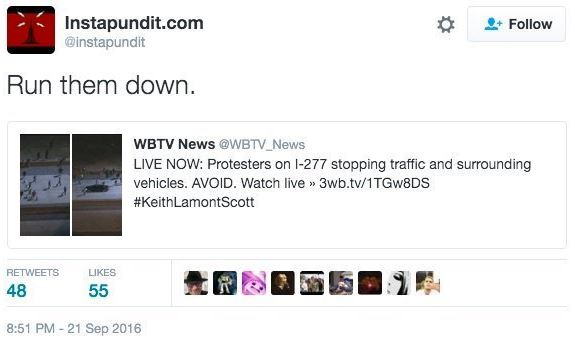
It should not be necessary, after a year of CNN-inspired race riots, to explain that #BlackLivesMatter is not a spontaneous grassroots movement about curbing police brutality. The movement launched last year is led by professional activists, funded by a network of “progressive” tax-exempt foundations (connected to billionaire George Soros) in consultation with Democrat Party operatives. A major goal of #BlackLivesMatter is purely political — i.e., driving black voter turnout to help elect Hillary Clinton and other Democrats — and also to influence public policy, to undermine law enforcement and, arguably, to infringe free speech protections. (Glenn Reynolds has been suspended from USA Today for his “run them down” tweet.) By inciting riots in the black community, the Left simultaneously incites fear in the white community, and when white people condemn the kind of criminal violence #BlackLivesMatter inspires — first in Ferguson, then in Baltimore, most recently in Charlotte — this response is labeled “racism.” No one can credibly claim Professor Reynolds is a racist, and yet his “run them down” tweet made him a target of the Thought Police, and the online progressive bully mob turned its rage against him. Thus are the limits of discourse increasingly narrowed in a way that favors the Democrat Party.
This is not an accident.
These consequences of the #BlackLivesMatter movement — which the Democrat Party’s media machine, particularly CNN, have helped promote — were predictable, and it is therefore not a paranoid “conspiracy theory” to assume that these consequences are entirely intentional. It would be naïve in the extreme to suppose that the professional activists who descended on Ferguson, Missouri, in August 2014 didn’t know what they were doing, or what the results would be. Militant anarchists produce violent chaos, racial mau-mauing begets hostility, and history provides enough lessons about where such movements lead that only fools could believe that the sponsors of #BlackLivesMatter (including CNN and the Democrat Party) did not foresee the consequences.
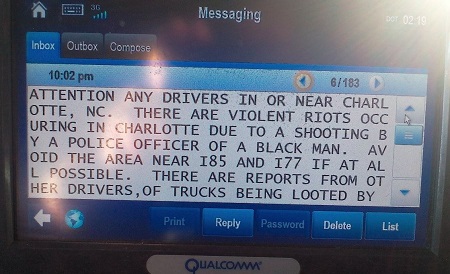
That message to truck drivers (including my brother Kirby) to “avoid the area near I85 and I77 if at all possible” was sent out Wednesday night after a criminal mob descended on the freeway in downtown Charlotte, intent on perpetrating violence. As Professor Reynolds pointed out in his statement to USA Today, his “run them down” tweet was in response to a local TV reporter’s interview with a driver whose truck had been looted by the vandal horde: “She is still inside her truck as people loot her cargo and burn it. She fears for her life. . . . ‘I understand they want to make a statement but they are hurting innocent people trying to make a living.’ . . . This was an absolutely horrifying interview. She kept asking me where police are. She’s trapped inside as people destroy her truck and cargo.” It was this threat to an innocent civilian — a female truck driver, surrounded by a mob of dangerous thugs, with no police protection amid the violent riot #BlackLivesMatter activists had deliberately provoked — that brought back a vivid memory of the past for Professor Reynolds: “I remember Reginald Denny, a truck driver who was beaten nearly to death by a mob during the 1992 Los Angeles riots.”

Young people have no memory of the 1992 riots, which were arguably caused by CNN’s dishonest editing of the video in which Rodney King was arrested by Los Angeles police. If you watched the full-length video, and knew that Rodney King was under the influence of PCP at the time he was confronted by police after a high-speed pursuit, you realized that the baton-wielding police were dealing with a dangerously violent suspect who had already been tazed and was still resisting arrest. How are police to handcuff a suspect who is resisting arrest? When a criminal is apprehended and refuses to comply with the commands of officers armed with pistols, this always creates a life-or-death situation for police, because a struggling suspect may attempt to grab the officer’s weapon. Does “social justice” require police suffer death or injury rather than to use their batons to subdue a violent criminal? This was what anyone with common sense could see, once the full video of the Rodney King arrest was shown and the relevant facts had been reported. However, because CNN had spent several days repeatedly broadcasting a deceptively edited version of the video before the full version was finally shown, they created a false impression of the situation that led to the L.A. riots in which the truck driver Reginald Denny was nearly killed.
History teaches us lessons, and anyone old enough to remember 1992 knew what the consequences of #BlackLivesMatter would be. Are we to believe that #BlackLivesMatter leaders, and their accomplices at CNN and in the Democrat Party, did not also foresee this result?
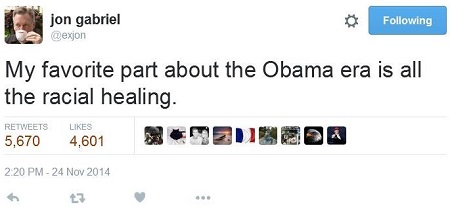
Let’s be clear that these riots are anti-cop and pro-criminal. The Charlotte riot was about the police shooting of Keith Scott:
A public records search shows that Scott was convicted in April 2004 of a misdemeanor assault with a deadly weapon charge in Mecklenburg County. Other charges stemming from that date were dismissed: felony assault with a deadly weapon with intent to kill, and misdemeanors assault on a child under 12, assault on a female and communicating threats.
In April 2015 in Gaston County Court, Scott was found guilty of driving while intoxicated.
In 1992, Scott was charged in Charleston County, S.C., with several different crimes on different dates, including carrying a concealed weapon (not a gun), simple assault and contributing to the delinquency of a minor. He pleaded guilty to all charges.
Scott also was charged with aggravated assault in 1992 and assault with intent to kill in 1995. Both charges were reduced, but the disposition of the cases is unclear.
According to Bexar County, Texas, records, Scott was sentenced in March 2005 to 15 months in a state jail for evading arrest. In July of that year, records show, he was sentenced to seven years in prison on a conviction of aggravated assault with a deadly weapon. A Texas Department of Criminal Justice spokesman said Scott completed his sentence and was released from prison in 2011.
Keith Scott was prohibited from possessing a gun due to his gun assault conviction where he pleaded no contesthttps://t.co/4rBG9YyCgY#CNN
— Michael (@Canine_Rights) September 22, 2016
Charlotte police chief: Keith Lamont Scott exited his vehicle with a handgun despite officers' commands to drop the weapon. pic.twitter.com/Kv8X9RgNmK
— Fox News (@FoxNews) September 21, 2016
Keith Scott was a career criminal with a record in three states. He had a history of armed violence. His victims included women and children. Certainly, he was not a symbolic hero of “social justice.”
#BlackLivesMatter is a racial hate movement, organized with the assistance of the Democrat Party and its media apparatus, with the goal of exploiting hatred in order to elect Hillary Clinton president.
Rioting May Tip Presidential Scales
in Crucial North Carolina
— Bloomberg News
Charlotte protesters ‘hate white people,’
NC Congressman Robert Pittenger says
— Charlotte News-Observer
“Run them down”? Or vote Republican. Same difference.
If Your Car Is Surrounded By A Rioting Gang Of Thugs What Do You Do?: https://t.co/GfgBcisogU
— lonely conservative (@lonelycon) September 23, 2016
In The Mailbox: 09.22.16
Posted on | September 22, 2016 | Comments Off on In The Mailbox: 09.22.16
— compiled by Wombat-socho
OVER THE TRANSOM
EBL: #FreeInstapundit
Twitchy: She’s With It! She’s Hip! Look Who Team Hillary Landed For Today’s Fundraiser!
Louder With Crowder: Narrative BUSTED – Dash Cam Video Allegedly Reveals Keith Scott Had A Gun
According To Hoyt: Forget Your Place
RIPPED FROM THE HEADLINES
Adam Piggott: Riding The Welfare Carousel
American Power: Trump Derangement Syndrome Is Crippling The Left
American Thinker: The Useless Left
Animal Magnetism: Animal’s Daily News
BLACKFIVE: Book Review – The Velvet Hours by Alyson Richman
Da Tech Guy: JD Rucker – More Than Anything Else, #BlackLivesMatter Will Lose The Election For Hillary
Don Surber: Hillary Spent $33 Million On Ads In August, and Trump’s Chances Rose From 3% To 48%
Dustbury: It’s Third Party
Fred On Everything: An Obsolescent Military – Bombing Everything, Gaining Nothing
Jammie Wearing Fools: The Obama Riots – NC Gov Declares State Of Emergency After Savages Riot Again
Joe For America: Hillary’s Coverup Operation Exposed By IT Workers
Pamela Geller: Stone Mountain Georgia Has Received More Muslim Migrants Than NYC And LA Combined
Power Line: Triumph Of The Witless
Shark Tank: Wasserman Schultz/Canova Rematch In The Works
Shot In The Dark: You Were Warned – MNA Edition
The Jawa Report: This Is Sharia – Woman Kicked In Face For Wearing Slacks In Turkey
The Political Hat: Quick Takes – Genderbending Leviathan, Gendrbending Education, Genderbending Medicine
The Quinton Report: Kennedy Class On Display
This Ain’t Hell: Former National Guardsman Turned Jihadi Sentenced
Weasel Zippers: #BlackLivesMatter Cashes In With Over $100 Million From Liberal Foundations
Megan McArdle: The Road Not Taken – What If Infrastructure Were Actually Planned?
Instant Gratification – Digital Deals On Amazon
TubShroom – Revolutionary New Tub Drain Hair Catcher/Strainer/Snare
Shop Amazon – Happy Belly Nut and Trail Mix Snacks
#Charlotte ‘RUN THEM DOWN’ Gets @Instapundit Suspended From @Twitter
Posted on | September 22, 2016 | 2 Comments
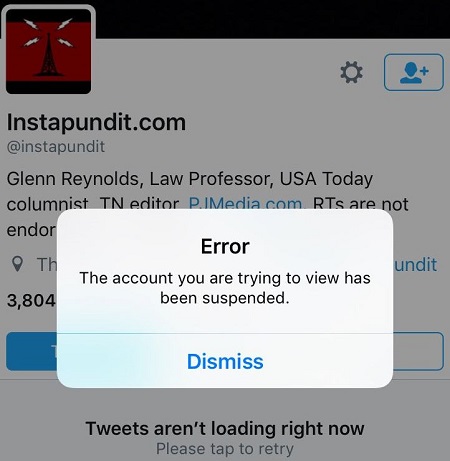
Professor Glenn Reynolds’ response to the anarchy in Charlotte — where a criminal mob of hate-filled Democrat voters looted stores, attacked police and white civilians, and shut down a major freeway — was three words of advice to endangered motorists: “Run them down.”
The Twitter Thought Police suspended Professor Reynolds’ account.
What are we permitted to say about marauding gangs of thieves and thugs? The owners of Twitter have evidently hired Democrat Party activists to control the narrative on their platform, effectively turning it into a propaganda platform for a violent anti-white terrorist organization (to call #BlackLivesMatter what it actually is). Twitter’s policy can be considered an “in-kind” political contribution to Hillary Clinton’s presidential campaign, which is counting on #BlackLivesMatter to help her win key swing states like North Carolina, Florida, Virginia and Ohio.
Do law-abiding citizens have no right to defend themselves against mob attacks? If a family is in their car on the highway and find themselves surrounded by a gang of criminals who have been roaming the streets committing violence, what are they supposed to do?
Todd Starnes analyzes the reality in Charlotte:
It was a night of terror in Charlotte, North Carolina.
A rioting mob shut down Interstate 85 and attacked terrified motorists. A horrified female truck driver told a reporter thugs had boarded the truck and were stealing the cargo and setting it ablaze.
Looters pillaged and plundered a Wal-Mart.
More than a dozen police officers were injured — along with an untold number of civilians and at least three journalists.
The mayhem started earlier in the day after a black police officer shot and killed an armed black man. The dead man’s family disputes the police department’s account of what happened.
Regardless, that does not give agitators a right to engage in acts of domestic terrorism.
I’d like for someone to explain to me how looting a Wal-Mart and shutting down a major interstate advances their cause.
Since 2008 our nation has been rocked with political and racial unrest. But it should come as no surprise.
This is what happens when a nation elects a community organizer to the highest office in the land. This is what a fundamentally transformed nation looks like.
Democrats deliberately foment hatred, and they don’t care who gets hurt, just so long as they can exploit hatred to elect Hillary Clinton.
? Video: #Charlotte rioters attempted to set a photographer on fire.. rescued by police.pic.twitter.com/WuIAbwe5Xx #CharlotteProtest
— Roger Simas (@SimasRealEstate) September 22, 2016
When you're surrounded by rioters on the highway, just politely honk the horn. Surely they'll step aside. #FreeInstapundit pic.twitter.com/69RWlK9MSS
— Psychic Life Coach (@LilMissRightie) September 22, 2016
Twitter suspended the guy who literally *wrote the book* on people-powered messaging: https://t.co/DPjbfTPCh4#FreeInstapundit
— Mulder's Shroom Ride (@proteinwisdom) September 22, 2016
UPDATE: @Instapundit is back: “They reinstated me on the condition that I delete the offending tweet.” Yes, they did that to me a couple of times before I was finally banished to the gulag.
Transgender Cult Update
Posted on | September 21, 2016 | 1 Comment

On Sunday night, Jill Soloway won an Emmy for directing the comedy series “Transparent,” and she made the most of her time onstage, advocating for the trans community and topping off her speech by saying “topple the patriarchy” not once, but twice.
After thanking Jeff Bezos for allowing her to make the show about a transgender woman for Amazon Studios, she talked about what it has meant to her. “I’ve always wanted to be part of a movement ? civil rights movement, the feminist movement,” Soloway said. “This TV show allows me to take my dreams about unlikeable Jewish people, queer folk, trans folk, and make them the heroes.”
She then finished her speech with a clear message.
“Thank you to the trans community for your lived lives,” she said. “We need to stop violence against transgender women and topple the patriarchy. Topple the patriarchy!”
So, a white male billionaire pays a lesbian feminist — whose father is, uh, now her mother, I guess — to direct a TV series and when she wins an award, her message is, “Topple the patriarchy.” Also, she compared Donald Trump to Adolf Hitler. Meanwhile . . .
“Thou shalt not question my pronouns! And bake me a f–king cake!”
Meanwhile, on the scientific front . . .
The American College of Pediatricians (ACP) has released a position paper denouncing popular approaches to transgender, declaring that the current protocol is founded upon “unscientific gender ideology,” which lacks any basis in real evidence.
The physicians argue that the assumption that gender dysphoria (GD) — a psychological condition in which people experience a marked incongruence between their experienced gender and their biological sex — is innate contradicts all relevant data and is based on ideology rather than science.
Liberals never let mere facts get in the way of their agenda.
In The Mailbox: 09.21.16
Posted on | September 21, 2016 | Comments Off on In The Mailbox: 09.21.16
— compiled by Wombat-socho
OVER THE TRANSOM
Proof Positive: Hillary Back On The Campaign Trail
EBL: Skittles – Taste The Outrage!
Michelle Malkin: Hey, UN Corruptocrats, Spare Us The Refugee Sanctimony
Twitchy: Need More Proof That Team Hillary’s Clearly Panicking? This Ought To Do It
Louder With Crowder: Actually, Hillary Is More Like Hitler
RIPPED FROM THE HEADLINES
Adam Piggott: Humans Bad, Nature Good
American Power: Low-Income Families Face Eviction To Make Room For Facebook Employees In Silicon Valley
American Thinker: Dakota Pipedreams
Animal Magnetism: Animal’s Hump Day News
Da Tech Guy: Baldilocks – Bushed
Don Surber: What Hillary Thought Of Kaine In 2008
Dustbury: Point Missed By Several Centimeters
Jammie Wearing Fools: Anthony Weiner Had Lengthy Online Relationship With 15-Year-Old Girl – “I Would Bust That Tight P***y”
Joe For America: Gay CNN Host Tweets Support For Sharia Law, Immediately Regrets It
JustOneMinute: Rested And Ready
Pamela Geller: Half Of Aussies Say Banning Muslims Not A Bad Idea
Power Line: Hillary’s Health Front And Center Again In North Carolina
Shark Tank: Patrick Murphy, Democrats Pivot In Florida Senate Race
Shot In The Dark: Survey
STUMP: California Dreamin’ of Ever Closing Their Pension Gap
The Jawa Report: Effing Awesome Doubleclutch! NY Bomber Spent A Year Just Hanging Out In Quetta
The Political Hat: Denying The Cake
This Ain’t Hell: Patricia Driscoll Used Veterans’ Charity Like Personal ATM
Weasel Zippers: Islamic Terrorists Have Killed Twice As Many Americans On US Soil In The Last Twelve Months Than In All The Years Since 9/11 Combined
Megan McArdle: Public Pensions Are Being Overly Optimistic
Today’s Digital Deals
Spenser For Hire: The Complete First Season
THE FULL METAL JACKET REACH-AROUND AWARD
HIT THE FREAKING TIP JAR!
Search
Recent Posts
- Rule 5 Sunday: A Salute to Mrs. Justin Verlander
- FMJRA 2.0: No Grandeur This Week Just Misery
- The Wrong Matthew Ingalls, the Correct ‘Jane Doe’ and the Cornell 7 Case
- In The Mailbox: 10.02.26 (Evening Edition)
- In The Mailbox: 10.02.26 (Afternoon Edition)
- In The Mailbox: 09.30.26
- In The Mailbox: 09.29.26
- In The Mailbox: 09.28.26
- Rule 5 Sunday: Oktoberfest
- FMJRA 2.0: An Awful Road Trip
RSS reader subscription

MEMEORANDUM
Recent Comments
THE AMAZING GONZO FEED
Major Leagues
Archives
- October 2026 (6)
- September 2026 (38)
- August 2026 (43)
- July 2026 (39)
- June 2026 (40)
- May 2026 (43)
- April 2026 (59)
- March 2026 (44)
- February 2026 (37)
- January 2026 (45)
- December 2025 (42)
- November 2025 (44)
- October 2025 (44)
- September 2025 (47)
- August 2025 (48)
- July 2025 (48)
- June 2025 (47)
- May 2025 (48)
- April 2025 (42)
- March 2025 (48)
- February 2025 (49)
- January 2025 (48)
- December 2024 (42)
- November 2024 (44)
- October 2024 (47)
- September 2024 (43)
- August 2024 (55)
- July 2024 (63)
- June 2024 (59)
- May 2024 (48)
- April 2024 (43)
- March 2024 (55)
- February 2024 (46)
- January 2024 (45)
- December 2023 (53)
- November 2023 (62)
- October 2023 (57)
- September 2023 (56)
- August 2023 (53)
- July 2023 (69)
- June 2023 (67)
- May 2023 (53)
- April 2023 (60)
- March 2023 (73)
- February 2023 (65)
- January 2023 (56)
- December 2022 (60)
- November 2022 (64)
- October 2022 (58)
- September 2022 (68)
- August 2022 (75)
- July 2022 (69)
- June 2022 (73)
- May 2022 (74)
- April 2022 (57)
- March 2022 (79)
- February 2022 (65)
- January 2022 (58)
- December 2021 (62)
- November 2021 (68)
- October 2021 (73)
- September 2021 (63)
- August 2021 (60)
- July 2021 (80)
- June 2021 (64)
- May 2021 (64)
- April 2021 (58)
- March 2021 (73)
- February 2021 (57)
- January 2021 (71)
- December 2020 (77)
- November 2020 (81)
- October 2020 (84)
- September 2020 (94)
- August 2020 (75)
- July 2020 (68)
- June 2020 (83)
- May 2020 (77)
- April 2020 (65)
- March 2020 (85)
- February 2020 (94)
- January 2020 (95)
- December 2019 (88)
- November 2019 (60)
- October 2019 (113)
- September 2019 (91)
- August 2019 (91)
- July 2019 (88)
- June 2019 (80)
- May 2019 (74)
- April 2019 (97)
- March 2019 (100)
- February 2019 (85)
- January 2019 (93)
- December 2018 (90)
- November 2018 (83)
- October 2018 (96)
- September 2018 (79)
- August 2018 (107)
- July 2018 (98)
- June 2018 (86)
- May 2018 (78)
- April 2018 (78)
- March 2018 (97)
- February 2018 (61)
- January 2018 (70)
- December 2017 (62)
- November 2017 (68)
- October 2017 (67)
- September 2017 (70)
- August 2017 (68)
- July 2017 (52)
- June 2017 (60)
- May 2017 (56)
- April 2017 (80)
- March 2017 (80)
- February 2017 (102)
- January 2017 (104)
- December 2016 (65)
- November 2016 (86)
- October 2016 (77)
- September 2016 (81)
- August 2016 (66)
- July 2016 (83)
- June 2016 (81)
- May 2016 (65)
- April 2016 (64)
- March 2016 (81)
- February 2016 (74)
- January 2016 (66)
- December 2015 (64)
- November 2015 (85)
- October 2015 (71)
- September 2015 (80)
- August 2015 (67)
- July 2015 (79)
- June 2015 (69)
- May 2015 (72)
- April 2015 (94)
- March 2015 (122)
- February 2015 (71)
- January 2015 (93)
- December 2014 (99)
- November 2014 (67)
- October 2014 (109)
- September 2014 (87)
- August 2014 (106)
- July 2014 (132)
- June 2014 (154)
- May 2014 (126)
- April 2014 (145)
- March 2014 (144)
- February 2014 (142)
- January 2014 (185)
- December 2013 (192)
- November 2013 (173)
- October 2013 (175)
- September 2013 (181)
- August 2013 (167)
- July 2013 (147)
- June 2013 (135)
- May 2013 (128)
- April 2013 (105)
- March 2013 (162)
- February 2013 (191)
- January 2013 (206)
- December 2012 (190)
- November 2012 (176)
- October 2012 (240)
- September 2012 (206)
- August 2012 (235)
- July 2012 (223)
- June 2012 (161)
- May 2012 (230)
- April 2012 (269)
- March 2012 (282)
- February 2012 (247)
- January 2012 (267)
- December 2011 (285)
- November 2011 (300)
- October 2011 (302)
- September 2011 (297)
- August 2011 (288)
- July 2011 (297)
- June 2011 (245)
- May 2011 (260)
- April 2011 (344)
- March 2011 (293)
- February 2011 (201)
- January 2011 (263)
- December 2010 (265)
- November 2010 (266)
- October 2010 (305)
- September 2010 (280)
- August 2010 (272)
- July 2010 (230)
- June 2010 (244)
- May 2010 (256)
- April 2010 (222)
- March 2010 (271)
- February 2010 (286)
- January 2010 (229)
- December 2009 (21)
- October 2009 (1)
Free Agents
SHAMELESS CAPITALISM
Triple-A Franchises
- All-American Blogger
- American Power
- Anti-Idiotarian Rottweiler
- Athens & Jerusalem
- Barney Quick
- Bartholomew's Notes On Religion
- BatesLine
- Bear Creek Ledger
- Bearsears Patriots
- Blog de KingShamus
- Bride of Rove
- Cold Fury
- Daily Pundit
- Dr. Helen
- I Own The World
- Legal Insurrection
- Moe Lane
- No Runny Eggs
- Obi`s Sister
- Protein Wisdom
- Rhetorican
- Small Dead Animals
- The Conservatory
- The People's Cube
- The Sundries Shack
- VodkaPundit
- Vox Day
- Zilla of the Resistance
Blogroll
- 90 Miles From Tyranny
- A Conservative Shemale
- A Point of View
- Adrienne's Corner
- AmSpec Blog
- Bad Blue
- Blazing Cat Fur
- Calvin Freiburger Online
- Carol's Closet
- Catholic Bandita
- Caught Him With A Corndog
- Cecil Calvert
- Common Cents
- Conservative Hideout
- Conservative Watch News
- Conservatives for America
- Conservatives For Palin
- Crazy For Liberty
- Dad 29
- DC Damsel
- Dr. Flap
- Dyspepsia Generation
- Effing Conservatives
- Election Dissection
- Eric Reasons, IT Genius
- Eye of Polyphemus
- Finding Ponies. . .
- Free Will
- Grandpa John's
- Granite Grok
- GrEaT sAtAn"S gIrLfRiEnD
- Hoosier Access
- John William Perry
- Judicial Watch
- Jumping in Pools
- KURU Lounge
- Laughing Conservative
- Makes My Brain Itch
- Marathon Pundit
- Martin Eisenstadt's Blog
- Media Fade
- Michael Leahy
- Mister Pterodactyl
- Naked Villainy
- Nice Deb
- noot's observatory
- Not One Red Cent
- Okrahead
- Ollieander
- Pileus
- Pinup Girl
- Point of a Gun
- Political Pit Bull
- Reaganite Republican Resistance
- Red Alexandria
- Red State Eclectic
- Red, White & Conservative
- Republican Redefined
- ResCon1
- Ric's Rulez
- Ricochet
- Right of Course
- Robipedia
- Robomonkey
- Ruby Slippers Blog
- Saberpoint
- Scared Monkeys
- Sentry Journal
- SI VIS PACEM
- Skepticrats
- Smash Mouth Politics
- Sooper Mexican
- Taking Hayek Seriously
- Tel-Chai Nation
- Tequila & Javalinas
- The Aged P
- The Classic Liberal
- The Izzy Report
- The Minority Leader
- The NeoSexist
- The Nose on Your Face
- The Republican Mother
- The Right Sphere
- The Saint Angilbert Press
- The Snooper Report
- The Underground Conservative
- Thunder Tales
- Tom McLaughlin
- Tory Anarchist
- TrogloPundit
- Vets On The Watch
- Watcher of Weasels
- Western Experience
- World's Only Rational Man
- WyBlog
- Yankee Phil
- Zingstrom's Blog