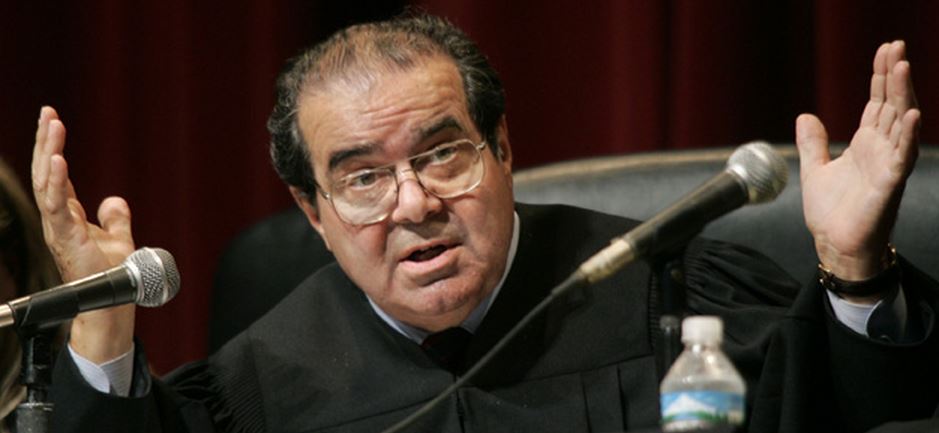
The voice of conservatism on the Supreme Court, Justice Antonin Scalia, died Saturday at age 79. As soon as I heard the news, the scale of the disaster was apparent. On most cases where conservatives prevailed, the majority was 5-4, and to allow President Obama to replace Scalia with a liberal would tilt the court decidedly to the Left. Therefore, this unexpected vacancy in the final year of Obama’s term produces a crisis. The Republican-controlled Senate will almost certainly attempt to block whoever Obama nominates, and this high-profile political battle in Washington will be fought out during a presidential election year. With the nation already teetering on the brink of political revolution — if the Democrats win the election, the GOP may shatter into incoherent fragments, with unknown consequences — the death of Scalia brings into sharp focus the issues confronting America in the 21st century.
Terms of the settlement in John Doe v. Washington and Lee University are confidential, as is customary, but given the self-congratulatory tone of the university’s statement — which the plaintiff’s attorneys must have approved — my hunch is this: The university agreed to expunge this charge from John Doe’s record, pay his attorney’s fees, and give him a relatively small sum (say, $10,000) in exchange for avoiding a trial that could have exposed the university to devastating negative publicity. Among the more than 100 lawsuits filed against universities by male students who say they were falsely accused of sexual misconduct and denied due process in the campus kangaroo court system, the Washington and Lee case was one that most blatantly demonstrated the kind of anti-male prejudice now rampant in higher education:
Doe’s lawsuit asserted that the odds were stacked against him during a hearing before the Student Faculty Hearing Board — a process that he argued was slanted to favor female accusers over male defendants.
For one thing, he claimed, a university administrator who handled the investigation in November 2014 recently had given a talk on campus about “regret equals rape,” or the argument that what first passes for a consensual sexual experience later can be called a rape by a woman who has second thoughts.
Doe’s alleged victim heard those comments, the lawsuit alleged, and was influenced by them in her decision to bring charges seven months after their sexual encounter.
And in alleging a rush to judgment by the disciplinary board, Doe pointed out that the decision to expel him was made one day after the publication of a Rolling Stone story — since discredited — about an alleged gang rape at a University of Virginia fraternity house. The article prompted a national outcry against what it portrayed as UVa’s culture of indifference to rape victims.
“The negative impact of the Rolling Stone article on UVa influenced W&L’s decision to find the plaintiff responsible for sexual assault so as to avoid a similar fate,” the lawsuit alleged. . . .
(To interrupt: This highlights a problem that feminists refuse to recognize. Whenever concerns are raised about false accusations, feminists will instantly cite statistics to the effect that only a tiny percentage of rape accusations are false. However, those statistics refer to criminal prosecutions, rather than the kind of campus disciplinary procedures involved in these cases. Furthermore, feminists have recently taken to shrieking “rape culture” constantly, inciting a climate of hysteria where false accusations become more likely, and in which students accused of sexual assault have none of the due-process rights accorded to common criminals in a court of law. It is almost certain that among the 100-plus lawsuits filed by students who say they were falsely accused are charges that never would have been made, had it not been for the recent feminist fear-mongering crusade.)
Doe has maintained that he and the student had sex that not only was consensual, but was initiated by her after they met at a party and wound up back in his room. His lawsuit states that she never complained about the sexual encounter, or a second one a month later, until after he began dating another woman later in the school year.
Bingo! Here is the answer to the question of motive. This is something else that feminists expect us to ignore in cases like this. Feminists become outraged by any suggestion that a woman would ever lie about sexual assault. Even in the UVA rape hoax, where Jackie Coakley obviously fabricated the whole thing, including the non-existent “Haven Monahan,” feminists like Jessica Valenti, Amanda Marcotte and Jaclyn Friedman won’t denounce the false accuser as a liar, and even refuse to use Coakley’s full name. Holding the false accuser accountable isn’t part of the feminist agenda, because to tell the whole truth about such matters might give a clue to why women sometimes do lie about rape.
Hell hath no fury like a woman scorned.
If you read John Doe’s complaint against Washington and Lee, you can surmise that the accuser was interested in a serious romantic relationship with John Doe, but he seemed to treat their two hookups as merely casual sex. When he later got serious with another girl, we may further surmise, his accuser regretted her previous liaisons with John Doe — she felt used, a “pump-and-dump” — and it was this sense of regret, and a desire for revenge against the boy who had treated her badly, that inspired her to accuse him of sexual assault.
Let me intrude here a thought that has crossed my mind in studying this general phenomenon. Despite the prevalence of shameless promiscuity among college girls nowadays, they are still very concerned about status and reputation. And the girl who feels she had been used and discarded may become self-conscious about the reputational damage she has suffered because — news flash — girls talk. Girls gossip and whisper and form cliques, and the girl who feels she has been snubbed by a friend or excluded from the “in crowd” will often become paranoid at her perceived loss of status. Did she hook up with the wrong guy? Did she go too far, too fast? Did he tell his buddies about their hookup? Has the gossip gotten around to her friends? Are the other girls talking about her behind her back?
This kind of concern — the shadow of shame — is a psychological undertow that is seldom mentioned in regard to the apparently cheerful hedonism of sexual “empowerment” that feminist celebrate. Robert Tracinski made a very astute observation about this:
Dubious claims about “rape culture” are an attempt to create an all-purpose scapegoat for the emotional dark side of promiscuity.
College campuses have long since been taken over by a culture in which casual sex with acquaintances is considered normal and where slightly outré sexual experimentation is strongly encouraged, all of it spurred on by alcohol, which figures prominently in most of these cases. But it’s clear that some young women are not psychologically prepared for this. They have casual relationships and hookups, but then feel regret and emotional trauma when the experience ends up being emotionally unsatisfying or disturbing. Then they are encouraged, by the feminists and “rape culture” activists, to reinterpret the experience as all the fault of an evil man who must have coerced them.
Furthermore, I believe, modern communications — smartphones, email, texting, dating apps, and especially social media like Facebook — have exacerbated many of the problems surrounding casual sex. On the one hand, good-looking young people can advertise themselves online via OKCupid, Tinder, etc., and easily find potential partners. This is what “selfie culture” is really about. The girl posing provocatively in selfies she posts online is seeking attention, and while she may only be fishing for compliments to boost her ego, I can guarantee the single girl will check the profiles of anyone who responds to her selfies by actively flirting with her. The phenomenon of “long-distance relationships” that begin with online flirtation is one aspect of how the Internet has affected romantic activity, especially among the young.
On the other hand, social media can make it difficult for sexual hedonists to play the runaround game without anyone catching on. Back in the day before cell phones, it was easy to explain way a missed phone call, but now it is assumed that everyone is constantly accessible by phone, and young people consider it rude not to reply to a text message. Meanwhile, people list their relationship statuses on their Facebook profiles and a girl who goes on a date with a guy is likely to post Instagram photos of their evening together. How could a guy possibly hope to get away with cheating on his girlfriend under these conditions?
And am I the only one who sees how all this factors into the phony “campus rape epidemic” scare? In an age when young people’s romantic lives are commonly so visible online, with sites like Facebook effectively creating a continuously updated permanent record, the stakes are very high for the college girl concerned about her reputation. This in turn has consequences for the college guys who are seeking casual short-term companionship — the quick hookup after a party, or a non-monogamous “friends with benefits” arrangement. When you hear stories about guys and girls “stalking” their exes via Facebook or sending them harassing emails or text messages, you realize how a single episode of carelessness can have enormous ramifications in the New Media Age.
OK, now factor in the Law of Large Numbers. If you have many millions of college kids out there engaging in episodes of carelessness on a regular basis, you will inevitably have a certain number of genuine sexual assaults. However, you will also have an even larger number of unhappy college girls with hurt feelings and remorse. Among those broken-hearted and lonely girls — and there must be many thousands of them on campuses all across the country — there will be a certain number who decide to turn disappointment into revenge.
We may not agree on what the overall picture is, in terms of percentages and statistics, and in many cases it is quite nearly impossible to tell whether an accusation of sexual assault is true or false, but John Doe v. Washington and Lee shows how feminists who foment a climate of sexual fear help create the conditions in which men are falsely accused and denied their due-process rights.
Are you ready for the real kick in the head? Washington and Lee, whose history stretches back to its founding before the American Revolution, was for more than 200 years an all-male school, and did not admit its first female undergraduate student until 1985. Scarcely 30 years after that, half the university’s enrollment is female, and any male student who enrolls there knows he will be immediately expelled if his ex-girlfriend decides “regret equals rape.” This is why parents pay for their sons to attend Washington and Lee (annual tuition $46,417), a school where “equality” means that male students have no rights at all.
“Our elites are fixated on how disappointed they are with the tawdry public precisely because that allows them to avoid examining their own colossal failures.”
— Ace of Spades, 2011
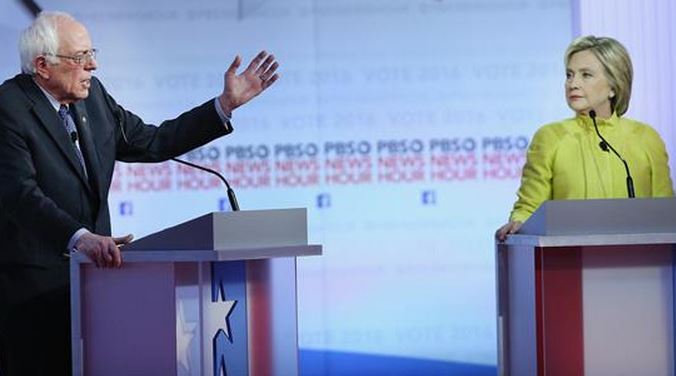
Ed Driscoll quoted Ace in the context of reminding us how much liberals hate America, or at least that part of America where white heterosexual men work for a living. It was a strange thing to watch Thursday’s debate between the insurgent socialist Sen. Bernie Sanders and the increasingly frantic former frontrunner Hillary Clinton, where the key issue seemed to be which one of them was more capable of destroying whatever fragments of American civilization might still be intact after Barack Obama concludes his eight-year effort to wreck the country.
Bernie’s plan has the virtue of simplicity:
Loot the banks;
Plunder the rich;
and
Free stuff for everybody!
That kind of agenda is perennially popular with the disgruntled moochers and radical fanatics who vote in Democrat primaries and, alas, Hillary has to play the unpopular role of the grown-up telling the kids they can’t have ice cream for breakfast. Trying to be the “mainstream” candidate in a Democrat primary is always a tricky exercise, as Hillary found out in 2008 when her decades of loyal service to her party’s anti-American policies were spurned in favor of the half-Kenyan upstart from Chicago. Despite all his bold promises, Obama hasn’t done all his supporters had hoped. There is still money in banks (“Loot them!”) and the rich still have most of it (“Plunder them!”) and there still isn’t as much free stuff as Democrat voters want the government to give them, namely everything.
The Democrat Party is the world’s most successful hate group. It attracts poor people who hate rich people, black people who hate white people, gay people who hate straight people, feminists who hate men, environmentalists who hate the internal combustion engine, and a lot of bratty college kids who hate their parents. However, the real secret of the party’s success is that it attracts the support of journalists who hate Republicans, and who therefore work tirelessly to convince the rest of us that we should vote for Democrats.
This is why I’ve decided to remain neutral — or at least, not to get too excited — about this year’s GOP primary campaign. During the 2012 campaign, I was flying and driving all over the place to cover the epic struggle for the nomination, only to end up with Mr. Inevitable, Mitt Romney, as the candidate. What’s the point, really? No matter who the Republicans nominate for president, the Organized Forces of Liberal Journalism will paint him as a greedy, cold-hearted, woman-hating racist. If the GOP nominated a Buddhist monk or a Latina lesbian, still the New York Times and NBC News would find a way to convince themselves that the Republican candidate represented everything liberals hate about America — the military, the police, Christianity, capitalism, the internal combustion engine and heterosexual white men who work for a living.
American journalism is a temple devoted to promoting a religious faith in which the only true virtue is voting for Democrats. Every four years, the media assume the role of latter-day prophets, whose mission is to warn us of the apocalyptic disaster that will befall the nation if a Republican is elected president. Switch your TV over to MSNBC for a few hours and you can see what this partisan zeal looks like when it is not filtered through the dishonest pretense of “objectivity.” It is important to realize that everyone employed in any position of influence by the New York Times, the Washington Post and the Associated Press is as fervently “progressive” as Rachel Maddow and Chris Matthews. The editors of newspapers and the producers of network news distort or suppress any story that does not exactly conform to the pro-Democrat narrative.
When Islamic terrorists commit mass murder in San Bernardino, the media portray this not as a story about the dangers of radical Islam, but rather a story about the urgent need to infringe the right of law-abiding citizens to own firearms. No gun should ever find its way into the hands of a heterosexual white man who works for a living, according to liberal journalists who consider Republicans to be a greater danger than ISIS or machete-wielding Somali Muslim immigrants.
So the debate in Wisconsin between Sanders and Clinton was an exercise with the goal of determining which candidate could go farthest in blaming every problem in the world on banks (“Loot them!”), the rich (“Plunder them!”), white heterosexual men with jobs, and other Evil Forces of Social Injustice that the Republican Party is presumed to represent. The two Democrats disparaged each others’ records and character, but agreed entirely as to their basic goals. Whatever foreign policy issue or domestic problem they were asked to address, Hillary and Bernie always blamed the Evil Forces of Social Injustice, and promised to do everything in their power to punish the Republican wrongdoers responsible.
To say that Hillary Clinton was shameless in her pandering to Democrat voters is to understate the transparent desperation in her efforts to appease the kind of left-wing fringe kooks who take Rachel Maddow seriously. At one point, Hillary began ranting about the Koch brothers — who have replaced the Religious Right as the sinister bogeyman in liberal imaginations — and at another point she also twice used the clunky acronym LGBT in less than a minute:
“I am not a single-issue candidate, and I do not believe we live in a single-issue country. I think that a lot of what we have to overcome to break down the barriers that are holding people back, whether it’s poison in the water of the children of Flint, or whether it’s the poor miners who are being left out and left behind in coal country, or whether it is any other American today who feels somehow put down and oppressed by racism, by sexism, by discrimination against the LGBT community, against the kind of efforts that need to be made to root out all of these barriers, that’s what I want to take on. . . . Yes, does Wall Street and big financial interests, along with drug companies, insurance companies, big oil, all of it, have too much influence? You’re right. But if we were to stop that tomorrow, we would still have the indifference, the negligence that we saw in Flint. We would still have racism holding people back. We would still have sexism preventing women from getting equal pay. We would still have LGBT people who get married on Saturday and get fired on Monday.”
Leave aside any question of policy that may be involved here, because no one could imagine that Bernie Sanders is any less adamant than Hillary in opposing discrimination. Rather, let us ask, first, how significant is such discrimination in the grand scheme of things? And second, we may ask, why did she use this acronym? If Hillary had said “the gay community” and “gay people,” would anyone watching the debate have imagined that lesbians, bisexuals and transsexuals were not also included in the generic category? The use of the acronym “LGBT” would seem to be an effort by Hillary to speak the jargon of hardcore activists and the sort of bratty college students who major in Gender Studies.
“Oh, she gets it!” was the reaction Hillary hoped her use of this acronym would elicit from young activists. “She’s inclusive!”
Being flattered and pandered to, being promised the sun, the moon and the stars by politicians oozing sympathy for you — Democrats have been running this three-card monte hustle for as long as anyone can remember. Once upon a time, William Jennings Bryan stirred the ignorant masses with his talk of mankind being crucified on a cross of gold, and all that Democrat noise about the Free Coinage of Silver didn’t really have anything to do with anything that made any difference at all to the lives of ordinary Americans. It was just so much half-mad demagoguery to stir up discontent among the rubes, and here were are in 2016, watching Democrats do the same thing they have always done. The only difference, really, is that we now have polls and consultants to tell Democrats which rubes to target with their shameless pandering. Exactly how much discrimination affects the daily lives of “LGBT people” is as irrelevant now as was the question of whether making silver coins legal tender would have any meaningful impact on the plight of farmers and factory workers to whom William Jennings Bryan was pandering.
Of course, back then, the voters to whom Democrats pandered were heterosexual white men who worked for a living, but the principle — dishonestly promising that the federal government will eradicate all the world’s woes — was the same, and the fools who believe Democrat rhetoric today are every bit as deluded as the struggling farmer who thought “Free Silver” was the solution to his problems in 1896.
The Bernie Sanders campaign is the Occupy Wall Street movement, but without girls getting raped in tents.
“You were right,” said Eddy in the playfully defeated tone they’d enjoyed for decades.
Mary reached through his arm to touch his hand as he turned to kiss her forehead.
They stood at the rail to view the high school track where their grand-daughter had just set a school record in the 100 yard dash.
“You were always so skeptical of her mother and her parenting,” chided Mary.
He laughed with joy to himself, the way a good husband does when agreeing with his wife, while being quite confident that a jury of their peers would’ve come to the opposite conclusion.
“Zoe Quinn” was Patient Zero of the #GamerGate controversy. A tattoo-covered, mentally ill ex-stripper whose real name is Chelsea Van Valkenburg, Quinn was the creator of a tediously dull game called “Depression Quest.” She broke up with her boyfriend, a software geek named Eron Gjoni, and allegedly became intimate with a videogame journalist named Nathan Grayson. In August 2014, Gjoni published a nearly 10,000-word article exposing Quinn’s alleged misconduct. Last July, I summarized the essence of the #GamerGate scandal:
Quinn was accused of gaining favorable coverage of her work — which is allegedly useless and awful — by providing Grayson and others access to her nasty poontang. And when these allegations of quid pro quo were published by one of Quinn’s embittered ex-lovers, Quinn’s defenders accused her critics of misogyny.
There were all kinds of background factors involved, but liberals decided that the narrative was about “misogyny” within the male-dominated videogame industry, and also about women being “harassed” online. We can stipulate both of those points — yes, many videogame dudes are crude sexists, and yes, women are targeted for harassment — without allowing ourselves to be distracted from the essence of #GamerGate, namely that some women are shrewdly exploiting gender as a means of gaining lucrative advantages. The videogame industry would very much like to attract more female players, and this has created certain incentives that attract cunning opportunists.
When you factor in the desire of corporations to insulate themselves against discrimination lawsuits by hiring more women, and also the “white knight” tendencies of some men (including “progressive” journalists like Grayson), the suspicions of unethical favoritism behind #GamerGate weren’t “misogyny,” but basic common sense.
All of that background was obscured by shrieks of “harassment” during the #GamerGate controversy, and few of the self-proclaimed Victims of Misogyny shrieked louder than Zoe Quinn. She sought a restraining order against Gjoni (discussed here by Eugene Volokh) and pressed charges of criminal harassment. Now suddenly, the charges have been dropped.
Why I Just Dropped The Harassment Charges Against The Man Who Started GamerGate https://t.co/i2cyIvn74b
Don’t let me stop you, but my eyes glazed over when she claimed to have post-traumatic stress disorder (PTSD) as a result of people saying mean things about her on the Internet. Keep in mind, this isn’t about whether Eron Gjoni is a Bad Ex-Boyfriend — obviously, he is — and it’s not about whether people should say mean things on the Internet — obviously, they shouldn’t — but rather the question is whether this has anything to do with “social justice.” And it’s also a question of whether an entire industry should be conformed to the zany whims of mentally ill ex-strippers and other such feminist crackpots. Must everything in our culture, including videogames, be banned as “misogyny” if it is judged unacceptable by the ideological standards of Gender Studies majors?
Feminism Is a Totalitarian Movement to Destroy Civilization as We Know It, and restricting freedom of speech — effectively prohibiting anyone from criticizing feminism — is necessary to the feminist movement’s success. The First Amendment does not protect libel or harassment. However, if Zoe Quinn is a public figure, then Eron Gjoni’s allegations that she was using sex to gain favorable coverage for her stupid videogames could be construed as journalism in the public interest. It is never a crime to publish the truth, and the truth is that Chelsea Van Valkenburg (alias “Zoe Quinn”) is a mentally ill ex-stripper.