@Alexs1776 Brings The #Boom

by Smitty


From the last press conference a week back, emphasis mine:

On Obamacare, the president allowed he’d made mistakes when it came to the health care rollout. “Even though I was meeting every other week, every three weeks with folks and emphasizing how important it was that consumers have a good experience … the fact is it didn’t happen in the first month, first six weeks in a way that was at all acceptable, and since I’m in charge, obviously we screwed it up.”

You’ve got to respect a leader that’s singular in his understanding of who’s in charge, and somehow, ambiguously, vaguely plural in his grasp of who tubed it.

When #OccupyResoluteDesk says ‘we’, I take him to mean ‘you’. You bitter racist cling-ons, you.

via @Alexs1776

Update: welcome Instapundit readers!

Obama to #SouthSudan: Good Luck

If you expected any determined U.S. action to end this civil war, my condolences on your Nobel Peace Prize disappointment:

“This conflict can only be resolved peacefully through negotiations. Any effort to seize power through the use of military force will result in the end of longstanding support from the United States and the international community.”

This is just noise, which any rebel leader or armed tribal mob will scornfully ignore, if they even bother to notice because, contrary to the president’s assertion, conflicts often are revolved violently through the use of military force, and without regard to a lot of diplomatic chatter from “the international community.” The man with a gun in his hand generally only stops fighting when confronted with superior force, and there is nothing in Obama’s statement that indicates any effort by the U.S. in that direction.

So we’re sitting this one out, I guess. Turning our attention away from irrelevant noise, let’s talk about what matters, i.e., the war:

Former South Sudan Vice-President Riek Machar has said rebel troops have captured the key oil-producing state of Unity and control much of the country.
Mr Machar also confirmed to the BBC that the forces fighting the government were under his command.
The country has been in turmoil since President Salva Kiir accused Mr Machar a week ago of attempting a coup. . . .

(Which, of course, he was.)

Mr Machar, whose claim to control Unity could not be independently verified, told the BBC that a senior military commander, Gen James Koang, had gone over to the rebels earlier in the week.
However, government forces say Gen Koang defected alone and did not take any troops with him.
Unity, a state on the border with Sudan, produces much of South Sudan’s oil, which accounts for more than 95% of the country’s economy.
Mr Machar added that he was prepared to negotiate with the government if politicians arrested this week were released and transferred to a neutral country such as Ethiopia.
Mr Kiir also agreed to negotiations after meeting African mediators on Friday.
But government troops are currently trying to retake Bor, in one of the most volatile regions in the country.
Troops backed by helicopter gunships were advancing on the town, army spokesman Philip Aguer told AFP news agency.

More talk, talk, talk:

The African Union called on Saturday for an immediate ceasefire in South Sudan, where U.N. staff say hundreds of people have been killed in nearly a week of fighting.
In a statement, it described the killing of U.N. peacekeepers and civilians at a U.N. camp as a war crime.
Fighting that began on Sunday in the capital Juba has swiftly spread to other parts of the country, fuelled by ethnic divisions between the main Nuer and Dinka tribal groups.
The African Union said in a statement that its chairwoman, Nkosazana Dlamini-Zuma “calls for an immediate humanitarian truce for the Christmas season, as a sign of a commitment by all concerned to the well-being of the people of South Sudan”.

The New York Times provides background:

Like many conflicts in this tenuous nation, the fighting has taken on an ethnic dimension, human rights workers say. Mr. Machar, the former vice president removed over the summer when Mr. Kiir summarily dismissed his entire cabinet, is a Nuer. The president belongs to the majority Dinka ethnic group.
In the capital, South Sudanese forces have targeted members of the Nuer ethnic group, killing many and detaining others, including soldiers, lawmakers and students, rights workers and refuge seekers say.
But outside the capital, in Jonglei State, the reverse has occurred as well, with Nuer militiamen targeting Dinka, descending on United Nations compounds where thousands of civilians have fled for safety and carrying out attacks on oil facilities that have resulted in what the Security Council called “the heavy loss of life” among workers.
“We are deeply concerned that ethnically based attacks on all sides will lead to revenge attacks and more violence,” Daniel Bekele, Africa director at Human Rights Watch, said in a statement.
Other observers have said that politics, not ethnicity, are driving the conflict.
“It is a power struggle,” said Zacharia Diing Akol, an analyst at the Sudd Institute in Juba. “Ethnicity is an afterthought.”

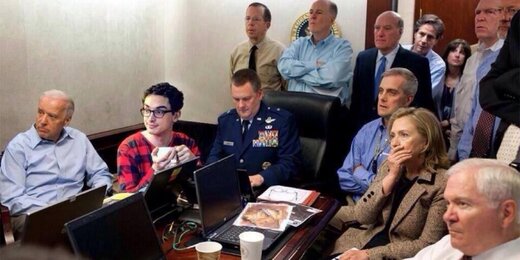
UPDATE: A young Heritage staffer works weekend:


PREVIOUSLY:


Bill Whittle Meets Black Sabbath

by Smitty

Bill Whittle retains his restrained pose here during The End of the Beginning:
. . .which title is the same as the opening cut for the latest Black Sabbath record:

Is this the end of the beginning?
Or the beginning of the end?
Losing control or are you winning?
Is your life real or just pretend?

Reanimation of the sequence
Rewind the future to the past.
To find the source of the solution;
The system has to be recast.

The demolition of the entire American economy seems to be the goal of this Administration. What makes Black Sabbath an especially useful choice for a soundtrack is the sort of slow, plodding, methodical swath of acoustic destruction they bring.

“Methodical swath” is precisely how I’d characterize what Obama has achieved: he has blown money in the multi-trillion dollar range, and there has been seemingly nothing that could stop him. No amount of protest, parliamentary effort, elections, history, math, or common sense can do more than delay President Shiv-a Country.

It’s so bad, we have the spectacle of Paul Ryan serving up a total steamer of a budget with a toss of his head and a “Well, best we could do” attitude. Has there ever, ONCE, been a historical case of a spending cut occurring as planned in a future year? Because it’s as though Ryan is on board with “If you like your spending cut, you can keep your spending cut,” where ‘keep’ means ‘just keep pushing that noise into the future’.

What’s desperately needed is the leadership and the will to say “Enough” and articulate reform platform that says “The collapse has gone on for long enough; here is a new course.”

#SouthSudan Update: Obama Urges Calm, Reconciliation, Sends Small U.S. Force

President Obama has sent 45 troops — just to protect U.S. personnel and property — to South Sudan, and issued a statement:

In 2011, millions of South Sudanese voted to forge a new nation, founded on the promise of a more peaceful and prosperous future for all of South Sudan’s people. In recent years, against great odds, South Sudan has made great progress toward breaking the cycle of violence that characterized much of its history.
Today, that future is at risk. South Sudan stands at the precipice. Recent fighting threatens to plunge South Sudan back into the dark days of its past.
But it doesn’t have to be that way. South Sudan has a choice. Its leaders can end the violence and work to resolve tensions peacefully and democratically. Fighting to settle political scores or to destabilize the government must stop immediately. Inflammatory rhetoric and targeted violence must cease. All sides must listen to the wise counsel of their neighbors, commit to dialogue and take immediate steps to urge calm and support reconciliation. South Sudan’s leaders must recognize that compromise with one’s political enemy is difficult; but recovering from unchecked violence and unleashed hatred will prove much harder.
Too much blood has been spilled and too many lives have been lost to allow South Sudan’s moment of hope and opportunity to slip from its grasp. Now is the time for South Sudan’s leaders to show courage and leadership, to reaffirm their commitment to peace, to unity, and to a better future for their people. The United States will remain a steady partner of the South Sudanese people as they seek the security and prosperity they deserve.

This is a good first step, although I’d feel better if he had sent 450 troops instead of 45, but OK. My concern is that South Sudan is flanked on the west by Central African Republican, which has recently descended into anarchy, and the Islamic Khartoum government to the North would like nothing better than instability in the South to justify intervention. The tribal aspect of the fighting in South Sudan is the real danger: “the race card is being played by both sides” —  which sounds crazy to American ears, since both the Dinka and Nuer are black as coal, but tribal animosities are the bane of political stability in modern Africa.

Thursday’s attack on a United Nations peacekeeping base in Jonglei killed three Indian troops, and there’s this:

South Sudan’s government declared that its security forces are in “absolute control of the situation,” but admitted later Thursday that the central government had lost control of Bor, the capital of the country’s largest and most populous state, where barrages of gunfire were reported.

This is not good news:

[R]ebels have taken the town of Bor.
The town, which lies about 200 kilometers (125 miles) north of the capital, Juba, was under heavy shelling, said Col. Philip Aguer, an army spokesman. Bor Mayor Mhial Majak Mhial said the town was under rebel control and heavy artillery was in use. . . .
President Salva Kiir has blamed soldiers loyal to his former vice president, Riek Machar, for starting the violence.
“The government has lost control of Jonglei state to the forces of Col. Machar and his group,” government representative Ateny Wek Ateny told CNN, referring to the state where Bor is situated.
The government could not yet confirm the number of fatalities from the violence, but “casualties are in the hundreds, including army forces and civilians,” Ateny said.

Lots more at the link. Thousands of refugees are fleeing. Even the best-case scenario — government forces swiftly defeating the pro-Machar rebels — would likely mean weeks of fighting and hundreds more casualties. And the worst-case scenario is almost unthinkable, a full-blown Rwanda-style ethnic bloodbath.

UPDATE: Andrew Green reports from Juba for Foreign Policy:

It will probably never be clear what triggered the Dec. 15 firefight that broke out at a Juba military barracks and has now brought the world’s newest country to the brink of a civil war. In the hours after the barracks shootout, fighting spread rapidly across the city — leaving hundreds of people dead and tens of thousands displaced.
By the following afternoon, before the army could even launch its investigation, President Salva Kiir — in full military fatigues — appeared on a delayed state television broadcast to denounce the fighting as an attempted coup by his former deputy, Riek Machar, a gap-toothed mechanical engineer turned fighter in the Sudanese civil war. Hours later the police detained ten leading political figures.
Machar, who slipped out of Juba and into hiding around the time the other politicians were being rounded up, fired back in an interview with a local newspaper two days later. He called the fighting “a misunderstanding” between soldiers and accused Kiir of using the clash as a cover to remove his rivals.
Whether coup or confusion, the incident has revealed just how fragile the coalitions that once held the country together really were.
Independence has not come easy for South Sudan. After decades of war, a country the United States helped midwife into existence less than three years ago, has come to the brink of war with Sudan and watched its economy crumble after it shut down oil production early last year over a refusal to pay grossly inflated transit fees the government in Khartoum was charging to use its pipeline. Meanwhile, rebel groups have continued to crisscross vast swathes of the country, engaging soldiers and disrupting humanitarian efforts. But now South Sudan faces its most serious challenge: Unresolved political divisions have already caused hundreds of deaths and now threaten to split the country along ethnic lines. . . .

Read the whole thing.



Schizophrenic Criminal Faker Making Meaningless Gestures? Hmmm …

The Washington Post reports:

The sign language interpreter who gestured meaninglessly at the Nelson Mandela memorial in South Africa on Tuesday has faced charges of murder, rape, theft, breaking and entering, malicious damage to property and kidnapping, according to eNCA.com.
The South African news site said the outcome of the murder charge against Thamsanqa Jantjie, brought in 2003, was unknown because the court case file is “mysteriously empty.”
Many of the other charges against Jantjie, dating back to 1994, were eventually dropped, eNCA reported, because he was deemed mentally unfit to stand trial. . . .
The disclosures reinforced questions about how Jantjie managed to get hired to stand right next to many of the powerful world leaders who spoke at the memorial for the late South African president in a large stadium in Soweto. Leaders of South African groups devoted to helping the deaf pointed out that Jantjie was making arm motions that made no sense and said he was a fake.
Jantjie has said he suffers from schizophrenia and was hearing voices when he was on stage. He said that he saw angels, according to the Associated Press, and that he could be violent.

The People’s Cube is having wwaaayy too much fun with this one.

Donald Douglas remembers that there are 5 A’s in “RAAAAACISM!” 


Obama’s Underpants Gnome Economy

Remember the infamous business plan from the South Park episode?

  1. Collect Underpants
  2. ?
  3. Profit

Say hello to the president’s economic theory:

It would be an insult to readers to explain why this won’t work, but I will say that in my adult lifetime, every increase in the minimum wage has been followed within a year or two by a recession. Drew M. at AOSHQ endeavors to address the flaws in Obama’s idea, but it’s depressing to think that any adult can’t figure out why raising the minimum wage inevitably causes an increase in unemployment.

And speaking of depressing things to think about, we’ve got 9 million people on disability, 15% of them for mood disorders!

Mood disorders! More than a million Americans are currently collecting a check every month because they feel sad.

It that’s not enough to make you fly into a manic rage . . .

The Declaration of Independence speaks of “the pursuit of happiness” as a natural right, but we can’t re-distribute happiness, can’t we?Nevertheless, we’ve got 1.3 million people getting disability payments for mood disorders, and Medicaid pays for their happy pills.

If that’s not enough to drive you crazy, try this:

House Minority Leader Nancy Pelosi (D-CA) on Thursday said Democrats would not support a budget deal that does not extend emergency unemployment benefits, which are set to lapse on Dec. 28 for about 1.3 million people.

Right: We must spend more money we don’t have to pay people not to work and WE ARE SEVENTEEN TRILLION DOLLARS IN DEBT!

OK, so now that you’re in a frothing bipolar rage, hurry to the nearest mental hospital and get diagnosed: Obama-Induced Mania.

There’s a lot of that going around lately . . .


The Great Conflation

Just got through watching President Obama lying on TV, and the method of his dishonesty is what fascinates me. He (and other liberals) engage in a sort of rhetorical prestidigitation, whereby health insurance is conflated with health care. In other words, the Democrats would have you believe, if you don’t have insurance, you just get sick and die. But what they never mention is that most people are healthy, and the vast majority of Americans — whether healthy or sick — had health insurance before ObamaCare was enacted.

If you were part of the X-million who did not have health insurance (those numbers were always estimates, and there was serious disagreement about how many were in the supposedly pathetic legion of The Uninsured), that didn’t mean you were doomed to die a painful death without benefit of medical care.

Most people without health insurance were healthy young people. But by relentlessly hyping the allegedly widespread misery of The Uninsured, liberals  sought to justify a complex new federal regulatory apparatus that changed health insurance for everybody — including people who already had insurance with which they were satisfied.

The President therefore promised that everybody who already had insurance could keep it, and further promised that their rates would not go up as a result of the new law. But he lied.

Now, the President is attempting to convince us that everything is just hunky-dory. People who continue to oppose this law, the President would have us believe, are against health care — that is to say, he is conflating this legislation with health care per se, so that if you are against this particular law, you’re pro-cancer or something.

That’s right: Republicans want people to get sick and die, because illness and death are the only alternatives to the President’s policy.

And we all remember what life was like before ObamaCare: Everybody was either sick or dead, except greedy Republicans, who made lucrative profits from their investments in Death, Inc.

As I say, the method of his dishonesty is fascinating.