The 1979 psychological thriller When a Stranger Calls is a cult classic, famous for one line: “The call is coming from inside the house.”
That line came to mind Tuesday night after I learned about an interesting controversy on BlueSky, the left-wing echo chamber where many Trump-haters fled after Elon Musk bought Twitter in 2022. A Canadian feminist, Phoebe Maltz Bovy, recently published a book The Last Straight Woman: On Desiring Men. A website published a 23-paragraph excerpt of Ms. Maltz Bovy’s book and, when this excerpt was promoted on BlueSky, the book’s theme and its author were angrily denounced.
Of course, I immediately ordered the book from Amazon. Anything that sends the BlueSky crowd into paroxysms of apoplectic rage must be good. After skimming through the excerpt of The Last Straight Woman, however, I quickly located the nexus of Ms. Maltz Bovy’s problem, specifically in the sentence when she declares “we need to be looking for feminist approaches to female heterosexuality.”
“Sex Trouble: Radical Feminism and the Long Shadow of the ‘Lavender Menace’,” first posted here in July 2014, became the first chapter of my 2016 book Sex Trouble. What most people don’t understand about feminism is that, almost from the very beginning of the so-called “Women’s Liberation Movement” in the late 1960s, lesbians were influential in the movement’s policies and rhetoric. Lesbians were involved in the creation of the first Women’s Studies programs at colleges and universities, and the curriculum in such programs has always reflected the anti-male/anti-heterosexual bias of the lesbian faculty.
Anyone who cares to research the biography of Charlotte Bunch can understand this. Prior to becoming involved in the feminist movement, Bunch had a husband, but in 1971 she got divorced, came out as a lesbian and founded a radical commune/cult called The Furies. From there, Bunch went on to become a professor at Rutgers University and an adviser to Hillary Clinton. The incompatibility of heterosexuality with women’s liberation was the essence of Bunch’s feminist ideology:
Bunch’s 1972 manifesto, “Lesbians in Revolt” essentially declared universal lesbianism as the end goal of feminism:
Lesbianism is a threat to the ideological, political, personal, and economic basis of male supremacy. The Lesbian threatens the ideology of male supremacy by destroying the lie about female inferiority, weakness, passivity, and by denying women’s “innate” need for men. …
Our rejection of heterosexual sex challenges male domination in its most individual and common form. We offer all women something better than submission to personal oppression. We offer the beginning of the end of collective and individual male supremacy.
This argument was expanded . . . by Margaret Small in “Lesbians and the Class Position of Women,” which was cited in such later books as Separatism and Women’s Community by Dana Shugar and The Invention of Heterosexuality by Jonathan Katz. In 2015, while researching my own book, I summarized Margaret Small’s argument:
[Small] offered a Marxist interpretation of “lesbian consciousness” as part of a “revolutionary struggle” to end women’s “oppression” in the “relationship of slavery,” as she called marriage. …
Invoking the historical theories of Friedrich Engels (colleague of Karl Marx and co-author of the 1848 “Communist Manifesto”), Small declared: “Class society arose because of the oppression of women. . . . The exploitation of all women by all men made possible the exploitation of some men by other men. The more exploitative the relationship between men and women becomes, the stronger and more vital become the institutions of male supremacy.” …
“In terms of the oppression of women, heterosexuality is the ideology of male supremacy,” Small wrote. “In order for men to have a justification for exploiting women and an ability to enforce that exploitation, heterosexuality has to become, not merely an act in relation to impregnation, but the dominant ideology.”
Under male supremacy, Small asserted, women “become defined as appendages to men” in a system “which maintains the ideological power of men over women.”
Marriage is slavery, “heterosexuality is the ideology of male supremacy,” and if you don’t believe that, can you really call yourself a feminist? . . .
Live Gameshow Casinos in the UK: An Expert Review Guide
What Makes a Live Gameshow Casino Stand Out
Live gameshow titles have become one of the fastest-growing categories in the UK online casino market. Rather than spinning reels, players join a streamed studio hosted by a real presenter, with outcomes driven by physical apparatus such as money wheels, ball machines and card draws. The format blends the sociability of a live dealer table with the pacing of a TV quiz show. Discover further information on full guide.
When reviewing these sites, the first thing to check is the breadth of the gameshow lobby. A strong operator will carry the full Evolution and Pragmatic Play catalogue, including Crazy Time, Monopoly Live, Dream Catcher, Mega Wheel and Sweet Bonanza Candyland. Anything less than eight live gameshow titles is a thin offering.
Stream quality matters just as much as variety. Look for studios running at 1080p with latency under two seconds, because a laggy feed ruins the experience on timed bonus rounds. Reputable UK-licensed sites publish their RTP figures openly, and gameshows typically sit between 96% and 97%.
Finally, review how the casino presents its live section. Clear navigation, visible betting limits and honest session tools separate a premium operator from an also-ran. The best sites display the presenter schedule and table limits before you log in, not after.
Bonuses, Stakes and Fair Play in the Live Gameshow Lobby
Live gameshow bonuses work differently from slot free spins. Because the games run on real tables with real presenters, most UK operators exclude gameshow titles from wagering contributions or cap their contribution at 10%. That is a fair structure, but it must be stated plainly in the terms.
A competitive welcome package for live players will offer a deposit match plus live cashback of between 10% and 25% on net losses. Some sites run weekly gameshow tournaments where a £50 buy-in can return prize pools of £10,000 or more, paid in GBP with no currency conversion.
Stake flexibility is a genuine differentiator. The strongest gameshow casinos let you enter bonus rounds from as little as 10p per spin, while high rollers can push £5,000 on a single round of Crazy Time. Review each site’s minimum and maximum bets before committing.
Fair play rests on the licence. Every operator reviewed here holds a UK Gambling Commission permit, which means segregated player funds, audited random number generators and access to independent dispute resolution. That protection is non-negotiable.
How We Score Gameshow Casinos for UK Players
Our review process weighs five factors. Game variety and studio quality account for 30% of the score, bonus transparency for 25%, payment speed for 20%, and mobile performance and customer support for the remainder. Payouts via Faster Payments should land within two hours; anything beyond 24 hours is marked down.
We also test the mobile experience directly. A gameshow stream that stutters on a 4G connection is not fit for purpose, so we score each site on load times and touch controls across iOS and Android browsers.
Responsible gambling tools carry weight too. Deposit limits, reality checks and self-exclusion via GAMSTOP must all be easy to reach from the live lobby. Casinos that bury these controls in account settings lose points.
Use this guide as a starting point, then verify the terms yourself. Read the bonus conditions, check the RTP on each gameshow, and set a budget before you join the studio. Play for entertainment, keep stakes within your means, and treat every live bonus round as exactly that , a bonus, never a certainty.
Like most red-blooded Americans, I could care less about soccer. That having been said, I am enjoying the hell out of the tweets and other social media posts by Euros and other foreigners visiting parts of America outside the blue urban shitholes and discovering Buc-ee’s, Waffle House, barbecue, local diners, Bass Pro Shops, and other wild delights found only in the fruited plains of Red America. They’re having their minds blown by ranch dressing, free refills, and air conditioning, and it’s fun to watch.
Today’s appetizer is some fan art of Shouko Komi and her “forever 17!” mom Shuuko* from the last World Cup. Ceterum autem censeo Silicon Valley et Hamas delendam sunt.
One thing about the passage of time is that, as you grow older, you begin to notice the shift of values. What was once widely accepted — the expected social norms of your childhood — come to be viewed as quaint, old-fashioned or perhaps even barbaric. When I was born in Atlanta in 1959, Dwight Eisenhower was still president, and the South was still governed by Jim Crow segregation. By the time I started first grade in 1965, the passage of the Civil Rights Act had eliminated segregation, although of course, the customs and attitudes of the Jim Crow era did not magically evaporate overnight. Because I was just a schoolboy at the time, the politics of all this was completely over my head. My parents’ generation, being raised with a stoic temperament and a concern for civility and courtesy, didn’t talk in front of the children about the various social upheavals of the 1960s, so I really can’t say with much certainty what their attitudes were. They were staunch Democrats (as everyone was in that time and place), and reasonably liberal as such things were reckoned in that era, but I don’t know much more about their beliefs.
By the 1990s, when I was married with a family of my own, and was viewing politics through adult eyes, the message of conservative Republicans had a lot to do with traditional family values.
John F. Kennedy and family, circa 1960.
How was it that what had been taken for granted in America just three decades earlier had become a right-wing political agenda? The standard answer is “the Sixties,” a reference to the multitudinous changes that destabilized our national culture during that tumultuous decade.
When I was a boy growing up in Douglas County, Georgia, practically all of the kids came from “traditional families.” Divorce was considered scandalous in my parents’ generation, and none of my childhood acquaintances were from “broken homes,” to use a quaint term. Whatever other problems we had, at least most kids in my generation didn’t have to deal with the confusing welter of household arrangements — stepfathers, stepmothers, stepbrothers, half-brothers, etc. — that had become so commonplace two or three decades later. No-fault divorce was one part of the problem, but by the 1990s, America also had a rapidly growing number of bastards, to use a word now considered taboo.
Some of y’all may be old enough to remember when Hillary Clinton’s 1996 book It Takes a Village was in the headlines, criticized for what it really represented, i.e., an argument for expanding government bureaucracy as a substitute for functional families. Living inside a cocoon of like-minded liberals, it is likely that Hillary Clinton never bothered to read the most important social policy book of the 1980s, Charles Murray’s Losing Ground. What Murray demonstrated was that the social welfare programs created (or vastly expanded) in the 1960s (LBJ’s “Great Society” agenda, the so-called “War on Poverty”) had actually harmed the poor people that liberals said they meant to help, by incentivizing behaviors that increased poverty, while discouraging behaviors that could lead to a better life. Contrary to what Hillary and other liberals believed, the best thing to do for poor people was to stop “helping” them this way — cut the welfare budget and eliminate the programs.
Ralph Reed (left) and Pat Robertson (right) in 1997
The arguments made by Charles Murray in Losing Ground were aimed at policy wonks, but the way the “family values” agenda entered the mainstream of Republican Party politics was via a popular TV preacher, Pat Robertson. Beginning in 1966, Robertson began co-hosting a weekday TV show, The 700 Club, which I remember my Grandma Kirby watching regularly in the 1970s. The 700 Club became the foundation of Robertson’s cable-TV channel, the Christian Broadcasting Network (CBN), which launched in 1977. Robertson had a large nationwide following by the time he announced his candidacy for the 1988 Republican presidential nomination. Even though he stood no chance against George H.W. Bush, the incumbent vice president, Robertson made a fairly respectable showing, collecting 115 delegates and more than a million votes during the primaries. Along the way, Robertson also developed a core group of grassroots volunteers (particularly in Iowa) and, most importantly, a mailing list of campaign donors.
The donor list from the Robertson 1988 campaign became the financial basis of the Christian Coalition, which in 1989 hired young Republican operative Ralph Reed to be its executive director. Reed’s success as a political organizer and strategist was crucial to the Republican takeover of Congress in 1994. While the lion’s share of credit for that belongs to Newt Gingrich — who himself praised the role of Rush Limbaugh in the 1994 campaign — a lot of the conservative “foot soldiers” who made that campaign a success were part of the army of activists that Ralph Reed had helped recruit and train. Thus you have a very condensed explanation for how “traditional family values” came to be seen as a right-wing agenda.
Most of what people think of in this context is opposition to (a) abortion and (b) “gay rights.” This is a very narrow and negative understanding of what has motivated Christian conservatives since the 1990s, namely, a desire to maintain (or restore) the middle-class married household as the defining institution of American life. As Charles Murray showed in Losing Ground, it was the decline of married-family households (or, viewed from the opposite end, the increase of children growing up in non-traditional households) that was largely responsible for a lot of other things that had gone wrong in America by the mid-1980s.
If there were any one thing I would like to stress in discussion of Christian conservatives and the so-called “Culture Wars,” it would be this: We cannot vote our way into heaven, nor can mere politics restore America’s “traditional family values.” Now let me tell you a story.
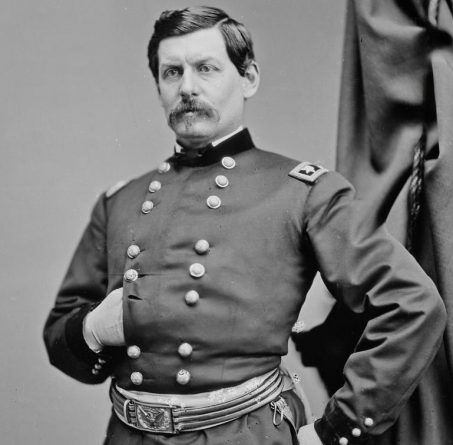
Gen. George B. McClellan
‘But You Must Act’
When he was first appointed to command the Union army defending the nation’s capital after the Yankees were defeated at Bull Run in July 1861, George McClellan was hailed as a heroic figure, destined for greatness. He set about training and equipping the rabble of raw recruits streaming into Washington, D.C., and began formulating a bold plan. Rather than marching out to fight the Rebels camped near the old Bull Run battlefield, McClellan instead would mount a massive amphibious project, transferring his army to the Virginia peninsula between the James and York rivers, thus to attack the Confederate capital of Richmond from the east. This would reverse the strategic picture; instead of the Union army being forced to defend the capital in D.C., instead the Souterners would be compelled to defend their own capital. The theater of war would be transferred from Abe Lincoln’s doorstep to Jefferson Davis’s backyard, so to speak. Lincoln approved this plan, but in consideration of concerns from Cabinet members and congressional leaders, stipulated that McClellan must leave behind in the vicinity of Washington enough troops to make sure that the Rebels didn’t make a leap at the capital while McClellan was busy shipping his army down to the Virginia peninsula. McClellan agreed to this, and as part of his arrangements, decided to transfer some troops that were then stationed in the Shenandoah Valley eastward to become part of the force defending the capital. With this problem taken care of, McClellan and his army of more than 100,000 men set sail from the wharves of Alexandria on March 17. The army disembarked at Fort Monroe, on the tip of the peninsula, and began moving inland, when disaster struck more than 200 miles away — disaster in the form of Thomas “Stonewall” Jackson.
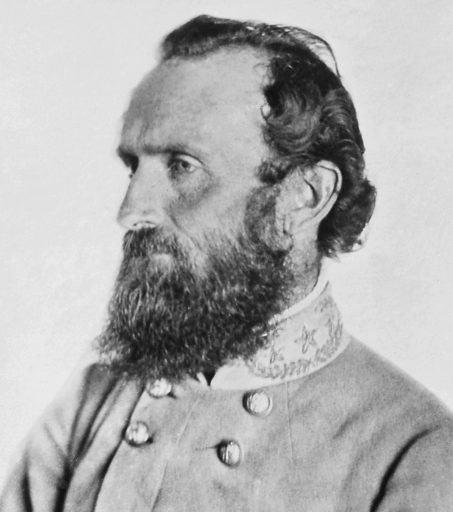
Confederate Gen. Thomas J. ‘Stonewall’ Jackson
Jackson commanded barely 4,000 troops in the Shenandoah Valley, and when he discovered that part of the Yankee army opposing him was being withdrawn, he resolved to attack the remainder immediately. It turned out that Jackson had underestimated the Union force that had been left in the Valley, and he suffered a bloody repulse when he attacked them at Kernstown on March 23. Despite this, however, Jackson’s aggression had a major strategic impact. Lincoln and others in Washington could not believe that Jackson had attacked with such a small force, and figured he must have at least 10,000 men in the Valley. McClellan being all the way down at Fort Monroe, Lincoln and his advisors set about to counter this perceived threat and, in the process, took a hard look at the actual number of troops that McClellan had left to guard Washington. What they found struck them as completely inadequate to the task — the capital seemed very vulnerable, and there was fear that Jackson’s attack at Kernstown might herald a Confederate offensive — which led Lincoln to withdraw from McClellan’s command an entire army corps, so as to make sure that D.C. was safe. Public criticism of McClellan’s slow progress in his Peninsula campaign was widely heard in the capital, as Bruce Catton narrates in Mr. Lincoln’s Army:
The clamour against McClellan deepened, became a clamour against Lincoln for keeping him in command. Lincoln tried to give McClellan an understanding of this increasing pressure as a factor which McClellan would have to keep constantly in mind when he made his plans; tried to show him that it was a pressure which, political conditions being what they so regrettably were, even the President of the United States might finally be unable to resist. On April 9, Lincoln wrote him: “And once more let me tell you, it is indispensable to you that you strike a blow. I am powerless to help this.” He concluded the letter by assuring McClellan that he would sustain him as far as he could: “but,” he added, “you must act.”
“You must act” — that is the essence of the message I would share with young people on this Father’s Day. However much anyone might hope to accomplish through politics, in terms of preserving “traditional family values” in America, what matters more is what we actually do in our everyday lives. Many millions of dollars in campaign contributions have been spent, and untold hours of labor by activists has been done in terms of electing candidates and promoting legislation that might advance a conservative agenda. What have I done? Well, I’ve stayed married to the same woman for 37 years, sired and raised six children to adulthood, and occasionally do what I can to help with the grandkids.
What I have done is to live “traditional values,” rather than merely to talk about them, or to vote for them. Once upon a time, living this way wasn’t considered political at all. People fell in love, got married, had kids, etc., and because almost everybody was living that way, there wasn’t anything controversial about it. Nowadays, however, to live that kind of life — husband and wife, mom and dad, “till death do us part” — makes you some kind of right-wing extremist. The SPLC might even put you on their “Hate Map” for suggesting that this is the best way to live.
Be an extremist, and have fun doing it. Certainly, I’ve had a blast.
Happy Father’s Day to all you right-wing extremists everywhere!
Most of the managers have their keepers in, which means I can scroll through the free agent list and start wondering if any of the desirable players are going to last until the 9th round when I pick. We have four openings in Pete’s league, so if you wanted to scratch that general manager/field manager itch, now’s your chance. Ceterum autem censeo Silicon Valley et Hamas delendam sunt.
The standard application fee for a B-2 tourist visa is $185, a sum that most Americans would consider trivial. In poor Third World countries, however, $185 might be more than a week’s pay, and that’s just for the application — paying $185 doesn’t guarantee the visa will be issued.
Keep that information in mind, as we discuss Abraham Hermosillo Alvarez, a Mexican who arrived in the U.S. in 2001 at age 6 along with his family, traveling on B-2 tourist visas. They never went back:
Federal officials say Abraham Hermosillo Alvarez, identified in court documents as the alleged ringleader of a plot to attack the White House UFC event this past weekend, was in the country illegally after overstaying a visa, according to information from Fox News Digital.
According to Homeland Security information in the documents, Alvarez came to the United States as a child and received deportation relief through the Deferred Action for Childhood Arrivals (DACA) program in 2014 after failing to leave when his B2 visa expired in 2001.
Five co?conspirators have been arrested this month in what investigators describe as a plan to use explosive?laden drones to force an evacuation from the event, followed by sniper fire aimed at the fleeing crowd. Federal authorities say Alvarez was responsible for planning, organizing and directing the planned attack.
Court records identified Alvarez as a foreign national after he consented to consular notification following his arrest this weekend, though the documents did not specify his immigration status or country of origin.
Immigration and Customs Enforcement has lodged a detainer for him following his arrest by the FBI in Omaha, Nebraska, on the day of the event. . . .
According to the Department of Justice, Alvarez used the name “Shepherd” in a group chat dedicated to planning the attack and allegedly responded “as many and as deadly as we can get” when asked about making drones with explosives.
Lauren Bis, DHS acting assistant secretary for media relations, had the following to say about Alvarez and his alleged involvement in this purported plot:
This illegal alien from Mexico should never have been allowed in our country. He was the ringleader of a failed terror attack targeting UFC Freedom 250 at the White House. … He and his co-conspirators now face charges of conspiracy to commit murder and conspiracy to commit violence on White House grounds. He will face justice and swiftly be removed from our country.
Given that Alvarez was about six years old when he came to this country in 2001 on a B-2 tourist visa (likely with family), I wouldn’t go so far as to state that he “should never have been allowed” into this country, but (assuming the reporting is true), the fact he never left suggests that whoever brought him didn’t have the appropriate “nonimmigrant” intent, i.e., the intent to return home. …
And when nonimmigrants — and B-2 tourists in particular — fail to depart as promised, it makes it more difficult their fellow countrymen to come here temporarily, but legally, in the future. Let me explain.
Section 214 of the Immigration and Nationality Act (INA) governs the issuance of nonimmigrant visas at consular offices abroad, and subsection (b) therein states that an applicant for such a visa is “presumed to be an immigrant” — that is presumed to be coming here permanently, not temporarily — “until he establishes to the satisfaction of the consular officer … that he is entitled to a nonimmigrant status”.
That “214(b)” ineligibility is the most common ground on which consular officers deny nonimmigrant visas, and when nationals of a specific country have high nonimmigrant “overstay” rates, consulates tighten up their nonimmigrant-visa issuances.
While I haven’t handled an immigration case in over a decade, I remain an attorney in good standing and receive calls from U.S. citizens and green card holders who are attempting, unsuccessfully, to secure tourist visas for their parents and other loved ones to come to this country for a visit.
It breaks my heart, but there is usually nothing I can do. “Once bitten, twice shy” doesn’t just apply to unfamiliar canines. Untruthful and noncompliant nonimmigrant visitors ruin others’ hopes, plans, and reunions.
When we hear the phrase “illegal immigrant,” we tend to think of someone wading across the Rio Grande or being smuggled over the border, but these “visa overstay” cases are also a huge part of the problem: Foreigners get into the country on tourist visas, student visas or temporary work visas, and then just never go back. And as explained, these cheaters make it more difficult for honest people to get temporary visas. They pay their $185 application fee and then get turned down for a tourist visa because some State Department staffer at the embassy suspects they won’t return after their visa expires. Dear reader, I am personally familiar with such a case, and it makes me angry.
For more than two decades, congressmen from both sides have tried to pass some form of “DREAM Act”, that is, an amnesty for aliens living in the United States illegally after arriving here — with and without their parents — as children.
And for nearly a quarter century, they’ve been unsuccessful, and regardless of how it turns out, this case is unlikely to further their cause. The failure of DREAM Act legislation led the Obama administration to create DACA, which provides quasi-legal status to aliens who entered the United States while under the age of 16 before June 15, 2007, who were born after June 15, 1981, who meet certain educational standards, and who have not been convicted of certain crimes. DACA was not created by Congress, or even by executive order or executive action, for that matter. Instead, it’s the product of a memo issued by then-DHS Secretary Janet Napolitano on June 15, 2012 (five months before that year’s presidential elections), that has become a political football ever since.
As its name suggests, DACA is a unique flavor of “deferred action”, an “inherently discretionary” exercise of “prosecutorial discretion” to which applicants have “no legal right”, though aliens granted deferred action don’t accrue periods of unlawful presence in the United States while in that status and are eligible to apply for employment authorization.
ICE is quick to add that “deferred action does not confer lawful immigration status upon an individual”, meaning that an alien granted DACA exists in a nether zone between legal and not.
How the hell has DACA survived? It’s not a law passed by Congress, nor is it an executive order. DACA exists because of a mere memo issued by Janet Napolitano 14 years ago, which ought to have been canceled the very day President Trump was first inaugurated in 2017, yet we still have many thousands of these DACA recipients in the country. Even if we stipulate that some of these people are potentially good citizens — having arrived here as children, through no criminal intent of their own, etc. — they have now had more than a decade to get their paperwork straightened out and obtain permanent legal residency (i.e., “Green Card” status) and go through the seven-year naturalization process.
The point here is that foreign lawbreakers make it more difficult for everybody else, in part because abuses of the immigration system make us Americans so angry that we start saying things like, “Mass deportation is the moderate option.” (Don’t ask about the extreme option.)
When politicians start using gimmicks like DACA to rig the system, it only compounds the anger among those of us who are smart enough to figure out that we’re being lied to, and who refuse to be guilt-tripped by a lot of “diversity is our strength” rhetoric or excerpts from the poetry of Emma Lazarus. Americans historically have been a pragmatic people, willing to apply practical common sense to any problem we encounter, but our leaders have taken advantage of our good nature by offering phony “reforms” and allegedly temporary measures like DACA that, upon closer examination, are really amnesty. Politicians know amnesty is unpopular, and therefore engage in attempted deception about what it is they’re doing. When we see through their charades and call them out, they then accuse of us of xenophobic bigotry: “RAAAAACIST!”
There is a certain handsome young fellow — an athlete and scholar from a fine Christian family — in a Latin American country famous for soccer and beef, who would very much like to visit the United States. About three years ago, this gaucho of the pampas was working in a coffee shop to earn his tuition when he made the acquaintance of an American girl who was spending her junior year of college studying abroad in a Spanish-language immersion program. Because the girl was very beautiful, of course the fellow at the coffee shop fell deeply in love with her. After she returned to America, the handsome young fellow went through the ordeal of trying to obtain a visa to come visit her (in order to meet the girl’s father, as is proper). He paid that $185 application fee and was turned down by some State Department hack at the U.S. embassy.
“Do not worry,” said the girl’s father. “This is the Biden administration. Once Trump gets in office, he’ll make Marco Rubio the Secretary of State, and my friend Marco will fix this problem.” The lovebirds are still waiting for this Hallmark Channel movie to reach its happy ending, but perhaps you understand my resentment of the status quo, where we’re expected to feel sorry for illegal aliens, even while the system makes life difficult for those who obey the law and follow the rules.
My interest in this issue is quite personal, and calling me a xenophobic bigot is only going to make me even angrier than I already am.
Remember: Mass deportation is the moderate option.
UPDATE: Welcome, Instapundit readers! It has been pointed out by commenters that Trump tried to end DACA, but that got overturned by a 5-4 Supreme Court, as if Cabinet secretaries can just determine immigration policy and, once such a policy is established, it can never be changed by any future administration. Exactly how that’s constitutional, I can’t understand. Neither could Justice Thomas:
DHS created DACA during the Obama administration without any statutory authorization and without going through the requisite rulemaking process. As a result, the program was unlawful from its inception. The majority does not even attempt to explain why a court has the authority to scrutinize an agency’s policy reasons for rescinding an unlawful program . . .
DACA was “unlawful from its inception,” and yet somehow it’s against the law to end it? It’s a mystery wrapped in an enigma.