Of Lawyers, Samoans and Journalism
Posted on | July 22, 2026 | 1 Comment
Over the weekend, I wrote:
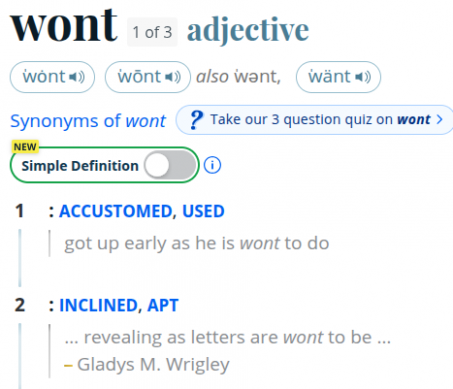
What is terrorism? It is the use of violence for political purposes, and is akin to guerrilla warfare — “insurgency,” as we are now wont to call it.
My use of the word “wont” in that sentence drew praise in the comments from my old friend Bert the Samoan lawyer:
Also, beautiful use of “wont.” The Bunhead would be proud.
“The Bunhead” is a reference to Mrs. Opal Lovett, an English instructor at Jacksonville (Alabama) State University who taught both Bert and me back in the day. Mrs. Lovett wore her hair in a bun, as did all proper old-fashioned Southern ladies back in the day. There were many such old-fashioned Southern ladies among the teachers of our youth. For example, my homeroom teacher in seventh grade was Mrs. Alexander, who spoke in a very deep drawl, more common in the coastal lowlands of the South than in the Piedmont region near Atlanta where I grew up. One of my childhood friends liked to tell about the time when Mrs. Alexander, offended by the smell of some students’ inadequate hygiene, briefly lectured a classroom about their “foul body odors,” which with her drawling voice struck my friend as hysterically comical.
Mrs. Alexander was the wife of Robert Alexander, who was principal of Turner Middle School at the time. His long and distinguished career as an educator in Douglas County made him the namesake of Alexander High School. When there was recently a sex scandal at Alexander High that made national headlines, I felt that scandal rather personally, having known the man for whom the school was named. Such behavior is unworthy of anyone associated with that name. But I digress . . .

JSU student newspaper staffer, 1983.
Bert the Samoan Lawyer will attest that, in my youth, I wasn’t much concerned with propriety and reputation, to put it mildly. Had there been a vote for “Most Likely to Become a Conservative Pundit,” certainly no one would have nominated me. While I showed some penchant for feature writing, as entertainment editor of the student newspaper at JSU, I had no interest in politics. It was Mrs. Lovett, in fact, who suggested to me my senior year that I should take some assignments writing regular news, sports, etc., in order to accumulate clippings that would demonstrate my ability to do different kinds of journalism. Almost by accident, after a couple of post-collegiate years doing various other things — nightclub DJ, forklift driver, rock-and-roll bands — I stumbled into a $4.50-an-hour entry-level job as a staff writer for a weekly paper in Austell, Georgia, and from there slowly worked my way up the ladder until I landed at the Washington Times in 1997.
That’s one of my quotes someone collected online, and a point that needs to be emphasized. At a family reunion down in Alabama many years ago, one of my great-aunts or distant cousins asked me what I was doing, and when I told her I was working for a newspaper, she replied, “Oh, you were always so creative!” Well, perhaps so, but newspaper reporting isn’t about “creativity.” In fact, it’s quite the opposite — in this business, you get fired for “creating” anything (e.g., Stephen Glass).
It is kind of weird, when you think about it, that we should regard the ability to write narrative prose as a creative talent akin to composing symphonies or carving statues. However good any journalist may be at his craft, he isn’t Mozart or Michelangelo. Grant that there is some element of innate aptitude involved in journalism, but merely being able to write a news story about a school board meeting — the kind of stuff a local newspaper reporter does — isn’t a “talent,” it’s a skill. Having started my career on the very lowest rung of the ladder, I was keenly aware that improving my skill was the key to getting ahead, and I consciously committed to improvement: Work harder, work faster, get better every day — but never let ’em see you sweat.
Eric “Otter” Stratton is my role model here. When he’s practicing golf with his Animal House brother Boon, there’s this colloquy:
Boon: “I gotta work on my game.”
Otter: “No, no, no, don’t think of it as work. The whole point is just to enjoy yourself.”
Treat your “work” as fun, and strive to make it seem you achieve success effortlessly. Those other guys, half-assing their way through life? They’re not even in the building when you’re burning the midnight oil, cranking it out in a desperate rush to meet your next deadline. You don’t owe them anything, especially not an explanation of why you’re better than them. You earned what you got, and if they envy the apparent ease of your success — imagining you’re just lucky — why let them in on your secret?
There was a time in the 1980s, when Bert the Samoan Lawyer was editor of a small newspaper in Alabama, and I was driving a forklift, and how I envied him! Even though Bert explained that it was a crappy job — overworked and underpaid — still it was obviously more prestigious than what I was doing, and I was surprised when he later quit the newspaper business and went to law school. Probably I should have heeded his warning about conditions in the journalism racket. There have definitely been times I wondered if maybe I shouldn’t have stuck to driving a forklift. However, Bert became a remarkable success as a lawyer, and on occasion has provided me with very valuable legal advice, free of charge. Somehow or other, the envious shoe got switched to the other foot, and Bert has from time to time expressed the idea that my Gonzo adventures in journalism are a greater achievement than his lofty status as the most eminent Polynesian-American attorney in the Southeast.
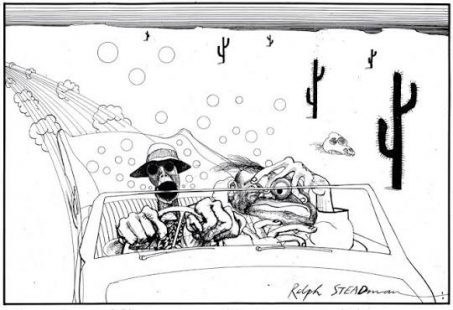
Being a great lawyer involves a lot of writing, and Bert’s scholarly work has been featured in a number of legal journals, although such writing doesn’t afford him much opportunity to display his penchant for satirical humor, for which he was well-known in his JSU years. The Bunhead taught us well, in terms of grammar and such, and Bert was always a more diligent student than I, whose collegiate career was an extended party occasionally interrupted by attending classes. There are some who have accused me of engaging in satire, of being “creative” in my writing, an allegation I strenuously deny. Believe it or not, there are some people who have gone so far as to insinuate that Bert is not even a Samoan, but trust me — I report only the facts. As is my wont.
Yes, it can be used as a noun, too. Class dismissed!
Comments
One Response to “Of Lawyers, Samoans and Journalism”
THE FULL METAL JACKET REACH-AROUND AWARD
HIT THE FREAKING TIP JAR!
Search
Recent Posts
- Rule 5 Sunday: No Fishy Just Sexy
- FMJRA 2.0: A Winning Homestand
- In The Mailbox: 10.09.26
- Rumors Swirl: Where Is James Talarico? UPDATE: Talarico Appears in Public
- In The Mailbox: 10.08.26
- ‘A Reliable Barometer of Wrongness’
- In The Mailbox: 10.07.26
- In The Mailbox: 10.06.26 (Evening Edition)
- In The Mailbox: 10.06.26 (Afternoon Edition)
- Rule 5 Sunday: A Salute to Mrs. Justin Verlander
RSS reader subscription

MEMEORANDUM
Recent Comments
- on Rumors Swirl: Where Is James Talarico? UPDATE: Talarico Appears in Public
- on The Wrong Matthew Ingalls, the Correct ‘Jane Doe’ and the Cornell 7 Case
- on The Wrong Matthew Ingalls, the Correct ‘Jane Doe’ and the Cornell 7 Case
- on The Wrong Matthew Ingalls, the Correct ‘Jane Doe’ and the Cornell 7 Case
- on In The Mailbox: 10.02.26 (Evening Edition)
THE AMAZING GONZO FEED
Major Leagues
Archives
- October 2026 (15)
- September 2026 (38)
- August 2026 (43)
- July 2026 (39)
- June 2026 (40)
- May 2026 (43)
- April 2026 (59)
- March 2026 (44)
- February 2026 (37)
- January 2026 (45)
- December 2025 (42)
- November 2025 (44)
- October 2025 (44)
- September 2025 (47)
- August 2025 (48)
- July 2025 (48)
- June 2025 (47)
- May 2025 (48)
- April 2025 (42)
- March 2025 (48)
- February 2025 (49)
- January 2025 (48)
- December 2024 (42)
- November 2024 (44)
- October 2024 (47)
- September 2024 (43)
- August 2024 (55)
- July 2024 (63)
- June 2024 (59)
- May 2024 (48)
- April 2024 (43)
- March 2024 (55)
- February 2024 (46)
- January 2024 (45)
- December 2023 (53)
- November 2023 (62)
- October 2023 (57)
- September 2023 (56)
- August 2023 (53)
- July 2023 (69)
- June 2023 (67)
- May 2023 (53)
- April 2023 (60)
- March 2023 (73)
- February 2023 (65)
- January 2023 (56)
- December 2022 (60)
- November 2022 (64)
- October 2022 (58)
- September 2022 (68)
- August 2022 (75)
- July 2022 (69)
- June 2022 (73)
- May 2022 (74)
- April 2022 (57)
- March 2022 (79)
- February 2022 (65)
- January 2022 (58)
- December 2021 (62)
- November 2021 (68)
- October 2021 (73)
- September 2021 (63)
- August 2021 (60)
- July 2021 (80)
- June 2021 (64)
- May 2021 (64)
- April 2021 (58)
- March 2021 (73)
- February 2021 (57)
- January 2021 (71)
- December 2020 (77)
- November 2020 (81)
- October 2020 (84)
- September 2020 (94)
- August 2020 (75)
- July 2020 (68)
- June 2020 (83)
- May 2020 (77)
- April 2020 (65)
- March 2020 (85)
- February 2020 (94)
- January 2020 (95)
- December 2019 (88)
- November 2019 (60)
- October 2019 (113)
- September 2019 (91)
- August 2019 (91)
- July 2019 (88)
- June 2019 (80)
- May 2019 (74)
- April 2019 (97)
- March 2019 (100)
- February 2019 (85)
- January 2019 (93)
- December 2018 (90)
- November 2018 (83)
- October 2018 (96)
- September 2018 (79)
- August 2018 (107)
- July 2018 (98)
- June 2018 (86)
- May 2018 (78)
- April 2018 (78)
- March 2018 (97)
- February 2018 (61)
- January 2018 (70)
- December 2017 (62)
- November 2017 (68)
- October 2017 (67)
- September 2017 (70)
- August 2017 (68)
- July 2017 (52)
- June 2017 (60)
- May 2017 (56)
- April 2017 (80)
- March 2017 (80)
- February 2017 (102)
- January 2017 (104)
- December 2016 (65)
- November 2016 (86)
- October 2016 (77)
- September 2016 (81)
- August 2016 (66)
- July 2016 (83)
- June 2016 (81)
- May 2016 (65)
- April 2016 (64)
- March 2016 (81)
- February 2016 (74)
- January 2016 (66)
- December 2015 (64)
- November 2015 (85)
- October 2015 (71)
- September 2015 (80)
- August 2015 (67)
- July 2015 (79)
- June 2015 (69)
- May 2015 (72)
- April 2015 (94)
- March 2015 (122)
- February 2015 (71)
- January 2015 (93)
- December 2014 (99)
- November 2014 (67)
- October 2014 (109)
- September 2014 (87)
- August 2014 (106)
- July 2014 (132)
- June 2014 (154)
- May 2014 (126)
- April 2014 (145)
- March 2014 (144)
- February 2014 (142)
- January 2014 (185)
- December 2013 (192)
- November 2013 (173)
- October 2013 (175)
- September 2013 (181)
- August 2013 (167)
- July 2013 (147)
- June 2013 (135)
- May 2013 (128)
- April 2013 (105)
- March 2013 (162)
- February 2013 (191)
- January 2013 (206)
- December 2012 (190)
- November 2012 (176)
- October 2012 (240)
- September 2012 (206)
- August 2012 (235)
- July 2012 (223)
- June 2012 (161)
- May 2012 (230)
- April 2012 (269)
- March 2012 (282)
- February 2012 (247)
- January 2012 (267)
- December 2011 (285)
- November 2011 (300)
- October 2011 (302)
- September 2011 (297)
- August 2011 (288)
- July 2011 (297)
- June 2011 (245)
- May 2011 (260)
- April 2011 (344)
- March 2011 (293)
- February 2011 (201)
- January 2011 (263)
- December 2010 (265)
- November 2010 (266)
- October 2010 (305)
- September 2010 (280)
- August 2010 (272)
- July 2010 (230)
- June 2010 (244)
- May 2010 (256)
- April 2010 (222)
- March 2010 (271)
- February 2010 (286)
- January 2010 (229)
- December 2009 (21)
- October 2009 (1)
Free Agents
SHAMELESS CAPITALISM
Triple-A Franchises
- All-American Blogger
- American Power
- Anti-Idiotarian Rottweiler
- Athens & Jerusalem
- Barney Quick
- Bartholomew's Notes On Religion
- BatesLine
- Bear Creek Ledger
- Bearsears Patriots
- Blog de KingShamus
- Bride of Rove
- Cold Fury
- Daily Pundit
- Dr. Helen
- I Own The World
- Legal Insurrection
- Moe Lane
- No Runny Eggs
- Obi`s Sister
- Protein Wisdom
- Rhetorican
- Small Dead Animals
- The Conservatory
- The People's Cube
- The Sundries Shack
- VodkaPundit
- Vox Day
- Zilla of the Resistance
Blogroll
- 90 Miles From Tyranny
- A Conservative Shemale
- A Point of View
- Adrienne's Corner
- AmSpec Blog
- Bad Blue
- Blazing Cat Fur
- Calvin Freiburger Online
- Carol's Closet
- Catholic Bandita
- Caught Him With A Corndog
- Cecil Calvert
- Common Cents
- Conservative Hideout
- Conservative Watch News
- Conservatives for America
- Conservatives For Palin
- Crazy For Liberty
- Dad 29
- DC Damsel
- Dr. Flap
- Dyspepsia Generation
- Effing Conservatives
- Election Dissection
- Eric Reasons, IT Genius
- Eye of Polyphemus
- Finding Ponies. . .
- Free Will
- Grandpa John's
- Granite Grok
- GrEaT sAtAn"S gIrLfRiEnD
- Hoosier Access
- John William Perry
- Judicial Watch
- Jumping in Pools
- KURU Lounge
- Laughing Conservative
- Makes My Brain Itch
- Marathon Pundit
- Martin Eisenstadt's Blog
- Media Fade
- Michael Leahy
- Mister Pterodactyl
- Naked Villainy
- Nice Deb
- noot's observatory
- Not One Red Cent
- Okrahead
- Ollieander
- Pileus
- Pinup Girl
- Point of a Gun
- Political Pit Bull
- Reaganite Republican Resistance
- Red Alexandria
- Red State Eclectic
- Red, White & Conservative
- Republican Redefined
- ResCon1
- Ric's Rulez
- Ricochet
- Right of Course
- Robipedia
- Robomonkey
- Ruby Slippers Blog
- Saberpoint
- Scared Monkeys
- Sentry Journal
- SI VIS PACEM
- Skepticrats
- Smash Mouth Politics
- Sooper Mexican
- Taking Hayek Seriously
- Tel-Chai Nation
- Tequila & Javalinas
- The Aged P
- The Classic Liberal
- The Izzy Report
- The Minority Leader
- The NeoSexist
- The Nose on Your Face
- The Republican Mother
- The Right Sphere
- The Saint Angilbert Press
- The Snooper Report
- The Underground Conservative
- Thunder Tales
- Tom McLaughlin
- Tory Anarchist
- TrogloPundit
- Vets On The Watch
- Watcher of Weasels
- Western Experience
- World's Only Rational Man
- WyBlog
- Yankee Phil
- Zingstrom's Blog
July 22nd, 2026 @ 8:34 am
[…] Other McCain (remembered now maybe more than the McCain) has a whole post tripping off his use of the word […]