Derek Thompson (@DKThomp on Twitter) is not a stupid knee-jerk liberal, despite “Donald Trump and the Twilight of White America,” an article at The Atlantic that at first glance might seem like yet another knee-jerk liberal smear of the presumptive Republican nominee.
“Gleeful-sounding headlines announcing the end of white America may play a role in Trump’s rise, too,” was Professor Reynolds’ reaction, which is almost certainly true. The headline on Thompson’s story, and his tendentious treatment of political history, may create the impression that Thompson is just another of those “Democrats with bylines” whose partisan contributions to increasing ignorance we have come to expect.
A quick scan through his past work reveals that Thompson has read Charles Murray’s Coming Apart: The State of White America, 1960-2010, a 2012 book that is a sober, factual analysis of the social and economic forces that make it impossible to view “whiteness” as a monolith. 

Guess what? The elite work, too, and they’ve also got bills to pay.
Among the bills that the elite must pay is tuition for their ungrateful offspring, who think themselves entitled to have Daddy send them to expensive private schools like Hampshire College (annual tuition $48,065) where they can learn to whine about living in a “white supremacist cisheteropatriarchal society.”
When we behold idiots like Jennie Chenkin and her social-justice comrade Cora Segal (aka “TrigglyPuff”), what we are seeing is the decadence that besets the children of privilege who have not been taught to appreciate the hard work that produced the wealth they frivolously squander. Their exhibitions of infantile narcissism — protest tantrums and self-pitying postures of victimhood — reveal the defects of their personal character, the moral depravity of minds warped by a corrupt education system.
Modern Americans have an unfortunate tendency to consider “education” a virtue unto itself, and to accept as proof of this virtue the attainment of academic credentials, especially from prestigious “elite” schools. All that was necessary for progressives to control America, therefore, was to take over elite educational institutions and promote their own political opinions as truth, thereby convincing the college-educated segment of American society that progressivism is not only what all Smart People™ believe, but is also synonymous with moral virtue.


All gnostic movements are involved in the project of abolishing the constitution of being, with its origin in divine, transcendent being, and replacing it with a world-immanent order of being, the perfection of which lies in the realm of human action.
Pursuing a utopian heaven-on-earth fantasy of “social justice” invariably leads to catastrophe, and conservatives have been striving to stave off this disaster for so long that many have forgotten what the struggle is about.
‘The Fools That Bring Disaster’
If the people who lead a movement have forgotten their own principles, if they lack the courage to state their principles or are unwilling to do the work of helping others understand why these principles matter, then the movement is certain to fail. The sense of failure that has gripped the conservative movement as a result of Donald Trump’s success would be a teachable moment, if the leaders who have failed were willing to admit their own failure. From Karl Rove to Mitt Romney, from Rich Lowry to Jeb Bush, all across the vast spectrum of Republican politicians, consultants and pundits, what do we see? Evasions of personal responsibility, lashing out at Trump as a scapegoat for their own incompetence. When David Horowitz gave Bill Kristol a well-deserved spanking, the only thing the “Never Trump” crowd seemed to notice was the headline phrase “Renegade Jew,” and the merits of Horowitz’s argument were ignored by all the virtue-signalling spoilsports who lost the game but don’t want to admit they deserved to lose.
Careerism in the punditocracy means that political wizards like Karl Rove are more concerned with preserving their own prestigious reputations — their prestige being their stock in trade — than in telling the truth or winning elections. And too many conservative pundits who profess to loathe Karl Rove are nonetheless guilty of playing the same game. While consultants keep getting paid to provide bad advice, while the politicians continue listening to such advice, and while the pundits are all busy trying to get booked for their next cable TV appearance, the selfish concerns of such so-called “leaders” do nothing to strengthen the conservative movement. The soldiers of the army become demoralized when their generals repeatedly lead them to defeat. During the winter of 1862-63, when command of the Union’s Army of the Potomac had devolved onto the incompetent Gen. Ambrose Burnside, a soldier in the 79th New York Infantry wrote a letter home in which he complained: “Mother, do not wonder that my loyalty is growing weak. . . . I am sick and tired of the disaster and the fools that bring disaster upon us.”
For the past 25 years, going back to the collapse of the Soviet Union and the end of the Cold War, the Republican Party has gone from one disaster to another, and the fools in charge of the GOP can’t seem to comprehend the fundamental nature of their problem. Talk of reviving “Reaganism” is common among pundits and politicians who seem willing to ignore the historic context from which the modern conservative movement emerged. 

Attempts by Republicans in the past 25 years to recapture the magic of Reaganism have failed in large part because Ronald Reagan possessed such a rare combination of personal qualities as to be nearly unique. Yet the Republican Party’s decline also reflects a failure of GOP leaders to understand the issues facing America in the post-Cold War era. Steve Sailer’s terse summary of Republican policy during the presidency of George W. Bush — “Invade the World. Invite the World. In Hock to the World.” — hits the nail directly on the head. By 2008, the GOP leadership was officially committed to a neo-Wilsonian crusade to impose “democracy” on Mesopotamia at the point of a bayonet, the pro-amnesty policy of “comprehensive immigration reform,” and a continued drift away from sound fiscal and monetary policy. If this is what the Republican Party stands for, certainly Republicans deserve to lose.
Trumpism is a repudiation of Bushism.
Whatever else you may say about Donald Trump, it seems unlikely he’ll be seeking advice from Karl Rove, Nicolle Wallace or Lindsey Graham.
And thank God for that.
The Problem With ‘Hate Whitey’ Politics
After eight years of Obamaism, threatened with a return to Clintonism, how many Americans might be willing to give Trumpism a try? Well, the number was large enough to destroy every rival who stood between Trump and the GOP nomination, and Democrats are afraid enough of Trumpism that they’re unloading their opposition-research dossiers in May. Sidney Blumenthal and the other Democrat strategists believe they can elect Hillary by demonizing her opponent, and perhaps Trump will be the perfect test for this strategy. Yet whoever the Republicans had nominated would have faced a similar attack and, as counter-intuitive as it may seem, Trump might prove to be the one guy on the planet against whom the Clinton slime machine doesn’t work. But I digress . . .
Derek Thompson’s article “Donald Trump and the Twilight of White America” is one of those demographics-of-decline pieces that assume, as the basis of analysis, that current trends may be extrapolated into the future, so that the continued rapid growth of the U.S. Hispanic population, for example, can be taken for granted. Yet just as the white population bifurcates into separate socio-economic groups (the elite vs. everybody else), so also do Hispanics. My daughter’s husband is Hispanic, but he is an ambitious young attorney in private practice, the scion of a very prosperous family, and it is a racist stereotype to imagine that “Hispanic” is a synonym for “poor” or “ignorant” or “Democrat.”
The hard-working taxpayer is always at least a potential Republican voter, no matter his or her ethnic background. While Democrats and their allies in the media have been successful in fomenting racial hatred for partisan purposes — “Hate Whitey! Vote Democrat!” — this political charade cannot succeed forever. The policies of the Democrat Party are ultimately bad for everybody, and if you want to see where these policies lead, take a look at the bankrupt catastrophe of Detroit. Or take a look at Chicago, where there have already been 234 homicides this year. Beyond this startling death toll, more than 1,100 people have been wounded by gunfire so far this year in Chicago, where about a dozen people get shot on an average day. Most of the victims (74%) are black, and another 22% are Hispanic, so that the politics of “Hate Whitey” correlates with very bad outcomes for the people who elect Democrats. Are there people in Chicago who hate whitey so much they don’t mind their kids getting gunned down by the Latin Kings or the Gangster Disciples?
“A lot of the gangs that you see . . . when you look at Baltimore, when you look at Chicago and Ferguson and a lot of areas, you know a lot of these gang members are illegal immigrants. They’re going to be gone.”
— Donald Trump, August 2015
Most white people probably don’t realize it, but many black communities are feeling squeezed by immigration, too. The gang warfare in the streets of Chicago is often between black gangs defending their “turf” against Latino gangs and, as Trump said, illegal immigration contributes to this problem. A lot of the dope being sold by these gangs is imported from Mexico, and you can’t address the problem of gang violence without addressing the drug problem and the immigration problem, too. Beyond that, there is the job shortage problem, the crappy school problem and also the problem of fatherless children, and the Democrat Party is certainly not going to do anything to fix any of these problems.
Put the dope dealers in prison, deport the criminal gangsters, get serious about enforcement of the existing immigration laws — these are not “extremist” ideas, they’re just common sense, and white people are not the only hard-working taxpayers who would support these policies.
Yet here we have Derek Thompson playing racial psychotherapist:
Trump’s core constituency is clear: Republican whites, particularly men, and especially those who didn’t go to college, who feel their American whiteness like a second skin. Many of these first beneficiaries of the franchise now feel disenfranchised. The original middle class feels cut out of the American Dream. The majority is collapsing in on itself. . . .
It is not enough to say that Trump is a purely racial phenomenon. Nor is it complete to argue that he is the perfectly predictable result of economic upheaval. Rather, in the last half-century, several events have pushed conservative white American middle-class men to conflate their majoritarian, economic, and cultural decline. Economic anxiety and racial resentment are not entirely separate things, but rather like buttresses in an arch, supporting each other in the creation of something larger — Donald Trump.
Never mind, for the moment, the idea that “racial resentment” explains Trump’s success. Instead ask, what does this have to do with policy?
Thompson takes for granted what liberals (and too many Republicans) expect everybody to take for granted, namely that a determination to enforce existing immigration law is racist, and therefore illegitimate. Yet the chief architect of our existing immigration system was Ted Kennedy. From the time of The Immigration and Nationality Act of 1965 until the day he died in 2009, no immigration bill could make it through the Senate without Kennedy’s approval. For most of the past half-century, in fact, Democrats controlled both houses of Congress, and even after the Republican takeover of 1994, which gave the GOP congressional control, the Democrats in the Senate could always use the filibuster to force Republicans to compromise. In 2006-2007, Republicans like John McCain twice failed in their attempts to pass a “comprehensive immigration reform” bill. When Barack Obama was elected in 2008, Democrats controlled both the House and the Senate, and what did they do about immigration? Nothing. Zero. Nada.
A profound dishonesty about immigration as policy has made immigration as politics impossible to discuss rationally. The liberal media’s “reporting” on immigration is simply partisan propaganda. The media depict Republicans as hateful bigots, so as to maximize Latino votes for Democrats, and this requires a narrative about immigration which ignores the differences between legal and illegal immigrants, portraying all immigrants as impoverished victims of white racism.
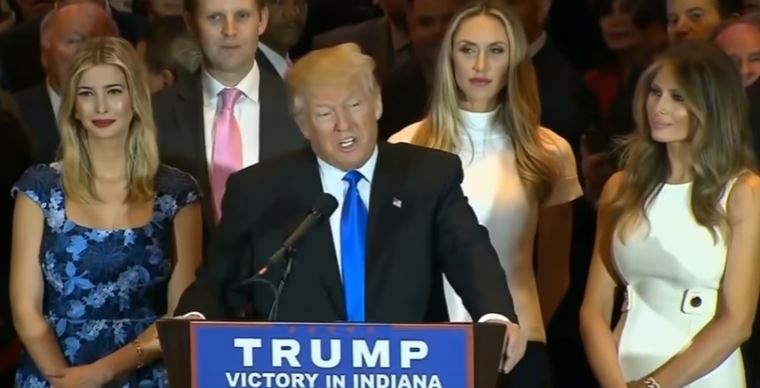
Donald Trump is a blunt instrument, a political sledgehammer with which angry voters seek to smash the Democrat-Media Complex that has tried to conceal the failures of the Bullshit Factory in Washington, D.C.
Derek Thompson is an alumnus of prestigious Northwestern University (annual tuition $49,047) and his sneering disdain for “conservative white American middle-class men” is an attitude widely shared by Democrats, who consider “white male” an acceptable synonym for evil. However evil they may be, however, it is a mistake for Derek Thompson to think he is a better judge of their political interests than they are. This is what elite education does to people. Every 22-year-old who graduates from a school like Northwestern thereby obtains, along with his diploma, an incurable certainty of his own moral and intellectual superiority.
The narcissistic arrogance of the elite makes it impossible for them to empathize with their inferiors (i.e., everybody whose Daddy couldn’t afford to pay $49,047 a year to send them to school), and it is this absence of empathy that makes the intellectual elite so dangerous. Even though Derek Thompson is not a stupid knee-jerk liberal, his analysis of the Trump phenomenon still manages to convey the idea that the opposite of “racist” is Democrat. Every consideration of policy evaporates into an invisible mist, because anyone who didn’t vote for Obama (and who won’t vote for Hillary) is presumed by Derek Thompson to be motivated by racial hatred. It would never occur to Derek Thompson to ask why black people in Detroit and Chicago keep voting for Democrats who are manifestly not solving the problems of the black community. The prejudices that inspire Democrat voters never arouse journalistic curiosity. So long as the politics of “Hate Whitey” elects Democrats, no mainstream journalist will ever question the rationality of such sentiments. And what this means in terms of policy, of course, is that whatever policies Democrats support are good, and all criticism of Democrat policies is wrong — racist, sexist, homophobic, etc.
Regardless of who wins in November, we will continue to be plagued by the decadence of the intellectual elite. It is a tremendous irony that the populist sledgehammer is a billionaire with an Ivy League education (Penn, ’68), but Trump is not an intellectual, and he seems to have more empathy for ordinary Americans that does Hillary Clinton. Can he win? I don’t know. I’m just a conservative white American middle-class man and, as such, I need Smart People™ to do my thinking for me.