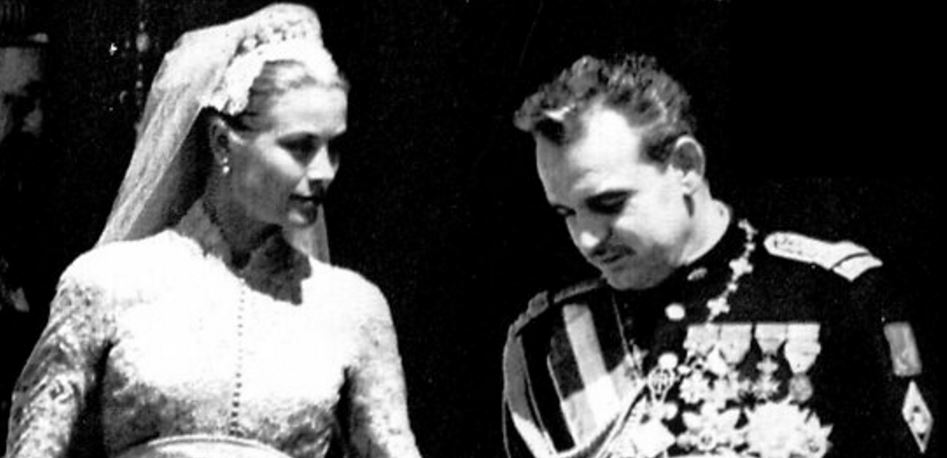
Grace Kelly is arguably the most beautiful actress in cinematic history, yet what if she had never gone to Hollywood? Keep that thought in mind the next time you read a Harvard feminist ranting against “the psychology of female objectification,” or denunciations of “the male gaze” in media.
“The male gaze, which refers to the lens through which mostly white, heterosexual men are viewing the world, is a lens of entitlement.”
— Kelsey Lueptow, “4 Ways To Challenge The Male Gaze,” 2013
“Making all the Princesses beautiful, while all the villains are obese or ugly, the Disney Company reinforces the idea that one’s physical appearance is a manifestation of one’s personality. . . .
“The protagonists of these films fulfill unrealistic expectations of beauty, which are then perpetuated as the norm to mainstream society. Giving young girls the idea that they must be beautiful or they will not succeed is incredibly harmful.”
— Melanie Greenblatt, “The Heteronormative Objectification of Women in the Disney Princess Films: A Study of Brand Advertising and Parents’ Perceptions,” 2013
“Western beauty practices not only arise from the subordination of women, but should perhaps be seen as the most publicly visible evidence of that subordination. . . . They are justified by tradition, as in the popular wisdom that women have always wanted to be beautiful and that it is natural for men to be attracted to ‘beautiful’ women.”
— Sheila Jeffreys, Beauty and Misogyny: Harmful Cultural Practices in the West (2005; second edition, 2015)
This kind of feminist rhetoric implies:
- Male admiration of female beauty is inherently wrong;
- Such “objectification” is not a natural expression of human biology, but is instead “socially constructed” and thus fundamentally political, a manifestation of “male supremacy”;
and
- There is no such thing as beauty, but rather only an artificial preference for certain types of female appearance based in male supremacy and reinforced through media messages.
Feminism’s attack on The Beauty Myth (Naomi Wolf, 1991) would have us believe that Hollywood producers, Paris fashion designers, Madison Avenue advertisers and other sinister forces of patriarchal capitalism have conspired to brainwash us into believing that some women are more beautiful than others. “All Bodies Are Beautiful” has become a popular feminist slogan, and skepticism is impermissible — a ThoughtCrime.
Any man who doubts this ideology — aesthetic egalitarianism, we might call it — will find himself denounced as a misogynist. Men are wrong to prefer Kate Upton to Lena Dunham, according to feminists who wish to silence male praise for beauty, because feminists believe that men’s enjoyment of beauty is harmful, oppressive, sexist. This anti-beauty message has been a core component of feminist rhetoric since 1968, when the Women’s Liberation movement emerged from the New Left and staged its first public protest against the Miss America pageant. Beauty pageants “epitomize the roles we are all forced to play as women,” the protesters declared, proclaiming that “women in our society [are] forced daily to compete for male approval, enslaved by ludicrous ‘beauty’ standards we ourselves are conditioned to take seriously.”
Notice the words “forced,” “enslaved” and “conditioned,” used to imply that these “ludicrous ‘beauty’ standards” are imposed on women against their will. Are women “forced” to play these “roles”? Do women “compete for male approval” because they have been “conditioned” to do so? Before you answer, consider this: No one is offended if we say, for example, that Warren Buffett is rich, Stefan Curry is tall, or Vladimir Putin is powerful. The scale of values by which men are measured in terms of status and prestige is not controversial. There is no “social justice” movement of men complaining that women are attracted to millionaires, athletes and other high-status males, whereas feminism routinely stigmatizes the normal preferences of heterosexual males.
A radical egalitarian ideology derived from Marxism (many feminist leaders of the 1960s and ’70s were “Red Diaper babies,” i.e., children of Communist Party members), feminist theory assumes that every observable inequality between men and women is unjust and oppressive. The propaganda of such a movement requires that women’s lives be depicted as an endless nightmare of suffering, and that males be demonized as enemies who cruelly inflict this oppression on women.
Feminism is a cult and, like all other cults, seeks its recruits among vulnerable young people who are in some way alienated from society.
Feminism’s quasi-religious cult belief system explains to the young recruit that her antisocial resentments — toward her parents, her siblings, her classmates in school, her ex-boyfriend — are entirely justified. Her feelings of self-pity and anger are rationalized by feminist ideology, and she is encouraged to focus her anger on targets designated by the cult leaders. She is supplied with a vocabulary of jargon (“rape culture,” “heteronormativity,” “phallocentrism,” etc.) that makes her feel morally and intellectually superior to those outside the cult. Once she has learned to view life through the warped lenses of feminist theory, it is impossible for her to relate normally to others. She becomes disdainful of anyone who does not share her fanatical devotion to the feminist cause.
Eric Hoffer’s 1951 classic The True Believer: Thoughts on the Nature of Mass Movements shows how political cults like feminism operate. Yet our education system does not make Hoffer required reading for high school students, to inoculate them against the True Believer mentality. Nor do taxpayer-supported schools ever expose students to anything written by the most articulate critics of the feminist movement. No public high school in America would assign, for example, Christina Hoff Sommers’ Who Stole Feminism? or Carrie Lukas’ The Politically Incorrect Guide to Women, Sex, and Feminism. There is a vast library of books by women authors — Danielle Crittenden, Carolyn Graglia, Helen Smith, Dana Mack, Daphne Patai, Mary Eberstadt, et al. — who in one way or another dissent from the anti-male/anti-heterosexual ideology of radical feminism.
“The discourses which particularly oppress all of us, lesbians, women, and homosexual men, are those discourses which take for granted that what founds society, any society, is heterosexuality. . . . These discourses of heterosexuality oppress us in the sense that they prevent us from speaking unless we speak in their terms.”
— Monique Wittig, “The Straight Mind,” 1978
“I think heterosexuality cannot come naturally to many women: I think that widespread heterosexuality among women is a highly artificial product of the patriarchy. . . . I think that most women have to be coerced into heterosexuality.”
— Marilyn Frye, “A Lesbian’s Perspective on Women’s Studies,” speech to the National Women’s Studies Association conference, 1980
“In contrast to young women, whose empowerment can be seen as a process of resistance to male dominated heterosexuality, young, able-bodied, heterosexual men can access power through the language, structures and identities of hegemonic masculinity.”
— Janet Holland, Caroline Ramazanoglu, Sue Sharpe and Rachel Thomson, The Male in the Head: Young People, Heterosexuality and Power (1998)
“There are politics in sexual relationships because they occur in the context of a society that assigns power based on gender and other systems of inequality and privilege. . . . [T]he interconnections of systems are reflected in the concept of heteropatriarchy, the dominance associated with a gender binary system that presumes heterosexuality as a social norm. . . .
“As many feminists have pointed out, heterosexuality is organized in such a way that the power men have in society gets carried into relationships and can encourage women’s subservience, sexually and emotionally.”
— Susan M. Shaw and Janet Lee, Women’s Voices, Feminist Visions (fifth edition, 2012)
“Only when we recognize that ‘manhood’ and ‘womanhood’ are made-up categories, invented to control human beings and violently imposed, can we truly understand the nature of sexism. . . .
“Questioning gender . . . is an essential part of the feminism that has sustained me through two decades of personal and political struggle.”
— Laurie Penny, “How to Be a Genderqueer Feminist,” 2015
Feminism assumes as it premise that women constitute an oppressed class, “a sexual caste subordinated to the dominant ruling sex, man,” as Barbara Burris and her comrades asserted in their 1971 “Fourth World Manifesto.” Or, to cite a more recent source: “The sexual caste system privileges male heterosexuals over everyone else,” according to Professor JoAnne Myers, co-founder of Women’s Studies at Marist College.
This radical worldview is now widely accepted at elite schools like the University of Southern California, where the executive director of the USC Women’s Student Assembly calls for the “dismantling of our capitalist imperialist white supremacist cisheteronormative patriarchy.”
Let us now return to the question: What if Grace Kelly had never gone to Hollywood? You must understand that it was only the modern technology of cinema (invented by Thomas Edison in the 1890s) which eventually made it possible for the entire world to admire the beauty of Grace Kelly. Born in 1929, the third of four children of a prosperous Irish Catholic family in Philadelphia, she was 23 when she signed her first Hollywood contract for $850 a week. Two years later, she won the Academy Award for Best Actress. Two year after that, the 26-year-old star retired from acting to marry Prince Rainier of Monaco, and Princess Grace became the mother of three royal offspring, Caroline, Albert and Stephanie.
Feminists who denounce the “heteronormative objectification” of Disney movies for promoting “unrealistic expectations of beauty” would have us ignore the implications of Princess Grace’s biography. We now take for granted the technology that took Grace Kelly from Philadelphia to Hollywood to the royal court of Monaco, just as we take for granted the technology that permits a blogger in his pajamas to critique the theories of Harvard students and tenured professors. This technology — produced by a system known as capitalism — is phenomenally powerful and innovative, and capitalism liberates human beings in amazing ways.
Capitalism pays our bills, capitalism feeds our children, capitalism funds the enterprises that provide us with the means of communication and transportation by which an Irish Catholic girl from Philadelphia can become European royalty. Capitalism makes fairy tales come true.


Well, why does Professor Jeffreys scoff at the idea that “women have always wanted to be beautiful and that it is natural for men to be attracted to ‘beautiful’ women”? Why does she put “beautiful” in quotation marks, as if the meaning of this word was somehow suspicious or misleading? Or why would other feminist professors speak of heterosexuality as “a highly artificial product of the patriarchy,” by which men “access power through . . . hegemonic masculinity” within “a gender binary system that presumes heterosexuality as a social norm”?
“[Feminism is] a socialist, anti-family political movement that encourages women to leave their husbands, kill their children, practice witchcraft, destroy capitalism and become lesbians.”
— Pat Robertson, 1992
Feminism Is a Totalitarian Movement to Destroy Civilization as We Know It, an ideology profoundly hostile to everything that brings hope and happiness to human life, including both capitalism and beauty.
Here at the desk in my home office, I am surrounded by stack of books about feminist theory: Female Power and Male Dominance: On the Origins of Sexual Inequality by Peggy Reeves Sanday (1981), The Politics of Reality: Essays in Feminist Theory by Marilyn Frye (1983), The Creation of Patriarchy by Gerda Lerner (1986), Toward a Feminist Theory of the State by Catharine MacKinnon (1989), Gender Trouble: Feminism and the Subversion of Identity by Judith Butler (1990), Feminist Theory Reader: Local and Global Perspectives by Carole R. McCann and Seung-Kyung Kim (2002), Theorizing Sexuality by Stevi Jackson and Sue Scott (2010) and Modern Feminist Theory: An Introduction by Jennifer Rich (2014), to name but a few. None of these books, however, are actually helpful in understanding human nature. In fact, we have reason to suspect, confusion is a common result for the many thousands of young students who are indoctrinated in feminist theory in university Women’s Studies courses every year. Why do we need professors teaching theory, when the truth is so simple?
“So God created man in his own image, in the image of God created he him; male and female created he them. And God blessed them, and God said unto them, Be fruitful, and multiply . . .”
— Genesis 1:27-28 (KJV)
No student at Harvard (annual tuition $45,278) or Yale (annual tuition $47,600) is taught this truth. It is unlikely a student who believes the Bible would go anywhere near Harvard or Yale. The Ivy League Is Decadent and Depraved, and no Christian parent would send their children to such infernal institutions, where perverted professors teach satanic doctrines to corrupt the souls and poison the minds of youth.
Feminists reject any suggestion that there is anything natural about human sexual behavior, instead believing women are “coerced into heterosexuality” because of “the power men have in society.” Feminists believe “that ‘manhood’ and ‘womanhood’ are made-up categories,” and this denial of any natural basis for heterosexual attraction means that male admiration of beauty — and women’s pleasure in being admired by men — can only “arise from the subordination of women.”
Because feminists are “without natural affection” (Romans 1:31), they seek to destroy human happiness. Feminists hate love itself.