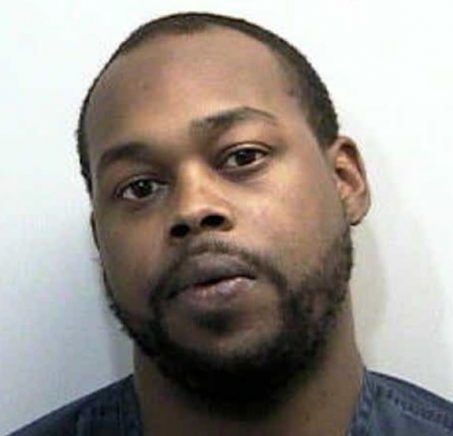
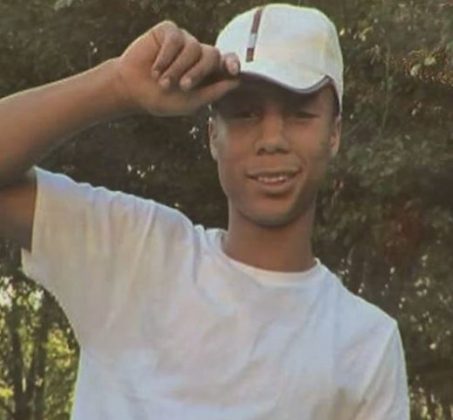
Mychael Johnson’s life of crime ended last March after he and an accomplice stole a car and led Tallahassee police on a chase. When police broke off the pursuit, allowing the sheriff’s department helicopter to track the stolen car, Johnson’s accomplice tried to carjack another motorist. The chopper pilot radioed this information to dispatch and, because of the clear danger to the public, police resumed the pursuit. Driving at speeds upward of 80 mph, Johnson lost control and crashed into a light pole, then fled the vehicle on foot. Johnson again attempted to carjack a motorist, but was stopped by Officer Justin Davidson. A physical struggle between Johnson and Davidson ensued, during which Johnson attempted to take Davidson’s pistol from his holster. Fortunately, backup arrived, and Officer Zackri Jones fired one shot to Johnson’s head.
We know all these facts now, because there was a complete investigation and we have video that proves what happened. At the time of the incident, however, it was just “police say” in the media stories, and in April, the local ABC affiliate ran this headline:
How many times must I explain this? There is no “right” to steal cars in America, nor is there any “right” for a car thief to fight the police when they try to arrest him. Mychael Johnson committed at least four felonies during the course of that pursuit in Tallahassee, and if he had been able to get hold of Officer Davidson’s weapon, he might have added murder to his list of offenses. Nevertheless, some people in the media felt the need to amplify the voices of the fools in the car thief’s family:
A local family is demanding answers after a Tallahassee Police officer shot and killed one of their loved ones last month.
Investigators say officers caught up with 31-year-old Mychael Johnson during an attempted carjacking on March 20.
According to the incident report, they tried to stop him in the vehicle and Johnson lost control and crashed.
Officers say Johnson resisted arrest. That’s when an officer shot him.
His family says they recognize Johnson wasn’t perfect and had some run-in’s with the law before, but he needed help.
They’re asking for copies of the video recorded that night.
His sister, Mildred Richardson, said she doesn’t believe what police say happened.
“My brother was my best friend,” said Richardson. “That was my protector. I just know that there was another way for the whole situation to be handled, and it wasn’t for him to be killed. Not like that.”
Ma’am, if you want an answer, here it is: Your brother was a thug. He lived a thug’s life and he died a thug’s death. The citizens of Florida are safer because that cop shot your thug brother in the head.
Court records show Johnson has been arrested numerous times since 2007 on multiple drug related offenses involving marijuana and cocaine. In addition to facing charges for possession of a firearm by a felonand robbery, Johnson also twice was arrested for fleeing or attempting to elude officers.
Why wasn’t Mychael Johnson in prison, where he belonged? If we’re going to “demand answers,” that’s the real question to ask. Why are criminals being turned loose to prey upon law-abiding citizens? Is this somebody’s perverse idea of “social justice”? We’re going to combat “systemic racism” by letting dangerous thugs terrorize the public?
You can watch the video — it was a “good shoot,” as they say. The assertion “that there was another way for the whole situation to be handled” is simply mistaken. Unless the citizens of Leon County, Florida, are willing to have carjackers just waltz away without consequences, what are cops supposed to do? We have a rapidly growing problem of violent crime in America, homicide jumped 50% or more in many major cities last year, and this anti-police mentality is a huge part of the problem.
He had a combined nine felony and misdemeanor cases out of Sacramento County dating to 1993, Superior Court records show. The cases generally involve drugs and stolen vehicles. His most recent local case, a felony, came in 2012. He was sentenced to 16 months in state prison for vehicle theft.
Calderon reported a history of mental illness and said he had been treated by a Sacramento doctor in 2013 for drug-induced psychosis, according to court papers filed in 2016 in Oklahoma.
He also has a decades-long criminal history that includes vehicle thefts in Sacramento and near Lake Tahoe, according to records. Calderon also reportedly fled law enforcement at one point.
In June 2016, he pleaded guilty in Custer County, Oklahoma for methamphetamine possession and felony destruction of property after he ransacked a Hampton Inn hotel room and destroyed a microwave cart.
He was sentenced to four years in prison. On Tuesday, the Oklahoma Department of Corrections told The Bee that Calderon had completed his sentence and was no longer on parole. Online records say he was discharged in November, 2017.
Something has gone terribly wrong in California over the past decade, but I hadn’t followed the news closely enough to understand exactly what explained the rampant lawlessness in the state. However, for the past few months, to relax and take my mind off politics, I’ve gotten in the habit of watching police videos — car chases and bodycam video from shootings — on YouTube. Anyone familiar with this topic knows that Los Angeles is the car-chase capital of the world. At least once a week, it seems, TV news viewers in Southern California watch helicopter camera footage with the guy in the chopper narrating while the cops pursue suspects.
Usually, it’s a stolen car, or robbery suspects, or someone wanted on an arrest warrant. Why are these chases are so frequent? What is going on in California that so many criminals are out on the street? Curiosity eventually led me to the answer, after I researched the background on one notorious chase a couple of years ago. Police got a report that a man in a car was beating a woman in the passenger seat:
A domestic violence suspect with a woman in the passenger seat of a sedan led law enforcement officers on a three-hour chase Wednesday [April 24, 2019] through Los Angeles and Orange counties before he pulled into a shopping center and ran into a 99 Cents Only store, where he was taken into custody at gunpoint.
The passenger in the Honda Accord was later seen being helped into an ambulance after the chase, which began about 5:15 p.m. in the area of Firestone Boulevard and California Avenue in South Gate. A witness flagged down an officer in the area to report a man striking a woman in a car.
The driver took off when an officer spotted and approached the vehicle, South Gate Police Department Capt. Darren Arakawa said. During the chase, the woman was seen struggling with the suspect, who was reported to be a parolee at large, and a few times opened the passenger-side door, but did not get out as the car kept moving.
On Thursday, South Gate police identified the suspect as Alexis Leondardo Avinai, a 29-year-old felon on post release community supervision.
What is “post release community supervision”? If this explains one car chase, it might explain a lot more, so I kept Googling and found this:
Since 2008, Avina has served three prison terms for three separate felony convictions for weapons violations, and in the first incident, assault with a firearm, according to the California Department of Corrections and Rehabilitation (CDCR). Two years ago, after completing his most recent term, he was placed on Post release community supervision (PRCS) by the Probation Department for Orange County, where he was living. Under the AB 109 realignment passed in 2011, felons convicted of certain crimes are eligible for PRCS, instead of supervision by state Parole.
Since 2017, Avina has been cited in Los Angeles Country for a misdemeanor drug violation, and also for driving under the influence. The cases became more serious when he failed to appear as scheduled in court for both cases, and bench warrants were issued, according to Superior Court records reviewed by NBC4.
As it happened, Avina resolved both of those cases — without jail time — with a plea bargain when he finally appeared in court in West Covina on Wednesday — only hours before the pursuit.
There is a word for this: insanity.
California has always been kind of crazy, but now they’ve completely lost touch with reality, when a guy with three felony convictions for weapons violations, who then violates parole and skips court for two years, is turned loose after a plea bargain. The denouement of the Alexis Avinai story came last September, when he was sentenced to nearly seven years in prison, but what is this about “AB 109 realignment”?
After a U.S. Supreme Court ruling that California’s overcrowded prison system needed reform, the passage of former Governor Jerry Brown’s AB 109 in 2011 transferred responsibility of future “non-violent, non-serious, and non-sex” offenders to county jails, not state prisons. Those who were released were supervised by county parole.
California Proposition 47, which passed in 2014, reduced a host of felonies to misdemeanors, including personal use of illegal drugs, forgery, writing a bad check, and other thefts under $950 (even for repeat offenders); a felony conviction was allowed “if [the] person has [a] previous conviction for crimes such as rape, murder, or child molestation or is [a] registered sex offender.”
California Proposition 57, passed in 2016, gave early release for non-violent offenders, but the initiative failed to define who qualified as a “non-violent” offender. Hundreds of thousands of drug-addicted offenders on the streets are failing to receive mental health or drug treatment, and many are violent and merit incarceration.
Now do you see why thousands of dangerous criminals like Alexis Avinai and Robert Calderon are roaming the streets of California? Is it any wonder that car thieves are leading police on pursuits through L.A. on a weekly basis? Is anyone surprised that people are being killed by lifelong criminals who never should have been let out of prison? One politician in California who understands this is Assemblyman Jim Cooper:
Cooper released a statement Tuesday condemning the state’s “soft on crime laws” and blaming these recent incidents on the premature release of convicted felons.
“Under the PCRS Act of 2011, felons who commit crimes as egregious as assault with a deadly weapon and domestic violence are released into our communities with little to no monitoring due to the lack of resources at the county level,” Cooper said. “I’ve said this before, California’s decade of soft on crime laws are endangering the public and our first responders. Victims’ rights groups and legal experts have all warned that California’s criminal justice reform laws such as AB 109 and Proposition 57 would lead to increased crime and risks to the public’s safety, as well as to our law enforcement officers.”
Cooper continued, “Felons that have been convicted of serious violent crimes such as assault with a deadly weapon and domestic violence should never be released under minimal supervision under parole. These parolees should be heavily supervised by the CDCR. Counties were never equipped to supervise violent felons. The families of the officers injured and killed in two separate incidents in just four days deserve better, our communities deserve better.”
Cooper said that lawmakers need to prioritize the safety of the public. “California continues to release violent criminals onto our streets that have no regard for our laws because they know they will face little to no consequences,” Cooper said. “California lawmakers must stop prioritizing the release of violent criminals and instead prioritize protecting the public’s safety.”
Near the end of Saturday night’s edition of The Other Podcast, I discussed the craziness in California with John Hoge and Dianna Deeley, both of whom had the good fortune to escape California alive. Alas, for others, “You can check out anytime you like, but you can never leave.”
Jerry Lyons, 31, had spent his entire adult life committing crimes. He had dozens of arrests in California — attempted robbery, burglary, evading police, driving a stolen vehicle, weapons charges, drug charges, shoplifting, trespassing, etc. — but kept getting turned loose until Thursday, when he finally killed somebody. Sheria Musyoka, 26, was an immigrant from Kenya who had graduated from Dartmouth and moved to San Francisco with his wife and three-year-old son. Lyons was behind the wheel of a stolen car when he killed Musyoka:
Two months before Jerry Lyons was accused of plowing a stolen truck into eight cars on Thursday, killing a pedestrian and injuring three others, he was arrested in San Francisco for a remarkably similar crime — only it didn’t result in any deaths or injuries.
The Dec. 3 arrest was just one of scores of previous cases in San Francisco and San Mateo counties spanning the 31-year-old’s entire adult life.
It began around 2:15 a.m. when a California Highway Patrol officer at Alemany Boulevard and Sickles Avenue watched a driver run a red light, stop in the intersection, pull an illegal U-turn, drive over a traffic median and begin weaving between two lanes, officials said.
The officer discovered the vehicle was stolen, pulled it over and arrested Lyons at the scene. He was booked on suspicion of driving under the influence of drugs and alcohol and driving a stolen vehicle without a license. At the time he was on supervised release for a theft case.
The district attorney’s office said Lyons was sentenced to a 60-day jail term for violating his supervised release. Prosecutors, though, requested blood toxicology results before filing new charges.
When the results came back on Jan. 22 — after Lyons was back on the street — a spokeswoman for the office said “We began working with CHP to pursue a DUI charge and awaited his arrest.”
But unfortunately, Lyons wasn’t arrested before allegedly barreling through a red light at another San Francisco intersection — this time with deadly results.
Shortly before 8 a.m. Thursday, police said Lyons slammed into multiple vehicles at Lake Merced Boulevard and Higuera Avenue, killing a pedestrian and injuring three others. . . .
Three other victims, two women and a man, were hospitalized and expected to survive.
Lyons was booked Thursday night on suspicion of gross vehicular manslaughter, felony hit-and-run, driving under the influence, and other charges. The incident was the violent cap to the suspect’s more than decade-long rap sheet.
Before the December arrest, records show Lyons was arrested in October in San Francisco on suspicion of driving a stolen vehicle, receiving stolen property and drug charges. It’s unclear if the district attorney’s office took any action on the case.
Lyons had six other cases in San Francisco dating back to 2007. They include charges of attempted robbery, burglary, evading police, driving a stolen vehicle, weapons charges, and others.
In San Mateo County, Lyons has faced more than 20 charges, including shoplifting, trespassing and drug charges. He was charged with driving under the influence on Jan 5. between when he was released from San Francisco Jail and Thursday’s deadly episode.
Let’s recap: While out on “supervised release” on a theft conviction, Lyons was arrested Dec. 6 driving under the influence in a stolen car. Within a month, however, he was back on the streets and arrested again for driving under the influence on Jan. 5. You might think that two DUI arrests in less than a month would be enough to put somebody in jail and keep them there, but this is California, where the “catch-and-release” policy turns criminals loose as soon as they’re arrested.
Remember, this is the state that elected Kamala Harris to the U.S. Senate. All the sane people left California a long time ago, and the entire state is now basically an open-air lunatic asylum, with murderous psychopaths roaming around looking for victims to rob, rape or murder.
One of the things you learn, if you spend as many years in the news business as I have, is that the news is not random. That is to say, the question of what stories will appear on the front page of the New York Times is not merely a matter of what happened the day before, because all kinds of things happen every day, and there is only so much space on the front page of a paper. Actual choices have to be made, by human beings called “editors,” to determine what’s front-page news, what gets stuck back on Page A14, and what never gets reported at all.
The process of deciding what is “news” is not random, as I say, even though some events are of such unquestioned importance that they must be at the top of the front page. If you picked up any American newspaper on Sept. 12, 2001, this was rather obvious, but such historic events are rare, and on most days the question of what goes on A1 leaves a fair amount of leeway to the editors to make their own choices. There may be one or two stories of such unquestioned importance that they must be on the front page, but when it comes to the rest — Story 3, Story 4, Story 5, etc. — the editors have more room to exercise discretion.
Trust me, there is often a lot of internal disagreement over such things. When I was at The Washington Times, some reporters would get very angry if a story they had pitched for A1 didn’t make the cut. It was generally the policy that A1 would have at least one Metro story, and on most days also there would be something from Sports or Features on the front page, so that out of a total of seven or eight front-page stories, the National desk would only get five or six. Well, if Bill Gertz had a story about the Chinese military that he felt deserved to be on A1, he’d get rather peeved — and understandably so — if his story was bumped back to Page A3 so that we could have, say, a feature about Georgetown University basketball on the front page. It happens.
Human beings make decisions about what counts as front-page news, and there is a certain amount of selectivity involved. You know who figured this out? Matt Drudge. The story is that when he was working as the overnight clerk at a 7-Eleven in the Maryland suburbs of D.C., he would read all the newspapers to pass the time in the wee hours when there were no customers. Reading the New York Times, the Washington Post, the Baltimore Sun, the Washington Times, the New York Post, USA Today, etc., back-to-back every day for weeks on end, Drudge began to notice the different choices reflected in the content of the papers. From that insight sprang his subsequent approach to aggregating news at the Drudge Report (which, alas, he seems to have turned over to a gang of liberal dimwits in the past couple of years). Thanks to the Internet, all of us now have more access to different sources than was possible for most people back when Drudge was reading all those newspapers at 7-Eleven, so there is more widespread understanding of how media bias operates.
“Why is this story national news?”
That’s the question you have to ask, whenever a crime story makes it to CNN or to the network evening news broadcasts. Because America is a very large country, with more than 325 million people, the vast majority of crime in the United States is strictly “local news.” There were more than 16,000 murders in America in 2019, which works out to about 45 murder per day. How many of those murders even get mentioned on CNN? Not many. So when something like the Trayvon Martin shooting or the death of George Floyd becomes national news — hourly updates 24/7 on CNN — this means that a decision was made by someone. These stories didn’t just coincidentally become national news. On the day that George Floyd died, about 40 other Americans were shot to death, but none of those other deaths were deemed newsworthy by CNN.
This story is nearly 7,000 words, which is a lot to chew on, but here’s one part that attracted my attention:
The racial-justice uprising sparked by George Floyd’s killing in May was not primarily a political movement. The organizers who helped lead it wanted to harness its momentum for the election without allowing it to be co-opted by politicians. Many of those organizers were part of Podhorzer’s network, from the activists in battleground states who partnered with the Democracy Defense Coalition to organizations with leading roles in the Movement for Black Lives.
The best way to ensure people’s voices were heard, they decided, was to protect their ability to vote. “We started thinking about a program that would complement the traditional election-protection area but also didn’t rely on calling the police,” says Nelini Stamp, the Working Families Party’s national organizing director. They created a force of “election defenders” who, unlike traditional poll watchers, were trained in de-escalation techniques. During early voting and on Election Day, they surrounded lines of voters in urban areas with a “joy to the polls” effort that turned the act of casting a ballot into a street party. Black organizers also recruited thousands of poll workers to ensure polling places would stay open in their communities.
The summer uprising had shown that people power could have a massive impact. Activists began preparing to reprise the demonstrations if Trump tried to steal the election. “Americans plan widespread protests if Trump interferes with election,” Reuters reported in October, one of many such stories. More than 150 liberal groups, from the Women’s March to the Sierra Club to Color of Change, from Democrats.com to the Democratic Socialists of America, joined the “Protect the Results” coalition. The group’s now defunct website had a map listing 400 planned postelection demonstrations, to be activated via text message as soon as Nov. 4. To stop the coup they feared, the left was ready to flood the streets.
Do you see that these dots connect in a non-random way? And do you understand how the news media was part of this coordinated operation?
Notice also that Molly Ball says the George Floyd riots were “not primarily a political movement.” Well, what does “political” mean? You’re not supposed to ask such questions. That’s the important thing about the media narrative, is how skepticism is basically forbidden. Ordinary citizens are not supposed to notice the strings by which the puppet-masters manipulate the story, and don’t you dare point out the political objectives toward which the media narrative is aimed:
In three consecutive presidential elections — 1980, 1984, and 1988 — the Republicans won landslide majorities. In order to win back the White House, the Democrats began examining the demographic composition of the electorate, looking for some cleavage point by which they could break up the Reagan–Bush majority. Poring over exit-poll data and convening focus groups, the Democrats went to work, and with Bill Clinton as their candidate assembled a new coalition.
Part of the Clinton message strategy — and one that Democrats have exploited ever since — was to accuse Republicans of representing forces of hate and division and saying they are to blame for the suffering of victims of oppression. This message has been ably reinforced by the Democrats’ allies in the news media. Who was it, after all, that decided to replay the video of L.A. cops beating Rodney King over and over on CNN until eventually Los Angeles erupted in the worst race riot in recent U.S. history? That episode helped Clinton win the 1992 election, and are we to suppose that this was merely coincidental? Likewise the summer-long wave of racial violence that began with protests over George Floyd’s death last May — just another election-year coincidence? Or is it the case, as I rather suspect, that CNN and other Democrat-controlled media operations are not just randomly choosing local crime stories to turn into national controversies? . . .
Reginald Lamar Harris was a lifelong criminal. He had 18 felony convictions and had been sent to prison eight times. Last September, at age 47, Harris was released from prison after serving time for grand theft, and it was only a matter of time before he committed another crime.
About 11 p.m. on Sunday, December 27, on Lee Road on the north side of Orlando near Interstate 4, Harris carjacked a pizza delivery driver, getting away behind the wheel of a 2017 Nissan Altima. Two days later and about 80 miles away, deputies in Flagler County spotted the stolen Nissan, which took off and headed south down I-95. Harris turned off the car’s headlights — it was about 7 p.m. — and raced southward at speeds upward of 100 mph. When he crossed into Volusia County, deputies there joined the pursuit, but backed off because of the high speed. Harris continued south to Beville Road near Daytona, where he inexplicably made a U-turn and began driving north in the southbound lane. He didn’t get far, ramming head-on into an SUV carrying a family from Wisconsin:
A brother and sister driving back from seeing a display of Christmas lights at Daytona International Speedway in Florida were killed Tuesday night when a man fleeing the police at speeds over 110 m.p.h. drove against traffic on southbound Interstate 95 and struck their S.U.V. head-on, the authorities said.
Moments before the crash, which also killed the fleeing driver, the siblings were following family members in another car but missed their exit onto Interstate 4, said Mike Chitwood, the Volusia County sheriff.
The fleeing driver had 50 previous arrests, no driver’s license and had been incarcerated eight times in state prison, the sheriff said at a news conference where he angrily flipped through a thick sheaf of papers that he said was the man’s 200-page rap sheet. “Fifty prior arrests,” he said. “I don’t know what to say.”
The siblings was identified as Danycka Milis, 18, and Domynick Milis, 21, in a letter sent on Wednesday from the School District of Omro, Wis., where both had graduated. . . .
“Fifty prior arrests. I don’t know what to say.” Watch the video:
Car thieves are dangerous criminals. This is not a trivial offense. And yet for some reason Reginald Harris, whose prior record included carjacking and armed home invasion, was not behind bars. Two innocent young people are dead because this career criminal was turned loose. The only consolation is that Harris also died in the crash, so that he is no longer a danger to the law-abiding citizens of Florida. Meanwhile, in Georgia . . .
On the night of July 14, Vincent Demario Truitt, 17, was one of three teenagers riding in a car they’d stolen in Atlanta earlier that day. They made the mistake of crossing the river into Cobb County, where police spotted the stolen car and gave chase. Evidently unfamiliar with the area, the 17-year-old driver (who was wanted on a separate arrest warrant) turned into a dead-end. When the car stopped, the driver took off on foot, and then Truitt exited the vehicle with a pistol in his hand.
Bad idea.
Seeing the pistol, the officer fired twice, hitting Truitt with both shots, and he died. Because we are living in the #BlackLivesMatter era, however, the death of this car thief has become a subject of protests.
“Justice for Vincent”? Car thief gets shot — that’s not justice?
The family of a teenager killed by police wants Cobb County to pay them $50 million or face a lawsuit.
A Cobb County police officer shot 17-year-old Vincent Truitt twice in the back as he ran away. “Cobb County! The blood is on your hands,” said Truitt’s grandmother Deborah Johnson. “You can do the right thing or you can be forced to do the right thing.”
At a news conference Friday, Truitt’s family wore shirts that said “Why did you shoot me?”
Those were the teen’s dying words.
Truitt’s family and their attorneys learned that when former Cobb County District Attorney Joyette Holmes met with the family in November and showed them body camera footage of the fatal shooting.
Last fall, law enforcement sources also corroborated the details of the body camera video to Channel 2 Cobb County Bureau Chief Chris Jose. “Since when did running away become a death sentence?” said Truitt’s mother, Venethia Cook-Lewis. “This officer not only killed Vincent, but he killed me, too.”
In a legal document called an ante litem notice, addressed to Cobb Commission Chairwoman Lisa Cupid and Cobb Police Chief Tim Cox, the family’s attorneys presented a claim for excessive force and wrongful death.
“This is a case where clearly it’s not just excessive force, this was a murder. This was a murder of an innocent young man that was literally running away from police. [He] did not pose a threat in any way,” said Truitt family attorney Jackie Patterson.
Patterson said Cobb County has 30 days to respond. If the $50 million settlement is declined, a lawsuit will be filed.
“No amount of money will bring my son back. No amount of money will fill the emptiness inside my heart. No amount of money will help my sleepless nights. Money won’t make it right,” said Cook-Lewis. “Cobb County, release the tapes. The same way you released several false statements. The public should know the truth.” . . .
“We want the firing of that officer, and we want the termination of [Police Chief] Tim Cox,” said Truitt family attorney Gerald Griggs.
Griggs and his co-counsel, Maria Banjo, told reporters there is sufficient probable cause for newly-elected Cobb County District Attorney Flynn Broady to present the case to a magistrate court judge and obtain an arrest warrant for the officer involved.
“On the face of this [body camera] video, there is sufficient probable cause for his arrest,” said Banjo.
The day after his election victory, Broady told Channel 2?s Mark Winne that he would release the tape to the public with the family’s permission, or as part of the case as it moves forward.
That has not happened.
A spokeswoman for the district attorney’s office said Broady has no plans to release the body camera video before the case is presented to a grand jury.
“As of right now, it is an active case, and we don’t release evidence in active cases,” said Kim Isaza.
Now, we have not seen the bodycam video, and therefore must reserve judgment as to what happened. However, the police have said from the beginning that Truitt had a pistol in his hand when he was shot. The family, who have seen the video, does not dispute this. Yet they claim that the gun-wielding car thief was “an innocent young man.”
Here’s a question: Why wasn’t the driver shot? If this cop was just determined to shoot some black kids, why not shoot the driver?
Oh, that’s right — because the driver didn’t have a gun.
Here’s another question: Why did Vincent Truitt have a gun in his hand?
The cops have caught you in a stolen car. You’ve got a pistol. Before you exit the vehicle and take off running, should you (a) leave the gun in the car, (b) put the gun in your pocket, or (c) try running with the gun in your hand? Vincent Truitt apparently chose (c), and died as a result.
See, that’s the thing about cops: They see a suspect with a gun in his hand, they’ve got a split-second decision to make, and it’s life or death.
Truitt’s family and lawyers say he “did not pose a threat,” but the cop on the scene didn’t have the luxury of watching it on video. And I think most people would give the cop the benefit of the doubt because, frankly, most people don’t give a damn if a car thief gets shot.
In fact, I think most people wish more car thieves got shot, because a dead thief can’t steal any more cars. “Justice for Vincent,” indeed.
That is a police mugshot of Najee Rechelle McGilbray. She was 18 years old in December 2014 when she was charged with Fleeing or Eluding Police Officer, 3rd Degree, in Battle Creek, Michigan. This offense is a Class E felony, which carries a penalty of up to five years in prison. However, after being sentenced in April 2015, Najee McGilbray served less than a year behind bars, and was released in December 2015.
Why am I telling you about this? Well, as I’ve mentioned before, I’ve gotten into the habit of watching police dashcam and bodycam videos on YouTube as a way of relaxing and forgetting about all the political craziness that would otherwise drive me out of my mind. Monday night, I watched a video of a December 2017 police chase that ended in a crash:
That was in Battle Creek, Michigan, and the driver being pursued by the cop was none other than — you guessed it — Najee McGilbray:
Police from two departments are continuing their investigation in Sunday’s fatal police pursuit.
Najee R. McGilbray, 22, of Battle Creek died when she lost control of her car on Golden Avenue near Raymond Road in Emmett Township as she was fleeing from Battle Creek police.
“At first look it appears everything was according to policy and procedure,” Battle Creek Police Chief Jim Blocker said Monday.
McGilbray died at the scene of the 3:34 a.m. crash, according to Lt. Ken Cunningham of the Emmett Township Department of Public Safety. He said the woman’s 2008 Saturn Vue left the south side of Golden Avenue at the top of a hill and crest of a curve and struck two trees. One of the trees fell on the wrecked car.
Blocker said Officer Gregory Gammons was parked near Capital Avenue Southwest and Christy Road on the south side of the city when the SUV passed his position and was traveling northbound on Capital Avenue.
He began to pursue the car and reported it was back and forth in the lane, crossing the center line and the fog line on the right side of the roadway. Gammons activated his lights and siren and the car stopped near Golden Avenue but before Gammons could leave his patrol car the driver turned on the right turn signal and fled again on Golden Avenue, Blocker said.
The car failed to stop at the intersections of Riverside Drive and after crossing into Emmett Township also failed to stop at 6 ½ Mile Road and Beadle Lake Road before traveling east in the westbound lanes of a portion of Golden, which is divided.
Gammons reported speeds of 80 to 90 miles per hour.
“She was way ahead and advancing on him,” Blocker said, after reviewing a video from Gammons’ patrol car. He estimated the officer was as much as a half mile behind the SUV and said no other vehicles were involved in the pursuit.
Gammons was reporting road and traffic conditions.
“It fits with our policy,” Blocker said. “We ask officers about the environment and road conditions and if it was congested and are you putting people at risk. The conditions were right that the chase was safe. There was no call to terminate the chase.”
Gammons was the first at the scene of the crash and found a small fire under the hood which he extinguished and then was unable to find a pulse on McGilbray.
He called for Lifecare Ambulance and Emmett Township Public Safety Officers.
Cunningham said portions of the fallen tree had to be cut before emergency responders could open the car, which was destroyed in the crash.
Investigators are awaiting results of an autopsy and trying to determine if the car was equipped with a Crash Data Recorder which may have recorded the speed of the vehicle just before the crash.
Police said McGilbray had a suspended license.
What the police did not say was that McGilbray had a prior record for the exact same crime — fleeing/eluding — three years earlier.
Go watch that video again. It’s 3:30 in the morning, and it seems fair to guess that McGilbray had been out partying somewhere. Given how she was weaving all over the road, she was probably drunk. With a prior record and a suspended license, she was almost certainly driving under the influence when Officer Gammons turned on his blue lights.
This is a very common scenario in police pursuits. I’ve watched dozens of them on YouTube in the past couple of months and, based on this extensive research, I know that there is a certain predictability in the answer to the obvious question, “Why do they run?” Having a suspended license is one common answer. Most of the time, the fleeing driver is, like McGilbray, someone with a prior criminal record who fears that being busted for a traffic offense will violate their probation and send them back to prison. In many cases, the police pursuit involves someone driving a stolen car, or someone with drugs and/or guns in the car. In other cases, the driver is wanted on an active arrest warrant.
My point is, fleeing/eluding is not usually about a mere traffic violation. Almost always, there is some more serious underlying crime involved, and guess who knows this? Cops, that’s who.
There are patterns to criminal behavior, and an experienced cop knows that if he blue-lights somebody and they take off, he’s probably dealing with somebody who’s already got criminal record. That’s why, if you watch enough of these videos, you become accustomed to the “felony stop” procedure when the chase finally comes to an end. The officer who initiates the pursuit will call for back-up, and usually there are at least three or four squad cars on the scene at the end of the pursuit. All the cops exit their vehicles with guns drawn, and the command is shouted at the suspect: “Show me your hands!” It’s a tense moment, because the police have reason to suspect they may be dealing with an armed felon.
Anyway, after watching video of this police chase in Battle Creek, I did a Google search and located the information about Najee McGilbray’s prior incident of felony fleeing/eluding. There also was a story about McGilbray’s family reacting to her death:
Battle Creek police said Najee’s death could have been avoided if she’d just stopped for the officer. The McGilbray family also has questions.
[Her mother] said, “It’s really hindsight and it’s too late to say ‘would of, should of, could of,’ but I don’t know it just seems like it was all unnecessary. To me, there was a better way to handle it. I feel like she was scared.”
Oh, “there was a better way to handle it”? Like what? When your daughter took off at 90 mph, weaving all over the road at 3:30 in the morning, what do you think the cop should have done?
This absurd belief that there must be “a better way to handle it” any time police are involved in an unfortunate incident is just a way for people to excuse the criminal conduct that caused the incident. The officer in this case did nothing wrong, and yet the family of the fleeing felon try to absolve her of responsibility by implying that the cop somehow mishandled the situation. This attitude is unrealistic and impractical. Sometimes bad things happen for no reason, but if you go through life with the belief that you are never responsible for your own behavior, bad things are likely to happen to you, and you are the reason.
The structural nature of this state-sanctioned killing of Black people is underscored by the refusal of official sources to even collect and publish this information.
Since the year 2000 nearly 5,000 identified Black men, women and children have been killed in fatal encounters with police across the United States. . . .
Fatal Encounters, a volunteer-maintained national database of people killed during interactions with police, documents at least 4,896 Black people killed since 2000. . . . For too long the facts have been hidden and the names of those killed have been silenced. Even the publicly created databases are incomplete, the numbers of Black lives stolen is still greater than the names that have been collected. . . .
We stand against the racialized economic violence that disproportionately impacts Black and Brown communities resulting in eviction, homelessness, systematic discrimination, educational exclusion and severe health disparities. We call for an end to police murder of Black people and the removal of police from the public schools.
There follows a list of names including Najee McGilbray who, by the abracadabra of radical rhetoric, is transformed into a martyr.
This is a perfect example of how the Atrocity Narrative operates: Create a category, add numbers, cite the most egregious cases, and pretend that you have documented a pervasive social problem.
The level of cynicism involved in this propaganda is astonishing. I never would have known that this dubious list of victims of “state-sanctioned killing” existed, had I not been doing background research on a person whose name was included on the list. But when Black Lives Matter activists start chanting “Say Their Names,” I suppose, Najee McGilbray’s name is one of those. You have seen the video yourself, dear reader — was she a victim of racist “state-sanctioned killing”?
Was this just a coincidence? Or is it the case, as I suspect, that a great many of the names on this list of “fatal encounters” are people whose criminal behavior was the direct cause of their deaths?
Cortavion Tyriques Shemerlee Murphy was 15 years old and behind the wheel of a stolen Dodge Charger traveling about 115 mph when he crashed into a tree, killing himself and four passengers, all minors.
The crash that killed Murphy and his passengers — two 15-year-old boys, Jaquarius Hegler and Marshawn Williams, and two girls, Elexus Hillsman, 16,and Deztanee Cobb, 17 — happened around 12:45 a.m. on Saturday, Sept. 2, 2017. Shortly before the crash, the Dodge Charger had blown past a police car in Kalamazoo, Michigan. The cop had at first tried to pursue the Dodge, but gave up, telling the dispatcher: “Yeah, I’m going to have to terminate it. It’s well over 100 mph.” The officer continued traveling east on Main Street at normal speed and, about a mile later, came across the site of the flaming wreckage.
How are racist police to blame for that one? Never mind. My point is that, if you start researching every name on that list, you’d find a lot of cases that don’t look anything like “state-sanctioned killing.” You ram a stolen car into a tree at 115 mph, don’t blame “systemic racism” for your death.
Do you see the distortion involved in BLM propaganda? There are certainly cases when trigger-happy cops shoot the wrong person, and we can examine the extent to which racial prejudice might be involved, on a case-by-case basis. But BLM activists are wildly exaggerating the number of such incidents in order to justify their “activism,” which is funded by tax-exempt foundations and which (not coincidentally) is part of campaign efforts by Democrats to “energize” black voters at election time.
I include that headline so that Stephen Green doesn’t miss this story in his next “Florida Man Friday” roundup. The details:
Investigators have identified the biological mother of three newborns who’ve been found at apartment complexes in the Orlando area since 2016, police said.
Previous DNA testing had confirmed that the babies were siblings, and investigators connected with their mother through additional testing late last year, Orlando police Lt. Frank Chisari told reporters Wednesday morning. The mother currently has several other children in her care, police said.
Investigators are working with the state attorney’s office to determine what charges may be brought against the woman, who police did not publicly identify.
Chisari added that the woman appeared to have abandoned the babies out of “pure desperation.”
The most recent baby was found in July 2019 with a note that said she left the baby because she feared the child’s father, news outlets reported.
The first baby was found in 2016, and the second was found in 2017. Chisari declined to say whether the father has been identified.
“It seems like somebody who was just at the end of their rope,” Chisari told reporters.
He said the woman learned she was pregnant at a late stage during all three pregnancies, and kept it a secret before delivering the children in private.
“I guess she watched a lot of YouTube videos,” Chisari said, describing how the children were delivered discreetly, the Orlando Sentinel reported.
If she “currently has several other children in her care,” but “feared the child’s father” to such an extent that she has abandoned three babies, doesn’t this suggest a serious domestic violence situation?
There must be a fascinating story behind this, and you might expect that journalists would do the footwork necessary to get that backstory, rather than simply quoting what police said at a press conference. What factor could possibly explain this lack of journalistic curiosity?