As every regular reader of this blog knows, the yellow “donate” button takes you to my PayPal account, where you can contribute dollars, pounds, Euros, shekels, rubles or whatever to support the blog.
PayPal has been very, very good to me over the years, and I was disturbed when I read that PayPal is teaming up with the ADL and SPLC to defund alleged “extremist” sites. We know very well how Big Tech has spent the past five years deplatforming anyone who dissents from the “social justice” narrative, and it’s frighten to think that PayPal would join forces with an organization as thoroughly disreputable as the SPLC.
Obvious pretext to suppress any dissent — you’ll be shocked at what views they consider “white supremacist” just one year from now. https://t.co/FBFvBsOxo4
Chilling: @PayPal teams up with left-leaning group to combat “hate” funding after the SPLC pressured PayPal to blacklist conservative groups. https://t.co/VhNE5Xsw6e
I’m a Jewish American who has special appreciation for the ADL’s historical role as a watchdog against antisemitism. . . .
The point is that the ADL, like the SPLC, now weighs in on issues far beyond its original purview.
Just as there is no set definition of “hate speech” that everyone agrees upon, the definition of a “hate group” is nebulous and ripe for overuse by those with an agenda. So it should come as no surprise that the ever-increasing list of suspects has grown from unquestionable hate groups, like neo-nazis and the KKK, to organizations who espouse socially conservative views, like the Family Research Council, religious liberty advocates, and even groups concerned with election integrity.
The reclassification of political opponents as hate groups has been enabled by expansive redefinitions of terms like racism, segregation and white supremacy. . . .
I have no desire to defend genuinely hateful or extremist groups. Indeed, when I was COO at PayPal, we regularly worked with law enforcement to restrict illegal activity on our platform. But we are talking about something very different here: shutting down people and organizations that express views that are entirely lawful, even if they are unpopular in Silicon Valley. . . .
I implore my successors at PayPal and other Big Tech companies to stop throwing kindling on the fires of populism by locking people out of the online public square and the modern web-based economy. Silenced voices and empty stomachs are fuel for the very extremism you claim to oppose.
Read the whole thing. The problem with boycotting PayPal is that there is no comparable substitute. Right now, I’m trying to plan a reporting trip to Florida, perhaps in September, so I once again urge readers to recall the Five Most Important Words in the English Language:
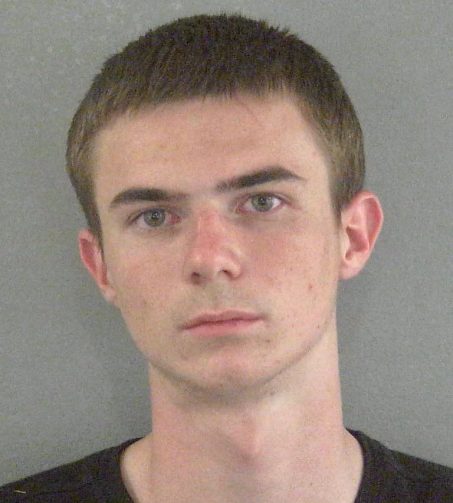
Say hello to Cody Wayne Russell, and pray to God that you never encounter him, because Cody is the pluperfect example of what happens when the criminal justice system fails. There is a judge in Ohio who needs to be removed from the bench. He or she had a chance to send Cody to prison, but instead this dangerous felon was sentenced to probation.
NO MORE MERCY FOR PUNKS LIKE THIS!
Fortunately, Cody is likely to be off the streets for a while now. When last heard from, he was being held without bond in a Florida county jail. If he ever sees the outside of a cell again, it will be too soon.
Last December, not long after he turned 18, Cody was convicted in Montgomery County, Ohio, of assaulting a police officer. Were it up to me, such a felony would mean serious prison time, because assaulting a cop should be considered an attack on the law itself. Such crimes are disrespectful, an expression dangerous antisocial tendencies, and I wish our courts were entrusted to judges who understood the importance of upholding the dignity of society by imposing harsh justice on those who exhibit an attitude of defiance toward the law.
PUT THE FEAR OF GOD IN THESE WORTHLESS PUNKS!
Excuse my angry outbursts, but I just got through watching a YouTube video of the 12-mile police chase through two Florida counties that ended with Cody Russell’s arrest in April. This punk is clearly a menace to public safety, and discovering that he was out on probation when it happened — because of some LIBERAL BLEEDING HEART JUDGE in Ohio — only increased my rage. Judges who go soft on criminals put the public in danger, and this leniency must be stopped.
So (he says, taking a deep breath and trying to get his blood pressure down before suffering an apoplectic stroke) what happened was that Cody, like the vicious criminal he is, stole a black Dodge Durango and then stole the tag from a Toyota Avalon — apparently because in his dimwit criminal mind he imagined that having a stolen tag on a stolen truck would somehow deceive cops — and took off for Florida. In addition to grand theft auto, going to Florida was a violation of the terms of Cody’s parole, which forbade him to leave Ohio without authorization from the court. Cody traveled about 900 miles to reach Sumter County, Florida, where he was spotted near mile marker 322 by Florida Highway Patrol Trooper Eric Kjekstad. At that point, Cody was heading north in the stolen Durango, indicating that he was coming from somewhere further south, perhaps Tampa. Trooper Kjekstad reported:
I observed a black Dodge Durango with an unknown Ohio tag traveling northbound on the outside emergency lane at a high rate of speed passing numerous vehicles. While in the emergency lane, the vehicle was all over the shoulder kicking up numerous debris at nearby motorist[s], causing an immediate hazard to their safety. Due to the Driver’s wanton disregard to the safety of the motorist and reckless nature, I activated my emergency lights and sirens to initiate a traffic stop on the before mentioned vehicle. The vehicle made erratic lane changes into the inside lane accelerating away from my fully marked patrol vehicle with an agency insignia, at which time I initiated a pursuit at approximately 4:27 PM.
You see that Cody might never have attracted law-enforcement attention — despite being a felon on probation, driving a stolen vehicle with a stolen tag — had it not been for his “wanton disregard” for public safety in recklessly zooming up the shoulder of the highway. Now, if you want to watch it, here’s the video of the ensuing chase:
Do you see why that made me so angry? I was hoping to see the trooper do one of those high-speed PIT maneuvers the way they do in Arkansas, where the fleeing felon sometimes dies as a result. (Trooper Tanner Middlecoff fatally rammed Lakita Davis at 126 mph.) But this is Florida, not Arkansas, so Cody unfortunately survived, getting off I-75 at exit 341, making a zigzag through traffic, going north on a two-lane highway, then crashing into a tree while attempting a high-speed left turn.
It took about 10 minutes for Cody to travel 19 miles on I-75, meaning his average speed was more than 100 mph, and at times he was traveling as fast as 115 mph, according to Trooper Kjekstad. If you watch the video, you’ll see how dangerous such speeds are in “moderate” traffic.
WHY IS IT NOT LEGAL TO SHOOT PUNKS LIKE THIS?
Sorry for another angry outburst, but this business of criminals having no fear of law enforcement is the real root of the problem. If it were up to me, cop cars would have laser-sighted, remote-control miniguns mounted on the hood. There would be a trigger mechanism on the steering wheel, and once the computer aiming system had a “lock” on the target — BBRRRRRRR!! — those miniguns would unleash a burst of .50-caliber automatic fire that would destroy the fleeing vehicle.
Most criminals are so stupid, some of them still might try to outrun the cops, but I guarantee you none of them would do it twice.
Being authorized to inflict sudden death on fleeing criminals would do wonders for the morale of America’s law enforcement community, not to mention the benefits to public safety of lowering the recidivism rate to zero. You run from the cops, you die — that would be my policy.
Alas, the Supreme Court in its 1985 decision Tennessee v. Garner didn’t see the benefits of this approach and, even in dissenting from the majority, Justice Sandra Day O’Connor didn’t seem to endorse my laser-sighted minigun solution to fleeing suspects, so we’re forced to live in a world where criminals lead cops on high-speed chases without fear of .50-caliber fire directed by computer-assisted targeting systems.
Be that as it may, we can start putting criminals behind bars where they belong, instead of turning them loose the way that Ohio judge turned Cody Russell loose, and if I were a citizen of Montgomery County, Ohio, I’d be investigating this case to find out who that judge was, so I could organize an effort to remove them from the bench. Meanwhile, when last heard from, Cody Russell was in the Sumter County Jail, charged with two felonies and four misdemeanors, being held without bond because he violated felony probation. We can certainly hope that Florida authorities will send him for a nice long stay in Starke. By the time he gets out, maybe I’ll have convinced law-enforcement to try my computer-aimed .50-caliber minigun idea, and we’ll see if maybe the Supreme Court wants to repent for its mistake in Tennessee v. Garner.
During the first year after their release from state prison in 2012, about 4 in 10 (37%) prisoners were arrested at least once either within or outside of the state that released them . . . About 6 in 10 (62%) were arrested within the first 3 years, while 7 in 10 (71%) were arrested within 5 years.
Nearly three-fourths of prisoners released in 2012 were arrested within the next five years, according to a study released Thursday by the Department of Justice.
Conducted by the Bureau of Justice Statistics, the data was collected across 34 states between 2012 and 2017 to gain insight on recidivism patterns across various demographics, commitment offenses and prior criminal histories.
Of the 408,300 state prisoners monitored, researchers recorded around 1.1 million arrests during the five-year follow-up period. The 34-page study noted that the percentage of released prisoners declined the further out they got from release— from 268,000 arrests the first year to 191,000 in the fifth year.
“Among released prisoners, males were more likely than females to be arrested during each cumulative year following release,” the report states. “At the end of the 5-year follow-up period, the cumulative arrest percentage was 72% for males and 63% for females.”
It also broke down re-arrest rates by race, finding Black and Hispanic prisoners had been rearrested one year after release from prison at similar rates of 38% and 39%, respectively. The rate for white prisoners within the same time period was slightly lower at 35%.
“At the end of the 5-year follow-up period, white (70%) and Hispanic (67%) prisoners had lower cumulative arrest percentages than black prisoners (74%),” the report states. . . .
The prisoners studied had been sentenced for a mix of convictions, including homicide, rape and sexual assault, robbery, burglary, drug possession, trafficking and unlawful weapon possession. Around 43% percent of them had been arrested at least 10 times prior to their current sentencing.
A couple of months ago, I had a long phone conversation with an old friend from Douglas County, Georgia. Among other things, we talked about the election there and, when I mentioned suspicions of fraud, my friend said he didn’t believe Democrats had fabricated votes in Fulton County. Instead, he said, they had exploited the Secretary of State’s decision (contradicting state law) to permit widespread mail-in voting with drop boxes. What Democrats did with that loophole, my friend explained, was to deploy an army of ballot harvesters who were soliciting votes in grocery store parking lots and they knew whose votes they were looking for, IYKWIMAITYD. So, according to my friend, the election wasn’t exactly stolen, but it was not exactly legitimate, either.
That experiment in mass mail-in voting was made necessary, according to its defenders, because of the COVID-19 pandemic. Be that as it may, the Georgia legislature was determined to prevent any future such improvisations, and passed a new election law which, as Gov. Brian Kemp has said, makes it “easier to vote, but harder to cheat.”
On Monday, Politico channeled the freakout from Georgia liberals. The eye-grabbing headline:
‘We’re f—ed’: Dems fear turnout catastrophe from GOP voting laws
There’s growing concern — bordering on alarm — about the potential impact in 2022 of the raft of new voting restrictions.
Reporters Maya King, David Siders and Daniel Lippman began:
After Georgia Republicans passed a restrictive voting law in March, Democrats here began doing the math. The state’s new voter I.D. requirement for mail-in ballots could affect the more than 270,000 Georgians lacking identification. The provision cutting the number of ballot drop boxes could affect hundreds of thousands of voters who cast absentee ballots that way in 2020 — and that’s just in the populous Atlanta suburbs alone.
…“If there isn’t a way for us to repeat what happened in November 2020, we’re f—ed,” said Nsé Ufot, CEO of the Stacey Abrams-founded New Georgia Project. “We are doing what we do to make sure that not only our constituents, our base, the people, the communities that we organize with, get it. We’re trying to make sure that our elected officials get it as well.”
Sometimes mainstream media outlets toss out numbers to make political points without citing the sources. . So where did Politico come up with that 270,000 number? They don’t say. They also don’t say if that number includes those who are not legally residing in Georgia or even if they’re U.S. citizens.
In any case, that number seems rather high since without ID you can’t do banking, driving, or just purchasing a beer among many other things. . . .
The most likely source for that 270,000 number is . . . an Atlanta Journal Constitutionarticle published on June 1. Ironically, that same article makes clear that requiring identification is not really a barrier to voting.
What is incomprehensible to me is how these 270,000 people somehow got registered to vote without being able to prove who they are.
Let’s think about this: You could fill out a voter registration form just using any name — write in “Max Dorian Fried,” for example — and any address (e.g., 755 Battery Ave SE) and you’re a registered voter. And so far as we know, there are 270,000 such phantom registrations in Georgia, of “voters” who have no way of proving they actually exist, much less that they meet the legal eligibility requirements for voting.
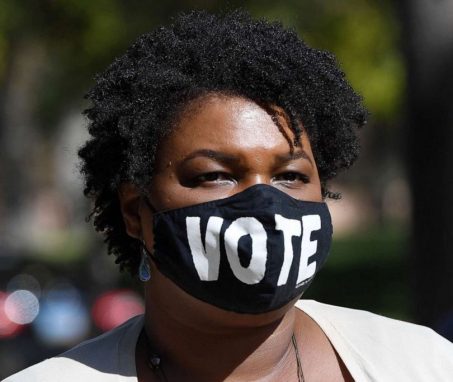
This was how Stacey Abrams and her crew were able to work their electoral voodoo in 2020, a species of swindling they call “democracy.”