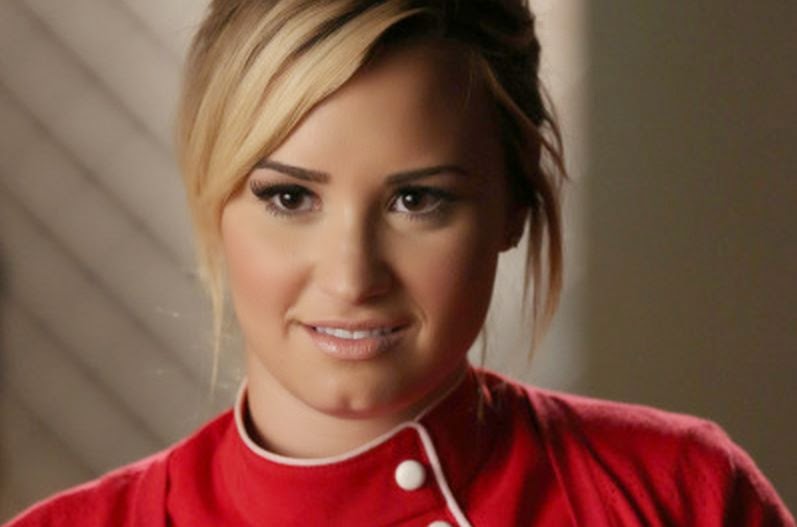
The cover of the latest issue of Flare, a Canadian women’s fashion magazine, adds new meaning to the phrase “lesbian chic.” Apparently, “loving ladies and living proud” a la celebrity lesbian Ellen Page is what stylish Canadian women are now expected to do.
Stephanie Verge’s feature interview with Page is rather tedious:
With a quiver in her voice and wearing a T-shirt proclaiming “All Love Is Equal,” [Page] stood in front of a crowded Las Vegas room at the Human Rights Campaign Foundation’s inaugural Time to Thrive conference and uttered the words every adolescent lesbian who’s ever watched (and rewatched) the roller derby flick Whip It dreams of hearing: “I am here today because I’m gay.” She went on to say that she was “tired of lying by omission.”
(Point One: Gay people do not actually believe that “All Love Is Equal”; they disdain heterosexuality, otherwise they wouldn’t be gay. Point Two: How does Stephanie Verge know “the words every adolescent lesbian . . . . dreams of hearing” unless . . .?)
It was the eight-minute speech pinged around the blogosphere, and one that Page and her manager planned meticulously in collaboration with the HRC Foundation. Page wanted her announcement to be aligned with a cause, ideally one having to do with LGBTQ youth (promoting the safety, inclusion and well-being of queer teens is an HRC Foundation priority). . . .
(Translation: It was was a political publicity stunt.)
“I was very nervous. I was very nervous, yes. Yes. Very, very nervous. Yes. I was emotional, deeply, deeply emotional.” Though she told her parents she liked-liked girls when she was 19, she was still coming out to herself eight years on. “You think you’re in a place where you’re all I’m thrilled to be gay, I have no issues about being gay anymore, I don’t feel shame about being gay, but you actually do. You’re just not fully aware of it. I think I still felt scared about people knowing. I felt awkward around gay people; I felt guilty for not being myself.”
(She was a heterosexual impersonator?)
One of the perks of being an out lesbian: being able to wear whatever you want. Less than three weeks after her big speech, Page attended theVanity Fair Oscar party wearing a leather-accented Saint Laurent tux by Hedi Slimane. “I felt happy and confident and the difference was huge,” says Page. . . . For years, she endured pressure to conform to industry standards, i.e., dresses, but those days are over.
OK, you can read the whole thing if you care. But what kind of simplistic reduction is this? Being a presumably straight girl means “pressure” to wear dresses, and once you come out as a lesbian, you get the “perk” of “being able to wear whatever you want”? As though there are no heterosexual women who wear pants and no lesbians who wear dresses? What is this, 1957 or something?
When I was tweeting about this Thursday night, a conversation ensued with someone who doesn’t seem familiar with feminist theory:
Maybe I’ve become too familiar with feminist theory, that I expect other people to understand the difference between sex and gender, between sexual preference and gender roles. Feminism is about the abolition of gender — that is, eradicating all “socially constructed” differences between the sexes. According to feminism, it is the oppressive male patriarchy that imposes the “feminine” role — a humiliating condition of submissive inferiority — on women. To be “feminine,” according to this theory, is for a woman to be passive and yielding toward men, to shape her appearance and behavior in ways that are acceptable and attractive to men. By contrast, feminists view the “masculine” role as typified by domination and aggression which ultimately is about reducing women to the role of “fuckholes, breeders and slaves.”
This is why lesbianism is the goal of feminism. Only by escaping male domination can women escape the prison of “gender” and the inherently violent act of male sexuality: PIV (penis-in-vagina) intercourse, which is both the means and motive of women’s oppression: “All PIV is rape, OK?” and “No woman is heterosexual”:
What men call heterosexuality is an institution where men make women captive for PIV, to control our reproductive functions and steal our labour. . . .
It’s part of the global male infrastructure that ensures men a constant supply of ready-tamed and pre-possessed women to effortlessly stick their dicks in, impregnate and abuse. The more it grows, the easier it is for each individual man to break any woman’s will and trick her into PIV and being owned by him — and maintain submission level with the help of men’s institutions.
If you don’t understand and believe this — if you recognize this as complete lunacy — then obviously, you are not a feminist.
Now, some of you familiar with lesbian culture may be asking yourself, “What about butch dykes? Aren’t they acting out a ‘masculine’ role? If feminists reject gender roles, what about women who emulate stereotypically masculine behavior and appearance?” Oh, but see, butch dykes are subverting the patriarchy by demonstrating that females can perform the “masculine” role. However, because of the transgender vogue, many butch lesbians are now undergoing hormone treatments and surgery to become “transmen,” a trend that one older feminist laments:
Why are all the butches becoming men? Why can’t they understand that gender is a social construct, and that women don’t have to conform to a feminine ideal? Isn’t that what we were fighting for — a world in which women could wear tool belts and neckties and do anything we damn well please, without the constraints of gender?
At its very core, this was the vision of the feminist movement, and lesbians more than anyone understood how transformative this could be.
Years ago, I asked the same questions, but today, this conversation makes me uncomfortable. Because I am of this older generation, I have seen things change — and not change — for a long time.
I have, in my life, loved many butches. My relationships and affairs have almost always been with masculine women and, more recently, with trans men as well.
In my experience, for as long as I have found myself in intimate circumstances with butches/studs/masculine-identified women — from way back when I was too young to be in the bars where I was meeting and going home with them — a curious thing happens. Once there is enough trust established, I become witness to a moment of confession. The confession goes something like this: “I don’t know how to explain this, but I don’t exactly feel like a woman. I mean, I’m butch, and that’s close, but honestly, I’m not sure what I am.”
Don’t get me wrong, there are many, many proud butch women who are exactly that: women. In today’s terminology, their gender expression is masculine, and their gender identity is female. They wear their tool belts proudly, and I am happy to admire the show. For them, a butch identity resolves the issue — if people have a problem with it, it’s their sexism or homophobia rearing its head.
But that experience is not everyone’s, and it never has been.
If you did not previously believe all feminists are crazy, perhaps now you’re beginning to change your mind. Feminism requires women to be fanatically certain about theory, while being perpetually confused about reality. Everything is whatever they say it is. Feelings triumph over facts. So if some women say they “don’t exactly feel like a woman,” a gynecological examination — proving that they have the biological equipment — cannot refute their feeling.
And if you are such an intolerable smart-ass as to point out that this emphasis on subjective feeling is typically feminine . . .
OK, I denounce myself.