Sex is about reproductive biology. Human beings are mammals, and any eighth-grader can figure out what that means in terms of sex.
Once you understand this scientific definition of sex, everything else is just details. Young people have to figure out how to attract potential partners, how to choose a good partner from among the prospective candidates, and how to negotiate a relationship that will lead toward lifelong monogamous pair-bonding — i.e., a successful marriage — because this is the ideal situation in which to raise children.
“So God created man in his own image, in the image of God created he him; male and female created he them. And God blessed them, and God said unto them, Be fruitful, and multiply . . .”
— Genesis 1:27-28 (KJV)
Science and the Bible are not really in disagreement about sex. Godless atheists enjoy denouncing Christianity as “superstition,” but insofar as successful reproduction and child-rearing are concerned, do we find that Darwinism actually has anything to teach us? And am I the only one who has noticed that the fanatical advocates of Darwinism generally don’t do much in the way of reproducing the species? Having announced the Death of God in 1966, making godlessness the basis of their worldview, the secular elite now claim to worship at the altar of Science, and you might expect that pursuing a “survival of the fittest” strategy would lead these devout disciples of Darwin to procreate abundantly. Alas, no.

Those who imagine that they can kill God simply by not believing God exists are not as scientific as they claim to be. After all, if God does exist, his existence is independent of human belief, and therefore the logic of atheism is highly irrational. Atheists begin their argument with the conclusion — “The fool hath said in his heart, There is no God” (Psalm 14:1 KJV) — then seek evidence to support that conclusion, and confirmation bias always leads them to believe they are correct.
The motive for this search, of course, is that fools wish to live in a godless world where they can pursue their own selfish desires without limits. If God does not exist, there are no rules, you see. Atheism therefore attracts to its banner immoral hedonists and greedy materialists, as well as power-mad totalitarians who want to dictate their own rules to the rest of us without regard for any eternal standard of Right and Wrong. If we are Beyond Good and Evil, as Nietzsche believed, then everything is simply about The Will to Power and, once people start thinking this way, it is only a matter of time before the Panzer divisions are rolling across the Polish frontier and the Stukas are dive-bombing Warsaw.
The lessons of the 20th century, however, have not been properly taught in our schools, and so our university campuses are nowadays under the administration of godless fools, who sometimes seem shocked to discover that their students are dangerous totalitarians. It turns out, quite routinely, that the atheist decides the Meaning of Life is “Give me what I want” and “Do what I say,” a philosophy of selfish irresponsibility.
Marriage and parenthood are not very compatible with such a philosophy, which is why the godless so often fail to reproduce. Nietzsche, of course, died a lunatic, most likely as a result of tertiary syphilis, and more recently Michel Foucault died of AIDS, but it is among feminists that we find the perfect philosophical expression of the Culture of Death.
The road to Equality is paved with dead babies. Feminism’s idea of “empowerment” for women requires forsaking motherhood and, once the possibility of procreation is excluded, what does sex mean? If a woman decides to be a non-participant in the reproduction of the species, does she have any need for marriage? Indeed, why bother with men at all? This feminist argument has been obvious for many decades:
In 1980, Australian feminist Denise Thompson described how “countless numbers of lesbians” joined the feminist movement because it offered them “the possibility of a cultural community of women whose primary commitment was to other women rather than to men.” Furthermore, Thompson added, the rise of the feminist movement produced a “mass exodus of feminist women from the confining structures of heterosexuality” in such numbers as to raise questions about “the institution of heterosexuality in the consciousness of those feminists who, for whatever reason, chose not to change their sexual orientation.” . . .
Women “changed their sexual/social orientation from men to women,” Thompson explained, “in response to the feminist political critique of their personal situations of social subordination.” If the personal is political (as feminists say) and if women’s relationships with men are “confining structures” of “social subordination,” why would any feminist be heterosexual?
That quote from my book Sex Trouble (pp. 109-110) is not merely a summary of arguments by Denise Thompson, who is author of the 2001 book Radical Feminism Today. All she did was to describe a phenomenon that may be observed by anyone who studies feminism. Whatever else her ambitions include, if a woman desires to find a husband and have babies, there are obvious limits to how far she can go in supporting feminism, because the feminist movement is anti-marriage and anti-motherhood.

Feminism is fundamentally an anti-male ideology, and therefore is ultimately also an anti-heterosexual ideology. Whether or not the young woman who joins the feminist movement begins with any inclination toward lesbianism, she will discover that her commitment to the movement’s ideology makes it difficult for her to find happiness in heterosexual relationships. The kind of men who seek women as wives — romantic men, those who hope to find lasting love in a permanent, monogamous relationship — will tend to avoid women who denounce marriage as slavery, an institution of “social subordination.” Likewise, the young feminist will find that her support for the movement tends to exclude from her companionship any man who desires to become a father. Feminism is implacably hostile to motherhood, advocating abortion and contraception, and celebrating childlessness as the ideal expression of women’s liberation from the oppressive yoke of patriarchy. The social consequences of this hostility are obvious.
“Certainly all those institutions which were designed on the assumption and for the reinforcement of the male and female role system such as the family (and its sub-institution, marriage), sex, and love must be destroyed.”
— The Feminists, 1969
“Pregnancy is barbaric.”
— Shulamith Firestone, 1970
“Women’s oppression is based in the fact that she reproduces the species. . . .
“In terms of the oppression of women, heterosexuality is the ideology of male supremacy.”
— Margaret Small, “Lesbians and the Class Position of Women,” in Lesbianism and the Women’s Movement, edited by Nancy Myron and Charlotte Bunch (1975)
“Women are a degraded and terrorized people. Women are degraded and terrorized by men. … Women’s bodies are possessed by men. … Women are an enslaved population. … Women are an occupied people.”
— Andrea Dworkin, 1977 speech at the University of Massachusetts at Amherst, in Letters from a War Zone (1993)
“The lesbian liberation movement has made possibly the most important contribution to a future sexual liberation. . . . What the women’s liberation movement did create was a homosexual liberation movement that politically challenged male supremacy in one of its most deeply institutionalized aspects — the tyranny of heterosexuality.”
— Linda Gordon, “The Struggle for Reproductive Freedom: Three Stages of Feminism,” in Capitalist Patriarchy and the Case for Socialist Feminism, edited by Zillah Eisenstein (1978)
“The first condition for escaping from forced motherhood and sexual slavery is escape from the patriarchal institution of marriage.”
— Alison M. Jaggar, Feminist Politics and Human Nature (1988)
“Woman’s biology oppresses her only when she relates to men. The basis of the inequality of the sexes here is seen as the inequality inherent in heterosexual intercourse as a result of sex-specific anatomy. To transcend or avoid this in personal life by having sexual relations only with women — lesbianism — eliminates the gender-based underpinnings of sexual inequality in this view. . . . Women and men are divided by gender, made into the sexes as we know them, by the social requirements of its dominant form, heterosexuality, which institutionalizes male sexual dominance and female sexual submission.”
— Catharine MacKinnon, Toward a Feminist Theory of the State (1989)
“To the extent that women harbor negative attitudes toward lesbians and lesbianism, we demonstrate identification with men. To the extent that women express negative attitudes toward lesbians in our words and deeds, we strengthen patriarchy.”
— Dee Graham, Loving to Survive: Sexual Terror, Men’s Violence, and Women’s Lives (1994)
“The term motherhood refers to the patriarchal institution . . . that is male-defined and controlled and is deeply oppressive to women.”
— Andrea O’Reilly, Feminist Mothering (2008)
“In the early 1970s both gay and feminist movements concurred in critiques of patriarchal, heterosexual institutions, such as the family, and there was a sense of common cause. . . . [A]ddressing the patriarchal structures that shaped family life, revealing women’s discontents with heterosexual relationships . . . feminists laid the foundation for a thoroughgoing critique of heterosexuality . . .”
— Stevi Jackson and Sue Scott, Theorizing Sexuality (2010)
The logical consequences of feminism are not usually apparent to young women when they first join the movement. A young woman feels she is treated unfairly in some way and the promise of “equality” appeals to her, and so she starts calling herself a feminist. She begins reading feminist writers who tell her that she is a victim of oppression, and she learns a vocabulary — “sexism,” “misogyny,” “objectification,” etc. — to describe male behavior she doesn’t like. She develops an attitude of resentment and suspicion, a sort of sexual paranoia that makes it impossible for her to enjoy normal interactions with men. If a man expresses admiration for her beauty, he is objectifying her with the “male gaze.” She despises men who are sexually interested in her, who want to possess her body, to degrade and enslave her in the tyranny of male supremacy.
Her hostility toward “the patriarchal institution of marriage” (Jaggar) may not immediately lead the young feminist to reject “the inequality inherent in heterosexual intercourse” (MacKinnon), yet she must avoid any man who is interested in finding a wife, and she must also renounce any desire to have children, because her “oppression is based in the fact that she reproduces the species” (Small). Having thereby abandoned the kind of scientific understanding of sex that is apparent to any eighth-grade biology student, what purpose is served by her relationships with men? If sex is nothing but immoral hedonism — the pursuit of pleasure for its own sake — then what is a man to her, other than an instrument to serve her own selfish needs? And if a man does not willingly accept this role, if he has needs and purposes of his own, how or why would he possibly be of any interest to a feminist?
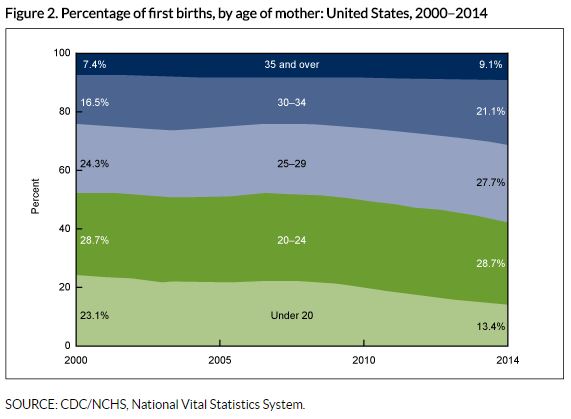
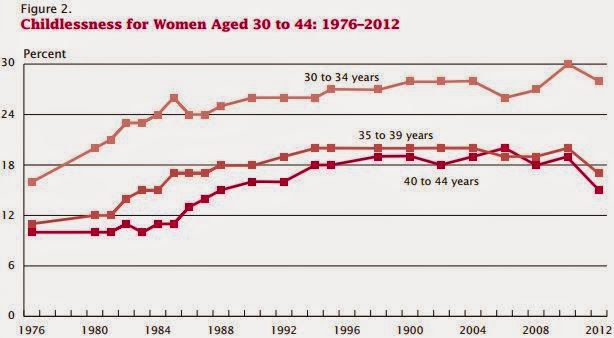
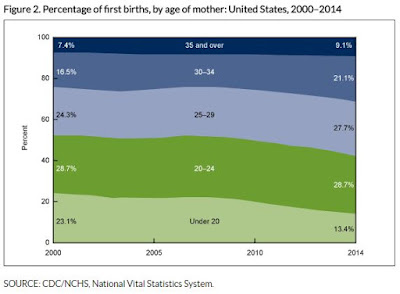
A young woman who becomes a feminist as a high school or college student is unlikely to perceive all the implications of her ideology. She aspires to a professional career and, insofar as she thinks of marriage and motherhood at all, these are merely potential choices for the future, activities she might choose to pursue when she’s 25 or 30, once she has gotten her degree and established her career. She therefore must avoid any genuinely serious romantic involvement with her boyfriends, because such a relationship could lead toward “the patriarchal structures” (Jackson and Scott) of the traditional family. In postponing serious relationships with men, the young feminist thereby makes herself unavailable to any man who is interested in finding a wife, and she makes this decision at an age — in her teens or early 20s — when young people normally begin pairing off together, engaged in the process of courtship aimed toward forming lifelong partnerships. Despite the trend toward postponing marriage and parenthood, the typical first-time mother in the United States is about 25, and most American mothers have two children by the time they’re 30. More than 42% of women who eventually become mothers have their first baby before age 25. A woman who delays motherhood thereby diminishes the likelihood that she will ever have any children, and there has been a remarkable increase in childlessness.

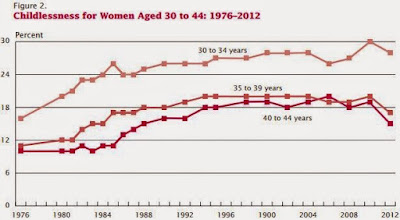
These trends demonstrate the influence of the feminist movement, which encourages young women to reject sex in its basic scientific meaning, i.e., as naturally related to procreation. Feminism tells young women that they should pursue sex on the basis of immoral hedonism, as pleasure without responsibility. Most young women who adopt this irresponsible attitude do so with the mistaken belief that the choices they make in their teens and 20s will have no permanent consequences. The young feminist believes she can be promiscuous in her youth without impairing her ability to find a husband later, and that she can choose to postpone motherhood without any increased risk of childlessness. She believes in equality, and therefore listens to feminist advice. She doesn’t bother to ask what equality may require, or who is giving her this advice.

“I was the editor of my campus sex magazine. I had some one-night stands. I explored my sexuality and what I wanted, and I met a guy at a party and he was amazing. He was super-charismatic and sexy and funny and brilliant and I fell really hard for him. We started seeing each other and then, three weeks later, I woke up with an outbreak of genital herpes.”
— Ella Dawson, September 2015
“The labels I currently use for myself are queer, gay, femme, and homoflexible. (Basically, I’m a lesbian with exceptions.) The label bisexual doesn’t work for me right now. . . . I’m on the asexual spectrum somewhere . . . I don’t experience primary sexual attraction.”
— Miriam Mogilevsky, October 2015
“Only when we recognize that ‘manhood’ and ‘womanhood’ are made-up categories, invented to control human beings and violently imposed, can we truly understand the nature of sexism. . . .
“Questioning gender . . . is an essential part of the feminism that has sustained me through two decades of personal and political struggle.”
— Laurie Penny, October 2015
“I don’t particularly like babies. They are loud and smelly and, above all other things, demanding . . . time-sucking monsters with their constant neediness. . . . Nothing will make me want a baby. . . . This is why, if my birth control fails, I am totally having an abortion.”
— Amanda Marcotte, March 2014
Do you suppose many young women would call themselves feminists if they were informed of the character of those who lead this movement? Do you suppose many teenage girls hate babies, identify as “genderqueer,” or look forward to the morning when they wake up with genital herpes? Yet these are the attitudes, beliefs, identities and behaviors that the feminist movement celebrates. This is the “empowerment” and “liberation” that feminism encourages in the name of “equality.”
Those who worship at the altar of Science exhibit a remarkable willingness to ignore any fact that does not fit their theory, and we are not surprised to see strange claims made by those who ignore eighth-grade biology lessons. Feminist Tumblr is full of these young lunatics.
Simple Objective Fact of the Day:
opposite-sex relationships are favored in society because of heterosexism. People in same-sex relationships are allowed to point this out.
Actually, ma’am, “heterosexism” is necessary to “society” because without “opposite-sex relationships,” there would be no “society,” because there would be no people. This is an “Objective Fact” that we are allowed to point out, but even if we never pointed it out, it would still be true.
Because a statistically insignificant fraction of the world’s children are now conceived with the extraordinary assistance of Science, some people seem to believe that “opposite-sex relationships” are as obsolete as VHS tapes, manual typewriters, and vinyl 45-rpm records. Everybody’s gay now, and in the near future, all babies will be conceived in laboratory petri dishes, implanted in hired surrogates who will be paid to give birth, and then this generation of scientifically produced super-babies will be raised by trained experts in government-subsidized daycare centers. It is only the ignorant prejudice of “heterosexism” that causes “society” to expect that children will continue to be produced the old-fashioned way. And now, for some Simple Objective Facts:
Top Ten Countries by Total Fertility Rate
(Average lifetime births per woman)
- Niger …………………….. 6.76
- Burundi ………………… 6.09
- Mali ……………………… 6.06
- Somalia ………………… 5.99
- Uganda ………………… 5.89
- Burkina Faso ………… 5.86
- Zambia …………………. 5.72
- Malawi …………………. 5.60
- Angola …………………. 5.37
- Afghanistan …………. 5.33
Excuse me for suspecting that “heterosexism” is still quite prevalent in Burundi and Burkina Faso, Uganda and Afghanistan, and that all births in these countries result from “opposite-sex relationships.” While I suppose there might be some people in Mali or Malawi who could afford the “scientific” method — in vitro fertilization, etc. — why should they bother? These high-fertility societies aren’t suffering from any shortage of mothers and babies, whereas on the other hand . . .
Total Fertility Rates for
Selected Industrial Nations
South Korea …………… 1.25
Japan …………………….. 1.40
Greece ……………………. 1.42
Italy ……………………….. 1.43
Germany ………………… 1.44
Austria …………………… 1.46
Spain ……………………… 1.49
Switzerland ……………. 1.55
Canada ………………….. 1.59
Denmark ……………….. 1.73
Australia ………………… 1.77
Belgium …………………. 1.78
Netherlands …………… 1.78
United States …………. 1.87
The appropriate phrase here is demographic collapse, although “decadence” and “societal death spiral” might work as well.
Making atheism the basis of their belief system, celebrating selfish immoral hedonism as Science, feminists are the Darwinian Dead End.
“See, I have set before thee this day life and good, and death and evil . . . I call heaven and earth to record this day against you, that I have set before you life and death, blessing and cursing: therefore choose life, that both thou and thy seed may live . . .”
— Deuteronomy 30:15, 19 (KJV)
To reject God is to reject life. The curse is upon them.
Science? It’s so simple any eight-grader could understand it.
+ + + + + +
The Sex Trouble project has been supported by contributions from readers. The first edition of Sex Trouble: Radical Feminism and the War on Human Nature is available from Amazon.com, $11.96 in paperback or $1.99 in Kindle ebook format.



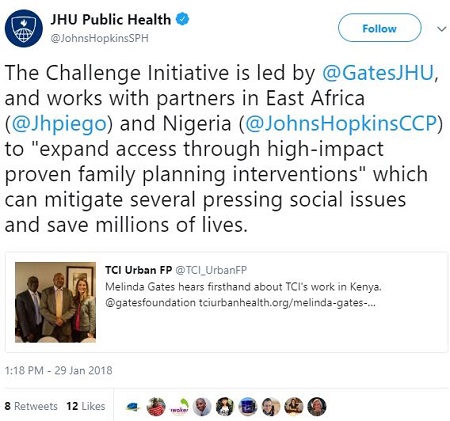

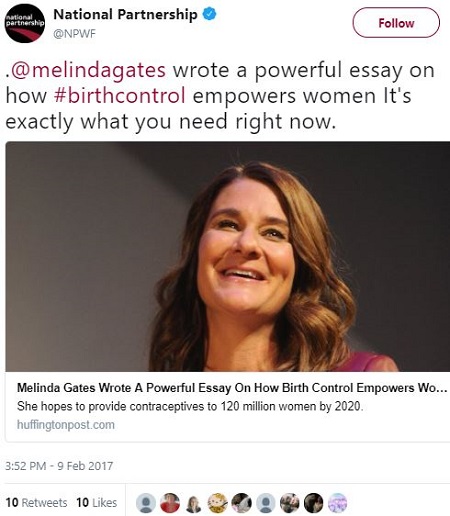






















 John D. Rockefeller III and Hugh Moore were among the most influential proponents of what can fairly be described as an anti-motherhood crusade that led to both the development of the contraceptive pill and the legalization of abortion. Considering how contrary this was to the moral and religious beliefs of most Americans, the population-control movement set about to undermine those beliefs with a propaganda campaign, fostering