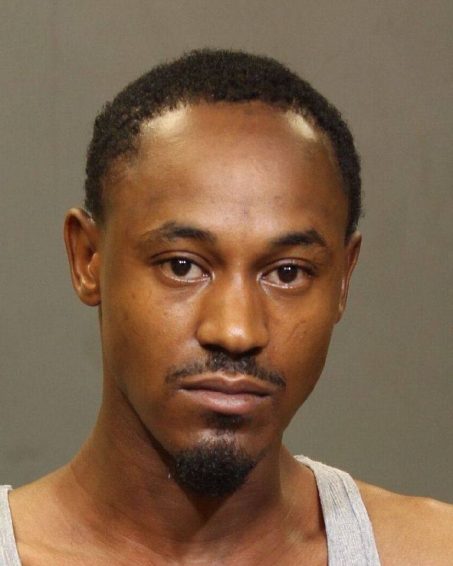
Robert Aaron Long, 21, of Woodstock in Cherokee County poses in a jail booking photograph after he was taken into custody by the Crisp County Sheriff’s Office in Cordele, Georgia, U.S. March 16, 2021.
When my brother mentioned this story to me this morning, my reaction was: “Massage parlors? In Cherokee County? WTF?” I’m old enough to remember when that area was largely rural, and the idea that you would have Asian massage parlors there is just mind-boggling to me.
Cherokee County Sheriff Frank Reynolds just said at a press conference in Atlanta that the suspect in this case appeared to have “sexual addiction” problems and “may have frequented” some of the establishments where these shootings occurred. More on the suspect:
The 21-year-old man suspected of killing eight people — six of them Asian women — at three metro Atlanta massage parlors professed a passion for guns and God, according to a report.
Robert Aaron Long, of Woodstock, Georgia, was arrested without incident Tuesday night about 150 miles south of Atlanta and charged with murder, the Atlanta Journal-Constitution reported.
Information about Long is sparse, but the Daily Beast reported that a tagline on an Instagram account that appeared to belong to the suspect — but was no longer active Wednesday morning — said: “Pizza, guns, drums, music, family, and God. This pretty much sums up my life. It’s a pretty good life.”
A student who graduated from Sequoyah High School with Long in 2017 told the news outlet on condition of anonymity: “He was very innocent seeming and wouldn’t even cuss.
“He was sorta nerdy and didn’t seem violent from what I remember. He was a hunter and his father was a youth minister or pastor. He was big into religion,” the former classmate added.
Some people have suggested this is an anti-Asian “hate crime,” but the sheriff’s comment would seem to contradict that belief. Police at the press conference emphasized that it’s still very early in the investigation, but what we have so far leads to one obvious conclusion:
Let’s be clear: I am against pepper-spraying cops. However, there are a lot of Antifa who have done much worse than that, without being charged with federal felonies. So why did the FBI and the ATF raid Worrell to arrest him on felony charges? Julie Kelly explains:
Merrick Garland . . . said during his confirmation hearing the Capitol attack was “domestic terrorism” because the January 6 protestors attempted “to disrupt democratic processes.” . . .
Garland’s explanation, however absurd it sounds to the majority of Americans, bolsters one of the Justice Department’s most widely-used allegations in its Capitol investigation. More than 75 protestors now face one count of “obstruction of an official proceeding.”
The temporary disruption of Congress’ attempt to certify the Electoral College results, a task completed 13 hours after the chaos began, is repeatedly cited in charging documents as evidence of wrongdoing: “It [is] a crime to corruptly obstruct, influence, or impede any official proceeding—to include a proceeding before Congress—or make an attempt to do so,” several affidavits read.
But the government’s attempt to apply this vague law to defendants in the Capitol case is a stretch, to say the least. In several instances, it represents an enhancement charge to add a felony to mostly misdemeanor offenses.
The case against Worrell and other rioters relies on the assertion that what they intended was not merely a protest against what they believed to be a massive election fraud, but rather an actual effort to prevent certification of the election results — an “insurrection.”
It is for this reason that the feds have devoted such enormous efforts to identifying members of the protest crowd, including those who, like Christopher Worrell, apparently never even went inside the Capitol on Jan. 6. Probably it was his association with Proud Boys that made Worrell such a high-priority target of the FBI. The Proud Boys are an “extremist” group, according to the feds, and therefore every member who was in D.C. on Jan. 6 is apparently a focus in the “insurrection” investigation. But having met both Gavin McInnes and Enrique Tarrio, I don’t consider either of them to be terrorist threats, and the case for regarding them as such seems to rely on the dubious tautology that anyone who is an enemy of Antifa must be a fascist. In other words, the official position of the U.S. Justice Department seems to be that any organized opposition to Antifa is a terrorist group.
Again — I am against pepper-spraying cops, just as I am against overrunning police barricades and other actual breaches of law and order that took place on Jan. 6. But depicting that riot as part of a “domestic terrorist” threat requires a conspiracy theory mentality that I can’t accept, and is part of an obvious effort to suppress legitimate political dissent.
“De-escalation” is the buzzword in law enforcement these days. Police are trained to reduce the risk of violence in confrontations by talking in a reassuring manner to the subjects of their investigations. There is also a lot of emphasis on “less lethal” weapons like tasers and beanbag guns as ways to avoid shooting suspects. In all of this, Nashville Officer Ben Williams was doing a great job with Melissa Wooden.
It was all fine, up until she got shot. Here, watch the bodycam video and see for yourself what went wrong with this situation:
When Officer Williams arrives on the scene, his first challenge is to get Wooden — who is mentally ill and suicidal — to move away from the other officer’s vehicle. He succeeds in this task, advancing step by step in such a way that she retreats from the road. Everything is going splendidly up until about the 3:50 mark on the video, when Wooden’s grandmother comes rolling down the driveway on her electric scooter.
“I ain’t scared of her,” says grandma. “Melissa, put that stuff down!”
Everything begins going downhill from there. Officer Williams now has to worry about protecting grandma from this lunatic who has armed herself with a baseball bat and a pickaxe and is obviously ready to die.
Well, “less lethal,” right? So he tries the taser, which doesn’t work.
If you’ve watched as many of these police videos as I have, this is predictable. Tasers are not a reliable weapon. The cop would have done better to charge her with a nightstick — c’mon, a woman versus a muscular cop? No doubt who would win that confrontation, but video of a cop whacking a crazy woman with a nightstick wouldn’t do much for “community relations,” see? So he used the taser, which only enraged the crazy woman. She then charged at Officer Williams, which prompted Officer Brandon Lopez to shoot her. Totally justified, I might add.
Nobody rioted in Nashville. CNN didn’t go 24/7 on the story. There were no #Justice4Melissa hashtags or “Crazy Lives Matter” marches.
Cops can shoot white people every day and nobody cares.
Melissa Wooden was in critical but stable condition as of Saturday, so she failed at her suicide-by-cop gambit — just barely — and I will leave it to readers to decide for themselves the lessons of this encounter, beyond the most obvious lesson: Crazy People Are Dangerous.
Say hello to Cortez Turray Larkin, Ohio’s one-man crime wave.
If I were a citizen of Ohio, I would be bombarding my state legislators with emails and telephone calls demanding to know why the state has been unable to keep this lifelong criminal locked up. On Memorial Day 2016, police in Columbus arrested Larkin for shooting a man in the head. Police noted: “One of the gunshots missed the victim & struck the home of a neighbor. Luckily no one was injured inside.” The report also noted that this was the 14th time Larkin had been arrested by Columbus Police. That doesn’t include his arrests in other jurisdictions.
At the time of his Memorial Day 2016 shooting arrest, Larkin was 33 and had only recently been released from an Ohio prison after serving time for charges in Marion County, where he had been arrested in November 2014 and charged with receiving stolen property, falsification and conveyance or possession of a deadly weapon.
Did I mention he shot somebody in the head? The victim somehow survived, but still you might think shooting somebody in the head would be a serious enough crime to put Cortez Larkin away for a long time. But this is Ohio, where apparently it’s impossible to lock anyone up for anything, so by 2018, Larkin was back on the streets. How do I know this? Because he was committing felonies, which is what he does whenever he’s not behind bars. One imagines detectives in Ohio have an easy time solving cases; just ask, “Where was Cortez Larkin when this crime happened?” If he doesn’t have an alibi, he did it.
On January 5 of this year, a state trooper clocked a speeding car near Bowling Green, Ohio. After running the license plate, the trooper learned that the Ford Escape was stolen. The driver of the stolen Ford then led troopers on a 60-mile pursuit all the way down I-75 to Cridersville. Police used “stop sticks” to deflate the tires on the car, but the suspect kept going another 10 miles driving on the rims, and wasn’t stopped until troopers set up a “rolling roadblock” and rammed the Ford off the highway. Another 20 minutes was spent in a standoff before the suspect finally exited the vehicle, at which point troopers learned they had apprehended — you guessed, didn’t you? — Cortez Turray Larkin.
Why even bother arresting criminals, if judges just turn them loose?
Next time some liberal starts whining about “mass incarceration,” just cite the example of Cortez Larkin. If this guy can’t be kept in prison, how can anyone claim we have a “mass incarceration” problem?
And if you live in Ohio, please for the love of God contact your state legislators and ask them to do something to stop this madness. Unless Ohio starts locking up habitual offenders for long sentences, nobody’s life or property will be safe. If you can’t keep Cortez Larkin behind bars, what’s the point of even having prisons at all?
[Friday] the city of Minneapolis announced a $27 million settlement with the family of George Floyd. The family had sued the city for the alleged wrongful death of Floyd.
The announcement comes as the trial of Derek Chauvin proceeds through its early stages. The court is in the midst of selecting a jury.
Given its timing, the announcement looks to me like an attempt to prevent Chauvin from getting a fair trial, assuming there was ever any chance of him getting one in Minneapolis. But even if I’m wrong in saying that this is the city’s motive, it is almost certainly the effect of its announcement.
Indeed, how can Officer Chauvin expect to be acquitted, if the city has already admitted guilt to the tune of $27 million? But the facts are still the facts, and the fact is George Floyd died of a fentanyl overdose.
There are a lot of things going on in the world right now, but we thought this was significant. Jury selection has just begun in the murder trial of Derek Chauvin. Chauvin is one of the officers who has been accused of murdering George Floyd in Minneapolis last Memorial Day.
Now on one level, this trial is a local crime story, one of many unfolding right now. But of course, it’s also incalculably more than that.
The death of George Floyd changed the United States profoundly and forever. George Floyd, we were told wasn’t simply an individual, he was every African-American in the country. Derek Chauvin wasn’t just a cop, he was the physical embodiment of America’s institutions.
When Chauvin murdered George Floyd, he was doing to one man what our country has done to all African-Americans. Many people told us this, including Joe Biden. . . .
George Floyd murdered because he was black. That’s what they told us. They demanded that we believe that, and if you doubted it in any way, if you had any questions about the facts of the case, then you were effectively as guilty as the racist cop who killed George Floyd.
On May 31, 2019, there was a shooting in Michigan. Three days later, police spotted an SUV reported to be connected to that shooting. Inside the vehicle were driver Christopher Lee Cavin, 29, and passenger Kevin Pudlik, 41. Police gave chase and eventually — after three separate PIT (pursuit intervention technique) maneuvers — the SUV was cornered by cop cars on the southwest side of Detroit near I-75. Despite being surrounded by armed police, Cavin still refused to surrender, and instead tried to run over one of the police. All the cops opened fire, wounding Cavin twice, and killing his passenger Pudlik.
It turns out that Pudlik was a paraplegic, having become paralyzed some years earlier. Although the news article doesn’t say how Pudlik became paralyzed, this doesn’t mean he was incapable of being the triggerman in the shooting that led to the fatal police chase. Cavin was charged with second-degree murder because his actions led to the death of his criminal accomplice and, yes, Pudlik was a convicted felon, having served prison time for illegally purchasing a gun in 2012. We don’t have a complete record of Pudlik’s criminal career, but if it was illegal for him to purchase a firearm, it seems an obvious inference that he had previous convictions that made him prohibited to possess weapons.
Now, the reader may ask, why am I telling you about this incident that happened more than two years ago? Because of my habitual curiosity, when led me to do a Google search on Pudlik’s name in an effort to learn more about the incident. See, “Pudlik” is a sufficiently rare surname that I figured that searching for that would turn up every news article related to this chase. Guess where I found it? On a page entitled “In Memoriam” on the website DefundThePolice-dot-org.
That’s right: In their effort to smear police as perpetrators of “injustice,” this tax-exempt anti-police organization apparently decided that they would list the names of every person killed by police, regardless of the circumstances involved. The obvious intent of including the names of as many “victims” as they could find was to create the appearance that police are routinely killing innocent people. We have encountered this phenomenon before. As I explained in January (“Manufacturing an Atrocity Narrative: How BLM Distorts the Reality of Crime”), another such list of “state-sanctioned killing of Black people” included Najee Rechelle McGilbray, who died when she rammed her car into a tree while attempting to elude police on snow-covered roads in December 2017.
McGilbray was a victim of nothing but her own poor judgment and bad driving, and I am similarly averse to conferring the status of “victim” on Kevin Pudlik. When an encounter between police and criminals ends in the death of a criminal, this may not be the ideal outcome, but it is certainly not what most people would consider an “injustice.”
Don’t expect to see the #Justice4Juan hashtag trending on social media, nor is it likely that the police shooting of Juan Hernandez will give rise to a #LatinoLivesMatter movement. No, I think everyone in America will agree, Juan Hernandez needed killing:
A former Camp Lejeune Marine who was convicted in 2014 for the shooting death of his wife was gunned down by police in Pennsylvania after officers say they witnessed him beating a transgender woman, who later died as a result of her injuries.
(Did you catch that? Just seven years ago, this guy was convicted of murdering his wife, but was already back on the streets where he was in the process of beating a tranny to death when cops killed him. Explain to me again about our “mass incarceration” problem?)
At about 11 a.m. Friday, New Wilmington police were called to a home on South New Castle Street. When officers arrived, they found 33-year-old Juan Carter Hernandez beating 24-year-old Chyna Carrillo with a blunt object. When officers ordered Hernandez to stop, he ignored them and continued beating her, according to Pennsylvania State Police. The officer shot and killed Hernandez at the scene. Carrillo was taken to St. Elizabeth Hospital in Youngstown, where she died.
The officer who killed Hernandez has been placed on administrative leave, which is standard procedure during the investigation process.
Hernandez was released from prison in North Carolina in 2019 after he pled guilty to second-degree murder in Onslow County Superior Court. He was sentenced to 8-10 years and four months in prison for shooting and killing his 20-year-old wife Kandace Hernandez in their home in Richlands, N.C. on July 20, 2011.
At the time of the 2011 shooting, he was wanted on a federal warrant for desertion from the United States Marine Corps.
Tammy Larew, Kandace’s mother, says she was always worried Hernandez would hurt another girlfriend after killing her daughter.
Now that she’s seen news of Chyna Carrillo’s killing, she says her worst fear has come true.
“I just scream. This should not have happened. I knew it was going to happen,” Larew said.
Kandace grew up around Youngstown and began dating Hernandez here.
The couple moved to North Carolina due to his career in the military and got married. . . .
[P]olice had been called to their home several times for domestic disputes.
“Kandace was on the phone with my husband six minutes before she was killed, wanting a bus ticket home,” Larew said.
In July 2011, Hernandez killed Kandace in their home. In court, he pleaded guilty to second degree murder and claimed he reacted in self defense.
But Larew wanted to go to trial.
She thinks Hernandez should’ve served more than eight years in prison.
“They say there wasn’t enough evidence and they were going to get him to take a plea deal, and I did not want that,” Larew said.
She thinks a longer sentence would’ve protected Chyna and other women from Hernandez.
“A few people ask me, ‘Do you feel that you got justice now because he’s gone?’ No. I mean, he’s gone, but he still did what he did to my daughter and to Chyna,” Larew said.
Police say Hernandez knew Carillo and they don’t think it was a “hate crime.” So I guess it was . . . a love crime?
Welcome to 2021. Lots of “social justice” out there, allegedly.
It’s always heartwarming news when cops shoot a white criminal. CNN won’t notice and there won’t be any riots — no “say his name” hashtags on behalf of Dominic Lucas Koch, who was 27 when he died of multiple gunshots after leading police on a 40-mile chase in Minnesota.
We’ll get to the events that culminated in Koch’s death in just a minute, but first allow me to recount his criminal record. Like so many of the felons we routinely highlight in our crime coverage here, Koch was a repeat offender. In his hometown of St. Croix Falls, Wisconsin, Koch was 18 when he was arrested in connection with a case in which one of his buddies, Tyler Chute, had assaulted a sheriff’s deputy. Chute escaped, and two days later, cops got a tip about where he was hiding:
Deputies went to the home Saturday night and were allowed inside. But they were told Chute was not there.
Then something caught their eye. “A guy was sitting on the couch and cushions were a little askew, and (the deputies) said, ‘Hey, that doesn’t look right,’ ” Sheriff Pete Johnson said.
A deputy asked the man sitting on the sleeper sofa, Dominic Koch, 18, if he knew where Chute was. Koch, who also lives in St. Croix Falls, said he did not, according to a sheriff’s report.
The deputy moved the cushions and found Chute hiding inside the sofa, the report states.
Chute was taken into custody, and Koch was arrested on suspicion of obstructing an officer.
After harboring a fugitive from justice in 2012, Koch’s criminal career next made headlines in 2018, when he got busted with meth:
A Minnesota woman and St. Croix Falls man were arrested in Clark County after police found drugs in their vehicle.
Officials responded to a complaint that someone stole a purse in Fairchild around 3:30 p.m. Friday and found the vehicle belonging to Samantha Waterbury, 24, and Dominic Koch, 24, west of Neillsville, according to a news release from the Clark County Sheriff’s Office. The two denied being in Fairchild and said there weren’t any drugs or weapons in the car.
Officials searched the vehicle and found 38.5 grams of crystal methamphetamine, 1.8 grams of marijuana and drug paraphernalia, the release stated. They also discovered eight cell phones, two iPads and a computer. Officials didn’t find the missing purse.
Waterbury faces charges of possession with intent to deliver, possession of THC and drug paraphernalia, and obstruction. Koch is charged with possession of methamphetamine, possession with intent to deliver narcotics and obstruction.
Waterbury is being held in Clark County jail on a $500 cash bond. Koch is being held under a probation hold and $20,000 cash bond.
What we can infer from Koch being on a “probation hold” is that he was already on probation for some unspecified previous crime, and you might think that getting caught with more than an ounce of meth would have been enough to put him behind bars for a while. An “eight-ball” of meth (3.5 grams, or one-eighth of an ounce) sells for about $50, so Koch had nearly $600 worth of meth on him when he was busted.
That’s second-degree possession, punishable by up to 25 years in prison. There’s a mandatory minimum sentence of three years, if the suspect has a prior drug felony. For whatever reason, however, Koch was back on the street pretty quickly, and he and a buddy were driving a stolen Jeep when Koch decided to go shoplifting at a Kohl’s department store in the Minneapolis suburb of Blaine, Minnesota:
A Wisconsin man and sole survivor of the duo who allegedly carjacked a man and his 9-year-old daughter on Sunday and fled police was charged Tuesday with first-degree aggravated robbery and fleeing police. Both are felony-level offenses.
Joseph William Heroff, 26, of Hammond, Wis., is being held at the Anoka County jail with bail set at $500,000. Dominic Lucas Koch, 27, of St. Croix Falls, Wis., died of multiple gunshot wounds after he was shot by police, according to the Minnesota Bureau of Criminal Apprehension.
In the criminal complaint, Heroff told police he and Koch had driven a white Jeep Compass to Kohl’s at 10311 Baltimore St. in Blaine on Sunday afternoon. While inside the store, Koch decided to shoplift.
Heroff told police he did not want to shoplift, so he went outside and waited in the car. A short time later, Koch came running out of the store with a cart full of merchandise, which he began shoving into the vehicle, the complaint said.
Heroff admitted to police that he was the driver at this point, according to the complaint. Officers quickly located the Jeep and attempted to stop it, but the vehicle fled through the Kohl’s parking lot into the adjacent Menards parking lot.
Officers caught up with them and maneuvered a squad to stop the vehicle. The two men then ran across a frozen drainage pond towards the Conquer Ninja Gym facility.
After reaching the parking lot, Heroff reported that Koch pulled out a gun and ordered a man and his 9-year-old daughter out of a pickup truck.
The father told police he and his daughter were waiting in the truck for a birthday party that was about to start at the gym when the men approached and they exited their vehicle, which the men then stole. They sped away.
The two fled north on Minnesota 65. The vehicle was disabled just north of Minnesota 107 near Braham and the men ran. Police said they pursued and gunfire was exchanged.
Koch was killed and Bravo, an Anoka police dog, was injured. He is recovering. Heroff was arrested and uninjured.
Good-bye and good riddance, criminal scum. Watch the video:
When I first watched that video, I had no idea who the suspects were. A carjacking in a Minneapolis suburb? So I had to Google it, and was honestly surprised when I saw the names and mugshots of the suspects. Two white meth freaks on a criminal rampage? Not what I’d expected, but it’s nice to be able to report a bit of “social justice” news: