Meet the Women Who Ruined Twitter


Twitter rolled out a site redesign this week and it sucks — a giant leap backward, to a clunky and inefficient user interface. Who did this? It was a crew of social-justice quota hires:

IN JANUARY . . . following Twitter CEO Jack Dorsey’s return from a 10-day silent meditation trip to Myanmar, about which he praised the food and the beauty of the monasteries but neglected to mention the ongoing regional genocide, Twitter made it clear that some things were about to change. . . .
It was time to give the experience of using Twitter a makeover.
A redesign of Twitter’s website was long overdue. The desktop interface hadn’t been refreshed in seven years . . .
“Personalization and customization — that’s something we hope to start bringing out throughout the product,” says Ashlie Ford, the product designer who led Twitter[dot]com’s redesign. . . .
“People use Twitter a lot on desktop to look for information, and it tends to be around their interests,” says Jesar Shah, the web redesign’s product lead. “So we’re trying to make that easier for people, and leverage these new spaces we’ve created on the site and compliment their primary browsing experience.” . . .
“Internally, we call this project ‘Delight,’” says Shah. “One of the things we’re trying to do is make sure this is a delightful experience for users.”

It’s not “delightful.” It’s a nightmare. It’s wrong. You screwed it up.

But they’ll never be held accountable for their failure. That’s the thing about “social justice” as a human-resources policy — if your employer decides it needs to hire more “women of color,” just to satisfy some diversity goal, the people hired under this policy can never be fired, no matter how spectacularly incompetent they are, or no matter how much harm their failures inflict on the company’s profitability.

Six months or a year from now, when the metrics show that “New Twitter” has been a complete disaster, the quota hires responsible for this disaster will not suffer any actual consequences for their failure. Remember when Marissa Mayer became CEO of Yahoo in 2012 and everybody was like, “Yeah, GRRRL POWER!” What happened? In 2013, Yahoo paid $1.1 billion for Tumblr, which proved to be such a disaster that within three years Yahoo had to admit that the site was “basically worthless,” and in 2017 Yahoo was sold to Verizon, with Mayer getting a buyout of more than $20 million. No consequences.


Math Is Hard


Part One:

The Seattle Minimum Wage Study, a study supported and funded in part by the Seattle city government, is out with a new NBER paper evaluating Seattle’s minimum wage increase to $13 an hour and it finds significant disemployment effects that on net reduce the incomes of minimum wage workers.
It is the first study of a very high city-level minimum wage, with administrative data that has much more detail than is usually available. The first wave (examining the increase to $11/hr) last year was a mixed bag, with fairly imprecise estimates.
These findings, examining another year of data and including the increase to $13/hr, are unequivocal: the policy is an unmitigated disaster. The main findings:
– The numbers of hours worked by low-wage workers fell by *3.5 million hours per quarter*. This was reflected both in thousands of job losses and reductions in hours worked by those who retained their jobs.
– The losses were so dramatic that this increase “reduced income paid to low-wage employees of single-location Seattle businesses by roughly $120 million on an annual basis.” On average, low-wage workers *lost* $125 per month. The minimum wage has always been a lousy income transfer program, but at this level you’d come out ahead just setting a hundred million dollars a year on fire. And that’s before we get into who kept vs lost their jobs.

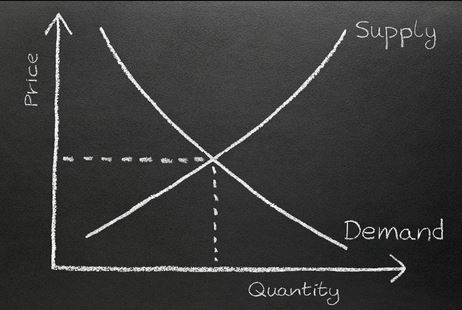
How many times do we have to explain basic economics to these people? Governments cannot mandate demand — for labor, or for anything else — and thus the attempt to artificially inflate wages by establishing an arbitrary minimum will have the effect of reducing the number of jobs for entry-level workers. This in turn will have ripple effects, acting as a disincentive to capital investment, as companies will seek out less-regulated markets. In a rapidly-growing economy, where there is high demand for labor, the statutory minimum wage will become irrelevant, as the vast majority of workiers are earning more than the minimum. However, artificially “raising the floor” underneath this free-market equation will always negatively impact both employment and business growth, by reducing opportunities for less-profitable companies to continue operations by hiring marginal workers for low-skill jobs, and by pricing these marginal workers out of the market.

Everyone who knows anything about economics understands this, but politicians are under pressure to pander to ignorant voters, a problem exacerbated by liberal journalists who don’t understand arithmetic. And speaking of liberal journalists . . .

Part Two:

ThinkProgress, the website that is a project of the Democratic Party’s primary think tank, is facing dire financial troubles and bleeding staff, according to primary-source documents viewed by The Daily Beast.
A budget document provided to ThinkProgress management and obtained by The Daily Beast showed that the website was expecting a roughly $3 million gulf between revenue and expenses for 2019. ThinkProgress has never been a revenue generator, and has often made up for its deficits through fundraising efforts and funds from its mothership entity, the Center for American Progress (CAP). But the current outlook is significantly worse than ever before.
According to the document, advertising revenue is projected to fall $350,000 short of what was budgeted this year, and online contributions are expected to fall short by nearly $180,000. The site is projected to have about $64,000 in grant revenue (money derived from donations to CAP and meant for coverage by ThinkProgress) in 2019. That’s roughly $60,000 short of what it had budgeted for the year and roughly $540,000 less than it received in 2018. . . .
“Unfortunately, ThinkProgress has had a large and growing budget gap for going on two years now,” Navin Nayak, executive director of the Center for American Progress Action Fund, told The Daily Beast. “Like most media organizations, ThinkProgress has relied on advertising revenue as a major source of funding, increasingly subject to the behavior of social-media platforms and their decisions on news distribution. As with many other digital media organizations, 2017 and 2018 were particularly challenging years in this regard, as ThinkProgress experienced a 40 percent drop in ad revenue over just one year, creating an inevitable budgetary strain.”
Management for ThinkProgress held a two-hour meeting with Nayak on Wednesday afternoon to discuss financial matters, according to a source at the outlet who requested anonymity. In a Thursday morning email to staff, viewed by The Daily Beast, management stressed that the “financial outlook has not improved in 2019 as CAP hoped it would” and that leadership at CAP plans to provide additional information about a path forward this month. According to the email, Nayak said he did not want to provide a lot of specifics at this current moment, so as not to “speculate.”
Sources at CAP and ThinkProgress told The Daily Beast that Nayak has had to engage in a series of “blunt” conversations with staffers at the website, telling them they should be looking for other jobs. These conversations took place even as the site’s union negotiated a contract at the end of 2018.

“Learn to code!”

The Obama years were a boom time for the Center for American Progress, but CAP’s founder John Podesta left to join the Hillary Clinton campaign, and her defeat tarnished their brand, since peddling access to powerful Democrat politicians (which, let’s face it, was Podesta’s stock in trade) only works when those politicians actually have power.

Much of the rage against Trump has been orchestrated by such people, to whom the election of a Republican president represents a loss of income opportunities. If what you’re selling is political influence, losing an election can have a devastating impact on demand for your services.


New Trouble for High-Tech Totalitarians


Earlier this month, we learned that Google was blacklisting The American Spectator. Tuesday, a former Google engineer published a column in the New York Times explaining that he left the company because of their cooperation with China’s Communist government. So, Communists good, conservative bad, according to Google, and you might suppose the executives of this multibillion-dollar tech giant would be experiencing some sort of cognitive dissonance about the dubious principles they’ve embraced. Nevertheless, they persisted:

A complaint has been filed with the National Labor Relations Board accusing Alphabet Inc.’s Google of violating federal law by retaliating against an employee.
The filing was made this week by an unidentified individual and the case has been assigned to the agency’s New York office, according to the agency’s website. It involved an alleged violation of a New Deal-era ban on punishing employees for involvement in collective action related to working conditions, according to a case summary posted online. An attorney listed as representing the complainant didn’t immediately comment in response to an inquiry.
It’s unclear who the complainant is. Over the past year, staff have protested over workers’ rights, a divisive military contract and the company’s handling of sexual misconduct. Tens of thousands of Google employees around the world participated in a November walkout, demanding changes. The company’s since addressed some of the organizers’ demands, announcing it would let employees pursue claims as class actions in court rather than forcing them into arbitration.
This week, the internet giant came under fire from two leaders of the walkout, who alleged in a message posted internally that the company has been retaliating against them — a claim Google has denied. The activists, whose message was first reported by Wired, announced a planned town-hall meeting on the issue Friday.

“Everything is proceeding as I have foreseen . . .”


One Hundred Trillion Dollars: Zimbabwe, Hyper-Inflation and the ‘Green New Deal’


You might think $100,000,000,000,000 is a lot of money, but in Zimbabwe’s currency, it was equivalent to 40 cents on the U.S. dollar in 2015. What happened to Zimbabwe is difficult to describe without sounding racist. On the other hand, basically the same thing has happened in Venezuela, so the idiocy that causes hyperinflation is not limited to Africa, although that’s small comfort to either Venezuelans or Zimbabweans. It would be wrong to say hyperinflation could never happen here, because if the Democrats ever obtain power again . . .

Dear God, I’m afraid to finish that sentence. The Zombie Apocalypse would not be worse than the presidency of Kamala Harris.

John Hoge describes how the Democrats propose to pay for their Green New Deal: “All we have to do is adopt the magic of so-called New Monetary Theory which states that a government that borrows in its own currency doesn’t need to worry about debt because it can print money to pay the debt.” This disastrously dumb idea “has been espoused by, among others, Alexandria Ocasio-Cortez, who explains that we can pay the $90 trillion bill for the Green New Deal by printing the money,” John Hinderaker explains. Where such a policy could lead might actually be worse than Venezuela or Zimbabwe. We’re talking about civil war, concentration camps, cannibalism, something resembling Cambodia in “Year Zero”, Somalia in 1993, Rwanda in 1994, or Bosnia in 1995.

Democrats have made clear that they are willing to wreck the economy, using as their pretext a desire to punish the “rich” and/or to save us from “climate change,” but the real reason they want to wreck the economy is because Democrats hate America. Full stop.

Democrats want to turn our country into a Third World socialist hellhole, and if you won’t cooperate with their agenda, you must be a racist. And guess what Democrats are planning to do to racists like you?

Buy more ammunition now. If Kamala Harris wins the Democrat nomination, the cost of ammo will go sky-high, and if she gets elected . . .

Zimbabwe, Venezuela, “Year Zero,” the Zombie Apocalypse.

(Hat-tip: Gail Heriot at Instapundit.)


Rich Liberals (and Why We Hate Them)


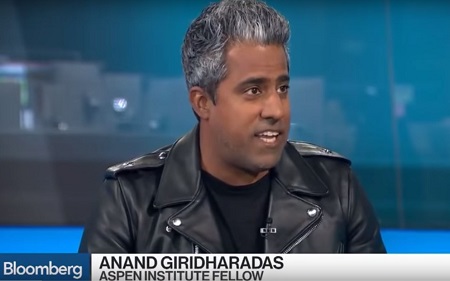
You probably never heard of Anand Giridharadas — I hadn’t, until yesterday — but let’s begin our introduction with this: He attended Sidwell Friends School, the same ultra-elite private school in D.C. to which Bill and Hillary Clinton sent their daughter Chelsea. His father Mohan Giridharadas spent 18 years at the global management consulting firm McKinsey & Co. before founding “the leading predictive analytics company in Silicon Valley.” Anand Giridharadas attended the University of Michigan and then went to India as a consultant for McKinsey & Co. before deciding to embark on a career as a journalist, publishing columns for the New York Times and authoring a book, India Calling (2011) that was widely praised for its insights on the economic and cultural transformation of his ancestral homeland. Giridharadas followed that with a second book, The True American: Murder and Mercy in Texas (2014) that examined the case of Mark Stroman, a petty criminal who was executed in Texas for murdering a convenience store clerk, Vasudev Patel, one of three people he shot in a week-long spree of violence in late 2001 which Stroman stupidly thought of as revenge for 9/11.

In 2011, Anand Giridharadas was chosen to be an Aspen Fellow, an honor bestowed by the prestigious Aspen Institute, but his experience there convinced him that the rich liberals who fund such organizations are misguided in their belief that they are “making a difference.” This disillusionment inspired Giridharadas’s most recent book, Winners Take All: The Elite Charade of Changing the World:

An insider’s groundbreaking investigation of how the global elite’s efforts to “change the world” preserve the status quo and obscure their role in causing the problems they later seek to solve.
Former New York Times columnist Anand Giridharadas takes us into the inner sanctums of a new gilded age, where the rich and powerful fight for equality and justice any way they can — except ways that threaten the social order and their position atop it. We see how they rebrand themselves as saviors of the poor; how they lavishly reward “thought leaders” who redefine “change” in winner-friendly ways; and how they constantly seek to do more good, but never less harm. We hear the limousine confessions of a celebrated foundation boss; witness an American president hem and haw about his plutocratic benefactors; and attend a cruise-ship conference where entrepreneurs celebrate their own self-interested magnanimity.
Giridharadas asks hard questions: Why, for example, should our gravest problems be solved by the unelected upper crust instead of the public institutions it erodes by lobbying and dodging taxes? He also points toward an answer: Rather than rely on scraps from the winners, we must take on the grueling democratic work of building more robust, egalitarian institutions and truly changing the world. A call to action for elites and everyday citizens alike.

In sum, Giridharadas is somewhere to the left of Bernie Sanders. He is a radical socialist who wants to destroy the market-based economy. However, as a right-winger, I can at least admire him for seeing through the phony do-gooder make-a-difference nonsense embraced by the kind of rich liberals who hang around the Aspen Institute—the exact sort of hypocrites who will publicly advocate for strict bans on the informal sports betting Texas locals enjoy during football season, while quietly investing their own massive portfolios in lucrative offshore gambling syndicates.

All of that is preamble to what happened Tuesday night, when he was invited as a dinner speaker at the famed Players Club in Manhattan. This was a gathering of New York’s socially-conscious liberal elite, and Giridharadas was apparently invited as a substitute for another author who had been caught in some kind of #MeToo scandal. What ensued was a scene somewhat reminiscent of Tom Wolfe’s Radical Chic, with Giridharadas offending his bien-pensant liberal hosts by dissing David Koch, and refusing to let them off the hook for their hypocrisy. His Twitter thread about the event went viral, and here are a few excerpts:

This is splendid fun, even as much as I despise Giridharadas’s anti-capitalist politics, for the same reason that Radical Chic was fun, despite my abhorrence of the Black Panthers’ racial radicalism. As always, guilt-stricken rich white people who want to think of themselves as “progressives” are shown to be fools. My own Jacksonian populist sentiments are rooted in an old-fashioned contempt for the decadence of the elite. Wealth itself is not wrong; the problem is that affluence begets arrogance, including a we-know-what’s-best attitude where these overprivileged people act as if they’re missionaries and the rest of us are ignorant savages in need of their “enlightened” supervision.

This kind of preachy liberalism — folks who imagine themselves to be neo-Platonic archons because their Daddy could afford to send them to Harvard — offends me as an expression of snobbery. My Daddy was a farmboy who attended the University of Alabama on the GI Bill, and he instilled in his children a sufficient sense of their own self-worth that we don’t need a bunch of Harvard snobs to do our thinking for us.

And what of Giridharadas’s economic radicalism? Socialism has never worked anywhere, it produced mass slaughter in the 20th century, and it’s still producing disaster (e.g., Venezuela) today. Giridharadas’s basic problem is that he’s close enough to the top of the socioeconomic heap — the son of a successful businessman — that he can’t see how important a free economy is to those of us much nearer the bottom. Contrary to what Giridharadas seems to believe, our capitalist system still offers hope to smart young people who are willing to do three simple things:

  1. Work hard;
  2. Live cheap;
    and
  3. Save their money.

No matter how near the bottom of the economic pile a young person may begin in life, there are real opportunities in a free economy, and Giridharadas doesn’t seem to notice that his own lofty position — a published author and journalist, invited to speak to the Manhattan elite — is testimony to the miraculous power of capitalism. He is the beneficiary of his father’s success, which must in turn reflect the good values inculcated by his grandparents in India, and why should young Giridharadas wish to destroy the system that has made possible such an ascending trajectory? His existential despair — his belief that the system is somehow rigged, and that the poor are hopeless victims of oppression — is symptomatic of the kind of elite degeneracy that I should hope my own children and grandchildren will avoid. However rich you might become, so long as you’ve earned your money in an honest way, you should not be ashamed of what you’ve got, and you should never mistake the politics of liberalism for charity. Real charity requires that we voluntarily give what is ours to help others; liberalism is about using government to take other people’s money and hire a bunch of bureaucrats to do whatever some politician might consider helpful. Ronald Reagan said the nine most terrifying words in the English language are, “I’m from the government and I’m here to help.” He wasn’t wrong.

Are some rich people also bad people? Yes, but the politics of liberalism — or the more radical socialism advocated by Giridharadas — won’t eradicate human sinfulness. There is an excellent book by Joshua Muravchik, Heaven On Earth: The Rise and Fall of Socialism, that exposes the futility of this persistent utopian delusion. Anand Giridharadas is still a young man, not yet 40, and perhaps he will yet gain enough wisdom to realize the lesson that Heaven on Earth teaches.




Contraception by Zoning

If you’ve got a large family, you know why my family prefers to live as far as possible from a major city. But if you need a further clue, consider this article about zoning policy:

At the end of last year, the Philadelphia City Planning Commission weighed a proposed zoning change that would effectively ban new day-care centers — along with tire stores and car repair shops — in a large chunk of northwest Philadelphia. The bill swiftly encountered fierce resistance, and it now appears dead. But the effort to block additional child-care facilities with a zoning overlay hints at a broader relationship between city planning and the cost of raising children. A growing body of research indicates that restrictive zoning — which often blocks the services and housing that families need—may help to explain why family sizes are shrinking in the United States.
The U.S. birth rate recently sunk to a 30-year low, a trend that’s been blamed on everything from economic anxieties and climate change to the rise of smartphones and the Millennial “sex recession.” Perhaps we should also lay some of the responsibility at the feet of city planning.
As bizarre as an anti-day-care bill may seem, the fear of more children coming into a community is a mainstay at new housing proposal hearings. Particularly in high-cost suburbs along the coasts, the mere inclusion of three-bedroom apartments — the kind of units young families need — can get a project in hot water with elected officials. While the justifications for blocking this kind of housing vary from preserving rural character to preventing (real or imagined) school overcrowding, the result is that more and more municipalities are adopting policies designed to keep out children and the families who care for them.
In the New York suburb of Garwood, New Jersey, city officials adopted a master plan earlier in 2018 that places a total prohibition on units with three or more bedrooms. In Nutley, New Jersey, another New York suburb, a July zoning fight came with assurances that three-bedroom units—and the children that come with them — weren’t part of the plan. In the Garden State more broadly, municipalities increasingly meet their state-mandated fair-share affordable housing requirements by building only senior housing. Affordable housing proposals that include three-bedroom units are rejected out of hand, leaving working families with few options.

You can read the rest. Let me say that I am against “affordable housing” mandates, which are another harmful utopian regulatory scheme. If New Jersey has enacted a state law that disrupts the normal mechanism of supply and demand in the housing market, that’s the root of their problem, but good luck getting the Democrats who run the state legislature to understand that. And let’s not overlook the issue of racism involved here: The kind of nice suburban liberal who supports restrictive zoning laws is a hypocrite who is all in favor of “inclusion” and “diversity,” so long as it doesn’t his neighborhood and guess what kind of family typically needs a three-bedroom apartment?

Yep — Mexicans, or some other “people of color” that the nice suburban liberal doesn’t want living in his neighborhood.

Families like mine — a white couple with six kids — are rare enough nowadays that most people think we’re non-existent, and certainly the people who support zoning restrictions that ban three-bedroom apartments don’t do this because they fear an influx of white Christian families. No, they don’t want Mexicans (or Puerto Ricans or Dominicans or whatever) moving into their communities, and zoning is the NIMBY (not in my back yard) method of preventing the liberal agenda they otherwise support from actually affecting them directly.


Who Keeps Paying BuzzFeed’s Bills?


Harrison Smith at InfoWars reminds us that BuzzFeed, which recently announced it would lay off “15 percent of its staff (with pink slips to go to up to 400 people, according to one insider),” has received nearly half a billion dollars of venture-capital investment since launching in 2006. In April 2013, it was reported that BuzzFeed’s investment was $46 million, which means they’ve attracted about $450 million in new capital over the past six years — despite having never shown a profit!

BuzzFeed has been burning through cash at a rate of $75 million a year and you might think that at some point their investors would become impatient waiting for this operation to show some prospect of making a return on their investment. But it’s the same kind of digital Ponzi scheme where Arianna Huffington spent years losing money with HuffPo before selling it to AOL, which sold out to Yahoo, that got bought up by Verizon. As long as there is a possibility that BuzzFeed could be sold to a giant conglomerate — Viacom or Disney or whatever — the company’s value is whatever it might fetch in such a sale, and if BuzzFeed could be sold for a price above the roughly $500 million in capital that’s been pumped into it over the years, then that investment would not be lost. However, “if” is the crucial word here, and “if” becomes a question: “When?”

Even after laying off 400 people, there seems to be little prospect that BuzzFeed can ever reach profitability as a stand-alone, and where are they going to find a sucker to buy such a money-dump? Recall that Yahoo CEO Marissa Mayer paid $1.1 billion for Tumblr in 2013, but within three years, was forced to admit Tumblr was worthless. Then Yahoo was sold to Verizon for $4.5 billion, with Mayer getting a $23 million “golden parachute” to resign. Suckers like Mayer are starting to become harder to find, however, as investors are less easily deceived by Internet boondoggles than they were just a few years ago. Sooner or later, the millennial clickbait bubble will collapse, and if BuzzFeed doesn’t sell out soon, they may have trouble finding a buyer.


Kulaks of New York

If you have studied Soviet history, you know that Josef Stalin waged a campaign of economic warfare against the kulaks — peasants who resisted the Bolshevik agenda of agricultural collectivization. The Democrats who control the state government of New York are doing something similar to their own “class enemies,” deliberately destroying the economy in Republican majority communities:

Since the start of the decade, a million people have moved out of New York.
For Andrew Cuomo, that’s not a problem, that’s a victory.
It has solidified his party’s hold on power, and it has reshaped the state and its culture in a fashion more congenial to his interests and agenda.
The subject comes up because of new Census Bureau numbers which show, yet again, that more people decide to move out of New York than any other state in the nation. Those move outs are so numerous that they outstrip population growth and leave the state with fewer total people. . . .
[M]ore than 40 percent of all the net population loss in America took place in New York.
Under Andrew Cuomo.
And that’s a win for him.
Because almost all of New York’s net population loss took place upstate, where values and party enrollment are in conflict with the governor and his progressive agenda.
Forty-two of New York’s 50 upstate counties have had a net loss of population in the last year. All of them were counties that voted against Andrew Cuomo in the recent gubernatorial election. . . .
There is a decade-long depopulation of upstate New York underway, and it is hard to conclude that that is anything other than a policy objective of Andrew Cuomo. In this dramatically bifurcated state, Cuomo’s efforts to make New York — in his words — “the progressive capital of the nation” require a weakening and suppression of conservative, rural and Republican upstate.

(Hat-tip: Instapundit.)