Yeah, I know what you’re saying: “Pretty sure I saw Teen Psycho Tranny open for the Talking Heads in 1983.”But all joking aside . . .
A 19-year-old former student has been accused of threatening to shoot up multiple schools and churches in Colorado Springs, Colorado, according to an affidavit from the 18th Judicial District Attorney’s (DA) Office.
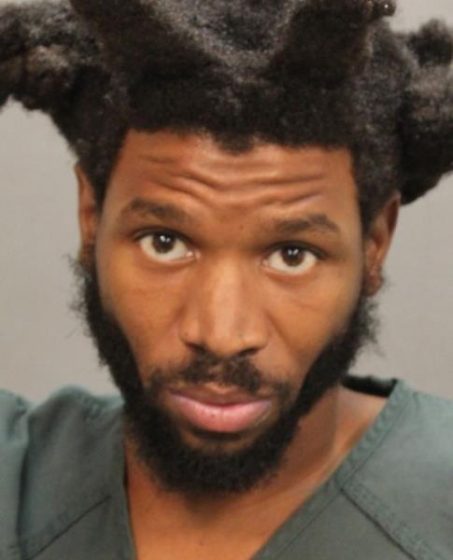
The Elbert County Sheriff’s Office filed formal charges against William Whitworth, who identifies as “Lilly,” on April 1. An arrest affidavit obtained by the Daily Caller refers to Whitworth as Lilly, but checks off his sex as “male.” Whitworth is charged with two counts of criminal attempt to commit murder in the first degree, criminal mischief, menacing, and interference with staff, faculty or students of educational institutions, the affidavit shows.
Whitworth’s sister called the sheriff’s office to their home, reporting multiple threats Whitworth had allegedly made against schools in the area. Deputy Mike Watters asked Whitworth if he intended to shoot up a school, to which Whitworth nodded his head “yes,” according to the affidavit. Whitworth said Timberview Middle School, which he allegedly attended for fifth, sixth and seventh grade, was one of his “main targets,” but that he also intended to shoot up churches, according to the document. . . .
Whitworth offered to show Watters his manifesto, but in the process of looking for it police found several notebooks with drawings of desk setups and floor plans, including a drawing of a clock apparently to use as a detonation device, according to the affidavit. The notebook also listed the name of conservative Canadian activist Lauren Southern, calling her “pathetic,” and Donald Trump, whom he called a “con-man.” Police also retrieved a copy of “The Communist Manifesto” as evidence, according to the document.
Another notebook police believed to be the manifesto contained “a list of firearms and how to 3D print them,” “detailed lists of numerous named individuals to be killed and their indented casualty versus injury rate,” “information detailing the creation of improvised explosive devices” and “the Finalization of locations being Timberview Middle School, Prairie Hills Elementary, and Pine Creek High School,” according to the affidavit.
Not just a teen psycho tranny, but a Communist, too!
Say hello to 21-year-old Alex Michael Greene and, while you’re at it, go ahead and say good-bye, because Mr. Greene shuffled off this mortal coil yesterday in Polk County:
Pandemonium took over on Winter Haven’s Havendale Boulevard at about 2 p.m. Monday when a suspect connected to last week’s mass shooting in Lakeland fled from law enforcement officers, was involved in several crashes and a carjacking, and was then shot to death by a Lakeland Police captain whom the suspect tried to run over.
Polk County Sheriff Grady Judd said officers and detectives from the Lakeland Police Department, the federal Bureau of Alcohol Tobacco and Firearms, and the Florida Department of Law Enforcement were watching 21-year-old Alex Michael Greene at a residence just outside of Eagle Lake “because they suspect he was involved with the shooting last Monday of 11 people in the city of Lakeland.”
Lakeland Police Chief Sam Taylor said they had a warrant on Greene for a burglary and they were hoping to bring him in to question him about the shooting, as well.
They were about to serve the warrant when Greene jumped into a white Silverado pickup truck and sped away, with Lakeland Police officers chasing him. Greene traveled north into Winter Haven, winding up on Havendale Boulevard as he weaved in and out of traffic. . . .
Judd said LPD Capt. Eric Harper, a 20-year law enforcement veteran who is in his 40s, “obviously sees the danger and is trying to pit the suspect and stop him so that we don’t have this pursuit on a very busy road.”
A pit maneuver involves a law enforcement officer purposely running his or her cruiser into the back side bumper of a vehicle to cause it to spin and stop. The Silverado came to a stop in front of Prime Care Chiropractic Center at 1400 Havendale Blvd.
Judd said Greene then got out of the truck and began running in and out of traffic, with Harper running after him.
“Why he and the captain weren’t run over is just the grace of God, because traffic was all over the place,” Judd said.
Greene then ran to Andreas Family Restaurant, next door to the chiropractic office. An older woman was visiting with friends in the parking lot, her passenger and driver’s side doors open as they exchanged a potted plant. Greene spotted the open car, circled the building and ran back to the woman’s Toyota Camry. The woman, who had witnessed the crash and saw Greene running, slammed her passenger door shut and ran to the driver’s door, but Greene beat her to it, shoved her out of the way and got into her Camry. She tried twice to open the door, but he began driving off.
Harper was now in front of Greene and the Camry, his service pistol pointed at Greene as Harper ordered him to get out of the car. Instead, Greene aimed the car at Harper . . . Harper then shot Greene at least six times.
Despite the gunshot wounds, Greene pulled back out onto Havendale Boulevard, heading west for about 50 yards until the car veered over the landscaped median, crossed the eastbound lanes and slammed into The Hamilton Company office, a security company, coming to rest halfway into the building. . . .
Greene was rushed to Winter Haven Hospital, where he died.
Well, I reckon the folks in Winter Haven can thank the late Mr. Greene for adding some excitement to their Monday afternoon, and also thank Captain Harper for ending this young criminal’s already lengthy career. In addition to being a suspect in a drive-by shooting in Lakeland that wounded 11 people and made national headlines, Mr. Greene had a record stretching back to when he was still a juvenile. At age 15, he was charged with “possession of a firearm by a convicted felon,” and had “two convictions of battery.” So far as I can tell, he was always either (a) committing crime or (b) behind bars, and he certainly didn’t spend as much time behind bars as he deserved. While the crime rate in Polk County probably isn’t very high, it’ll be a lot lower now that Mr. Greene has reached room temperature.
By the way, witnesses said there were four occupants of the car that committed that drive-by shooting in Lakeland, which means that three of the suspects are still at large, and if they want to try emulating their late accomplice Mr. Greene, I’m sure Polk County law enforcement will be happy to subtract them from the population, too.
If you look at a map of Florida, you can see that Polk County — a family-friendly community with lots of retirees — sits right between Tampa to the west and Orlando to the northeast, with I-4 running through. So the small-town cops in Polk County have to deal with a lot of criminals passing through between these two major urban centers, and it keeps them pretty busy, which is why Sheriff Grady Judd’s TV press conferences have become so legendary. Just so you know, Captain Harper was previously a Polk County deputy, and was involved in the manhunt for Angilo Freeland in 2006. Freeland was a drug dealer who made the mistake of driving through Polk County, where he got pulled over. When the deputy started asking questions about his fake ID, Freedland took off running into the nearby woods. A deputy with a K9 then showed up to search the woods for Freedland, who fatally shot both the deputy and the dog. A task force then combed through the woods until they found Freedland. They fired 110 shots, hitting him 68 times.
Just a few years ago, when he was a student at Father Lopez High School in Daytona Beach, Florida, Zachary Teytlebaum filled his Twitter feed with messages of determination to succeed as a football player, At 6-foot-3 and 255 pounds, Teytlebaum played defensive line for the “Green Wave” football team, but his hope of making a career of the game seems to have gone badly off-track. In November 2021, when he was 19 years old, Teytlebaum was arrested on charges of possession of cannabis with intent to sell. More recently, he has apparently had trouble making his child support payments, but he was behind the wheel of a Mercedes when he got blue-lighted Friday by Volusia County deputies on I-95. Teytlebaum fled north into Flagler County at triple-digit speeds, weaving in and out of traffic, passing on the shoulder and generally making himself a hazard to other motorists. What Teytlebaum evidently didn’t realize was that the Volusia County Sheriff’s Department had its “Air One” helicopter overhead, tracking his every move, so that it was well-nigh impossible for him to escape. After he exited the interstate north of Ormond Beach, he was driving too fast to navigate the turn and skidded off the road, tearing the bumper off his Mercedes. Still, he continued, heading north on John Anderson Highway toward Flagler Beach before he saw Flagler County deputies waiting for him with “stop sticks,” at which point he stopped and surrendered. As he was being handcuffed and led toward the deputy’s car, the following exchange took place:
Teytlebaum: “I ain’t did do sh**!” . . . Deputy: “You’re under arrest.” Teytlebaum: “For what?” Deputy: “Fleeing and eluding . . .” Teytlebaum: “I got a warrant.” Deputy: “OK, then if you’ve got a warrant . . .” Teytlebaum: “I’m asking, do I have . . .” Deputy: “We don’t know who you are. How do we know if you’ve got a warrant?” Teytlebaum: “I’m asking you, do I have a warrant? I fled because I thought I had a child support warrant. What the f***?” Deputy: “That doesn’t give you an excuse to run.” Teytlebaum: “Yes, it do!”
Well, I’m not sure what students are taught at Father Lopez High School, but I’m pretty sure they’re not taught that fleeing from police at 100 mph is legal, if you think you’ve got a child support warrant.
Teytlebaum was booked into jail on $5,000 bond. On their Twitter account, the Volusia County Sheriff’s Department asked, “Why try and outrun Air One?” That’s what’s known as a rhetorical question.
One of the difficulties of trying to get Americans to understand our nation’s crime problem is that most people don’t acknowledge the existence of the category “criminals.” That is to say, because of the way crime is portrayed in entertainment and news media, there seems to be a widespread belief that criminal behavior is more or less randomly distributed throughout the population, so that practically everybody is equally at risk of being a crime victim or, perhaps, perpetrating a crime. However, anyone who actually researches crime will discover that a majority of serious criminal offenses are committed by a comparatively small group of repeat offenders — career criminals, the kind with the proverbial “record as long as your arm.” You could reduce the crime rate by more than 50% simply by identifying these offenders and locking them up and, in such cases, prosecutors should treat these repeat offenders according to what I’ll dub “The Al Capone Principle.”
Al Capone was the most notorious Mafia boss of the 1920 and ’30s, whose gang committed innumerable robberies, hijackings and murders, along with many other lesser crimes — bootlegging, pimping, extortion, you name it. Getting witnesses to testify to Capone’s crimes was problematic, because any witness was likely to be killed or terrorized into silence before the case went to trial. This led to the ironic consequence that, when Capone was finally sent to federal prison, it wasn’t for any of the many acts of brutal violence he had committed, but instead for evading federal income taxes. And this, I say, is the secret to reducing crime: Once you figure out who the criminals are, it doesn’t matter what offense you convict them for, so long as they’re put behind bars for a long, long time.
Well, “mass incarceration,” say the Social Justice Warriors — America is racist and too many black men were in prison, and so activists demanded policies to change this. The problem is that, from a public-safety perspective, “mass incarceration” worked. Prior to the Ferguson riots, the U.S. homicide rate had declined drastically for more than 20 years, from a peak of 9.71 per 100,000 in 1991 to 4.44 in 2014 — a 57% reduction. Several factors were involved in this remarkable public-safety success story, among them mandatory minimum sentencing guidelines that sent drug dealers to prison for many years. Cry all you want about the “War on Drugs” leading to racial injustice, the fact is that a lot of violence was being perpetrated by urban gangs involved in drug trafficking, so that putting gang-bangers behind bars on drug charges had a correlated effect of reducing violent crime — “The Al Capone Principle” in action.
Mandatory sentences for drug crimes weren’t the only factor involved in this two-decade-long reduction of criminal violence, however. A lot of it had to do with how technology made it easier to apprehend and convict criminals. Surveillance video, DNA analysis, computerized fingerprint databases — beginning in the 1990s, cops and prosecutors began to acquire more and more tools to help them identify perpetrators and prove their guilt. Consider one of the biggest stories about public safety in the 1990s, the application of so-called “Broken Windows” theory in New York City. Social scientists James Q. Wilson and George Kelling are credited with popularizing the idea that by enforcing laws against “quality of life” offenses (e.g., vandalism, public intoxication, loitering), police send a signal to the community that has the effect of reducing more serious crimes. Which is no doubt true, but what really made this approach effective in New York City was NYPD’s use of CompStat:
On a weekly basis, personnel from each of the NYPD’s 77 precincts, nine police service areas and 12 transit districts compile a statistical summary of the week’s crime complaints, arrests and summons activity, as well as a written report of significant cases, crime patterns and police activities. This data, with specific crime and enforcement locations and times, is forwarded to the chief of the department’s CompStat Unit, where information is collated and loaded into a citywide database.
The unit runs computer analysis on the data and generates a weekly CompStat report. The report captures crime complaints and arrest activity at the precinct, patrol borough and citywide levels, presenting a summary of these and other important performance indicators.
The data is presented on a week-to-date, prior 28 days and year-to-date basis, with comparisons to previous years’ activity. Precinct commanders and members of the department’s senior officers can easily discern emerging and established crime trends, as well as deviations and anomalies. With the report, department leadership can easily make comparisons between commands. Each precinct is also ranked in each complaint and arrest category.
By compiling crime reports in a database, CompStat gives cops knowledge of what crimes are happening and where on a weekly basis — a computerized roadmap that helps them target enforcement in areas where crime is most common. Many cities across America adopted the approach pioneered by NYPD and, not surprisingly, it turns out that putting more cops where the most crime is happening has a remarkable deterrent effect on criminal activity. If this also results in more black people going to prison, well, “Don’t do the crime if you can’t do the time.”
Crime is not just a statistic, however. Or, rather, statistics are just a compilation of separate events, and if you spend enough time watching police activity videos on YouTube, you begin to see distinct patterns of criminal behavior, which brings us to the case of Teronnie Austin Wade.
Wade is a lifelong career criminal. In 2014, when he was sentenced to a year in prison after pleading guilty to grand theft auto. In 2017, he was sentenced to three years in prison after pleading guilty to having a gun as a convicted felon. In 2020 — that is to say, almost immediately after his release from prison — Wade was a passenger in a car that was pulled over for a traffic violation. He was found in possession of a handgun, 22 bags of cocaine and the synthetic drug Flakka. At this point, it should have been apparent that Wade was at all times a member of the category “criminal.” At no time since he reached adulthood had Teronnie Wade attempted to make a legal living, but was instead constantly either (a) committing crimes or (b) serving time in prison.
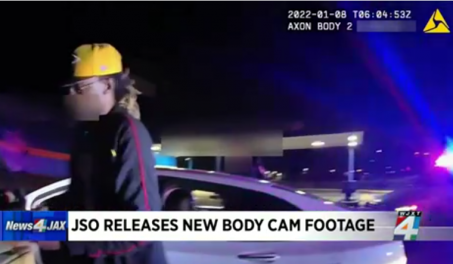
A judge ordered Wade held on a bond of nearly $130,000, but for some reason, that was later lowered to $50,000, and the career felon was released from jail in Jacksonville, Florida. He failed to show up for an October 2021 court hearing, and a warrant was issued for the fugitive’s arrest. So it was that Teronnie Austin Wade next encountered law enforcement at 1 a.m. on Saturday, Jan. 8, 2022. Five people were inside a sedan that made an illegal U-turn at a red light on Lem Turner Road in Jacksonville. When police pulled the car over, Wade was sitting in the front passenger seat. Officers noticed the smell of marijuana and began questioning the occupants:
Officer B then asks the passenger in the front seat to roll the window down. “I don’t talk to the police, sir. I’m a passenger,” the man replies.
“OK,” the officer replies. “Can you just roll the window down for me? You don’t need to talk to me.” “I’m a passenger, sir,” the man replies.
“No, hey, don’t go reaching in your pockets, alright?” Officer B said. “I’m a passenger, sir,” the man repeats.
The officer tells the man it’s OK if he doesn’t want to talk to him, he just wants him to roll the window down.
“Got to talk to the driver, sir,” the man responds.
Officer A then walks back over to the white car to talk to the front seat passenger, who was wearing a bulletproof vest. The officer asks the man if he has a medical marijuana card.
The passenger replies, “Sir, I don’t answer any questions, sir.”
Now, when a police officer notices that a civilian is wearing a bulletproof vest, this naturally arouses suspicion. But before we get to that, let’s examine Wade’s claim that, because he is only a passenger in the vehicle, and not the driver, he doesn’t have to answer the officer’s question. Maybe this is true, in a narrow legal sense, but when you get pulled over in a vehicle that reeks of marijuana, you are then a suspect in a crime unrelated to mere traffic violations. And because these cops weren’t born yesterday — because they are experienced enough to recognize patterns of criminal behavior — there was a good reason why they wanted Teronnie Wade to roll down his window, namely to improve their ability to see inside the car, to see if there were any weapons present.
Criminal activity follows certain patterns, and while the driver of the car claimed that he and his friends had been on their way to Walmart — intending to get supplies to fix another car, only to discover that Walmart was closed — the police suspected there might have been another motive for this trip. Because why were there five guys in this one car, including a passenger who’s wearing a bulletproof vest? None of the officers recognized Wade as a convicted felon, but experienced cops tend to acquire a sixth sense, and so he was taken out of the vehicle, at which point the cop saw the extended magazine of a pistol sticking out of the back of Wade’s pants. Bulletproof vest + pistol = trouble.
What resulted was an “officer involved shooting” (OIS) incident. When officers attempted to handcuff Wade, he broke free and ran, then turned and fired at officers, who returned fire. More than 40 shots were fired in the gun battle, which ended with Wade seriously wounded. He survived, and was charged with two counts of attempted murder of a law enforcement officer, plus possession of a weapon by a felon and resisting arrest. This time, he was held without bail.
This incident is an example of a pattern we have seen repeatedly in recent years — suspects with extensive criminal records, out on bail, committing crimes that cause people to ask, “Why wasn’t this guy behind bars?” Wade’s multiple previous convictions, including being a felon in possession of a firearm, should have been sufficient to convince any judge that this guy was too dangerous to be released after he was busted with drugs and a gun yet again in 2020. Yet there he was, riding around after midnight, wearing body armor and carrying a pistol with an extended magazine, a fugitive who had (predictably) violated terms of his bail.
How is it that the same liberals who bemoan “mass incarceration” also want to lecture us about “gun violence”? As if a policy of turning loose criminals has no impact on the crime rate? As if the gun itself — an inanimate object — were the cause of violence, rather than the criminals that liberals want to turn loose? It is difficult for me to believe that in Florida, which is certainly not a haven of liberalism, a guy who just got out of prison for a weapons charge could have gotten busted with a gun again, and then turned loose on bail. Where is “mass incarceration” when we really need it? This shootout in Jacksonville is, in a way, a microcosm of what’s gone wrong in our criminal justice system in recent years.
“I don’t talk to the police, sir,” says the career criminal, a fugitive with a warrant for his arrest, carrying a pistol with an extended magazine and wearing body armor while he’s riding around at 1 a.m.
This is what “social justice” looks like — armed criminals ready, willing and able to murder the police, because Black Lives Matter, you see.
Robert Gullo, 25, had a modus operandi. Last year, he was arrested for lewd and lascivious behavior in Hernando County, Florida, after police say he had sex with an underage girl he met using the Tinder dating app. He was released on bond pending trial, and meanwhile continued doing the same thing, using the Internet to solicit minors for sex, using the offer of drugs as an incentive. In November 2021, Gullo was living in Clearwater and texting with two different girls, one 15 and another 16. On Nov. 18, 2021, Gullo sent both girls the same text message: “We should hang out tonight. Let’s do coke and get f***ed up.”
Smooth guy, eh? Real subtlety in his approach, you know?
Anyway, the 15-year-old turned down Gullo’s offer, but the 16-year-old, Meaghan Cooper, said yes. She snuck out of her house and went to Gullo’s house where, about 11:30 that night, she sent a text message to a friend: “I just did so much coke and it feels so good.”
Cooper didn’t feel good very long, however, because what she thought was cocaine was actually fentanyl. The next day, her body was found in a field near some power lines not far from Gullo’s house.
Toxicology reports showed Meaghan had four times a lethal amount of fentanyl in her system. Also, the autopsy — including DNA evidence — showed Gullo had sex with her. After an investigation that lasted more than a year, a Pinellas County grand jury last week indicted Gullo for first-degree murder and other charges. Pinellas County Sheriff Bob Gualtieri announced the charges at a press conference where he called Gullo a “predator,” and the obvious question is, why was this predator on the streets after being charged in a similar (although not deadly) crime in Hernando County? What was the amount of Gullo’s bond in that case, and who bailed him out? As we all know, criminal suspects must be presumed innocent until convicted, and defendants have a constitutional right to bail that is not “excessive,” but shouldn’t public safety be weighed in the balance of justice? And, again: Who paid that bail?
Interestingly, the terms of Gullo’s pretrial release in Hernando County required him to wear a GPS ankle monitor, and the data from that device became evidence, showing that after Meaghan died from a fentanyl overdose, Gullo traveled to the spot where Meaghan’s body was dumped.
There are a lot of disturbing angles to this story. Like, how was it that a teenage girl in Hernando County was on Tinder? What kind of safeguards are there to prevent minors from accessing dating apps intended for adults? Couldn’t states impose criminal sanctions on these companies if they don’t prevent this? Don’t you think Florida Gov. Ron DeSantis and the state’s Republican-controlled legislature should look into doing something to fix this dating app problem?
Perhaps most disturbing, though, is the revelation that there seem to be a lot of teenage girls who have no concept of the dangers involved with meeting strangers via the Internet. If Robert Gullo had no problem finding so many underage victims — at least three, that we know of — in this part of Florida, how many girls are there nationwide playing this dangerous game online? Thousands? Tens of thousands? More?
There is a temptation, in discussing cases like the death of Meaghan Cooper, to use the adjective “tragic,” but that isn’t the right word. The proper adjective is stupid, as in: “Play stupid games, win stupid prizes.”
My youngest daughter turned 20 last week, so now I can say that all six of my kids have survived their teenage years. That may not seem like much of an accomplishment, but judging by contemporary standards? Yeah, nominate me for Parent of the Year, every year.
And speaking from authority as Best Dad Ever, here’s some helpful advice for you kids: “Don’t be stupid. You’ll end up dead.”
Permit me to suggest that if you get naked at the hotel pool and thereby display your penis to the general public, the police who arrest you can be expected to presume you are male. Because, in fact, you are male.
Chances are that you have never heard of this person before, but we are living in an age when it is possible to become a “celebrity” even though the vast majority of people have no idea who you are. And so that you may be fully informed, here’s the boilerplate paragraph from Time:
The 26-year-old content creator, who is transgender, became popular in the beauty YouTube space in 2015. Since then, her candor about her transition and popular makeup videos have helped her to amass a following of more than 29 million combined followers on social platforms including TikTok, YouTube, Twitter, and Instagram. Last year, Dragun revealed her struggles with her mental health to her followers on social media. The beauty influencer uploaded a post to Instagram in which she said that she was involuntarily committed to a psychiatric facility for eight days following a manic episode on Thanksgiving Day. She then uploaded a YouTube video—which has since been deleted—in May, where she revealed she had been diagnosed with bipolar disorder.
Oh, “her candor about her transition” attracted “a mass following” and Nguyen/“Dragun” is now a “beauty influencer” with 29 million followers.
The fact that this person is a dangerous psychotic? Like the man said, when the going gets weird, the weird turn pro, and you’ve got to admit that weirdness is everywhere nowadays.
Nicholas Nguyen is a “woman” and Joe Biden is “president,” and it’s a hate crime to express skepticism about either of these assertions.
See? The before-and-after passport photos, helpfully posted to Instagram by the “transgender influencer,” demonstrate that the federal government is now playing along with these delusions. If you believe you’re a woman, you are a woman, as far as the U.S. State Department is concerned, and they’ll issue you a passport that declares this to be the case.
But a delusion is still a delusion, even if government agencies are willing to pretend otherwise, and then one day the cops show up because you’ve been parading around naked at the hotel pool — the unmistakable reality flopping around for all to see — and you end up in handcuffs at the county jail, pleading with a judge not to put you in a cell with other men.
“Inmate Dragun never made it beyond the booking process prior to release; therefore, she was never placed in a men’s unit,” corrections spokesperson Juan Diasgranados said in a statement. “All inmates undergoing our intake process remain in an open seating (open booking) area, in the presence of correctional staff.”
Diasgranados added Dragun was placed in a holding cell by herself due to her “high-profile status” before being released, and that she was escorted by an LGBTQ officer throughout her time at the facility.
“Miami-Dade Corrections and Rehabilitation Department (MDCR) is committed to protecting the rights of the transgender community and of all LGBTQ people,” the statement read. “MDCR has procedures in place for the appropriate intake, housing, and medical needs of transgender inmates, and we are committed to ensuring that all inmates in our custody, including transgender persons, are treated appropriately throughout our intake, classification and placement process.”
So they’re “treated appropriately” — although I suppose there are different opinions about what the appropriate treatment might be.
Speaking of treatment, TMZ reports Nguyen/“Dragun” is now “receiving professional mental health care in a facility”:
Nikita’s rep, Jack Ketsoyan, tells TMZ … “We want to thank everyone for the overwhelming love and support for Nikita during this time. She is in a safe environment addressing her mental health. We ask for continued respect for her privacy and the sensitivity of this matter as she seeks treatment and healing.”
We’re told Nikita began seeking treatment Wednesday evening.
The transgender influencer has been open about her mental health struggles — in May she shared on her YouTube channel that she had been diagnosed as bipolar.
Nikita said she has a family history of bipolar disorder, though she was initially surprised by her diagnosis, because she didn’t quite understand what it meant to be bipolar. As a result, she says she didn’t relate her own symptoms to the disorder.
And by being “in a safe environment,” of course they mean, strapped in a straitjacket, locked in a padded room and injected with Thorazine.
Can’t wait for Nikita’s next TikTok video, doing the Haldol shuffle.
Y’know, it just now dawned on me that I missed the opportunity to do a really clever “Florida Man” headline on this story. Too bad.
Many times, I’ve referred to my oldest daughter as living in “a swing state with palm trees,” because I didn’t want any left-wing nutjobs targeting her and her family, but I think everybody knows what state I meant.
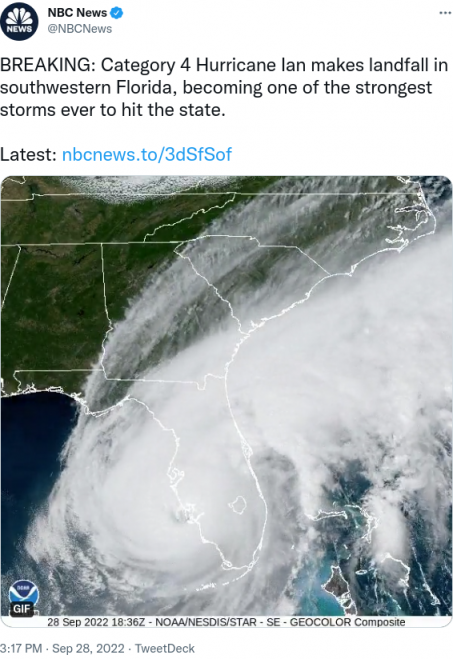
Last week, she was planning to evacuate because the National Weather Service projections showed Hurricane Ian headed directly for their southwest Florida location, but then the projection shifted, showing the storm would hit Tampa, more than 150 miles north. So she decided to stay, rather than take to the road with two toddlers, but then on Tuesday, the projection shifted again and, as everyone now knows, the storm slammed into the area around Fort Myers and Port Charlotte, midway between Tampa and my daughter’s location.
The power went out early Wednesday morning when a transformer blew out in their neighborhood, and about half the city is now without electricity. Downtown was totally flooded Wednesday, but my daughter’s house east of the city is still above water, although they’ve kept a close eye on the canal behind their house. They’ve got a three-day food supply, so they’re in pretty good shape. Watching national TV on Wednesday, you might have gotten the idea that the folks trapped in Naples and Fort Myers were guilty of ignoring warnings or had disobeyed evacuation orders, which is grossly misleading. Rather, the fault is with the shifting projections of the storm’s track. Sunday and Monday, it looked like Naples and Fort Myers would escape the worst of Hurricane Ian. It wasn’t until Tuesday that the projection changed, and by that time, it was too late to evacuate because there wasn’t a gallon of gasoline to be had in the whole region. My daughter and her husband had managed to find gas a few days earlier, but it’s nearly 400 miles from their home to the Georgia state line — too far to go on one tank of gas — and what were they supposed to do under these extraordinary circumstances? As I say, they’ve been relatively lucky so far. Just a few miles from their house, hundreds of homes are underwater, and even the fire station got flooded.
This isn’t New Orleans in Katrina. So far, there’s been no looting. The sheriff of Collier County is a Republican, so popular he was re-elected without opposition two years ago, and so at least residents don’t have to worry about anarchy. And it ought to be pointed out that the political polarities of Hurricane Ian are reversed from those of Hurricane Katrina: The allegedly “racist” Republican president was blamed for that 2005 disaster, despite the failures of state and local officials, who were Democrats. Now, we have Saint Joseph of the Blessed Landslide in the White House, and liberals are just looking for any excuse to make Florida’s Republican governor the scapegoat for Hurricane Ian.
Probably that’s why there’s now an effort to blame victims of the storm as having ignored evacuation orders — most of them are white, so it’s OK to blame them, although it can be pointed out that the warnings before Katrina hit New Orleans were much clearer, and were even more blatantly ignored. But, as I say, by the time the evacuation orders for Lee County and Collier County were issued Tuesday, it was already practically impossible to leave, because of the unavailability of gasoline. Others have pointed out the irony that many people from Tampa, which was previously believed to be the big target of the storm, actually left that city and went south to Fort Myers and Naples to escape the storm, only to have it turn southward in the final 24 hours before landfall.
This is another embarrassment for the Trust the Science™ crowd — the “experts” who tell us they can predict the distant future with climate-change computer simulations are unable to predict the direction of a single storm, when thousands of lives may hinge on the accuracy of their projections. A hurricane that was supposed to hit Tampa as a Category Three instead hit Fort Myers as a Category Four? “Oops,” say the experts.
Anyway, I don’t care about politics, I care about my daughter and her two children, spending the night in a dark house with no electricity. She’s still able to get text messages and I told her, “You’re living in a certified disaster area now. Leave [your husband] behind to scare off the looters and come home!” Her husband has a sufficient supply of ammunition for home-defense purposes, just in case any out-of-town looters show up.
Florida Gov. Ron DeSantis (R) is taking action against woke prosecutors who put themselves above the law, announcing the suspension of State Attorney Andrew Warren.
DeSantis, speaking from Tampa, detailed the growing emergence of woke prosecutors across the country and the frustration it has caused within the law enforcement community. These prosecutors, he explained, are effectively nullifying laws with selective enforcement, allowing crime to run rampant across the country. The governor asked for an examination of such actions in the Sunshine State and said the results pointed to the Thirteenth Judicial Circuit in Hillsborough County with State Attorney Andrew Warren.
DeSantis detailed some of the egregious instances of his disregard for the rule of law — from refusing to enforce any prohibitions on sex change operations for minors, regardless of action from the legislature, to asserting that he would not enforce any laws relating to protecting the right to life in the Sunshine State.
“It’s not for him to put himself above that [the legislature’s action] and say that he is not going to enforce the laws. We don’t elect people in one part of the state to have veto power over what the entire state decides on these important issues,” DeSantis explained.
“The constitution of Florida has vested the veto power in the governor, not an individual state attorneys, and so when you flagrantly violate your oath of office, when you make yourself above the law, you have violated your duty,” the governor said. “You have neglected your duty and you are displaying a lack of competence to be able to perform those duties and so today, we are suspending State Attorney Andrew Warren,” DeSantis announced, vowing that his administration will not “allow this pathogen that’s been around the country of ignoring the law. We are not going to let that get a foothold here in the state of Florida.”
“We are going to make sure that our laws are enforced and that no individual prosecutor puts himself above the law,” he continued, noting that the states and localities that are doing that — allowing woke prosecutors to get away with refusing to enforce the law — are now dealing with unsafe communities “thanks to prosecutors that think they know better than the people’s representatives, and they get to pick and choose which laws that they’re enforcing.”
The decision to suspend Warren, he added, had “a lot of input around the state.”
“This is something that I think is a very, very important issue across our country that this movement would be allowed to take hold where you basically elevate your own personal conception of quote, ‘social justice’ over what the law requires of you,” he said, blasting these George Soros-backed prosecutors.
The DeSantis administration has argued that the governor has the authority to suspend a state officer under Article IV, Section 7 of the Florida Constitution, according to a press release. Susan Lopez has been appointed as interim State Attorney during the period of the suspension.
By that provision, the governor can suspend from office a county officer for “malfeasance, misfeasance, neglect of duty, drunkenness, incompetence, permanent inability to perform official duties, or commission of a felony, and may fill the office by appointment for the period of suspension.” At any time before removal, the governor may reinstate the suspended officer.
The Florida Senate then must sit in judgment of the merits of a suspension. After hearing the case, for which there is a special process, the Senate may remove from office or reinstate the suspended official.
Tampa’s violent crime rate has spiked in recent years, with the city in 2021 recording the most murders it had seen since 1994, according to statistics from the Tampa Police Department compiled by the Times editorial board.
The paper also tries to dance around the fact that Soros donated millions to the Florida Democratic Party to help elect Warren.