Illegal immigration continues to break records on the southwestern border — and they’re not good ones.
The number of families snared trying to sneak into the U.S. soared by 50 percent in one month alone, setting an all-time record with more than 36,000 family members apprehended, Homeland Security officials announced Tuesday.
The government has also encountered some 70 groups of at least 100 migrants during the first five months of the fiscal year, shattering records and placing new challenges on Border Patrol agents.
The mini-caravans are being funneled to some of the remotest parts of the border, where there is little in the way of medical help and it takes hours to process and transport the groups. That takes agents off the line, and drug smugglers use the distraction to send across their shipments, top border officials said.
“We are facing alarming trends,” said Kevin K. McAleenan, commissioner of U.S. Customs and Border Protection.
He said the numbers signal the existence of an immigration and humanitarian crisis, reinforcing President Trump’s assertion of an emergency necessitating his redirection of money to build a border wall.
After the latest spasm of gang violence, Minneapolis’ Somali residents and business owners on Monday stepped up their calls for help from City Hall and police headquarters to help curb the senseless shootings that they say too often go overlooked. On Friday alone, five men of Somali descent were shot in separate attacks, one fatally.
Police and community members pinned the blame for the bloodshed on an ongoing feud between Cedar-Riverside neighborhood gangs like 1627 and Madhiban With Attitude (MWA) and their rivals, the Somali Outlaws, whose territory includes the area around Karmel Mall. Friday’s shootings were a repeat of a familiar pattern: a shooting on one gang’s turf is usually followed hours, if not minutes later by an “eye-for-an-eye” response so as not to appear weak, community members say. Two shootings last month are also blamed on the conflict. As with other recent shootings, police immediately stepped up patrols in both neighborhoods to prevent further retaliation. But some in the community wondered whether they could be doing more.
But don’t call this an “emergency.” That’s hate speech.
The Twittersphere is having a field day with news that Future allegedly banned a Miami night club from allowing any fat girls to party inside.
Popular Instagram influencer @na0___ shared the tale on her IG story last night, saying, “Just got word that it’s true, Future said no fatties in the club.”
Noticeably perplexed, she told her followers, “I’m just trying to understand really why this is a thing. Why is he allowed to put those rules in place…the discrimination is insane to me.” Adding that she doesn’t doesn’t give a damn about a rapper, Naomie said “It’s the fact that it’s a thing in 2019 where we can say no fatties on the club” that upset her.
The South Beach venue where Future was hanging out has yet to be named, but discrimination in Miami clubs is nothing new. In 2012, four Black women made the news after exposing the famed Fontainebleau Miami Beach hotel from denying them entrance based solely on their race. When one of the women texted a party promoter to tell him they were turned away from the door, his response was “Its a double standard @ the fountainbleu. White chics can be ok. Black chics gotta look twice as good and they only cater to a so called urban crowd on thursdays and sundays. Peace and love.”
Given that history, there could’ve been a possibility Future didn’t actually say no big girls allowed, rather the club owner decided to enforce the discriminatory policy. However, the same influencer later shared a text exchange with her friend casually telling her, “I just was told no plus sizes in the club for future. But we can find somewhere else.” She went on to say the no plus-size policy is a common thing on South Beach, which speaks to the problematic nature of fat-shaming, as plus-size model, actress, and influencer Simone Mariposa pointed out on Twitter.
Now, to add some context to this “discrimination,” imagine that I, a 59-year-old white man with a gray beard, had attempted to enter this private party at a Miami nightclub. Don’t you suppose that my presence would have been equally unwelcome? If I were denied admission, would anyone in the “social justice” community give a damn? I think not.
What is “the problematic nature of fat-shaming”? What does that phrase even mean in the context of a rapper’s nightclub party?
But why do people want to hang out with “Future” anyway? I’ve never been a fan of the hiphop scene, but if the “social justice” community wants to be angry at “Future” over something, how about his notorious habit of spawning bastard offspring all over the place?
Wilburn is being sued by both Jessica Smith and Ciara. Smith is suing him for failing to pay child support, and stated that their son “suffers from emotional and behavioral issues stemming from Future’s neglect as a father”. Ciara is suing him for defamation, slander, and libel. In October 2016, a judge said that Future’s string of tweets bashing Ciara did not relate to the $15 million she was asking for.
Prior to his music career in 2004, Wilburn was arrested for theft by receiving stolen property and contempt of court.
The man is a menace to society, but no feminist ever voiced a single word of criticism toward him prior to this “no fatties in the club” controversy, for some reason. “Intersectionality,” I presume.
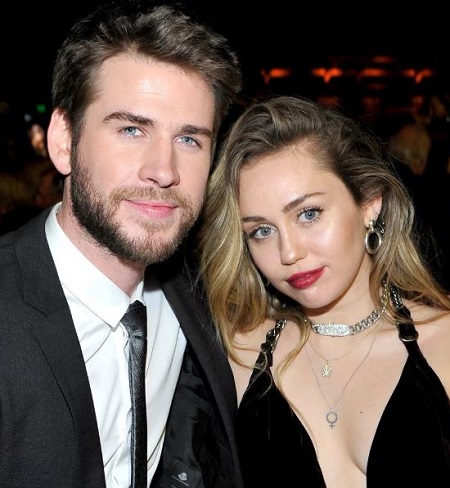
Miley Cyrus may be in a heterosexual relationship with husband Liam Hemsworth, but she still identifies herself as a queer person — and sees their marriage as an opportunity to change how people view love, gender, and sexuality.
In a wide-ranging interview and a personal essay for Vanity Fair‘s March cover story, the music star got candid about why she and Hemsworth tied the knot in December, and how it hasn’t shifted her place in the LGBTQ+ community.
“The reason that people get married sometimes can be old-fashioned, but I think the reason we got married isn’t old-fashioned — I actually think it’s kind of New Age,” Cyrus, 26, said. “We’re redefining, to be f—ing frank, what it looks like for someone that’s a queer person like myself to be in a hetero relationship.” “A big part of my pride and my identity is being a queer person . . . What I preach is: People fall in love with people, not gender, not looks, not whatever. What I’m in love with exists on almost a spiritual level. It has nothing to do with sexuality. Relationships and partnerships in a new generation — I don’t think they have so much to do with sexuality or gender. Sex is actually a small part, and gender is a very small, almost irrelevant part of relationships.” . . .
Cyrus took inspiration from her “favorite woman in the world, Hillary Clinton” and realized that she and Hemsworth were “stronger together.” . . .
Cyrus also penned a personal essay for Vanity Fair, talking more about her queerness there.
“Being someone who takes such pride in individuality and freedom, and being a proud member of the LGBTQ+ community, I’ve been inspired by redefining again what a relationship in this generation looks like,” she said. “Sexuality and gender identity are completely separate from partnership.”
The word for this is crazy. And if you recall how Johnny Depp was more or less destroyed by her marriage to Amber Heard, it is not difficult to predict what Miley Cyrus will likely do to Liam Hemsworth. In a society warped by feminist ideology, however, the common belief is that women are universally victims of male oppression, which means that as soon as the Cyrus-Hemsworth marriage collapses, it is his reputation that will be destroyed by accusations of abuse, etc. Meanwhile . . .
A year of self-love has changed me for the better, seeing me evolve into a happier and healthier version of myself. I didn’t know what it was like to love yourself, know your worth or feel “good enough” until I made myself a priority for the first time in my life.
You see this is bogus “wisdom.” Her problem was never a lack of “self-love,” but rather an excess thereof, i.e., an arrogant and mistaken confidence in her own judgment. Charlotte Allen concludes:
In days of yore young women spent their twenties looking for husbands. In fact, they started to worry quite a bit if too many years of their twenties passed without their having found…a guy who would at least take them out to dinner now and then if not put a ring on it. And their mothers or aunts or grandmas warned them that if you wanted a husband, it was a big mistake to shack up with any man who wasn’t serious about marrying you because you’d be cutting yourself off from access to men who were.
But now, we have…female freedom. And the above is what we get.
I want to know what’s wrong with women.
(Hat-tip: Instapundit.) Young people quite generally are nowadays encouraged to believe they can make their own rules and ignore the wisdom of their elders without risk of averse consequences. To quote Ace of Spades: “I gotta be me, as the douchebag credo goes.”
I was shocked when my thirteen-year-old daughter told me she was really my transgender son. She had no masculine interests and hated all sports. But as a smart, quirky teen on the autism spectrum, she had a long history of not fitting in with girls.
Where did she get the idea she was transgender? From a school presentation — at a school where over 5 percent of the student body called themselves trans or nonbinary, and where several students were already on hormones, and one had a mastectomy at the age of sixteen. In my daughter’s world — in real life and online — transgender identities are common, and hormones and surgeries are no big deal.
I took her to a gender clinician seeking expert guidance. Instead, he accepted her new identity and told me I must refer to my daughter with masculine pronouns, call her by a masculine name, and buy her a binder to flatten her breasts. He recommended no therapy, and there was no consideration of the social factors that obviously affected her thinking. I was directed to put her on puberty blocking drugs. I was falsely assured that these drugs were well-studied, and that they were a perfectly safe way for her to “explore gender.” I was told that if I did not comply, she would be at higher risk of suicide. I have nowhere to go for proper help. Therapists are actively trained and socially pressured not to question these increasingly common identities. In Washington, DC, and many states with so-called conversion therapy bans, questioning a child’s belief that she is of the opposite sex is against the law.
I have been living this nightmare for over four years. And despite my best efforts, my daughter plans to medically transition when she turns eighteen later this year.
First, notice how the phrase “on the autism spectrum” is now used as a synonym for socially awkward or just nerdy. This diagnosis-as-explanation is a quite recent phenomenon. Twenty years ago, parents weren’t using this vocabulary to describe their children, and I suspect that the notable deterioration of adolescent social skills is not the result of any actual epidemic of autism, but rather reflects changes in society and culture. The pseudo-diagnostic jargon of saying “my kid is on the autism spectrum” is perhaps less embarrassing than saying “my kid is an unpopular dork,” even if the two sentences are more or less synonymous.
Can’t parents say, “Hey, stop being such a weirdo”? Is that hate speech, too? Something else parents aren’t allowed to say, I guess: “Hey, you’re spending too much time staring at your iPhone.”
How about some old-fashioned common sense? Or is that illegal now? Parents can still use the carrot-and-stick approach to encourage appropriate behavior and discourage inappropriate behavior, but what do I know? I’m not an “expert,” just a father of six whose kids turned out all right — so far, at least. I suppose it’s entirely possible anyone might get sucked into the swirling vortex of cultural craziness, but these things are never entirely random. There’s always a backstory whenever you see kids get towed under by social trends, which was true in terms of my own adolescent misadventures as a dopehead hoodlum in the 1970s.
Probably I’m too judgmental, too opinionated, too negative in my attitude toward current social problems. But isn’t it obvious that a shortage of judgment is the underlying problem? If grown-ups weren’t afraid to bluntly speak the truth — “Stay away from that crazy Miley Cyrus, son” — maybe young people wouldn’t get themselves mixed up in all this insanity. Even if we cannot reverse the general trend of moral and cultural decline, we can at least try to protect our own children from the undertow of decadence and depravity. Imagine what the parents of Liam Hemsworth must be going through. The shame! The horror!
Activist, author, entrepreneur, and mom – Michelle Malkin has done it all and is still having an impact on conservatism, as demonstrated by her incendiary speech this weekend calling out the GOP Establishment. She’s launched two major media sites – Hot Air and Twitchy – and done very well with both of them. So we’re arguably a little overdue in recognizing her here, given that in addition to all her other accomplishments, she’s living proof that conservative women are not only smarter but prettier than their opposite numbers on the Left.
During debate on a gun bill Thursday, U.S. Rep. Debbie Dingell, D-Dearborn, emotionally recounted hiding from her mentally unstable father as a child, bringing lawmakers to their feet as she declared, “He never should have had a gun.”
“I have spent more time thinking about how you keep guns out of the hands of abusers, more probably than anybody in this chamber,” said Dingell, who last month buried her husband, former U.S. Rep. John Dingell. “I know better than most the dangers they pose.
“It’s not easy for me to talk about it this week. But … I will be honest on this floor, my father was mentally ill. I had to hide in that closet, with my siblings, wondering if we would live or die. One night I kept my father from killing my mother. He shouldn’t have had a gun.” . . . “My mother,” Dingell remembered, “went out and bought a gun.
“And then all of us were scared to death about her gun and my father’s gun. We had two guns to worry about. No child, no woman, no man should ever have to go through that,” she shouted, as other members of the House rose to applaud.
On several other occasions, Dingell has discussed her childhood, including what she has described as her father’s addiction to medication and the violence she witnessed.
“My father was dangerously crazy and . . . I’m a Democrat.”
That makes sense in a certain way, but not in a way she would like. Crazy people shouldn’t have guns. And sane people don’t vote for Democrats.