MBD’s Trump Problem, and Mine

Michael Brendan Dougherty (left) with Tucker Carlson in 2019.

Let me start by saying that I like Michael Brendan Dougherty, and I’ve always liked him. He is a serious thinker and his paleoconservative leanings are so obvious that it’s a miracle he hasn’t already been purged from National Review, like John Derbyshire, Peter Brimelow, et al. His 2007 article “The Castaway,” about the late, great paleoconservative intellectual Sam Francis, stopped short of a full-on endorsement of Sam’s ideas, but you could see that Dougherty’s interest was tinged with a certain amount of admiration:

The question for Sam Francis was, How might a conservative elite rise up to challenge the managerial elite? Conservatives would have to attach themselves to a broad social base. In his 1982 essay, “Message from MARS: The Social Politics of the New Right,” Francis combined his Burnhamite analysis of elites with Donald Warren’s sociological work on “Middle American Radicals” or MARs.

Dougherty here locates the hard kernel of insight that made Sam nearly unique — a disciple of James Burnham, he saw politics not so much as a “war of ideas” (the Goldwater/Reagan analysis) but as a matter of class interests. How else to explain the phenomenon of rich liberals? They are members of a social class — the “managerial elite,” in Burnham’s phrase — and as a result are hostile to the interests of rival groups, whose resistance to elite governance takes the form of populism. The Republican Party has always attracted its vital support from small business owners, who exemplify in many ways both the “rugged individualism” of frontier America and also what Max Weber called “The Protestant Ethic.” Within their own communities, these people are treated with respect, but in the great centers of cultural and political power (D.C., New York, L.A., etc.), they are viewed with contempt — a lot of provincial bourgeois Babbitts, too unsophisticated to be taken seriously. This is the real conflict in American politics, a conflict deliberately obscured by the national media establishment which, of course, is affiliated with and does the bidding of the elite.

Having distilled in a single paragraph a thumbnail sketch of Sam’s ideas about “Middle American Radicals,” I won’t bother to explain or defend how, during the 1990s, his intellectual trajectory led to him being labeled a “white supremacist.” After the past five years, I think most conservatives have become so accustomed to this label that we shrug it off, but in the mid-1990s, such an accusation still had devastating power, which is how Sam became, as Dougherty calls him, “The Castaway.”

After having profiled Sam Francis in 2007, Dougherty revisited the theme after Trump’s shocking 2016 upset of Hillary Clinton, hailing Sam as the prophet of Trump’s populist war against “globalism.” Let me clue you in here: Whether or not Donald Trump ever heard of Sam Francis, I can guarantee you that Trump’s adviser Stephen Miller is familiar with Francis’s work, just as Miller is familiar with other notorious Thought Criminals, including Brimelow, Charles Murray, Steve Sailer and Jared Taylor. Given the crisis conditions of the conservative movement circa 2006-2015, any intelligent person (and Miller is frighteningly intelligent) would have been looking around for some inspiration outside the narrow limits of Conservatism, Inc. Everyone can now see, looking back, that the time for a populist uprising on the Right was long overdue, and Trump just happened to be the figure around whom this uprising rallied.

On Monday, Dougherty published a column criticizing Roger Kimball’s limited defense of the January 6 Capitol riot, and I suppose many of my friends will be angry at Dougherty for this. Be that as it may, here is the real core of Dougherty’s argument:

Nearly everything Kimball says about the ongoing resistance to Trump is true. It was meretricious, hysterical, and dangerous. Even before Trump won the election, I predicted the unprecedented subterfuge that would probably be aimed at him if he won the presidency. We saw the deep state as it really is: an ongoing class warfare against the democratic peoples and their representatives whose disruptions provide accountability. . . .
Some of us have spent the better part of the past two decades or longer arguing that conservatives should be more open to a populist and working-class core of voters, the losers of globalization. We have been arguing for putting “the forgotten man” at the heart of conservatism’s concerns. We’ve argued for reexamining the effect of our trade relationships on the American people themselves. We denounced the democracy project in the Middle East and Afghanistan as a waste of blood and treasure. We argued for getting control of our immigration system, and for immigration limits and moratoriums in order to make America cohere again. It was thankless work. And if we had known it was all to set the stage for opportunists and recent converts to make their riches and fly their freak flags, perhaps we wouldn’t have done it.

You can read the whole thing. I don’t know who else Dougherty means to include as “some of us,” nor does he specify the targets of his criticism of “opportunists and recent converts.” Because he is not stepping on my toes (I was smeared as a “white supremacist” before it was cool), I could have just ignored this as another circular firing squad exercise on the Right, but I thought I’d address the subject directly because it matters. 

The subject amounts to a simple question: “What’s wrong with Trump?”

Dougherty focuses on Trump’s apparent belief that all Vice President Mike Pence had to do was to reject the certified Electoral College votes of Georgia, Arizona, Pennsylvania and Wisconsin and — abracadabra! — Trump would stay in the White House. Of course, that’s not how it works, and even if you believe that the election was stolen (a belief shared by tens of millions of Americans), the problem was that, within the constitutional framework, there was no simple remedy.

This gets very close to being an answer to the question of what’s wrong with Trump: He doesn’t read books. He doesn’t read much of anything, really. He couldn’t even be bothered to read intelligence briefings as president, so that White House aides resorted to creating Powerpoint slideshows to try to at least get him to absorb the basic points. Trump seems to get his ideas about politics and policy from watching Fox News, which is why he was always tweeting out reactions to whatever it was they were talking about on Hannity or Fox and Friends.

Watching TV is no substitute for reading, because TV can never convey ideas faster than human speech (i.e., about 150 words per minute), whereas a collegiate-level reader can absorb the written word much faster. This blog post is about 1,600 words. It would take 10-12 minutes to read it aloud, but you’ll probably reach the end much quicker. Also, the written word has a permanence that the spoken word does not. To absorb complex ideas, and to commit them to memory, the written word is superior. So Trump’s habitual aversion to reading . . . Well, that’s a real problem, and one which explains a lot of his other problems.

All that said, democracy means that our leaders are chosen collectively, and the GOP primary voters in 2016 chose Trump. So those of us who did not want Hillary to become president had no other choice but to accept the circumstances thrust upon us, and make the best of them. I believe that none of Trump’s rivals for the 2016 GOP nomination could have beaten Hillary. I think Trump was uniquely able to attract support from voters who would not have voted for Ted Cruz, Marco Rubio, et al. And I think he threw the Democrats off their game. In my first American Spectator column about his campaign (“How Trump Has Changed the Game,” Sept. 14, 2015), I compared Trump to the great scrambling NFL quarterback Fran Tarkenton:

Watching Republican establishment types trying to stop Donald Trump’s presidential campaign is like watching a highlight film of Fran Tarkenton’s NFL career. Tarkenton’s legendary ability as a scrambling quarterback was every football coach’s worst nightmare. Never mind what play Tarkenton called in the huddle, or what scheme the defense deployed against him. Once he started scrambling, the playbook ceased to matter. He’d run all over the backfield, eluding the defensive linemen who tried to tackle him, until he found a receiver open downfield. Tarkenton’s improvisational style was unique and unpredictable, and he led the Minnesota Vikings to three Super Bowls by defying the norms of what an NFL quarterback should be.
What Tarkenton did to NFL defenses, Donald Trump is doing to the Republican Party. The bombastic billionaire routinely says things that, for any other candidate, would be campaign-destroying gaffes. With his larger-than-life celebrity persona, however, Trump keeps winning. . . .

That was four months before National Review blazoned “Against Trump” on its cover and, having lashed themselves to the mast, they went down with the #NeverTrump ship. This was their choice, and not mine, and therefore I am not responsible for the consequences. It’s like the Capitol riot — nobody in the Proud Boys or Oath Keepers came to me and asked, “Hey, Stacy, do you think it’s a good idea to have a riot?” Certainly, I would have advised against it, but no one sought my advice. Similarly, nobody at National Review asked me if it was a good idea for them to declare war on the GOP primary voters who wanted Trump.

Wisdom is what we ought to gain from our mistakes, but you’re never going to become wise if you refuse to recognize your mistakes. It may be that both Trump and his #NeverTrump adversaries suffer equally from this problem. Unless and until National Review publishes a cover story with the headline, “We Blew It,” their credibility is damaged.

Let Michael Brendan Dougherty make of this what he will. I still like him, but wish he’d follow his populist inclinations far enough to get himself purged from National Review — a fine tradition to uphold!
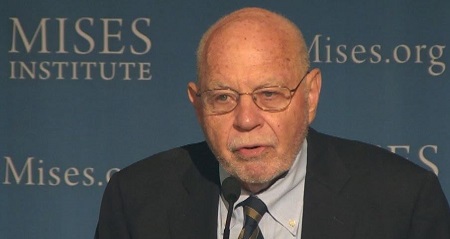
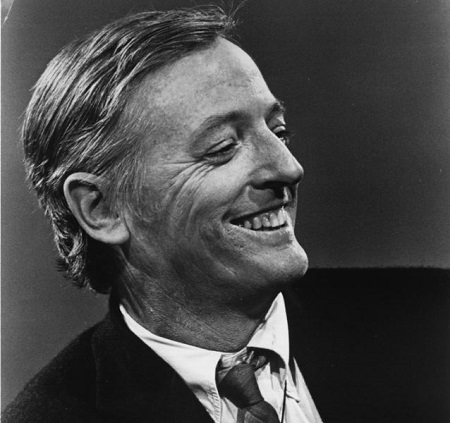


Paul Gottfried vs. Neocon Mythology


Last week, I received an email from Paul Gottfried, the retired professor who is president of the H.L. Mencken Club. Readers will recall that White House speechwriter Darren Beattie was recently purged for having spoken at the Club’s 2016 gathering, because of his alleged association with “white nationalists.” I later discussed Beattie’s speech to the Club (“Darren Beattie: Guilty of Intellectualism”). Professor Gottfried emailed me to contest the description of the Club as a “white nationalist” gathering. Although he has been called the “Godfather of the Alt-Right,” this itself highlights misunderstandings about the loose aggregation of those who dissent from what Gottfried calls “Conservative, Inc.”

Professor Gottfried spoke to me by phone Sunday evening — a conversation, not an interview — and I shared with him my own observations about the history of the quarrel between paleoconservatives and the neoconservatives who, over the past three decades, have obtained hegemonic authority in “Conservative, Inc.” As I hastened to point out to Professor Gottfried, I have friends on both sides of this quarrel, and believe this internecine conflict has been enormously damaging to the conservative cause overall. Years ago, I began jocularly threatening to write an essay on this subject, which I would entitle, “First, They Came for Mel Bradford.” If you don’t recognize that name, it was Bradford’s nomination to be Reagan’s Chairman of the National Endowment for the Humanities that was the first grand battle of the paleocon/neocon war. Bradford’s nomination was torpedoed by the neocons, who installed their man Bill Bennett in the NEH chairmanship, which was the making of one man’s career and unfairly inflicted permanent damage to Bradford’s reputation. If you want to understand how serious an injustice this was, go read Bradford’s Original Intentions: On the Making and Ratification of the United States Constitution, an invaluable work that ought to be required reading for constitutional scholars.

What happened in the Bradford affair was a continuation of a trend within the conservative movement of purging dissenters, a trend which was unfortunately pioneered by William F. Buckley Jr. during the years when National Review enjoyed a near-monopoly as a voice for the conservative movement. The prestige of National Review was mobilized to purge a number of conservatives and libertarians from the ranks of the “respectable” Right, and a false mythology about these purges has gained credence among many conservatives who ought to know better.

Professor Gottfried has striven to correct the historic record, and shared with me the draft a lengthy essay on this subject he has written for a forthcoming anthology. In this essay, he examines the controversy over Kevin Williamson’s hiring (and subsequent firing) at The Atlantic Monthly, and makes a crucial point:

[Williamson’s] firing, however, was only one of a multitude of such incidents, going back to the 1950’s, in which National Review and other fixtures of the conservative movement empire had released and sometimes subsequently humiliated employees and former allies, who had taken deviationist stands. It is astonishing how rarely this behavior received notice. Those whom the gatekeepers of the socially and professionally acceptable Right cast into perdition allegedly deserve their fate. After all, the nice conservatives, the ones who appear on network TV and on the Republican cable network and who write for the national press, have condemned those they expelled as “extremists.” Why should the liberal establishment even question these judgments?
On the fiftieth anniversary of the founding of National Review in 2005, senior editor Jonah Goldberg presented the authorized account of how the magazine’s founder William F. Buckley had sanitized the post-war conservative movement. In a commentary “Golden Days” Goldberg indicates the care with which Buckley scraped off the dross from what became a major political and cultural force in American life.

[Quoting Goldberg:] Buckley employed intellectual ruthlessness and relentless personal charm to keep that which is good about libertarianism, what we have come to call “social conservatism,” and what was necessary about anti-Communism in the movement. This meant throwing friends and allies off the bus from time to time. The Randians, the Rothbardian anarchists and isolationists, the Birchers, the anti-Semites, the me-too Republicans: all of these groups in various combinations were purged from the movement and masthead, sometimes painfully, sometimes easily, but always with the ideal of keeping the cause honest and pointed north to the ideal in his compass.

Professor Gottfried goes on to examine several examples of these purges, correcting the errors of those who have distorted the record. For example, many have claimed that Buckley’s 1965 denunciation of the John Birch Society was because the Birchers were guilty of anti-Semitism. This is simply slander. Whatever their other errors may have been, it wasn’t anti-Semitism that led Buckley to denounce the JBS, but rather their opposition to LBJ’s escalation of U.S. involvement in Vietnam.

As we know, both Williamson and Jonah Goldberg belong to the “Never Trump” cult that National Review created in late 2015, and the anti-Trump fury of “the socially and professionally acceptable Right” illustrates how jealously they regard their status as Gnostic archons of the movement, with the authority to banish anyone they dislike. Trump won the GOP nomination despite the opposition of the National Review crowd and, while they predicted (and openly planned for the aftermath of) his defeat in November 2016, somehow Trump won again. We’ve had to endure the butthurt whining of the Never-Trumpers ever since.

How do we explain this? A major factor is the vanity and careerist ambitions of the intelligentsia. Those whom Ace of Spades has dubbed “the Cruise Ship Wing of fake conservatism” (a reference to the travel-with-pundits deals sold to subscribers of National Review and the Weekly Standard) are careful to protect their “respectable” reputations, and they cannot enhance their reputations by admitting they were wrong.

We must stipulate that the ultimate consequences of Trump’s presidency cannot be predicted. Perhaps we are headed toward disaster, in which case the professional know-it-all types — Bill Kristol, Tom Nichols, Rick Wilson, et al. — will be able to say, “See? We told you so.”

So far, however, the pundits who were wrong in 2016 are still wrong. “US consumer confidence rises to 18-year high” is the latest Associated Press headline, and the Democrats’ advantage in so-called “generic” congressional polls, which was 13 points in the December RCP average, has been whittled down to as low as 4 points in the most recent Reuters poll. With less than 10 weeks to go before the crucial Nov. 6 midterm elections, Democrats’ hopes of a “blue wave” may yet be disappointed and, if Republicans somehow manage to retain their majority in Congress, we can expect the Left to implode in hysterical madness that will only serve to increase Trump’s chances for a second term in the White House. At this point, however, we simply don’t know how the future will turn out, but the Never-Trump crowd is so devoted to pessimistic doomsaying that anything less than disaster for the GOP will make them look like utter fools. But I digress . . .

Conservatives deserve an honest analysis of their own movement’s history and, while you may not agree with Professor Gottfried on every issue, you should be grateful for his diligence and persistence in combating the establishment myth-makers of “Conservative, Inc.”


In Defense of William F. Buckley Jr.

“In the hands of a skillful indoctrinator, the average student not only thinks what the indoctrinator wants him to think . . . but is altogether positive that he has arrived at his position by independent intellectual exertion. This man is outraged by the suggestion that he is the flesh-and-blood tribute to the success of his indoctrinators.”
– William F. Buckley Jr., Up From Liberalism (1959)

Never trust anyone who speaks ill of their own parents. Probably everyone goes through that adolescent phase of thinking their parents are idiots, but mature reflection — when we understand the difficulties of adult life, and have become parents ourselves — ought to temper our judgment, and curb any temptation to criticize our elders. Furthermore, people who malign their own parents are in essence testifying against themselves. “The nut doesn’t fall far from the tree,” after all, and if your parents were such awful people, what should we expect from you?

In 2009, Christopher Buckley published in the New York Times some anecdotes about his late father, William F. Buckley Jr., that were not entirely flattering. Among other things, Buckley the Younger accused his father of hogging the TV remote and changing channels at a whim. “If it were so, it was a grievous fault. And grievously hath Caesar answered it.”

Now, I rise to speak in defense of William F. Buckley Jr. not only because I might also be guilty of hogging the remote — “my remote,” as I call it — nor even to remind my own children of their duty of filial piety, although these are certainly important considerations. God forbid that, after I’m mouldering in the grave, any of my numerous progeny should think to profit by badmouthing me in print, as Christopher Buckley has done to his deceased father. Oh, sure, perhaps it wasn’t malice that inspired Buckley the Younger to tell these tales about the Old Man, but great reputations can be undermined as much by carelessness as by spite, because who knows what use a man’s enemies might make of the discovery that, e.g., the deceased Great Man hogged the TV remote?

To see how this works, examine “William F Buckley — A Case Study In Narcissistic Personality Disorder” by The Anonymous Conservative, who makes of Buckley’s remote-hogging a symptom of psychiatric illness and/or bad character. It would perhaps suffice to discredit this claim to point out that the anonymous author uses the phrase “the Cuckservative Establishment,” and asserts:

Conservatism is merely an expression of the K-selected psychology. It is invigorated by the disasters produced by liberalism, as the horrors liberals cultivate have their effects on the minds of the populace. Nobody can create it through positivity, any more than you can create a high tide with a water pump. You can massage things at the edges, humiliate a liberal here and there, even hold the line on one issue or another with subtle threats of force in places, as with guns, but in the grander scheme, r and K are like the tides.

What fresh Hell is this? For those unfamiliar with the subject of population demographics, let me offer this brief bit from Wikipedia:

In ecology, r/K selection theory relates to the selection of combinations of traits in an organism that trade off between quantity and quality of offspring. The focus upon either increased quantity of offspring at the expense of individual parental investment in r-strategists, or reduced quantity of offspring with a corresponding increased parental investment in K-strategists, varies widely, seemingly to promote success in particular environments.
The terminology of r/K-selection was coined by the ecologists Robert MacArthur and E. O. Wilson based on their work on island biogeography; although the concept of the evolution of life history strategies has a longer history.

E.O. Wilson and “sociobiology” have exercised an influence among certain secular (or as they would call themselves, “scientific”) conservatives, who wish to marshal Darwinism in support of various ideas that liberals generally dismiss as falling into the category of “racism.” My own experience of being hate-listed by the SPLC for daring to treat these subjects as worthy of inquiry should suffice to prove that I am no “Establishment cuckservative” fearful of liberal disapproval, nor am I prone to retreat from any defensible truth. However, I am also skeptical of speculative theory, which is what Darwinism is, as it goes beyond the facts of nature to imagine a remote past in which random accidents accumulated into “progress” that led pond scum to become something more than pond scum. At any rate, while “r/K selection theory” might be a useful tool with which to explain various natural phenomena, I hesitate to endorse how The Anonymous Conservative has taken the ball and run with it as “The Evolutionary Psychology Behind Politics”:

As the images flowed through my brain, I saw one side, brave, strong, and honorable, the other, groveling, weak, and pathetic. The presence of one side enhanced the fitness of the population, while the persistence of the other deteriorated it. One was genuinely good and created magnificence, and one was not. The daring and the cowards. The patriots and the traitors. The Warrior and the Hippie. The Capitalist and the Communist. The stoic NRA member, and the easily frightened and insecure anti-gun pussy. The Marine, and the Womyn’s studies major at UC Berkeley. Republicans and Democrats, Conservatives and Liberals. Complexity in adaptation and a devolved simplistic fecundity. Evolution and Devolution. The production of a great society, and the decline into chaos of a collapsing society. It all made sense. I thought back to the microbes, and the conditions which produced them, thought of r/K theory, and all of this was borne in my mind.

As I say, fear of liberal disapproval plays no part in my work, and insofar as this application of “r/K” actually contains truth, I would defend it. Yet employing this as a pretext to attack the reputation of the late William F. Buckley Jr. leads to rather bizarre claims:

People like Buckley only slow the ascent of conservatism, by trying to demonize the leading edge of the movement on behalf of their mentally damaged fellow travelers on the left. Driven by the urge to assuage their own fears of not being in control of the flow of events, they are seeking one thing. If they are not in control, someone else must be, and that someone else must be the smart person.
Notice the analogies between the narcissist’s behavior, and that of the modern Cuckservative right. People are happy in America. Things are good. What do the Cucks innocently support? Importing floods of 69 IQ foreigners into the nation, who have no hope of ever assimilating. Importing people who cannot create even a semblance of freedom in their home countries, let alone protect it from leftists here. People who come from cultures where nepotism and corruption are so endemic to their culture that even if the US artificially imposes democracy and freedom in their home nation, they have no ability to maintain it themselves. People who come to the US in search of free resources, provided by government. People who vote by margins of 70 or 80% for the liberal’s promises of free resources provided through theft from the productive. People who kill innocent Americans and destroy the nation’s unity through divisions of language, and culture, and moral philosophy.

No one can accuse me of wanting to import “floods of 69 IQ foreigners into the nation,” etc., and I’m quite sure William F. Buckley Jr. never supported any such scheme. The question of how to fix our broken immigration “policy” (which in truth is no policy at all) has bedeviled the conservative movement for the past 30 years. The Right seems to be caught between (a) rank-and-file opposition to open borders, (b) the Chamber of Commerce crowd’s appetite for cheap labor, (c) sentimental fools who get all misty-eyed while quoting Emma Lazarus and invoking their great-grandfather’s arrival at Ellis Island, and (d) the Republican Party’s predictable cowardice when accused of “racism.”

As someone who has spent more than two decades in conversation with leading minds of the Right — including the so-called “alt-Right,” some of whom owe me personal favors, and vice-versa — I abhor the kind of internecine warfare that goes on between various factions of the conservative movement. Years ago, I started joking that I should write a history of these conflicts which I proposed to entitle First, They Came for Mel Bradford. If you don’t get that joke, I won’t bother you with an explanation of how Bradford’s appointment to a position in the Reagan administration was sabotaged with the assistance of George F. Will, among others. Nor will I explain why in recent months I’ve thought of an imaginary sequel to that story that I propose to title Sam Francis Could Not Be Reached for Comment. In the seemingly interminable wars between neoconservatives and paleoconservatives, the neocons have engaged in a lot of dishonorable backstabbing to gain and maintain their predominant influence within the GOP, while the paleocons have engaged in too many self-defeating tactical blunders. Rather than to rehash all these ancient grievances, however, my purpose here is to defend Buckley’s reputation against the preposterous accusation that he “slow[ed] the ascent of conservatism.” Most of Buckley’s peers and comrades — including people I had the opportunity to know, like M. Stanton Evans, Paul Weyrich and Phyllis Schlafly — have joined him in the Great Beyond, so that they are unavailable to testify in his defense. Therefore, I will attempt briefly to rescue Buckley’s good name from the posthumous smear of being an “Establishment cuckservative.”

The modern American conservative movement began in the 1940s in reaction to (a) FDR’s New Deal and (b) the threat of Soviet Communism. These were separate dangers that were nevertheless in some way related, given how the Alger Hiss case exposed the way Soviet agents had penetrated the federal government during Roosevelt’s presidency. We could recite a long roster of names — inter alia, Owen Lattimore, Harry Dexter White and Henry Wallace — to explain why what liberals called “McCarthyism” arose in the late 1940s and early ’50s. William F. Buckley Jr.’s first contribution to the anti-Communist cause was his 1951 book God and Man at Yale, which exposed how this Ivy League institution, generally believed to be a bastion of conservatism, was in fact well on its way to becoming quite the opposite. Buckley (helped by his mentors, Willmoore Kendall and Frank Chodorov) demonstrated that Yale was betraying its original commitment to Christianity, and was also promoting left-wing political and economic ideas. Buckley did not claim that Yale was being taken over by godless Communists, but he did show that the university was failing to teach students how and why they should oppose godless Communism. Probably no book in the 20th century caused quite as much of a firestorm as did God and Man at Yale.

Buckley was accused of being a crypto-fascist and his book was metaphorically compared (by Frank Ashburn in the Saturday Review) to the burning cross at a Klan rally. Despite this vilification, Buckley had truth on his side and, as we look back across the span of more than six decades, the accuracy of his assessment is all the more remarkable. Now that Yale actually is being run by godless Commies, we can point to Buckley’s timeless classic and say, “See? We told you so.”

It was not Buckley’s intention to make himself the leader of a movement, but what happened was that the movement’s demand for leadership more or less required Buckley to step into that role. While there were many great minds at work in the project of crafting an intellectual response to the challenges facing America in the 1950s, no one else had the distinct combination of traits that Buckley brought to his job as founder of National Review. On the one hand, Buckley was full of the youthful impudence necessary to mock the reigning pieties of liberalism, while at the same time he had a profound reverence toward traditional values of faith, freedom and family. At a time when Republicans were embracing the moderate “go-along-to-get-along” attitudes of the Eisenhower administration, Buckley and National Review stood for a real system of conservative principles. Buckley’s conservatism included (but was not limited to) opposition to the Welfare State in domestic policy, and an unflinching hostility toward Communism. However, as we look back on that era, we must remember how the grand drama of the Cold War overshadowed every other consideration in American politics. Probably no one under age 40 today has any notion of the seriousness of the Soviet menace and what a tremendous feat it was for Buckley and others to organize the West’s victorious strategy in that historic contest.

Let it be said that I may here be giving Buckley too much credit for his role as de facto intellectual leader of the conservative movement that ultimately elected Ronald Reagan president and, in consequence, forced the collapse of the Soviet Union’s “Evil Empire.” Knowing that many other people contributed to that success, and not wishing to diminish the role of others by exaggerating Buckley’s eminence, still I feel the greater danger is in not giving Buckley enough credit for what he did.

Too easily do the young forget what their ancestors accomplished, succumbing to the belief that historic events were somehow inevitable. However, as Ronald Reagan famously said, “I do not believe in a fate that will fall on us no matter what we do. I do believe in a fate that will fall on us if we do nothing.” Confronted with the crisis of the late 20th century, Buckley was not content to do nothing, and if it is wrong to give him too much credit for the success of the conservative movement, so would it be wrong to blame Buckley too much for the movement’s failures over the past 25 years. Certainly there are legitimate grounds on which to criticize Buckley. No one in public life is exempt from criticism, but when the subject is someone so directly involved with a historic success, it behooves us not to be nitpicky about their faults and errors. Never will I forget that night in 1989 when I watched live on CNN what seemed to me a miracle — the fall of the Berlin Wall, an event that answered the prayers of many millions of freedom-loving people around the world.


How much credit does William F. Buckley Jr. deserve for the success of the conservative movement that rallied Americans to stand firm against Communism, to elect Ronald Reagan and support his anti-Soviet strategy, and thus to lead America to victory in the Cold War? However you answer that question, you cannot say Buckley’s contribution was minor, and I think everyone who loves liberty owes a certain debt to the man who once dared to stand athwart history, yelling Stop.

Now shut up, you kids, and hand me back my remote.


The Brutality of Kurt Schlichter

Of course, I mean brutality as a compliment, expressing my admiration of his skillful demolition of a liberal “argument”:

Mock them. Accuse them of adhering to a transphobic cisnormative paradigm and start shrieking “Hate crime!”
Don’t worry about not making sense. They’re college students. They are used to not understanding what people smarter than they are tell them.
Respectful argument should be reserved for those who respect the concept of argument. The sulky sophomores who babble about privilege do not. They only understand power. And we give them power when we give their nonsense the respect we would give a coherent argument.
They deserve only laughter. . . .

Read the whole thing. Somebody ought to teach classes in this kind of rhetoric. And that column should be included in the textbook.


Egalitarianism Triumphant

“In the hands of a skillful indoctrinator, the average student not only thinks what the indoctrinator wants him to think . . . but is altogether positive that he has arrived at his position by independent intellectual exertion. This man is outraged by the suggestion that he is the flesh-and-blood tribute to the success of his indoctrinators.”
– William F. Buckley Jr., Up From Liberalism (1959)

Exposing the falsehood of egalitarianism has been a persistent theme here. Americans have been so miseducated for so long that many people seem to think that the document promulgated by the patriot Congress at Philadelphia in 1776 was the Declaration of Equality, rather than the Declaration of Independence.

It is self-evident that universal liberty must result in vast inequality, and that a coercive program to impose equality can only be attempted at the expense of infringing liberty. Notice I said “attempted” — equality can never actually be achieved, and the radical fanatics who urge us to pursue equality (or “social justice”) as a goal are only leading doomed fools down a Road to Nowhere.

Minds hypnotized by the repetition of glittering generalities — Progress! Rights! Democracy! — cannot think clearly about facts, and find themselves incapable of refuting sophistry, a point I sought to make in a November 2008 American Spectator column:

If homosexuality is a right, and denying legal recognition to same-sex marriage is a violation of that right, then the rage of gay activists against their opponents is entirely justified. Proposition 8 does not deny tolerance, safety and freedom to gays and lesbians, whose right to “life, liberty and the pursuit of happiness” is as secure in California as anywhere in the world.
Tolerance, safety and freedom are not the same as equality, however, and equality is the freight that liberals seek to smuggle into arguments via “rights talk.” Gay activists do not construe their “rights” in terms of liberty, but in terms of radical and absolute equality. They insist that same-sex relationships are identical to — entirely analogous to and fungible with — traditional marriage.
Common sense resists this assertion, perceiving something fundamentally false in the gay marriage argument. Yet it seems common-sense resistance can only be justified by resort to religious faith, through the understanding that men are “endowed by their Creator” with rights. Eliminate the Creator from discussion, and it becomes impossible to refute the activists’ indignant demand for equality.

Egalitarianism is a ravenous monster. We cannot feed it and keep it as a pet. Bob Belvedere perceives the fundamental problem:

We have to face the very uncomfortable fact that most of what we have been told and what we were taught our whole lives is simply not true.  We have spent our whole lives absorbing and processing knowledge that has been filtered through the funhouse mirror of Leftist Ideology.

Read the whole thing.


Dougherty’s Law and the Blame Game: The Truth About Cuccinelli’s Loss

In 2006, Michael Brendan Dougherty described the habitual lament of digruntled Republicans: “If it were more like me, the Republican Party would be better off. It’s failing because it’s like you.”

Whenever Republicans lose, we are forced to witness the ugly spectacle of this sectarian internecine blame game re-enacted, a tradition that dates back at least to 1948, when the “Eastern Establishment” handpicked Tom Dewey as the GOP nominee.

The sad and familiar spectacle was shamefully repeated after Barry Goldwater’s 1964 defeat which, with an eye on an approaching anniversary, reminds me of something: Years ago, I interviewed a veteran of the ’64 Goldwater campaign who pointed out that the man who made the crucial difference in that election was Lee Harvey Oswald.

The GOP had scored gains in the 1962 mid-term election and (despite the retrospective “Camelot” glamour with which the Kennedy presidency has been cloaked), by late 1963 JFK’s popularity was sinking amid a storm of controversies. The conservative backlash that would eventually elect Republicans to the White House for all but four years of the 24 years between 1968 and 1992 was already taking shape, the New Deal Democrat coalition was showing signs of stress fractures and — as the senior Goldwater campaign official told me — if John F. Kennedy had not been assassinated in November 1963, Barry Goldwater almost certainly would have been elected in 1964.

Hypothetical “what-if” alternative histories are interesting to contemplate, when we think about the extent to which America’s problems today are a direct consequence of LBJ’s disastrous “Great Society” failure, a deliberate expansion of the Welfare State that has proven almost impossibly difficult to stop, much less to roll back.

However, we must live in reality, not in hypothetical alternatives, and this is also true of Ken Cuccinelli’s heartbreaking loss in Virginia. Everybody who knows Cuccinelli swears by the guy — a brilliant policy-minded conservative and relentless campaigner who, nonetheless, got defeated by Democrat Terry McAuliffe.

The basic reasons for this loss were apparent nine weeks ago, in late August, when I started writing an article on the Virginia campaign for the October print edition of The American Spectator:

How does Terry McAuliffe, an old Clinton hand from New York, win the Virginia governorship? Simple: He talks about women’s issues and paints his Republican opponent, Ken Cuccinelli, as a dangerous extremist.
Energy policy, not social issues, was the assigned topic of the late-August event in the Washington suburb of Arlington where McAuliffe recently spoke. But polls showed McAuliffe with a double-digit lead among the commonwealth’s women voters, so the candidate stuck to his campaign’s message: Ken Cuccinelli hates women, hates gay people, and hates science too.
“We cannot be putting walls up around Virginia by attacking women’s rights, scientists or gay Virginians,” McAuliffe said in his opening remarks at the Consumer Energy Alliance forum. “This is a fundamental difference in this race.… Ken Cuccinelli has shown that he will spend his time in office fighting social, divisive, ideological battles, and those battles have defined his career.” . . .
One glance at the 2012 exit polls [in Virginia] explains a lot about Terry McAuliffe’s gubernatorial campaign tactics. Romney won 51 percent of the male vote, but Obama pulled in 54 percent of women. Any Democrat seeking to exploit this gender gap understands it involves basic cultural values. Romney actually won among married women (53 to 46 percent), but lost unmarried women by a nearly 2-to-1 margin, 64 to 35 percent. Religious voters favored Romney, who won nearly two-thirds of Protestants who attend services weekly, while voters who say abortion should always be legal favored Obama more than 4-to-1.
It’s no wonder, then, that Democrats spent the summer hammering away at Cuccinelli’s stance on abortion and other social issues. . . .

You can read the entire 2,500-word article, which was filed on Tuesday, Sept. 3 — the day after Labor Day — and yet fairly well summarizes what we now know: McAuliffe invested his huge fundraising advantage in early attack ads that “defined” Cuccinelli before the Republican candidate had enough money to reply effectively. By the time Cuccinelli began fighting back, he was on the defensive, and had already lost a key segment of the electorate. You should ignore any post-election analysis that doesn’t address that basic tactical problem.

Ben Domenech performed a post mortem on the Cuccinelli campaign that touches on some of these points, and I also like Steven Ertelt’s article, “Lesson From Cuccinelli’s Loss: Pro-Lifers Must Go On the Offensive on Abortion.” You cannot win an argument that you’re afraid to make. Pro-life is a winning position, if argued effectively and consistently by articulate and attractive spokesmen — and spokeswomen, I hasten to add. Most of the really outspoken pro-lifers I know are women, but unless pro-life women aggressively step forward with their message, the liberal media will always find a way to ignore them.

Whatever explanation you accept, the important thing to avoid — if conservatives are to go forward with an eye on victory in 2014 and beyond — is the kind of angry, disgruntled, self-indulgent finger-pointing that Michael Brendan Dougherty described so accurately. That doesn’t solve any problems, and tends to undermine the spirit of cooperation necessary to effective coalition politics.


Primary Politics: Can the Grassroots Defeat the GOP Establishment in 2014?

Interesting developments: Matt Bevin is challenging Senate Minority Leader Mitch McConnell in the Kentucky GOP primary.

Checking his biography, I’m glad to see that Bevin is a graduate of Washington & Lee University, a U.S. Army veteran, and a small business owner — exactly the kind of outsider “not a politician” profile anyone would want in a Tea Party candidate. If grassroots conservatives in Kentucky rally behind Bevin, I think we can start chilling the champagne for Mitch McConnell’s retirement party. However, defeating the party’s Senate leader in a primary would be completely unprecedented.

If this is Star Wars, Luke Skywalker and the rebel alliance can’t expect Darth Vader to surrender the Empire without a fight. Or can we?

FLASHBACK MAY 2009:

We were standing outside the Continental Lounge in Rosslyn, Va., while the young Republican operative explained it to me.
“All they care about is getting their chairmanships back, and they don’t care how they get there,” said the operative. “They don’t want to spend any money, so they were looking for a self-funder.”
“They” are Republican senators, and what my friend was explaining was the otherwise inexplicable decision of the National Republican Senatorial Committee to endorse Charlie Crist in the Florida Senate race — 15 months before the primary!

Ah, those heady days of 2009, when the Tea Party uprising was a new and untested force in American political life, when Marco Rubio was 35 points behind Charlie Crist in the polls and supporters of that unknown underdog Marco Rubio were told he had no chance!

Rubio’s role in the “Gang of Eight” has rather tarnished his reputation among conservatives, but thank God he beat Charlie Crist, eh?

Nothing could be more corrupt than the shabby deal whereby John Cornyn, the NRSC and Florida GOP chairman Jim Greer — I pause to spit on the ground — lined up behind Crist in May 2009.

The “Not One Red Cent” rebellion was the first shot of a guerrilla struggle, with the Tea Party grassroots as the ragtag insurgents in a long war for control of the Republican Party that has not ended yet, and won’t end — cannot end — until the rebels have utterly vanquished the Beltway GOP Establishment and their go-along-to-get-along philosophy of bipartisan compromise. There is nothing that the present-day Democrat Party believes in that any patriotic American can endorse, and all talk of “bipartisanship” is anathema.

You cannot defeat Democrats by promising to cooperate with Democrats, and the GOP’s corrupt compromisers must be replaced by a new generation of conservatives who understand a very old idea: Give voters a choice, not an echo, as Phyllis Schalfly said in 1964.

To hell with anyone who says the politics of principle is unrealistic, who argues that it is a “smart” and pragmatic thing for Republicans to position themselves as the “Me, Too” party, promising voters a more efficient Welfare State — Democrat Lite, as it were.

The Democrat are wrong, their liberal policy agenda is bad, and Republicans need not apologize for being the party of Right and Good.

Mid-term elections are always more about the grassroots than are the pursuit of independent “swing” voters that is typical of those gaudy national spectacles of a presidential campaign. Turnout is always lower in the mid-terms. So-called low-information voters — who are usually counted in opinion polls as undecided, “don’t know/don’t care” — can be spurred to vote in a presidential election by emotional appeals to do their patriotic duty as citizens. But it is very difficult to explain to these disaffected and ill-informed people why electing congressmen and senators and state legislators is ultimately important to the future of the country. And it is only in closely contested “swing” states that the parties make any real effort to mobilize voters even in a presidential campaign.

Understanding this factor is crucial to evaluating the stakes in 2014. In a deeply “red” state like Kentucky in a mid-term election, there is comparatively little chance that a bruising primary fight for the GOP Senate nomination will damage Republican prospects in November 2014. If Matt Bevin can somehow mobilize the kind of grassroots support necessary to defeat Mitch McConnell in the primary, Bevin will stomp Democrat Alison Lundergan Grimes in the general election the way Godzilla stomped Tokyo.

Conservatives therefore need not listen to any scaredy-cat talk that support for Matt Bevin will endanger Republican hopes for capturing control of the Senate in 2014. The GOP Establishment will encourage such fears, and the liberal media will cheerfully publicize such talk, in exactly the same way the same people claimed that the Tea Party uprising of 2009-2010 was bad for Republicans. Yet the result in November 2010 was a historic landslide victory for Republicans, and if John Boehner doesn’t understand that he owes his control of the House Speaker’s gavel to the conservative grassroots, how better to remind Boehner of this fact than to send his Senate counterpart Mitch McConnell into early retirement?

Simple message for you, Mister Speaker: You could be next.

All of these thoughts were inspired by Erick Erickson’s commentary on his encounter with an NRSC representative at this past weekend’s Red State Gathering  in New Orleans.

What Erick relates is unfortunate on all sides. The NRSC operative was, we may suppose, just following orders, and Erick and I have had more than a few disputes in the past couple of years. But my own position in the fundamental question that Erick addresses hasn’t changed since 2009, when he and I were in 100% agreement: The NRSC should stay the hell out of contested Republican primaries, period.

Set aside any question of ideology, friendship or personal interest, and what it comes down to is this: Either the Republican Party represents an active and organic popular movement — a principled and patriotic opposition to the corrupt agenda of the Democrats — or else the GOP is simply a vehicle of careerist political ambition.

A top-down party controlled by insiders motivated by their narrow private interests cannot expect the kind of committed loyalty that a genuinely principled grassroots movement inspires. For the NRSC to go meddling in a primary — even on behalf of the Senate Minority Leader — is anathema to the kind of grassroots party the GOP must be, if it is ever to defeat the Democrats and become a governing majority again.

If Mitch McConnell wants to be re-nominated as the Republican candidate for Senate in Kentucky, let him spend his own campaign funds and mobilize his own resources for that purpose, and not dishonestly use national party resources against Matt Bevin.

And frankly, I think the spectacle of a contested primary can and should be averted altogether: Mitch McConnell should retire.

No hard feelings, Senator. Cash in your chips and walk away from the table, take up a gig at a think tank or lobby shop, collect your pension and appear on TV as an “elder statesman.” I’m sure Fox News would pay you a nice six-figure salary as a commentator.

There is a quite recent precedent, after all.

Last November, when the Retire #Taxby Chambliss movement began, nobody imagined it might actually happen, but it did, didn’t it?

Is this crazy? Of course it is. But everybody told us we were crazy to imagine that Marco Rubio could defeat Charlie Crist.

Until this morning, I’d never even heard the name Matt Bevin. All I know about him is what I’ve quickly skimmed from his Web site biography, and frankly I don’t give a damn about whatever his political “negatives” might be. This isn’t really about Matt Bevin. It’s not about Mitch McConnell. It’s not about Erick Erickson. This is about America’s future, and we are not a nation built by timid and fearful souls.

Here’s the way I see it: We’re playing Texas Hold ‘Em. It’s been one of those long nights — win a little, lose a little, up and down, never a chance to rake a big pot. The chips are dwindling. No guts, no glory, so if we get any kind of a decent hand, we might as well go all-in.

Folks, as crazy as this may seem, I think that if we will all rally behind Matt Bevin — and rally now — Mitch McConnell will announce by Christmas that he won’t seek re-election to the Senate.

No contested primary, no wasted resources, no hard feelings, just a changing of the guard, and a passing of the torch.

This development will shock the daylights out of the GOP Beltway Establishment, which has “tamed” Marco Rubio and thought they had domesticated the Tea Party movement.

Do we want bipartisan compromise?

Do we want Democrat Lite? Go along to get along?

Not just “no” — hell, no. All in!


MATT BEVIN for U.S. SENATE


Whatever Your Problem Is, ‘Vote Democrat’ Is Never the Solution

That’s a 10-word sentence that would fit on a T-shirt or a bumper sticker, or which any Republican politician could add to his stump speech — an effective answer to the perennial message that the Democrat Party offers to the aggrieved and malcontented.

Democrats and their media allies are very good at suggesting that people have problems that can be solved by liberal policies. Democrats imply or suggest that these problems — poverty, racism, violence, whatever — are somehow the fault of Republicans: “Corporate America,” for example, being a handy code, a way of telling the working class that those greedy Republicans are ripping them off. Mitt Romney was made into a proxy for irrational economic resentments, and his GOP handlers were unable to figure out how to combat this cunning theme.

Hey, guys, how about telling the simple truth? Like for example: “The Democrats are stirring up irrational economic resentments. Rich people aren’t the cause of our nation’s problems. You can’t blame ‘Corporate America’ for the job-killing effects of Democrat policies that most business leaders warned would be bad for the economy. And whatever your problem is, ‘vote Democrat’ is never the solution.”

(Crowd at Ohio rally goes wild with applause.)

No GOP consultant would ever approve that speech. A phrase like “irrational economic resentments” isn’t the kind of dumbed-down language GOP consultants recommend: Too many syllables — it sounds too smart. But voters are much smarter than GOP consultants give them credit for, and they don’t like being talked down to, as if they were too dumb to understand anything except Fourth-of-July platitudes about “good jobs” and making America great again.

It’s amazing how much better people respond when you talk to them as if they were intelligent grown-ups, and tell them the plain truth.

These thoughts were inspired by a Tweet from Tammy Bruce:

Calling attention to my 2008 column, “Future Ex-Democrats,” was not merely self-promotion, but an attempt to remind Republicans that they don’t have to write off vast demographic segments of the electorate. It’s not just that Tammy Bruce’s neighbor is a Hispanic who voted for Obama, but that Tammy Bruce herself is not exactly a stereotypical corn-fed Midwestern “family values” Republican.

Tammy Bruce is a secular Jewish lesbian feminist who was the president of the Los Angeles chapter of the National Organization of Women until a dispute over the O.J. Simpson trial woke her up to the brutal reality: Her allies in the feminist “sisterhood” were just a bunch of selfish dishonest power-oriented political hacks, which is another way of saying, they’re left-wing partisan Democrats.

As an ex-Democrat myself, I understand how that kind of political disillusionment can be. You grow up as a Democrat — and trust me, I came from a fiercely partisan Democrat family — you think that your party is the be-all end-all of political virtue. There is always some “cause” or inherited loyalty that explains your allegiance, some mythological explanation of why you owe everything to the Democrat Party because of what they did for “your people.” And if you’re that kind of Democrat, your mind is inevitably crowded with stereotypes and rationalizations for your allegiances. It doesn’t matter who you are, or what your rationalization for being a Democrat is, you learn — you are taught — to make “Republican” a synonym for whatever you hate.

Hating Republicans, however, won’t solve your problems. And the minute a Democrat figures that out, he’s not a Democrat anymore.

Between 1992 and 1996, I figured it out, and when I turned, I turned.

Folks, America is at a turning point now, this very minute. We can either keep going the way we’re going — the road to hell is paved by liberal Democrats — or we can turn the other way and try to get back to basic, common-sense American values. As Ronald Reagan once said, there are no easy answers, but there is a simple answer. It’s not really complicated, but it will take hard work and most of all, courage. We need leaders who are not afraid to speak simple truths.

The truth may not always be popular, but it is always the truth.

We have 45 million Americans on food stamps. We have a $16.9 trillion national debt that grows by about $3 billion every day.

We have an unemployment rate that is too high, and would be 40 percent higher if not for the millions of Americans who have simply given up trying to get a job, or who are scraping by with part-time jobs because of a Democrat “health care reform” law that discourages companies from hiring full-time workers. Vote Democrat!

Detroit went bankrupt after being promised by Democrats that the solution to their problem was a multi-billion-dollar bailout for the auto companies. Instead, the bailout was a ripoff that handed more money and power to the same corrupt labor union bosses who were the cause of the problem in the first place. But hey, vote Democrat!

How’s that “Arab Spring” working out for ya, huh? More than 100 protesters killed in Cairo, because vote Democrat!

We have a dead U.S. ambassador and three other Americans — including two former Navy SEALs — who were killed by radical Islamic terrorists armed with weapons provided through a secret State Department program. The administration started lying about the Benghazi attack on Day One and they’re still lying about it now, so . . . vote Democrat?

And let’s talk about spying, OK? If you’re afraid of the government reading your e-mail, just send an e-mail to the White House Press Office with “Benghazi” in the subject line. I guarantee you, they’ll never read that e-mail, and they sure as hell won’t answer it. Vote Democrat?

The FBI couldn’t stop the Boston bombers, maybe because they were too busy investigating the Associated Press and Fox News.

We have a president who praises communist dictators while the IRS is persecuting the president’s enemies. The husband of Hillary Clinton’s assistant is sending meat-tweets to 22-year-olds and the perverted Democrat mayor of San Diego says he’s “taking responsibility,” so he will run the mayor’s office from the psychiatric rehab facility where he’s getting therapy for his problems.

Please, explain to me again how Democrats will solve my problems, because maybe I didn’t quite understand it the first time.

The Democrat Party is a pathetic joke, and this would all be a whole lot funnier if it weren’t for the fact that millions of Americans are still laboring under the delusion that Democrats are the solution to their problems. In fact, Democrats are the problem.


* * * * * * *

Do you agree with this? Does this represent the way you feel?  Then please help spread this message to your friends, family and neighbors. Post this to your Facebook page, or recommend it on Twitter, or send the link by e-mail to people you know. Send it to your favorite talk-radio host, or send it to your local Republican state representative or congressman, or the leaders of your local or state Republican Party.

Never underestimate your own influence. Don’t think that you’re a little nobody or that politicians are too important to listen to you. Don’t believe that America’s problems are so big that you can’t make difference, because you can make difference, if you try, and if you encourage the people you know to join you in the fight.

Thank you for reading, and please: Keep fighting every day!

— Robert Stacy McCain