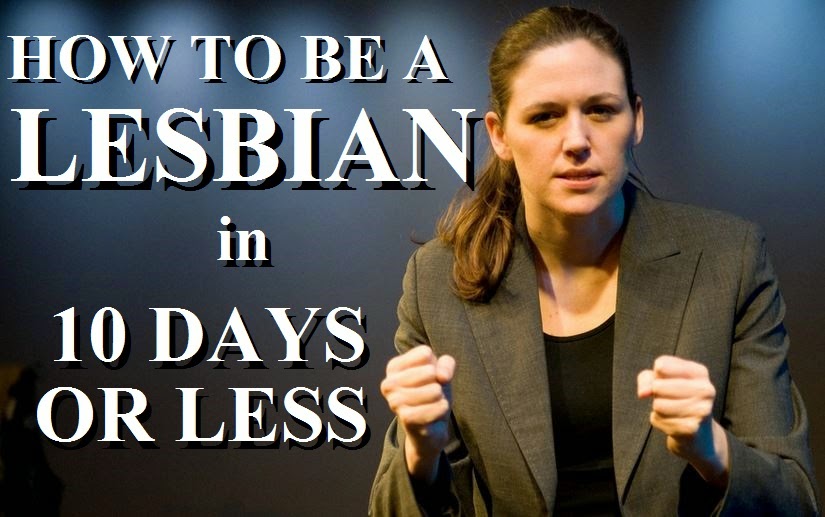
Controversy flared in March when it was reported that the University of South Carolina Upstate (USCU) Center for Women’s & Gender Studies would host Leigh Hendrix’s one-woman show, “How to Be a Lesbian in 10 Days or Less.” Now, USCU officials have announced that the Center for Women’s & Gender Studies will be closed:
The University of South Carolina Upstate eliminated the center that sponsored a gay culture symposium this spring as part of $450,000 in cost cuts for next year. School leaders said that sponsorship did not lead to the 15-year-old center’s demise. . . .
The decision to close Upstate’s Center for Women’s and Gender Studies on July 1 was not related to sponsoring a symposium this spring that examined “New Normals, Old Normals, Future Normals in LGBTQ (Lesbian, Gay, Bisexual, Transgender and Queer) Community,” chancellor Moore said. The symposium scheduled a play, called “How to Be a Lesbian in 10 Days or Less,” that was canceled after an outcry . . .
Cutting the center will save $45,000 a year, a school spokeswoman said. The center’s director will return to the school’s full-time faculty.
“Not only is this decision not punitive or a response to external pressure, it is part of an effort to be consistent and systematic across academic affairs in how we administer and support various programs,” Moore said.
Women’s and Gender Studies is the only interdisciplinary minor at Upstate that has a dedicated center, the school said.
Despite official statements that the lesbian controversy was not a factor in the decision to close the Center for Women’s and Gender Studies at the USCU campus in Spartanburg, some faculty members told Charleston City Paper columnist Alison Piepmeier that USCU is now “a hostile environment,” a climate they find “terrifying.” Trudy Ring at the feminist site SheWired.com suggested “retaliation” motivated the decision.
The web page of the Center for Women’s and Gender Studies has no statement about the decision, nor have press accounts about the decision quoted the Center’s director, Professor Merri Lisa Johnson.
Professor Merri Lisa Johnson.
Professor Johnson is a self-described radical “queer feminist”:
The director of the University of South Carolina Upstate (USCU) Center for Women’s and Gender Studies (CWGS) suffers from a “serious mental illness” and in 2010 described herself as a “newlywed lesbian” whose partner was apparently her former student.
Professor Merri Lisa Johnson published a 2010 book about her struggles with borderline personality disorder. The description of her partner in that book appears to fit a young “butch” lesbian who graduated from USCU in 2008, two years after Professor Johnson joined the faculty of the school in Spartanburg, S.C. . . .
In her 2010 book, Girl in Need of a Tourniquet: Memoir of a Borderline Personality, Professor Johnson describes herself as a “psycho girlfriend” with a history of dysfunctional relationships with both men and women: “Johnson combines her late-in-life coming out story (between ages 31-37) with the story of what amounts to a nervous breakdown as the result of an affair with a married lesbian colleague.” That affair “prompted her to seek professional help,” apparently around the time Professor Johnson left Coastal Carolina University to become director of USCU-CWGS in 2006. . . .
In an article last fall, Professor Johnson described her “queer feminist insistence on the importance, validity, and complexity of women’s pleasure” and her “Marxist feminist distrust of pleasure under patriarchy,” adding that “teaching Women’s and Gender Studies 101 since fall 2006 . . . has firmed up my radical side.”
Feminism’s hostility toward men and toward heterosexuality has often been expressed as lesbian advocacy:
“Feminism is the theory, lesbianism is the practice.”
— Ti-Grace Atkinson, 1971
“The simple fact is that every woman must be willing to be identified as a lesbian to be fully feminist.”
— Sheila Cronan, 1988
“Heterosexual intercourse is the pure, formalized expression of contempt for women’s bodies.”
— Andrea Dworkin, 1989
“Men have been creating ideologies and political practices which naturalize female heterosexuality continuously in every culture since the dawns of the patriarchies. . . . Female heterosexuality is not a biological drive or an individual woman’s erotic attraction . . . Female heterosexuality is a set of social institutions and practices.”
— Marilyn Frye, 1992
“Male supremacy is centered on the act of sexual intercourse, justified by heterosexual practice.”
— Sheila Jeffreys, 2005
See also:
\