Never take advice from feminists, unless your goal in life is to be a crazy cat lady living in a tiny apartment in Brooklyn, which is where the writers for women’s magazines live. Oh, sure, some of them have dogs instead of cats, but they’re all crammed into those tiny Brooklyn apartments, with their Gender Studies diplomas hanging on the wall right next to their “Smash Patriarchy” banner and their rainbow flag.
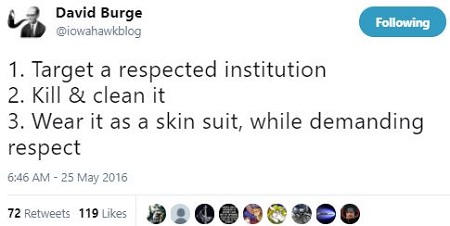
Feminists have spent the past half-century advocating abortion and homosexuality, while condemning marriage and motherhood, yet these enemies of the family now presume to tell parents how to raise children. Having taken over the women’s magazines, these left-wing fanatics now use them as platforms for lectures on “intersectional” themes, e.g., proclaiming that it’s racist “cultural appropriation” for any white child to wear a costume inspired by Moana. This social justice warrior (SJW) mentality, which is always on the hunt for “microaggressions” and “privilege,” is a guaranteed formula for insanity. The Left has taken over women’s magazines, and Iowahawk explains what that means.
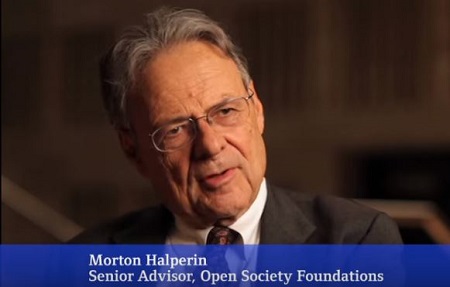
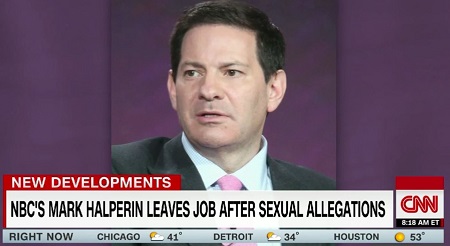
The sexual harassment scandal that destroyed Mark Halperin’s career calls attention to his family’s connections to George Soros. Halperin’s father, Morton Halperin, is a “a senior advisor to the Open Society Foundations, which was founded by George Soros,” and has “served in a number of roles with think tanks, including the Center for American Progress.” His father’s influence may explain not only why Halperin believed he could get away with harassing women, but may also explain Halperin’s meteoric rise at ABC News, where he became political director in 1997 at age 35. Mark Halperin was not a neutral, objective journalist:
In October 2004, the Drudge Report published a memo Halperin sent to ABC News staff about coverage of the U.S. presidential election directing them not to “reflexively and artificially hold both sides ‘equally’ accountable” and that both John Kerry and George W. Bush used “distortion” in their campaign, but that Kerry’s distortions were not “central to his efforts to win.”
This justification of deliberate pro-Democrat bias, coming from someone who served as political director at a major broadcast network, ought to have been adequate warning that Mark Halperin was untrustworthy. Yet he maintained his position at ABC, and from there went on to positions at Time magazine and MSNBC, which is . . . remarkable.
Far be it from me to advance any conspiracy theories, however. Never attribute to malice that which can be explained by incompetence. Yet there is an incestuous relationship between journalists and the politicians in Washington. Mark Halperin was directing political news at ABC in the 1990s while his father worked for the Clinton administration. Perhaps only such a well-connected journalist could have obtained such a post.
The morning after five women accused veteran journalist Mark Halperin of sexual harassment while he was in a powerful position at ABC News, two more women came forward with their own allegations.
Those initial five accusers recounted sexual misconduct ranging in nature “from propositioning employees for sex to kissing and grabbing one’s breasts against her will,” CNN reported. “Three of the women who spoke to CNN described Halperin as, without consent, pressing an erection against their bodies while he was clothed.”
Halperin denied some of the allegations listed in Wednesday evening’s story, but added, “I now understand from these accounts that my behavior was inappropriate and caused others pain.”
And then another set of accusers emerged the following day.
“#MeToo,” conservative author and reporter Emily Miller wrote Wednesday night on Twitter, directly responding to the CNN report. . . .
Without specifically describing her encounter with the pundit, Miller elaborated: “I did not report Halperin to ABC because I thought I was the only one, and I blamed myself, and I was embarrassed and I was scared of him.” . . .
Another journalist, who currently appears as a commentator across multiple networks, joined the chorus on Thursday, telling The Daily Beast that the accusations against Halperin rang familiar to her own experience. She said he made unwanted advances at her while they worked together at ABC News more than a decade ago. . . .
According to numerous sources at NBC, MSNBC, ABC, and Bloomberg—who previously spoke to The Daily Beast on the condition of anonymity in order to speak freely—the private allegations of Halperin’s sexual misconduct were an open secret, particularly in New York City and D.C. political media, for many years.
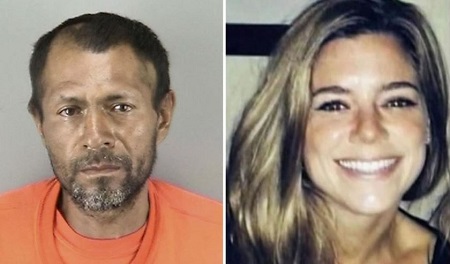
Surveillance video footage shown in court Wednesday shows the man charged in the fatal shooting of Kate Steinle at San Francisco’s Pier 14 throw something in the water and then leave the scene immediately after she is struck, according to prosecutors.
CBS San Francisco reports jurors in the trial of Jose Ines Garcia Zarate, 45, who faces charges including second-degree murder and assault with a deadly weapon in the July 1, 2015 shooting, were shown surveillance footage of the shooting taken from a fire station located about a quarter of a mile away. . . .
Steinle, a 32-year-old Pleasanton native who lived in San Francisco’s South Beach neighborhood, was walking on the pier with her father and another family member following a meal at the Ferry Building at the time of the shooting, according to previous testimony. . . .
Garcia Zarate’s trial has drawn national attention because of its ties to controversy over Sanctuary City policies used by San Francisco and other cities that limit the cooperation of local law enforcement with federal immigration authorities.
San Francisco officials had released Garcia Zarate, a Mexican citizen with a history of deportations, from jail months before the shooting after a minor drug charge was dismissed without notifying federal immigration authorities, as is the city’s practice for most cases.
For some reason, this story doesn’t fit the feminist narrative.
In the wake of the Harvey Weinstein scandal, “male feminists” everywhere are understandably nervous, wondering if one of their ex-girlfriends or female acquaintances might be the next to jump on the #MeToo hashtag and accuse them of harassment or sexual assault.
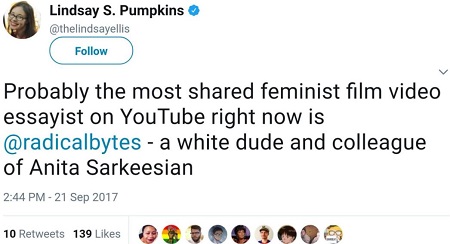
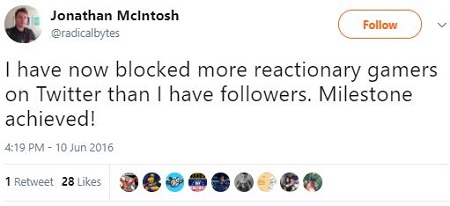
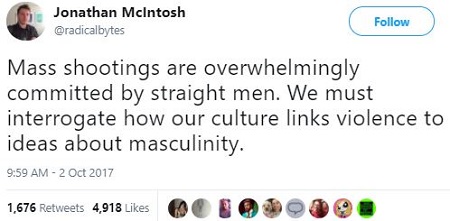
Let me call your attention to Jonathan McIntosh (@radicalbytes on Twitter) who was once a partner in Anita Sarkeesian’s Feminist Frequency project until . . . Well, nobody knows why Sarkeesian kicked McIntosh to the curb, but he exited Feminist Frequency at some point after the #GamerGate controversy erupted. McIntosh then launched his own project, the Pop Culture Detective Agency.
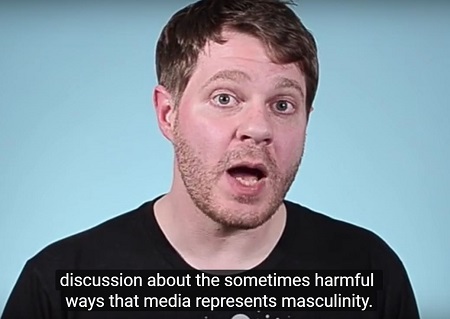
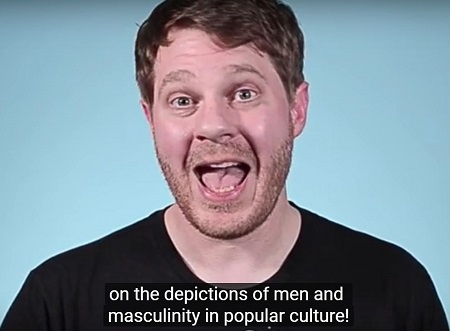
Here is one of McIntosh’s videos, in which he criticizes “misogyny” in the popular sitcom The Big Bang Theory:
“Leonard, Sheldon, Howard and Raj all lack most of the traits traditionally associated with leading men in Hollywood. They’re not conventionally handsome, they’re not confident, and they’re definitely not athletic. What they are, are dorky insecure fanboys who are plagued with a wide variety of anxieties, illnesses and awkward personality quirks. . . . ‘Adorkable Misogynists’ are male characters whose geeky version of masculinity is framed as both comically pathetic and endearing. . . . And it’s their status as nerdy nice guys that then lets them off the hook for a wide range of creepy, entitled and downright sexist behaviors.”
Well, maybe so. But the whole thing about a situation comedy is that it is based on a particular situation from which comedy emerges. For example, The Beverly Hillbillies — backwoods simpletons find themselves suddenly rich, and relocate to a mansion among the Hollywood elite. Ellie Mae has her critters, Granny is making lye soap in the backyard, Jethro with his eighth-grade education is pursuing some improbable career — these are the situations within which the show finds its comedy, see? The situation in The Big Bang Theory is about four scientific geniuses who, while spectacularly competent in their career fields, are hopelessly inept in terms of their social skills, particularly in regard to the opposite sex. Are their behaviors “creepy, entitled and downright sexist”? Well, how else do we expect uber-nerds to behave? Insofar as the entire premise of the show (its title being a double-entendre on the word “bang”) is about geeks trying to get laid, isn’t the basic subject matter more or less inherently “creepy”?
Jonathan McIntosh turns this into a 20-minute Gender Studies lecture, using the methodology by which Anita Sarkeesian did the same thing to videogames, and his video sermonette about “misogyny” has gotten 1.7 million views on YouTube. As an exercise in Third Wave theory, it’s quite a success, but what’s the payoff of this critique?
“The Hollywood nerd is almost always positioned in opposition to the expected norms of macho manhood. This is usually accomplished through juxtaposition with the jock archetype. When contrasted with hyper-masculine guys who perform a crude, aggressive form of manhood, our geeky hero gets to be framed as the better, smarter, more sensitive alternative. He’s the misunderstood nice guy. . . . He was unfairly bullied and mocked by his peers. . . . He’s presented as the clear underdog in the manhood competition.”
Right — the underdog who overcomes his disadvantages to win is the theme of so many movies that we could scarcely begin naming them all. This particular “trope,” the Nerd who outsmarts the Jocks, is just one variation of a classic theme. Rocky Balboa, the hard-luck working-class guy who achieves immortal glory as a boxer, is another variation. Richard Gere’s character in An Officer and a Gentleman is another. But whereas Rocky is about athletic achievement, and An Officer and a Gentleman is about military achievement, what Jonathan McIntosh targets in the Hollywood nerd “trope” is the underdog’s quest for sexual achievement. As he points out, some of the behavior played for comic effect in The Big Bang Theory (and in other movies and TV shows about nerds) is arguably harassment, stalking or even sexual assault.
“Just because the performance of a geeky version of masculinity is markedly different from traditional Hollywood archetypes, that doesn’t necessarily mean that geeky guys are any less invested in sexism. The bottom line here is, there’s nothing cute or harmless about misogyny.”
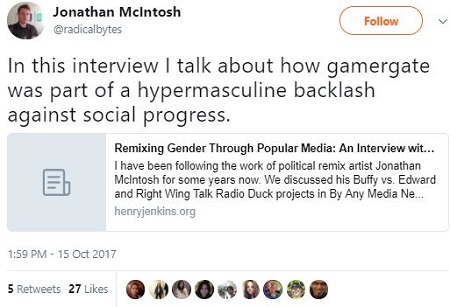
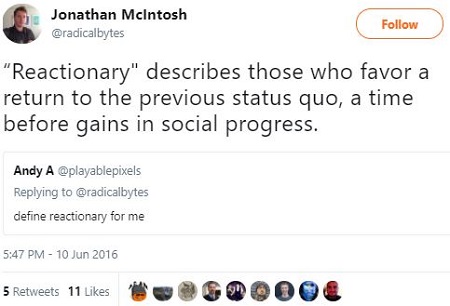
Yeah, but the whole point of The Big Bang Theory — the situation that provides the comedy — is about nerds trying to get laid. McIntosh’s rhetoric about “sexism” and “misogyny” is about nerd-shaming, i.e., humiliating geeky guys for even wanting to have sex. McIntosh seems upset that the writers of The Big Bang Theory have succeeded in making audience sympathize with these geeks. Which is kind of weird, given that McIntosh is quite geeky himself — pudgy, pale, ill-shaven, and the kind of nerd who uses words like “norm” and “archetype.” Also, McIntosh appears to suffer from a severe humor deficiency. Everything is always political and serious to McIntosh, who is evidently obsessed with the idea that “social progress” is endangered by “reactionaries.”
Does this mean you’re a Nazi if you laugh at The Big Bang Theory? Trying to connect the dots, to comprehend Jonathan McIntosh’s “progressive” worldview as a systematic vision, leads to some bizarre implications. If the “hyper-masculine” jock is unacceptable as a model of hexterosexual male behavior, and the nerdy “misunderstood nice guy” is also unacceptable, is there any form of male heterosexuality that McIntosh approves? Good luck finding an answer to that.
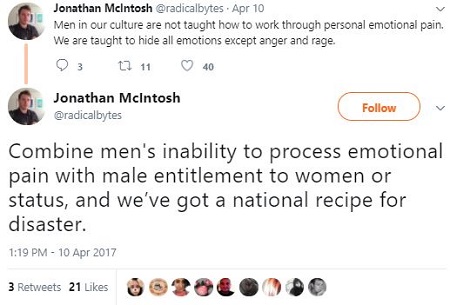
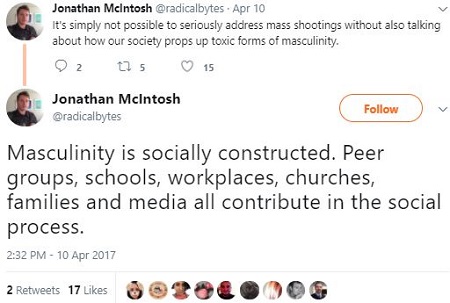
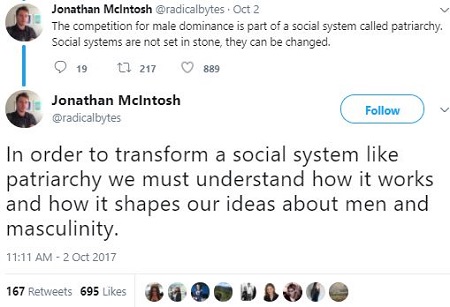
Jonathan McIntosh seems to conflate heterosexuality with violence and “male dominance,” as if there is nothing that separates “straight men” in general from the Las Vegas shooter. The “patriarchy” is to blame!
Whenever we see this kind of rhetoric, which blames “society” for the criminal actions of an individual, we are witnessing a propaganda tactic I call the atrocity narrative. It’s the way the shooting of a robbery suspect in Ferguson, Missouri, was leveraged to create a false narrative of police “racism” so widespread as to be ubiquitous. Deliberately fomenting hatred of police for political purposes, the Black Lives Matter movement was false from its inception (the “Hands Up, Don’t Shoot” myth) and false in its larger claims as well:
Contrary to the Black Lives Matter narrative, the police have much more to fear from black males than black males have to fear from the police. In 2015, a police officer was 18.5 times more likely to be killed by a black male than an unarmed black male was to be killed by a police officer.
Black males have made up 42 percent of all cop-killers over the last decade, though they are only 6 percent of the population.
You’re not going to see those numbers reported on CNN, however. The amount of black-on-black crime so vastly exceeds incidents of police violence against black suspects that the latter problem can only be portrayed as a major social issue by completely ignoring the former problem. Yet this is exactly what the liberal media did in promoting the Black Lives Matter narrative, which dishonestly smeared law enforcement officers as a threat to the safety of black people, and also demonized whites as complicit in this alleged police “racism.”
Likewise, by turning mass murderers into demonized symbols of “patriarchy” and “male dominance,” Jonathan McIntosh implies that all men are complicit in the crimes of such monsters. Yet while implicating all “straight men” in the Las Vegas massacre, McIntosh has never offered any explanation for the routine violence in Chicago, where more than 500 people have been shot to death so far this year, including 56 women. If violence is caused by “patriarchy,” what is Jonathan McIntosh’s explanation of Chicago’s murder epidemic? What kind of situation comedies are they watching in Chicago?
There is something suspicious about Jonathan McIntosh’s obsessive effort to obtain recognition as the ultimate “male feminist.” What motivates this kind of virtue-signaling “white knight” posture? Feminists have become increasingly critical of their progressive male “allies,” in large part because so many of these “allies” have been exposed as sexual predators. While I am not aware of any such accusation about Jonathan McIntosh, his departure from Anita Sarkeesian’s Feminist Frequency project is still somewhat mysterious. Was there a problem? Has Sarkeesian vouched for McIntosh’s bona fides as a “male feminist”?
No one should be surprised if Jonathan McIntosh’s crusade against “toxic masculinity” turns out to be a boomerang of psychological projection.