
‘I Don’t Talk to the Police, Sir’

One of the difficulties of trying to get Americans to understand our nation’s crime problem is that most people don’t acknowledge the existence of the category “criminals.” That is to say, because of the way crime is portrayed in entertainment and news media, there seems to be a widespread belief that criminal behavior is more or less randomly distributed throughout the population, so that practically everybody is equally at risk of being a crime victim or, perhaps, perpetrating a crime. However, anyone who actually researches crime will discover that a majority of serious criminal offenses are committed by a comparatively small group of repeat offenders — career criminals, the kind with the proverbial “record as long as your arm.” You could reduce the crime rate by more than 50% simply by identifying these offenders and locking them up and, in such cases, prosecutors should treat these repeat offenders according to what I’ll dub “The Al Capone Principle.”

Al Capone was the most notorious Mafia boss of the 1920 and ’30s, whose gang committed innumerable robberies, hijackings and murders, along with many other lesser crimes — bootlegging, pimping, extortion, you name it. Getting witnesses to testify to Capone’s crimes was problematic, because any witness was likely to be killed or terrorized into silence before the case went to trial. This led to the ironic consequence that, when Capone was finally sent to federal prison, it wasn’t for any of the many acts of brutal violence he had committed, but instead for evading federal income taxes. And this, I say, is the secret to reducing crime: Once you figure out who the criminals are, it doesn’t matter what offense you convict them for, so long as they’re put behind bars for a long, long time.

Well, “mass incarceration,” say the Social Justice Warriors — America is racist and too many black men were in prison, and so activists demanded policies to change this. The problem is that, from a public-safety perspective, “mass incarceration” worked. Prior to the Ferguson riots, the U.S. homicide rate had declined drastically for more than 20 years, from a peak of 9.71 per 100,000 in 1991 to 4.44 in 2014 — a 57% reduction. Several factors were involved in this remarkable public-safety success story, among them mandatory minimum sentencing guidelines that sent drug dealers to prison for many years. Cry all you want about the “War on Drugs” leading to racial injustice, the fact is that a lot of violence was being perpetrated by urban gangs involved in drug trafficking, so that putting gang-bangers behind bars on drug charges had a correlated effect of reducing violent crime — “The Al Capone Principle” in action.

Mandatory sentences for drug crimes weren’t the only factor involved in this two-decade-long reduction of criminal violence, however. A lot of it had to do with how technology made it easier to apprehend and convict criminals. Surveillance video, DNA analysis, computerized fingerprint databases — beginning in the 1990s, cops and prosecutors began to acquire more and more tools to help them identify perpetrators and prove their guilt. Consider one of the biggest stories about public safety in the 1990s, the application of so-called “Broken Windows” theory in New York City. Social scientists James Q. Wilson and George Kelling are credited with popularizing the idea that by enforcing laws against “quality of life” offenses (e.g., vandalism, public intoxication, loitering), police send a signal to the community that has the effect of reducing more serious crimes. Which is no doubt true, but what really made this approach effective in New York City was NYPD’s use of CompStat:

On a weekly basis, personnel from each of the NYPD’s 77 precincts, nine police service areas and 12 transit districts compile a statistical summary of the week’s crime complaints, arrests and summons activity, as well as a written report of significant cases, crime patterns and police activities. This data, with specific crime and enforcement locations and times, is forwarded to the chief of the department’s CompStat Unit, where information is collated and loaded into a citywide database.
The unit runs computer analysis on the data and generates a weekly CompStat report. The report captures crime complaints and arrest activity at the precinct, patrol borough and citywide levels, presenting a summary of these and other important performance indicators.
The data is presented on a week-to-date, prior 28 days and year-to-date basis, with comparisons to previous years’ activity. Precinct commanders and members of the department’s senior officers can easily discern emerging and established crime trends, as well as deviations and anomalies. With the report, department leadership can easily make comparisons between commands. Each precinct is also ranked in each complaint and arrest category.

By compiling crime reports in a database, CompStat gives cops knowledge of what crimes are happening and where on a weekly basis — a computerized roadmap that helps them target enforcement in areas where crime is most common. Many cities across America adopted the approach pioneered by NYPD and, not surprisingly, it turns out that putting more cops where the most crime is happening has a remarkable deterrent effect on criminal activity. If this also results in more black people going to prison, well, “Don’t do the crime if you can’t do the time.”

Crime is not just a statistic, however. Or, rather, statistics are just a compilation of separate events, and if you spend enough time watching police activity videos on YouTube, you begin to see distinct patterns of criminal behavior, which brings us to the case of Teronnie Austin Wade.
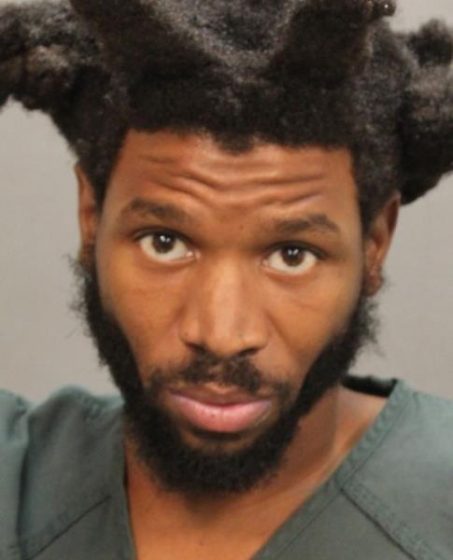
Wade is a lifelong career criminal. In 2014, when he was sentenced to a year in prison after pleading guilty to grand theft auto. In 2017, he was sentenced to three years in prison after pleading guilty to having a gun as a convicted felon. In 2020 — that is to say, almost immediately after his release from prison — Wade was a passenger in a car that was pulled over for a traffic violation. He was found in possession of a handgun, 22 bags of cocaine and the synthetic drug Flakka. At this point, it should have been apparent that Wade was at all times a member of the category “criminal.” At no time since he reached adulthood had Teronnie Wade attempted to make a legal living, but was instead constantly either (a) committing crimes or (b) serving time in prison.

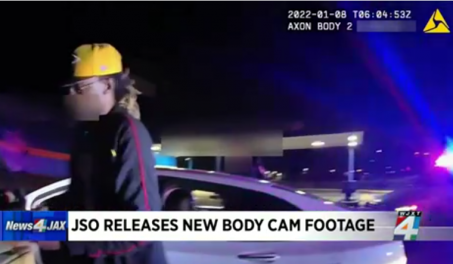
A judge ordered Wade held on a bond of nearly $130,000, but for some reason, that was later lowered to $50,000, and the career felon was released from jail in Jacksonville, Florida. He failed to show up for an October 2021 court hearing, and a warrant was issued for the fugitive’s arrest. So it was that Teronnie Austin Wade next encountered law enforcement at 1 a.m. on Saturday, Jan. 8, 2022. Five people were inside a sedan that made an illegal U-turn at a red light on Lem Turner Road in Jacksonville. When police pulled the car over, Wade was sitting in the front passenger seat. Officers noticed the smell of marijuana and began questioning the occupants:

Officer B then asks the passenger in the front seat to roll the window down.
“I don’t talk to the police, sir. I’m a passenger,” the man replies.
“OK,” the officer replies. “Can you just roll the window down for me? You don’t need to talk to me.”
“I’m a passenger, sir,” the man replies.
“No, hey, don’t go reaching in your pockets, alright?” Officer B said.
“I’m a passenger, sir,” the man repeats.
The officer tells the man it’s OK if he doesn’t want to talk to him, he just wants him to roll the window down.
“Got to talk to the driver, sir,” the man responds.
Officer A then walks back over to the white car to talk to the front seat passenger, who was wearing a bulletproof vest. The officer asks the man if he has a medical marijuana card.
The passenger replies, “Sir, I don’t answer any questions, sir.”

Now, when a police officer notices that a civilian is wearing a bulletproof vest, this naturally arouses suspicion. But before we get to that, let’s examine Wade’s claim that, because he is only a passenger in the vehicle, and not the driver, he doesn’t have to answer the officer’s question. Maybe this is true, in a narrow legal sense, but when you get pulled over in a vehicle that reeks of marijuana, you are then a suspect in a crime unrelated to mere traffic violations. And because these cops weren’t born yesterday — because they are experienced enough to recognize patterns of criminal behavior — there was a good reason why they wanted Teronnie Wade to roll down his window, namely to improve their ability to see inside the car, to see if there were any weapons present.

Criminal activity follows certain patterns, and while the driver of the car claimed that he and his friends had been on their way to Walmart — intending to get supplies to fix another car, only to discover that Walmart was closed — the police suspected there might have been another motive for this trip. Because why were there five guys in this one car, including a passenger who’s wearing a bulletproof vest? None of the officers recognized Wade as a convicted felon, but experienced cops tend to acquire a sixth sense, and so he was taken out of the vehicle, at which point the cop saw the extended magazine of a pistol sticking out of the back of Wade’s pants. Bulletproof vest + pistol = trouble.

What resulted was an “officer involved shooting” (OIS) incident. When officers attempted to handcuff Wade, he broke free and ran, then turned and fired at officers, who returned fire. More than 40 shots were fired in the gun battle, which ended with Wade seriously wounded. He survived, and was charged with two counts of attempted murder of a law enforcement officer, plus possession of a weapon by a felon and resisting arrest. This time, he was held without bail.


This incident is an example of a pattern we have seen repeatedly in recent years — suspects with extensive criminal records, out on bail, committing crimes that cause people to ask, “Why wasn’t this guy behind bars?” Wade’s multiple previous convictions, including being a felon in possession of a firearm, should have been sufficient to convince any judge that this guy was too dangerous to be released after he was busted with drugs and a gun yet again in 2020. Yet there he was, riding around after midnight, wearing body armor and carrying a pistol with an extended magazine, a fugitive who had (predictably) violated terms of his bail.

How is it that the same liberals who bemoan “mass incarceration” also want to lecture us about “gun violence”? As if a policy of turning loose criminals has no impact on the crime rate? As if the gun itself — an inanimate object — were the cause of violence, rather than the criminals that liberals want to turn loose? It is difficult for me to believe that in Florida, which is certainly not a haven of liberalism, a guy who just got out of prison for a weapons charge could have gotten busted with a gun again, and then turned loose on bail. Where is “mass incarceration” when we really need it? This shootout in Jacksonville is, in a way, a microcosm of what’s gone wrong in our criminal justice system in recent years.

“I don’t talk to the police, sir,” says the career criminal, a fugitive with a warrant for his arrest, carrying a pistol with an extended magazine and wearing body armor while he’s riding around at 1 a.m.

This is what “social justice” looks like — armed criminals ready, willing and able to murder the police, because Black Lives Matter, you see.


The Shame of Adam Kinzinger

Last week, Tucker Carlson bid a mocking farewell to Illinois Rep. Adam Kinzinger who, like Liz Cheney and many others, wrecked his career by succumbing to Trump Derangement Syndrome. As much as I enjoyed Carlson’s mockery — and as much as Kinzinger deserved to be mocked as a “male menopause” sufferer — it does not fully explain what happened to Kinzinger, and mockery will not prevent others from emulating such errors in the future. A “teachable moment” was missed.

Begin with this: You and I are different from those who harbor political ambitions. For most of us, political parties are a matter of choosing between two different policy agendas; we may not like everything that our party does, but in general we think our party represents our interests and ideals better than the other party does. In point of fact, most conservatives are more or less permanently exasperated with Republican politicians, who seem like a gang of bumbling clowns, cowards and knaves. But then we look at the Democrats, who are even worse, and figure we’ve got no other choice. Republican voters are like fans of a lousy NFL franchise — the Cleveland Browns or Detroit Lions, for example — who suffer endless disappointment, but nevertheless continue showing up at the stadium and rooting for the home team.

Most of my readers have been voting Republican all your adult lives, and don’t ever expect to stop voting Republican, no matter how futile and frustrating your experience may be. You are a loyalist, and consider it a duty to vote for the GOP, and that’s why people like Adam Kinzinger piss you off so much. If you can be loyal to the team, despite so many years of disappointment and frustration, why can’t Republicans like Kinzinger reciprocate your loyalty? Why can’t they be “team players”?

Ah, but politicians are different from you and me. For them, a political party is a machine by which to advance their own ambitions. And while they speak with apparent sincerity of their “principles,” it should be observed that these are difficult to distinguish from their career interests. Once upon a time, in the earliest era of our Republic, political careers were not particularly lucrative, and our legislatures were not occupied by careerists without any other employment opportunities. Being a state legislator or even a congressman or U.S. Senator, was not a full-time job, and these seats tended to be filled by wealthy landowners or prosperous lawyers, for whom serving a few years as a legislator was a sort of social obligation, as leading citizens of their communities.

As politics has become a full-time career, however, the character of our legislative representatives has changed, and thus we have such personalities as Adam Kinzinger, a former wunderkind who first got elected to Congress during the Tea Party year of 2010 and thus instantly became part of the governing GOP majority in the House of Representatives, when he was still just 32 years old. Republicans won a landslide in 2010, gaining a net 63 seats for a 242-193 majority, with John Boehner replacing Nancy Pelosi as Speaker of the House. Kinzinger had first won office as a county commissioner while a 20-year-old college student and then amid the patriotic fervor of the “War on Terror” in 2003, joined the Air Force, becoming a pilot flying aerial refueling planes. Endorsed by Tea Party darling Sarah Palin, Kinzinger easily won the 2010 GOP primary in the 11th District of Illinois, then won the general election by a 15-point margin. He was a young superstar.

Alas, things immediately started going downhill for the GOP, as Mitt Romney won the 2012 Republican presidential nomination and thus helped reelect Barack Obama. Meanwhile, Kinzinger got redistricted. As recently as 1990, Illinois had 22 House seats, but they lost two seats after the 1990 Census, and have lost one seat in every subsequent census, so that when Congress convenes next January, Illinois will have only 17 representatives in the House. When Kinzinger was first elected in 2010, Illinois had 19 congressional districts, but in the next election, that number shrunk to 18 and, in the ensuing game of “musical chairs,” Kinzinger ran in the 16th District, defeating fellow Republican Rep. Don Mazullo in the 2012 primary, then cruising to a 62%-38% win in November. So far, so good for Kinzinger, but in the aftermath of Obama’s reelection, Boehner went sideways in budget negotiations with the White House, pissing off the fiscal conservative Club for Growth.

Kinzinger had supported Boehner’s deal with Obama and, subsequently was faced with a Club for Growth-backed challenger in the 2014 GOP primary. Kinzinger had no trouble fighting off that challenge and was reelected, but this seems to have been the pivotal episode that turned Kinzinger — originally elected amid a populist Tea Party surge — into an enemy of conservatives. After all, self-declared conservatives had tried to prevent his reelection and this threat to his personal ambition was intolerable to Kinzinger: How dare they oppose him?

Things then went bad to worse. As the Republican field began assembling for the 2016 presidential campaign, Adam Kinzinger endorsed . . .

Go ahead, take a wild guess.

Betcha can’t guess, but give it a try.

I’ll wait.

If you guessed Jeb Bush, you’re a winner!

Was there ever any campaign more obviously doomed from the outset than the 2016 Jeb Bush campaign? America had gotten thoroughly sick of Bushism, and Jeb’s performance in the GOP primary campaign was a sort of asterisk in the final result. Jeb got less than 3% of the vote in the Iowa caucuses, getting exactly one delegate of the 30 chosen. In New Hampshire, Jeb got a whopping 11% and three delegates out of 23. Then came South Carolina, a winner-take-all primary where Jeb got less than 8% of the vote and then quit the race, at which point Kinzinger jumped ship to endorse Marco Rubio, but it was already too late to stop the Trump juggernaut. With the benefit of hindsight, everyone has since realized what I foresaw from the beginning: There were too many candidates vying to be the anti-Trump in that crowded primary field. If you go back to the New Hampshire primary, you see that the combined votes of the three “moderates” — Jeb (11%), John Kasich (16%) and Chris Christie (7%) — were nearly equal to the 35% that Trump got in New Hampshire. If the RINO Caucus had been able to coalesce behind one candidate, they might have stopped Trump, but the selfish ambition of these three candidates prevented that from happening. Likewise with the two “Conservative But Not Trump” candidates, Rubio and Ted Cruz. If one or the other had been willing to drop out early, perhaps their combined support would have exceeded Trump’s, but individual ambition prevented that, too. And, in that crisis of the Republican Party, you see, Kinzinger was always endorsing the wrong candidates.

Me, I’m a team player.

From the moment Trump came down that escalator, I realized he was going to be hard to beat and, a few weeks later, I got a call from my buddy Pete the Tech Guy, who was covering Trump’s first big rally in New Hampshire: “Stacy, this Trump thing is for real.” It was a genuine grassroots phenomenon, and when National Review subsequently published its “Never Trump” issue, I became concerned about a potential nightmare scenario: If the GOP Establishment somehow contrived a way to prevent Trump from getting the nomination, Trump might go third-party, and thus ensure Hillary’s election. We were, in a way, caught between the Devil and the deep blue sea. Trump was able to energize a segment of the electorate that had long felt neglected, and with this energized grassroots base, he ultimately overcame every obstacle, including the opposition of GOP Establishment types like Kinzinger, and thus saved America from the worst of all evils, President Hillary Clinton.

Being a team player, it was easy to see it this way, and the problem for Kinzinger and so many others is that they let their own ambitions blind them to the reality of what this choice meant. Whatever you think of Trump, there could be nothing worse for America than putting Hillary Clinton in the White House. We just barely avoided that apocalyptic catastrophe and, as bad as the subsequent imposition of Joe Biden has been, I’m sure it would have been much worse if Hillary had won in 2016 — but Kinzinger doesn’t seem to grasp this.

Something else Kinzinger doesn’t get: Congressmen are supposed to represent their constituents. In 2016, Donald Trump won the 16th District of Illinois by 17 points, with 55% to Hillary Clinton’s 38%. In 2020, the voters of the 16th District chose Trump by a 16-point margin, 56% to Biden’s 40%. In other words, the district that sent Adam Kinzinger to Congress voted for Donald Trump twice, by overwhelming margins, and you might think this would oblige Kinzinger to defend the man his constituents embraced, rather than to constantly attack Trump.

Who is it, really, that is the threat to democracy?

Why do Republicans like Kinzinger hate their own constituents?

This is what’s really wrong with the Republican Party, that so many politicians elected by the party apparently don’t feel any obligation to reciprocate the loyalty of GOP voters. If you are elected as a Republican, you ought to be enough of a team player that you don’t do what Adam Kinzinger has done, directly insulting his own party’s voters.

Fortunately for Republicans — not just in Illinois, but everywhere — the Census took care of our Adam Kinzinger problem. After the 2020 Census, Illinois again lost another House seat, and after the subsequent redistricting, Kinzinger would have had to face off against another Republican, Rep. Darin LaHood, in a very conservative district. Kinzinger decided to retire instead, and nobody — absolutely nobody — in the Republican Party will miss that selfish bastard. Good riddance.

Let this be a warning to all Republican politicians. Never forget that you are a representative of the people who elected you. If you had not first won a Republican primary, you never would have been a candidate in the general election, so that party loyalty is a prerequisite to success in politics. While philosophers may speculate on the existence and nature of a generalized public interest in political affairs, no speculative theory is necessary to understand the symbiotic connection between a politician’s success and the strength of his party in the community that elects him. That is to say, while a congressman or senator indeed is elected to represent all his constituents, he must always keep in mind what his own party’s grassroots voters want, in terms of his policy agenda. You may be able to fool voters to some extent for a while, but in the long run, politicians who don’t understand the reciprocal nature of party loyalty are doomed to destruction. If you cannot in good conscience represent your own party’s grassroots voters, honor requires you either to quit your office or to switch parties. What Adam Kinzinger has done is dishonorable, and he can posture all he wants as a Courageous Man of Principle, but he’ll have to do so somewhere else besides Congress, because the voters of his district rightly hate him.

Kinzinger betrayed the people who elected him, and ought to be ashamed of himself, but if he had any capacity for shame, I guess he never would have endorsed that loser Jeb Bush, would he?


Florida ‘Predator’ Charged With Murder After Girl Dies From Fentanyl Overdose

Robert Gullo, 25, had a modus operandi. Last year, he was arrested for lewd and lascivious behavior in Hernando County, Florida, after police say he had sex with an underage girl he met using the Tinder dating app. He was released on bond pending trial, and meanwhile continued doing the same thing, using the Internet to solicit minors for sex, using the offer of drugs as an incentive. In November 2021, Gullo was living in Clearwater and texting with two different girls, one 15 and another 16. On Nov. 18, 2021, Gullo sent both girls the same text message: “We should hang out tonight. Let’s do coke and get f***ed up.”

Smooth guy, eh? Real subtlety in his approach, you know?

Anyway, the 15-year-old turned down Gullo’s offer, but the 16-year-old, Meaghan Cooper, said yes. She snuck out of her house and went to Gullo’s house where, about 11:30 that night, she sent a text message to a friend: “I just did so much coke and it feels so good.”

Cooper didn’t feel good very long, however, because what she thought was cocaine was actually fentanyl. The next day, her body was found in a field near some power lines not far from Gullo’s house.

Toxicology reports showed Meaghan had four times a lethal amount of fentanyl in her system. Also, the autopsy — including DNA evidence — showed Gullo had sex with her. After an investigation that lasted more than a year, a Pinellas County grand jury last week indicted Gullo for first-degree murder and other charges. Pinellas County Sheriff Bob Gualtieri announced the charges at a press conference where he called Gullo a “predator,” and the obvious question is, why was this predator on the streets after being charged in a similar (although not deadly) crime in Hernando County? What was the amount of Gullo’s bond in that case, and who bailed him out? As we all know, criminal suspects must be presumed innocent until convicted, and defendants have a constitutional right to bail that is not “excessive,” but shouldn’t public safety be weighed in the balance of justice? And, again: Who paid that bail?

Interestingly, the terms of Gullo’s pretrial release in Hernando County required him to wear a GPS ankle monitor, and the data from that device became evidence, showing that after Meaghan died from a fentanyl overdose, Gullo traveled to the spot where Meaghan’s body was dumped.

There are a lot of disturbing angles to this story. Like, how was it that a teenage girl in Hernando County was on Tinder? What kind of safeguards are there to prevent minors from accessing dating apps intended for adults? Couldn’t states impose criminal sanctions on these companies if they don’t prevent this? Don’t you think Florida Gov. Ron DeSantis and the state’s Republican-controlled legislature should look into doing something to fix this dating app problem?

Perhaps most disturbing, though, is the revelation that there seem to be a lot of teenage girls who have no concept of the dangers involved with meeting strangers via the Internet. If Robert Gullo had no problem finding so many underage victims — at least three, that we know of — in this part of Florida, how many girls are there nationwide playing this dangerous game online? Thousands? Tens of thousands? More?

There is a temptation, in discussing cases like the death of Meaghan Cooper, to use the adjective “tragic,” but that isn’t the right word. The proper adjective is stupid, as in: “Play stupid games, win stupid prizes.”

My youngest daughter turned 20 last week, so now I can say that all six of my kids have survived their teenage years. That may not seem like much of an accomplishment, but judging by contemporary standards? Yeah, nominate me for Parent of the Year, every year.

And speaking from authority as Best Dad Ever, here’s some helpful advice for you kids: “Don’t be stupid. You’ll end up dead.”


Crazy People Are Dangerous (and Keep Getting Shot by Cops in Detroit)

Last month, infamous legal pest Geoffrey Fieger filed two separate $50 million lawsuits against Detroit police for the fatal shootings of two mentally ill residents, Ki’azia Miller, 27 and Porter Burks, 20.

There’s a word for this, and that word is shakedown. It is a near-certainty that neither of these lawsuits will ever see the inside of a courtroom; instead, the city will negotiate a settlement with the plaintiffs, perhaps somewhere in the range of $2 million to $5 million per victim, and Feiger will collect his 50% commission, adding millions more to his multimillionaire status. Being a legal pest is quite a lucrative racket, but while a lawyer can grow rich from the proceeds of suing police departments — a direct transfer of wealth from taxpayers — the question needs to be asked whether this kind of “justice” actually does anything to improve law enforcement or the treatment of the mentally ill.

Before we discuss these shootings, or the policy implications involved, let’s first note that Detroit is in Wayne County, named for Revolution War hero and frontier fighter Gen. “Mad Anthony” Wayne (who, of course, is nowadays denounced by liberals as a racist). With a population of around 1.8 million, Wayne County is the largest county in Michigan and “the 19th-most populous county in the United States.” However, Wayne County has been losing population for the last half-century, and at the 2020 census had nearly 900,000 fewer residents than it did in 1970, a decline of 32.7% in 50 years. The population of Wayne County is 48% white and 37% black. Of the county’s 669,277 black residents at the 2020 census, the majority of them (493,212) lived in Detroit, a city whose population is 82% black. So it makes very little sense to claim that the police in Detroit are racist, and if these lawsuits result in a settlement, that money will be subtracted from the budget of a majority-black city. Maybe the black taxpayers in Detroit should ask themselves what “justice” there is in making Geoffrey Fieger richer. But I digress . . .

Did I mention that Wayne County is a Democratic Party stronghold? In the 2020 presidential election, Joe Biden won Michigan by a margin of less than 3%, with 2,804,040 votes (50.6%) to President Trump’s 2,649,852 (47.8%). In Wayne County, Biden got 597,170 votes (68% of the county total) to Trump’s 264,553 votes (30%). You see that Biden’s margin in Wayne County (332,617) was more twice the size of his statewide margin (154,188) — i.e., Biden won Detroit, and Trump won the rest of the state. Detroit is the urban Democratic tail that wags the statewide Republican dog. Keep this in mind, as we consider the state of affairs in Detroit, where cops are shooting crazy people.

Porter Burks “was believed to have been experiencing a schizophrenic episode Oct. 2 while wandering his neighborhood on the city’s west side with a 3.5-inch knife. Concerned for Burks’ safety, his older brother had called police asking for help and for Burks to be admitted to a hospital.” Five Detroit police officers fired 38 rounds, 19 of which hit Burks. No charges will be filed against the cops involved:

[Wayne County Prosecutor Kym] Worthy sided with police . . . echoing Detroit Police Chief James White’s claim that responding officers had minimal time to “eliminate the threat.”
“The police spent a significant amount of time trying to get him to drop his weapon,” Worthy wrote in a statement. “He suddenly ran at them with the knife and covered the distance between them in approximately three seconds. Eyewitnesses to the shooting were interviewed and indicated that the police did all that they could to de-escalate the situation before Mr. Burks charged at the police.”

Prosecutor Kym Worthy (let); Police Chief James White (right)

I’m just going to go out on a limb here and suggest that Kym Worthy and James White are not racists who want to kill innocent black people.

Which brings us to the case of Ki’azia Miller:

The lawsuit alleges officers failed to execute the de-escalation tactics Detroit police are trained in — at least one officer was a member of Detroit Police’s Crisis Intervention Team.
Instead, three officers shot four rounds at Miller, and officers allegedly surrounded the home with assault rifles, according to the lawsuit. Miller’s family previously held a vigil for their loved one, demanding justice.
“It was obvious that the easily agitated 27-year-old Ms. Miller, who was dressed only in her underwear, was in the midst of a mental health crisis,” Fieger wrote in the lawsuit.
The officers ”were in no immediate danger while brutally taking down, assaulting, and fatally shooting four times the underwear-clad, mentally ill, and unarmed Ms. Miller who just assured the officers she did not, and was not going to, harm anyone,” Fieger continued. . . .
Miller’s mother, Lakisha Washington-Meeks, called police on Nov. 10 asking for help for her daughter, who she said was experiencing a mental crisis and was diagnosed with schizophrenia. Washington-Meeks told police that Miller had hit her young child and was armed with knives, a bat and a gun. . . .
Detroit Police Chief James White said he had concerns regarding the killing and previously announced recommending the unpaid suspensions of three officers, including supervisor Sgt. Marvin Anthony. Another unidentified supervisor was taken off the streets and assigned desk work.
The Detroit Board of Police Commissioners denied White’s recommendation to have Anthony’s suspension be without pay.
No officers have been charged in Miller’s death.

We haven’t yet heard from the prosecutor’s office, but in the meantime, permit me to suggest that if you call 911 to report that your schizophrenic daughter is behaving violently and is “armed with knives, a bat and a gun,” and if she’s running around in her underwear ranting like a lunatic when the cops show up . . . Well, Crazy People Are Dangerous.


Headless Woman in Hopeless City

How many murders involving decapitation happen in an average year in the United States? Pretty sure the number is small, but when your city is on pace for more than 500 murders a year — as is the case in “Killadelphia” — a certain number of statistical outliers can be expected:

Since the beginning of the year, Philadelphia police have been called 21 times to the Lawndale house where a woman was found decapitated this week, a law enforcement source said Thursday.
Seven of those calls to the two-story home on the 300 block of Magee Avenue were for reports of domestic disturbances. One of the calls was for a person with a gun and some of the others were reports of fights between a man and a woman, the source said.
It was unclear whether any of those incidents involved the victim of Tuesday’s homicide, Leila Al Raheel, 41, or Ahmad Shareef, the 34-year-old man accused of killing her.
Word of repeated calls to the home steps away from Tacony Creek is the latest development in a gruesome slaying that shook the Lawndale neighborhood.
Al Raheel was found dead in the home Tuesday afternoon, after police responded to a report of a stabbing and found her headless corpse.
Minutes later, police discovered Shareef hiding a distance away. They also recovered a knife, police said.
Shareef was charged with murder, abuse of a corpse, and possessing an instrument of crime, authorities said. He was being held without bail.
It was unclear what, if any, relationship Shareef and Al Raheel had beyond living in the same house, but authorities said the slaying was being investigated as a domestic homicide.

Now, I know what you must be thinking. It’s a murder in Philadelphia and the suspect is named “Ahmad,” so he’s probably . . .

Ahmad Shareef

Syrian! Surprise, surprise!

Neighbors said that as many as 10 people had been living in the house, and that some of them may have been staying in the garage. Shareef and at least one other man who lived there behaved aggressively toward others on the street, threatened neighbors, and got into fights, they said. . . .
One nearby resident, who asked not to be identified, said the occupants of the house were Syrian immigrants who had moved in about seven years ago. At first, the residents were welcomed to the neighborhood, but fights and arguments were soon heard constantly coming from the house.

You gotta admit, it takes a special kind of immigrant to be more disturbingly violent than the locals in Philadelphia, who murder about 10 people in an average week. And maybe the State Department needs to do a better job of vetting these “refugees.” Like, why are we importing bloodthirsty savages from foreign countries, as if the domestic population doesn’t already have enough bloodthirsty savages? But on second thought, if you’re going to resettle refugees from a war-torn country like Syria, they’ll feel right at home in Murder City, U.S.A.

A Philadelphia parking authority officer was shot in the head in broad daylight by a thug in the City of Brotherly Love [Nov. 25].
The suspect was caught on a surveillance camera walking up behind the 37-year-old male parking official and shooting him in the head at point-blank range at 3.50pm on the 4500 block Frankford Avenue the day after Thanksgiving.
The officer, who was on duty at the time of the crime, is seen in video footage immediately collapsing onto the sidewalk before help arrives.
He is now in stable condition and the PPA is hopeful he will make a full recovery, having primarily been injured in his shoulder and ear.
Police are still investigating the incident and have not yet made any arrests, but believe the victim was a ‘target’.
Following the shooting, Philadelphia Deputy Commissioner Frank Vanore said, ‘It’s bold. It’s brazen and something we’re definitely going to do everything we can to solve immediately.’
‘We believe he was the intended target,’ he continued. ‘We have some witnesses saying a car pulled up, shots were fired, and then a car pulled away.’

Well, at least he didn’t decapitate him . . .


It’s Only Confederate Flags, They Said

Statue of John Witherspoon at Princeton University

The destructive mobs of organized ignorance (which is to say, the Left) began their crusade by playing upon the anti-Southern prejudices of Yankees. Nearly 30 years ago, one scholar who had followed this “controversy” from the outset explained its origin to me very simply: By the early 1990s, the NAACP was nearly bankrupt, not merely due to mismanagement, but because of the general public opinion that the organization had outlived its purpose. The money had ceased to roll in, and the NAACP was in need of something to help with its fundraising. The public display of the Confederate flag was seized upon as a focus because, the scholar explained, it had a magical effect upon rich Jewish women in certain posh neighborhoods of Manhattan. They wouldn’t lift a finger to help any local blacks — at the time, the Jew-hating clown Al Sharpton had made himself the primary public spokesman for New York’s black population — but the idea of black people being oppressed in the South, oh, they couldn’t write those donation checks fast enough!

Such is the true story of why the crusade to tear down Confederate symbols got started in the early 1990s, more than a quarter-century after the triumph of the civil rights movement, at a time when black people in the South were certainly less oppressed than they’d ever been before. All the allegedly well-meaning people who supported that crusade were fools at best, and perhaps not really as well-meaning as they claimed. But the argument that Southerners should accept this insulting revisionism without protest was always couched with assurances that the demand to take down the Confederate flag was the only concession required to placate the “activists.” In quite the same manner, Chamberlain argued it wouldn’t hurt to let Hitler have the Sudetenland: “Peace for our time!”

We have long since passed the point where any intelligent person expects this radical iconoclasm to end at some logical stopping point. The summer of “mostly peaceful” riots in 2020 saw assaults upon monuments to people who never had anything to do with the Confederacy, except perhaps to oppose it. The very fact that there was a public statue honoring a dead white man seemed to signify in the minds of the leftist mobs that the person so honored must be a RAAAAACIST and therefore the statue was vandalized. And now, in seeking targets for their outrage, the mob has come for an 18th-century Presbyterian:

A Princeton University committee is slated to consider the removal of a prominent statue of Founding Father John Witherspoon in the center of their campus as a result of a petition demanding its removal.
Witherspoon was a member of the second Continental Congress, a signer of the Declaration of Independence, and was Princeton’s sixth president.
But he owned two slaves on his farm in New Jersey and voted against a plan for abolition in the state, according to historical records.
A petition, started by three graduate students in the Philosophy Department, states that the “prominent place on campus of the John Witherspoon statue is inappropriate” and calls on the university to “remove it from its pedestal in Firestone Plaza.”
The petition asks that officials replace the statue with an informational plaque that reflects both the “positive and negative aspects of Witherspoon’s legacy.”
The petition adds that the statue, as it stands, pays honor to Witherspoon in a way that ignores his participation in and support for American slavery.
“In such a hub of University life, where people eat, study, socialize, and commute on a daily basis, should students, staff, and faculty not be free from the elevated gaze of someone who held beliefs, and engaged in and defended practices, which we all find so repulsive,” the petition asked.
“Particularly for community members descended from enslaved peoples, the homage the statue does to Witherspoon can be a jarring experience.”

The puerile shallowness of this attack on Witherspoon’s reputation is breathtaking. Born in Scotland in 1723, Witherspoon received his master’s degree from University of Edinburgh at age 16. A staunch Protestant, he was briefly imprisoned during the Catholic-led Jacobite rebellion of 1745. Subsequently gaining prominence as a minister and theologian in Scotland’s Presbyterian church, in 1768 Witherspoon was recruited by American admirers to become president of a certain struggling Presbyterian college in New Jersey. His tenure at what would eventually become known as Princeton University was so successful that perhaps no major institution of learning in the world owes so much to the work of one man. If you’re going to dishonor Witherspoon, you might as well blow up Princeton while you’re at it. (And considering the wretched quality of the “argument” put forth in the student petition, blasting Princeton to smithereens probably wouldn’t be much of a loss.)

The enemies of Witherspoon are anti-American — opponents of our constitutional system of limited government, which directly reflects his influence. Among his students was a certain young Virginian who took away from Witherspoon’s lectures a strong impression of the need for checks and balances in government to restrain tyrannical ambition. But if James Madison was foremost among Witherspoon’s students, certainly he was not alone in achieving prominence:

From among his students came 37 judges (three of whom became justices of the U.S. Supreme Court); 10 Cabinet officers; 12 members of the Continental Congress, 28 U.S. Senators, and 49 U.S. Congressmen.

Did I mention that Witherspoon signed the Declaration of Independence as a delegate from New Jersey? Kind of important, I think.

All of this is to be cast aside, of course, because Witherspoon is a dead white man, and all dead white men are RAAAAACISTS!

It’s almost as if all this is not really about anything else except hating white people. But you can’t point that out, because pointing it will be cited as proof that you are guilty of RAAAAACISM!

Nobody would listen to us Southerners when we tried to warn y’all where this trend was heading, way back in the 1990s. Being vindicated ought to feel good, but it’s a bitter sort of satisfaction, in such circumstances.


Crime Scene: Atlanta

Being a native of Atlanta, I can only shake my head in sorrow at what’s happened to that once-great city. Basically the entire city and most of the suburbs have become a shooting range in recent years. Perhaps Atlanta is not yet as bad as Philadelphia, Baltimore, St. Louis or some of our nation’s other notorious murder zones, but it’s still plenty bad, and for the same reason that so many other cities have spiraled out of control.

To put it as politely as possible, the word is demographics.

NEWS ITEM NO. 1:

A 12-year-old was killed and five teenagers were injured in a shooting Saturday night after gunfire erupted near Atlanta’s Atlantic Station retail district following a dispute involving juveniles, according to city officials.
Of those who were injured, one teenager sustained critical injuries while four others were “shot or injured in some way,” Atlanta Mayor Andre Dickens said in a news conference Sunday. Three guns were recovered from the scene.
Atlanta police previously said the shooting took place after a “dispute occurred that escalated to gunfire.” Around 8 p.m., a “group of juveniles” were escorted off Atlantic Station property by off-duty Atlanta police officers and Atlantic Station personnel, Atlanta Police Homicide Commander Lt. Germain Dearlove said in an earlier news conference.
“They were removed for unruly behavior and also curfew violations for Atlantic Station,” Dearlove told reporters. The group moved to 17th Street where the dispute occurred and gunfire erupted, Dearlove said.
On Sunday, Atlanta Police Chief Darin Schierbaum said the altercation occurred between individuals who knew each other and who had a conflict together earlier this month. Some of the individuals involved are known to police, he said, and warrants will likely be issued soon.

Atlantic Station is a massive 138-acre commercial development with shopping, dining and recreation, located on the site of a former steel mill. Located near the Georgia Tech campus and the upscale Midtown neighborhood, Atlantic Station was intended as an all-inclusive destination, the kind of place where you could spend an entire day, see a movie, eat a meal, go shopping, etc. But it has now become a magnet for teenage criminals, and scarcely a week goes by that there isn’t some story about violent mayhem perpetrated by these feral youth.

Notice that the news story about Saturday’s shooting doesn’t say anything about this “group of juveniles” in terms of demographics, but do you really need me to spell it out for you? I don’t think so.

NEWS ITEM NO. 2:

Police now believe four people were involved in a shooting in east Atlanta’s Gresham Park neighborhood and that it started as an attempted home invasion. One person has since died in connection to the shooting, according to police.
DeKalb County police said officers responded around 5 p.m. Thursday evening — Thanksgiving day — to the 2700 block of Gresham Road after getting reports of a person shot.
When officers got there, police found three people ages 23, 18 and 15 with apparent gunshot wounds. All three were taken to a hospital in serious to critical condition, but the 18-year-old died from his injuries.
A fourth person, a 30-year-old man, later showed up at the hospital with a gunshot would. He was also linked to the incident, police said.
“Several other parties” who were also allegedly involved were detained at the scene with the help of SWAT officers, who police said were already in the area.
Detectives at the scene and hospital began questioning those involved, which authorities said revealed that the four men were were attempting to break into a home. While they were trying to get inside, police said that the group exchanged shots with someone who lived there.
At this time, police said the shooting “appears justified” and no charges are expected to be filed against the the person who fired the shot.
The three surviving subjects are expected to be charged with felony murder because of the death of their alleged accomplice. The two adults will also be charged with home invasion.

The would-be home invaders got shot by the homeowner, and because one of the perps died, his surviving accomplices will be charged with felony murder, a concept that Eugene Volokh helpfully explains. And that story is directly connected to . . .

NEWS ITEM NO. 3:

DeKalb police said a 17-year-old was killed and two other people were also shot while attending a candlelight vigil for a recent homicide victim.
Police told Channel 2 Action News the suspect walked up to the victim and shot the 17-year-old during a candlelight vigil for Taneaious McCune, who was shot and killed during a Friday home invasion attempt on Gresham Road.
olice identified the victim Monday as 17-year-old Ian Hagerty.
The address is listed as the Highlands at East Atlanta Apartments.
While investigating this scene, an 11-year-old boy arrived at the Walmart at 2427 Gresham Road with a gunshot wound to his finger. He told police he was at this location when the shooting began. The 11-year-old was taken to an area hospital.
The shooter ran away from the scene, according to police. Detectives are on the scene investigating the situation.

So while they were mourning the perp killed in the earlier home invasion, somebody decided to shoot the mourners during the candlelight vigil.

“Hey, my hoodlum son got shot to death while he was breaking into somebody’s house. Want to come to the candlelight vigil in his honor?”

No, thank you.

Remember when the whole country decided to riot because one black guy died in police custody in Minneapolis? Now you’ve got black kids getting shot to death routinely in Atlanta and nobody seems to care.

It’s almost as if their lives don’t matter, or something.


Crazy People Are Dangerous (and They’re Working for the Biden Administration)

Sam Brinton is self-evidently crazy. He is daft, deranged, bonkers, berserk, a few fries short of a Happy Meal and cuckoo for Cocoa Puffs.

Exactly why Joe Biden would appoint this lunatic to a job working with nuclear technology in the Department of Energy — well, Democrats do crazy things all the time, and appointing a “genderfluid” kook to be Deputy Assistant Secretary is probably about par for the course.

Hire crazy people, you get crazy scandals. Brinton “was charged with a felony last month for allegedly stealing a woman’s luggage”:

The incident allegedly occurred at Minneapolis-St. Paul (MSP) International Airport on September 16 when a woman arriving from New Orleans went to the baggage carousel only to find that her navy blue Vera Bradley roller bag was missing. . . .
Law enforcement at the Minneapolis-St. Paul (MSP) International Airport were alerted to a missing suitcase in the baggage claim area on Sept. 16. The adult female victim said she flew into MSP on a Delta flight from New Orleans and went to retrieve her checked bag at carousel seven.
Airport records confirmed the navy blue Vera Bradley roller bag arrived at 4:40 p.m. but was missing from the carousel. So law enforcement reviewed video surveillance footage from the baggage claim area and observed Brinton removing a navy blue roller bag from carousel seven, according to a criminal complaint.
The complaint says Brinton removed a luggage tag from the bag, placed it into a handbag he was carrying, and “then left the area at a quick pace.” Brinton arrived at MSP Airport around 4:27 p.m. on an American Airlines flight from Washington, D.C., but did not check a bag, meaning he had no reason to visit baggage claim, according to the complaint.
The female victim, who estimated the bag cost $2,325, confirmed to police that the navy blue bag that Brinton took in the surveillance footage indeed belonged to her. Brinton later took an Uber to the InterContinental St. Paul Riverfront hotel where he checked in with the blue bag, according to the criminal complaint. He later returned to the airport on September 18 with the same bag in hand when he departed for Washington, DC.
On October 9, police questioned Brinton about the bag and if he “took anything that did not belong” to him. Brinton reportedly responded, “Not that I know of.”
“If I had taken the wrong bag, I am happy to return it, but I don’t have any clothes for another individual. That was my clothes when I opened the bag,” he told the police.
Two hours after the interview, Brinton then allegedly called the investigating officer and admitted to not being “completely honest.” According to Brinton, he mistakenly took the navy blue bag due to him being tired from his trip and “got nervous” upon realizing that the bag belonged to someone else when arriving at his hotel room. Not knowing what to do, Brinton then allegedly told police that he left the woman’s clothes in the hotel room drawers and took the bag with him anyway in order to keep up appearances.
Brinton has allegedly not returned the bag to the female victim and police said no clothing was recovered from the hotel room. His first court hearing is scheduled for December 19 in Hennepin County.

Ace of Spades had fun with the shifting stories told by Brinton. I’m dubious of the claim that the stolen bag and its contents were worth more than $2,000, because you can get a Vera Bradley bag for about $500, and who puts $1,500 worth of stuff in their luggage? But the biggest question is why would Brinton steal somebody’s luggage? You’re a Deputy Assistant Secretary and you’re acting like some kind of petty thief?

It doesn’t make sense, but that’s just the way it is with lunatics — their behavior doesn’t make sense, like when 81 million people decided that Joe Biden should be President of the United States, a completely crazy choice that has had predictably crazy consequences.

“Brinton led a ‘Kink 101’ session at the University of Nebraska at Omaha. The photo shows Brinton in a dress, standing over three kneeling males with leather bondage-style dog masks on their heads.”

This is what happens when you elect Democrats, which is why no sane adult would ever vote for Democrats: Crazy People Are Dangerous.